
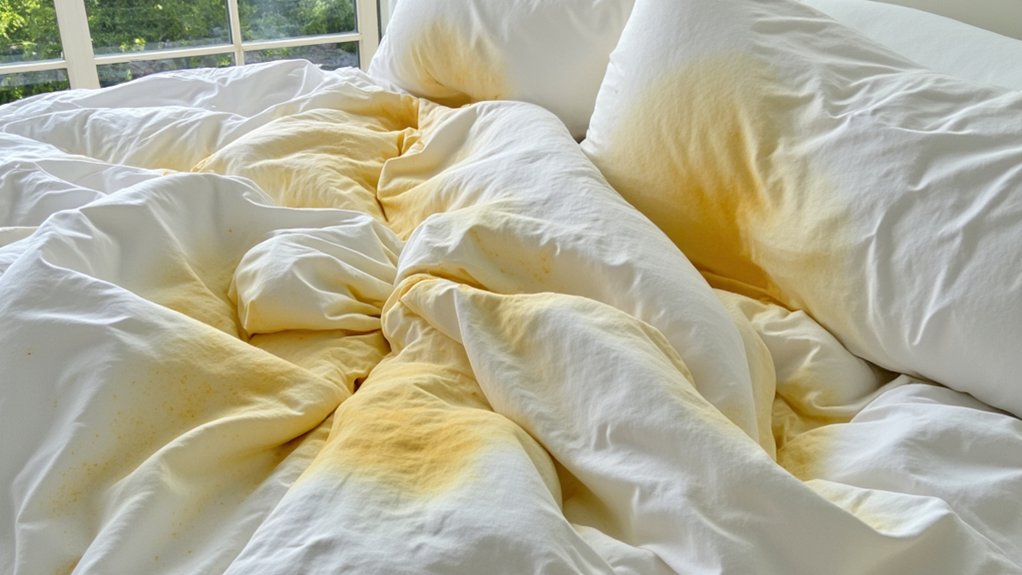
Just like those stubborn coffee rings on your favorite mug, yellow sweat stains on sheets tell a revealing chemical story. You’ll notice these unsightly marks appearing gradually, especially if you’re using white or light-colored bedding. The interaction between your body’s proteins, salts, and the fabric’s fibers creates this familiar yellowing effect – but that’s just the beginning. Understanding the complete chemical process can help you prevent and tackle these stains more effectively.
The Science Behind Yellow Sweat Stains
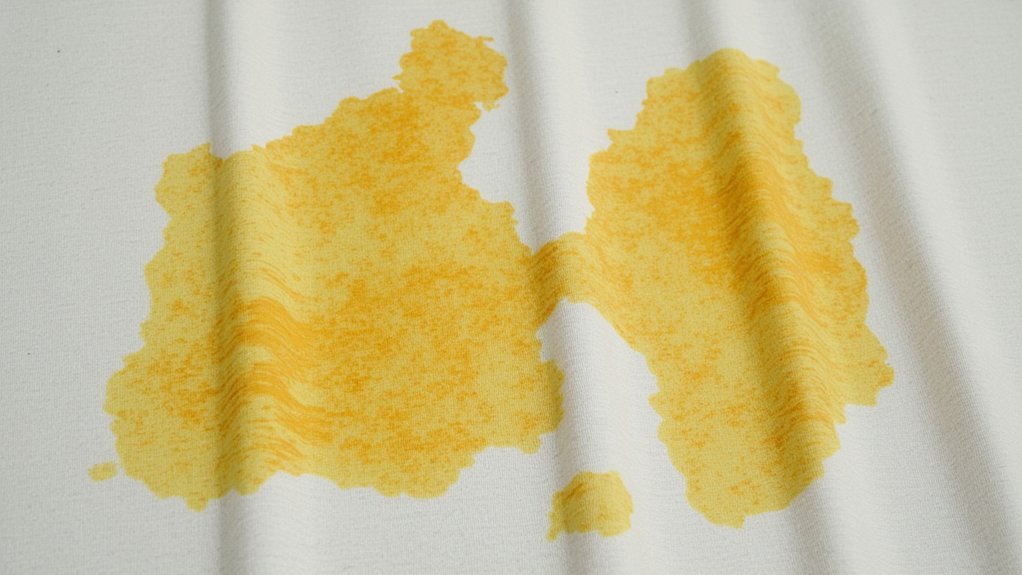
While you might assume sweat itself causes yellow stains on sheets, the discoloration actually comes from a chemical reaction between your sweat’s proteins and the natural oils on your skin.
Your sweat composition includes water, salt, proteins, and other compounds that interact with skin oils. When these substances mix and dry on fabric, they create a yellowing effect through oxidation. This process accelerates when:
- Your body temperature rises above 98.6°F
- Sweat accumulates in fabric fibers
- Bacteria break down proteins in dried sweat
The stain formation happens gradually, but you’ll notice it most on light-colored sheets. According to textile scientist Dr. Sarah Chen, “The yellowing intensifies when sweat proteins bond with fabric fibers, especially in cotton and synthetic blends.”
Common Factors That Intensify Sheet Discoloration
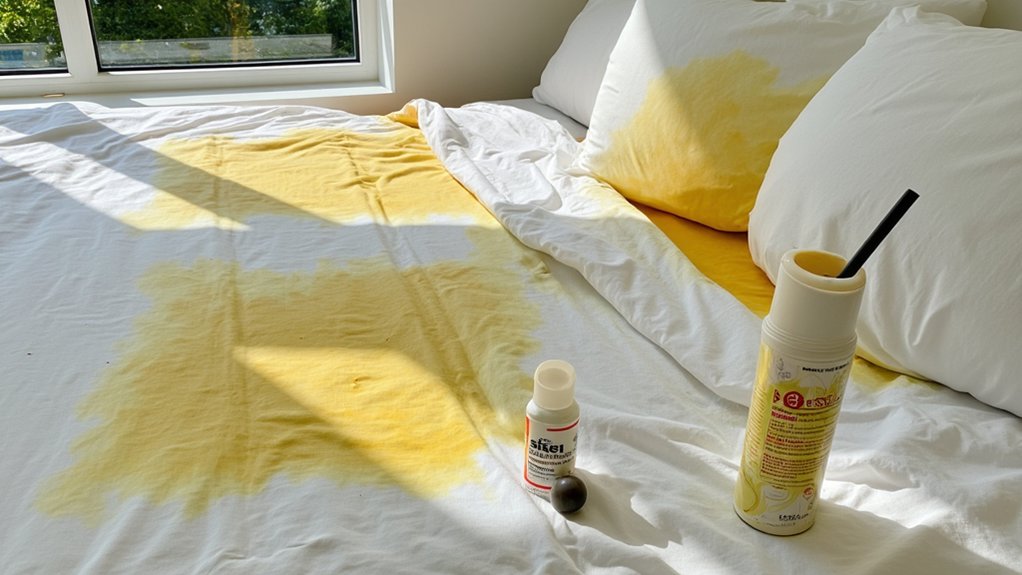
Several everyday habits and environmental conditions can dramatically accelerate the yellowing of your bed sheets beyond normal sweat stains.
Key factors that worsen sheet discoloration include:
- High room humidity (above 60%)
- Using oil-based skin products before bed
- Dietary influences like consuming foods rich in beta-carotene
- Hormonal changes during menopause or puberty
- Not changing sheets weekly
- Using harsh detergents or bleach frequently
“The combination of sweat proteins and environmental factors creates a perfect storm for sheet discoloration,” explains textile expert Dr. Sarah Chen. You’ll notice more intense yellowing if you live in warm climates or frequently apply self-tanning products. Regular use of retinol-based skincare can also contribute to faster staining, as these products oxidize when mixed with sweat.
How Body Chemistry Affects Your Bedding
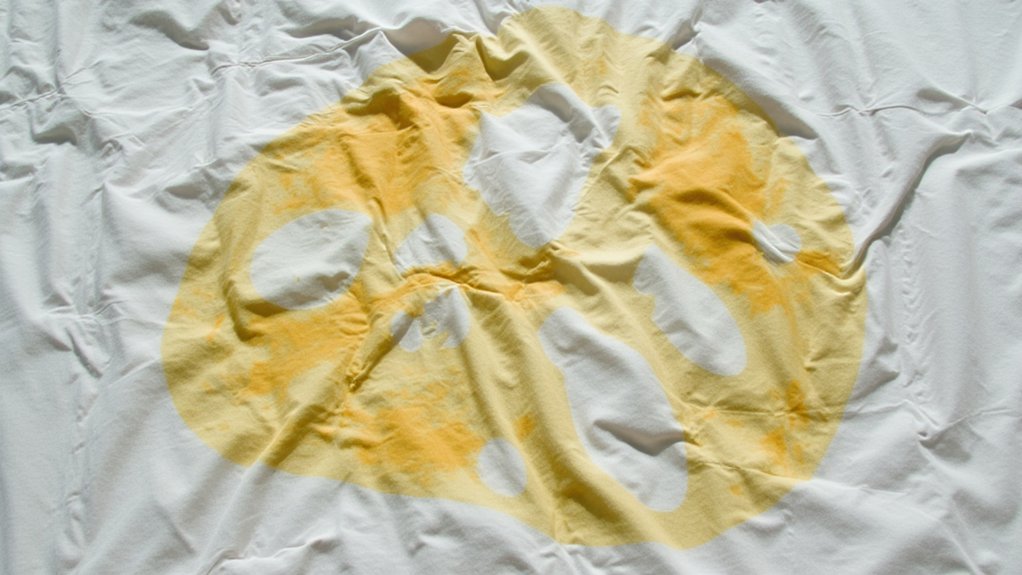
Your unique body chemistry plays a major role in how quickly your sheets become discolored. Your body pH level influences the intensity of sheet staining, with more acidic sweat creating stronger yellow marks over time.
Sweat composition varies greatly from person to person, affecting how your bedding reacts to nighttime perspiration. If you’re someone who produces sweat with higher protein content, you’ll likely notice more pronounced yellowing. Similarly, your body’s natural oils, minerals, and medications can intensify discoloration.
Consider these factors that impact sheet yellowing:
- Natural pH levels (typically 4.5-6.5)
- Mineral content in sweat
- Protein concentration
- Medication residue
- Hormonal changes
Dr. Sarah Chen, dermatologist, explains: “Your skin’s acidity and unique biochemical makeup directly determine how quickly fabric develops those characteristic yellow stains.”
Prevention Tips to Keep Sheets White
Although sweat naturally contains compounds that yellow sheets over time, implementing proper prevention methods can greatly extend the bright white appearance of your bedding.
Key Sheet Maintenance Tips:
- Wash sheets weekly in hot water (130°F minimum)
- Use color-safe bleach or white vinegar in each wash
- Don’t overload the washing machine
- Dry sheets completely before storing
Smart Fabric Choices:
- Select 100% cotton or bamboo sheets
- Choose moisture-wicking materials
- Avoid synthetic blends that trap sweat
“The key to preventing yellow stains is addressing sweat buildup immediately,” says textile expert Dr. Sarah Chen. “Natural fibers combined with proper washing techniques can keep sheets crisp and white for years.” Remember to change your sheets more frequently during summer months when you’re likely to sweat more.
Best Washing Methods to Remove Yellow Stains
When yellow sweat stains have already set into your sheets, specific washing methods can help restore their original brightness and eliminate discoloration.
For effective stain removal:
- Pre-treat spots with a mixture of 1 cup white vinegar and 2 cups warm water
- Soak sheets for 30 minutes in hot water with 1/2 cup baking soda
- Add 1/4 cup lemon juice to your regular detergent during washing
Laundry expert Sarah Bennett recommends these washing techniques: “Run your washer on the hottest setting your fabric can handle, and don’t overload the machine. One set of sheets per load guarantees proper cleaning.”
For stubborn stains:
- Create a paste using 3 parts baking soda to 1 part water
- Scrub gently into yellowed areas
- Let sit for 15 minutes before washing
- Repeat if necessary
The Role of Personal Care Products
Many personal care products you apply before bed can contribute significantly to yellow sheet stains through their interaction with sweat and body oils. When you use skincare products like night creams, serums, or body lotions, they can transfer onto your sheets and mix with perspiration.
Common deodorant ingredients, particularly aluminum-based compounds, are major culprits in creating yellow stains. “Antiperspirant residue combines with your body’s natural proteins, creating those distinctive yellowish marks,” explains Dr. Sarah Chen, textile scientist.
To minimize staining:
- Wait 15-20 minutes after applying products before lying down
- Use natural deodorants without aluminum
- Apply nighttime skincare products at least 30 minutes before bed
- Consider using protective pillowcases for expensive sheets
- Opt for oil-free moisturizers when possible
Natural Solutions for Stain-Free Bedding
Natural remedies offer effective alternatives to harsh chemicals for keeping your sheets pristine and stain-free. “Simple household ingredients can work just as well as commercial products for preventing yellow stains,” says laundry expert Maria Thompson from the Natural Cleaning Institute.
Try these proven solutions:
- Mix 1/2 cup white vinegar with your natural detergents during the wash cycle
- Pre-treat stains with a paste of baking soda and water
- Choose sheet materials like organic cotton or bamboo that resist sweat absorption
- Spritz sheets with a solution of 1 part lemon juice to 2 parts water before washing
“The key is consistency in your washing routine,” Thompson explains. “Natural solutions work best when you’re proactive about treating and washing your bedding every 1-2 weeks, before stains set in.”
Frequently Asked Questions
Can Yellow Sweat Stains on Sheets Spread to My Pajamas or Sleepwear?
With 99% of sweat being water and 1% proteins and minerals, you’ll find your sweat composition can transfer between fabric types, staining both sheets and sleepwear during contact while sleeping.
Are Yellow Sweat Stains on Bedsheets More Common in Certain Age Groups?
You’ll notice yellow sweat stains more in teens and young adults due to age factors affecting sweat composition, including higher hormone levels and more active sweat glands during these years.
Do Medical Conditions That Cause Night Sweats Create Darker Yellow Stains?
If you’re experiencing hormonal imbalances or sleep disorders that cause heavy night sweats, you’ll likely notice darker yellow stains since these conditions often produce more concentrated sweat with higher protein content.
Can Mattress Protectors Prevent Yellow Stains From Reaching the Mattress Underneath?
Yes, quality mattress protectors with effective sweat absorption materials can block sweat from seeping through. You’ll want a waterproof protector that’s specifically designed to prevent liquid penetration into your mattress.
Is There a Difference Between Yellow Stains From Men Versus Women?
Verily, you’ll notice gender differences in sweat stains. Men’s sweat typically contains more proteins and lipids, while women’s sweat composition has lower concentrations, potentially resulting in less intense yellow discoloration.
