
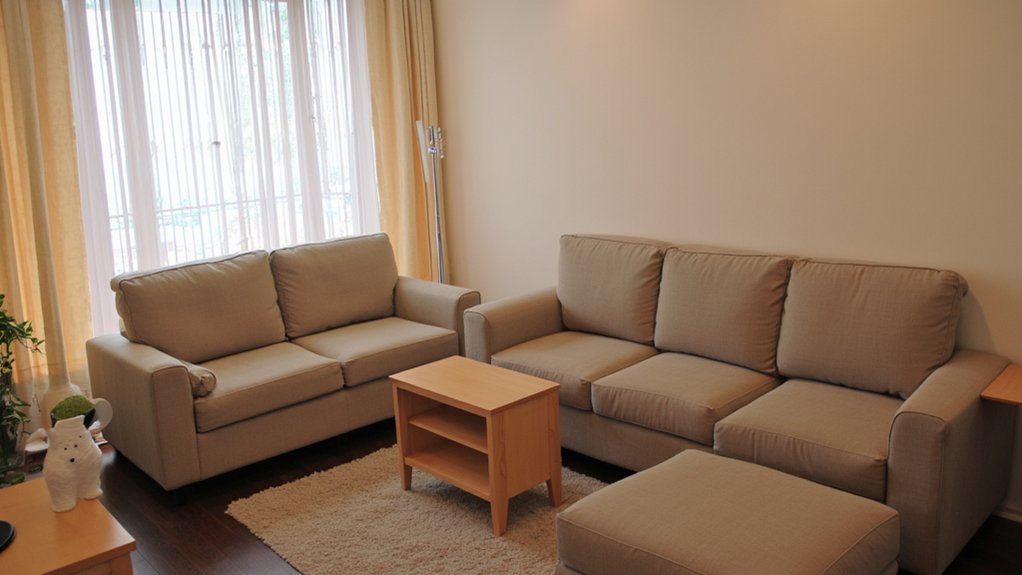
When you’re working with a small living room, arranging your sofa and loveseat strategically can transform the space from cramped to comfortable. Interior designers recommend starting with the largest piece – typically your sofa – as the focal point, then positioning your loveseat to complement it. With seven distinct arrangement styles to choose from and essential spacing guidelines to follow, you’ll discover how to maximize both seating and flow in your compact living area.
1. L-Shaped Corner Arrangement
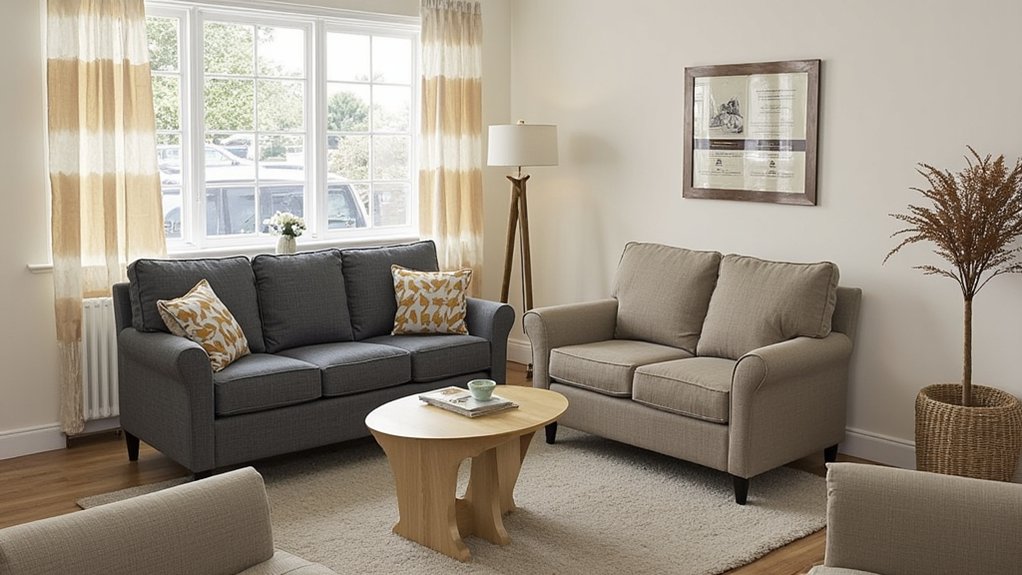
One of the most space-efficient ways to arrange your sofa and loveseat is the L-shaped corner configuration, which maximizes seating while minimizing wasted floor space.
Professional interior designer Sarah Chen recommends: “Position your largest piece, typically the sofa, against the longest wall. Then place the loveseat perpendicular to it, creating an L-shape that opens toward the room’s main entry point.”
For ideal flow and functionality, follow these key steps:
- Leave 18-24 inches of walking space between the furniture and walls
- Position the corner where the pieces meet about 3-4 inches apart to prevent awkward gaps
- Anchor the arrangement with a square or round coffee table that’s at least 14-18 inches from both seating pieces
2. Parallel Wall Seating Setup
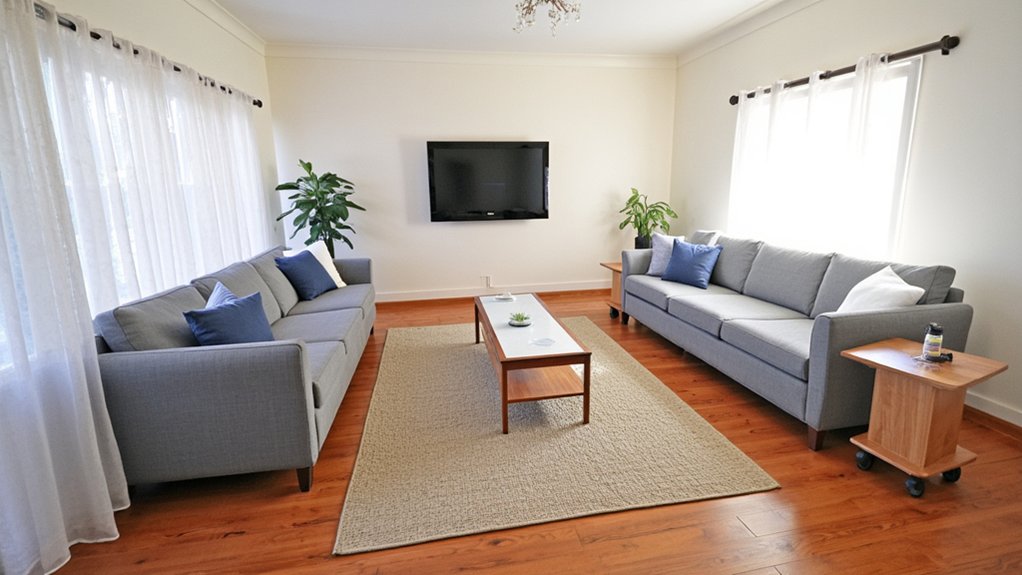
The parallel wall arrangement offers a classic solution when you’re working with a narrow living room layout or want to create a natural conversation area. Place your sofa against one wall and position the loveseat directly opposite, leaving at least 6-7 feet of space between them for comfortable traffic flow.
Consider these key elements for successful parallel wall seating:
- Center a rectangular coffee table (approximately 4×2 feet) between the seating pieces to anchor the conversation area
- Add slim end tables (16-18 inches wide) at each end of the sofa to maximize functionality without crowding
- Mount your TV on the perpendicular wall, ensuring it’s visible from both seating pieces at a 42-inch viewing height
“This arrangement maximizes seating capacity while maintaining clear pathways,” says interior designer Sarah Mitchell.
3. Floating Furniture Away From Walls
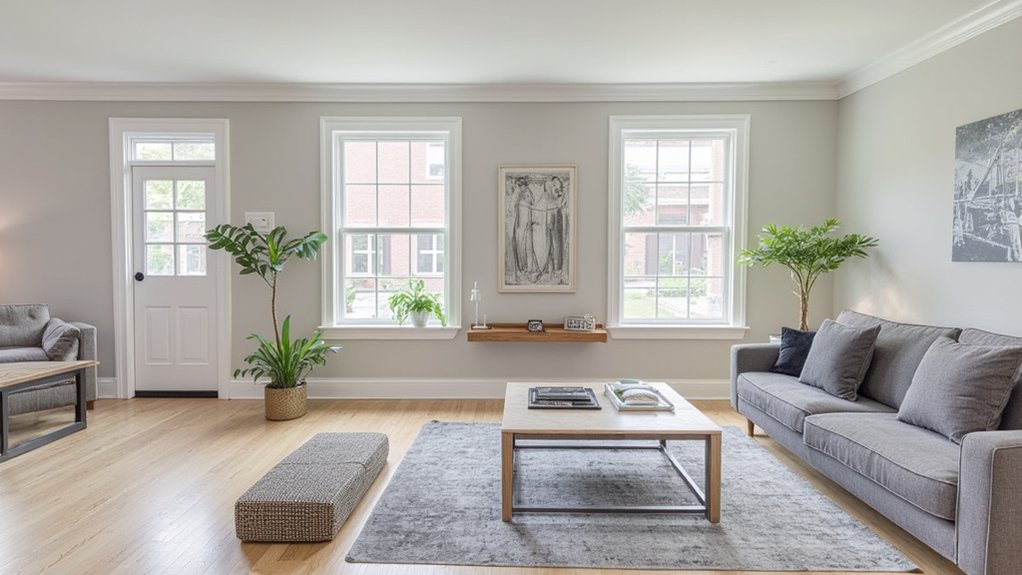
Here’s how to make floating furniture work effectively:
- Place your sofa perpendicular to the longest wall, leaving 24-30 inches of walkway space behind it
- Position the loveseat across from the sofa with 5-7 feet between them for comfortable conversation
- Add a slim console table (no wider than 12 inches) behind the sofa to create a purposeful boundary and prevent the space from feeling empty
4. Diagonal Conversation Area Setup
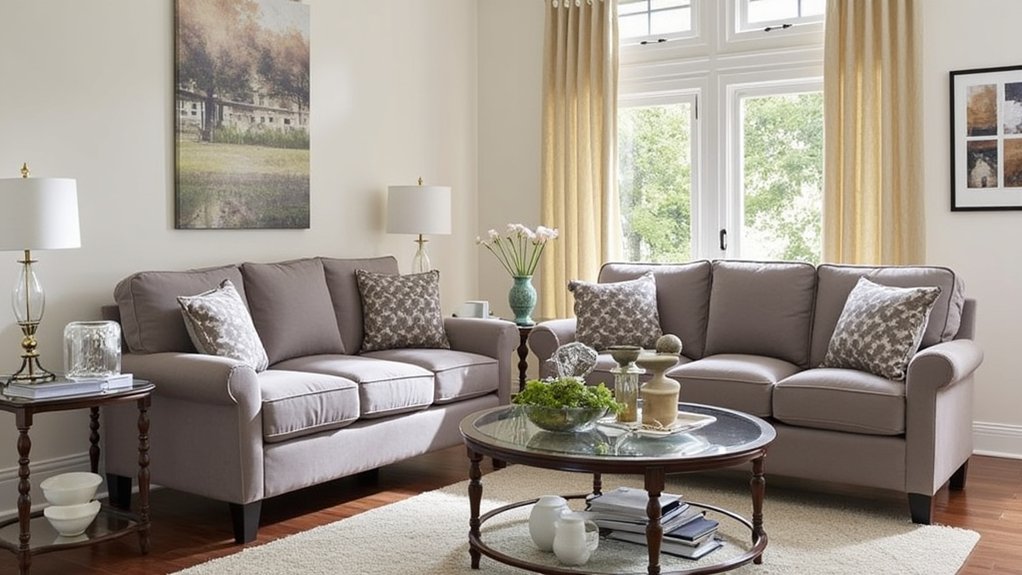
Creating a diagonal conversation area offers an innovative solution for small living rooms that feel cramped with traditional parallel arrangements. Position your sofa at a 45-degree angle from the wall, then place your loveseat perpendicular to create an inviting V-shape formation.
Interior designer Sarah Miller explains, “Diagonal arrangements maximize corner spaces while drawing the eye across the room diagonally, making it appear larger.”
Follow these key steps for an effective diagonal setup:
- Start with your largest piece (sofa) angled from the room’s dominant corner, leaving 30-36 inches for walkways
- Position the loveseat to face the sofa’s center, forming a conversation triangle
- Add a coffee table or ottoman at the center point, about 18 inches from each seating piece
5. Create Mini Media Center Setup
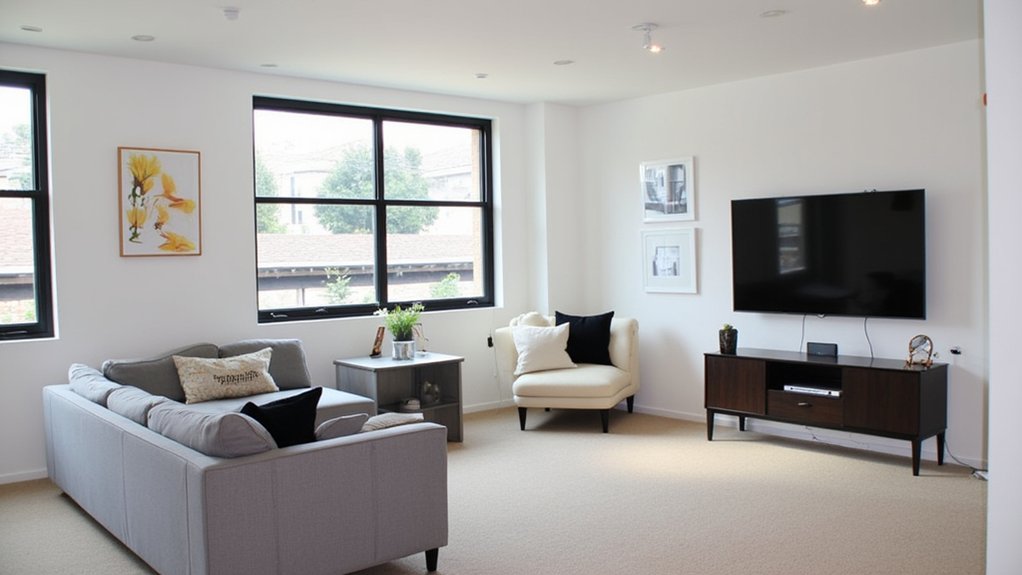
While diagonal arrangements work well for pure conversation spaces, many homeowners need their seating to accommodate both socializing and TV viewing. A mini media center setup maximizes your small living room while creating an ideal viewing experience. Interior designer Sarah Chen recommends positioning your TV on the longest wall, then arranging seating parallel to it.
Key elements for your mini media center:
- Place your sofa 8-10 feet from the TV wall, facing it directly for the best viewing angles
- Position the loveseat perpendicular to the sofa, creating an L-shape that maintains conversation flow
- Add a compact corner table between the sofa and loveseat to anchor the arrangement and provide a surface for remotes and beverages
This layout typically works best in rooms measuring at least 12×14 feet.
6. Window-Facing Seating Configuration
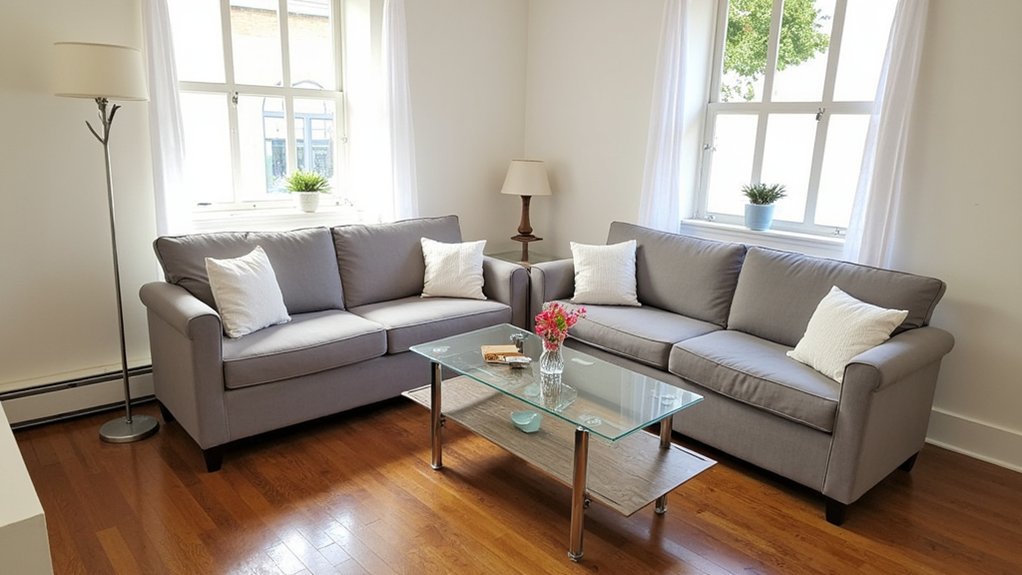
A window-facing seating arrangement offers three key benefits: natural lighting, outdoor views, and enhanced room depth perception. Position your sofa or loveseat about 24-36 inches from the window wall to create an inviting focal point while maintaining traffic flow.
For ideal window-facing layouts, follow these key steps:
- Place your largest piece (typically the sofa) parallel to the window, leaving at least 2 feet of walking space behind
- Position the loveseat perpendicular to create an L-shape, allowing conversation without blocking natural light
- Add a slim coffee table 18 inches from seating pieces to anchor the arrangement
“Window-centric furniture placement can make a small room feel twice as large by connecting indoor and outdoor spaces,” notes interior designer Sarah Mitchell. This setup maximizes both functionality and visual space.
7. Back-to-Back Split Seating
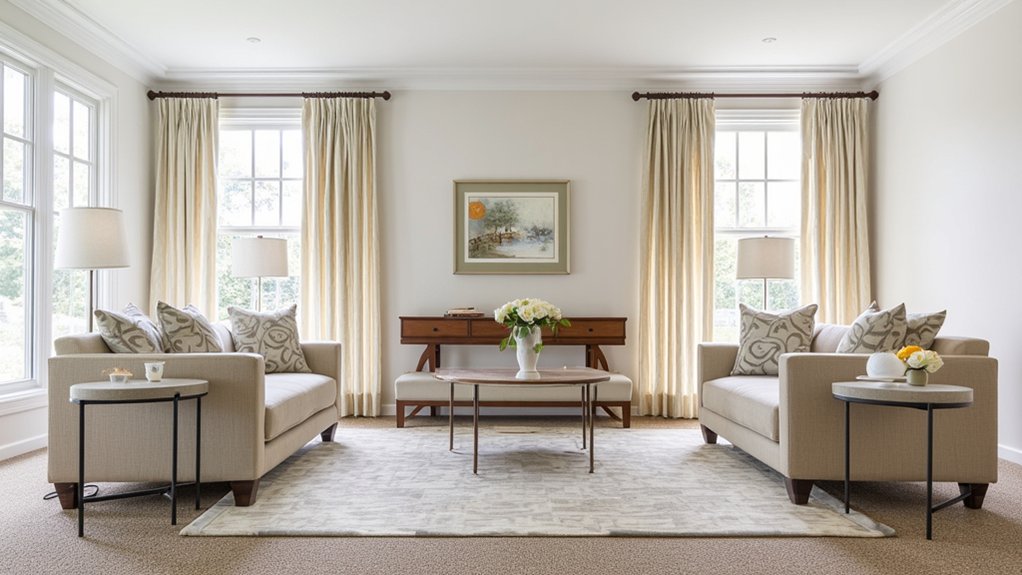
Because small living rooms often require creative solutions, back-to-back split seating lets you divide your space into two distinct conversation areas. Place your sofa and loveseat with their backs facing each other, leaving 12-18 inches between them for a console table or storage bench.
Interior designer Sarah Matthews suggests this arrangement works best when you:
- Position the larger sofa against the room’s longest wall, creating a primary seating zone
- Place the loveseat perpendicular to windows, establishing a secondary conversation area
- Add a narrow console table (no wider than 12 inches) between the pieces to define boundaries
This layout maximizes your square footage while maintaining clear pathways. You’ll need at least 144 square feet to implement this arrangement effectively, ensuring comfortable traffic flow around both seating areas.
