
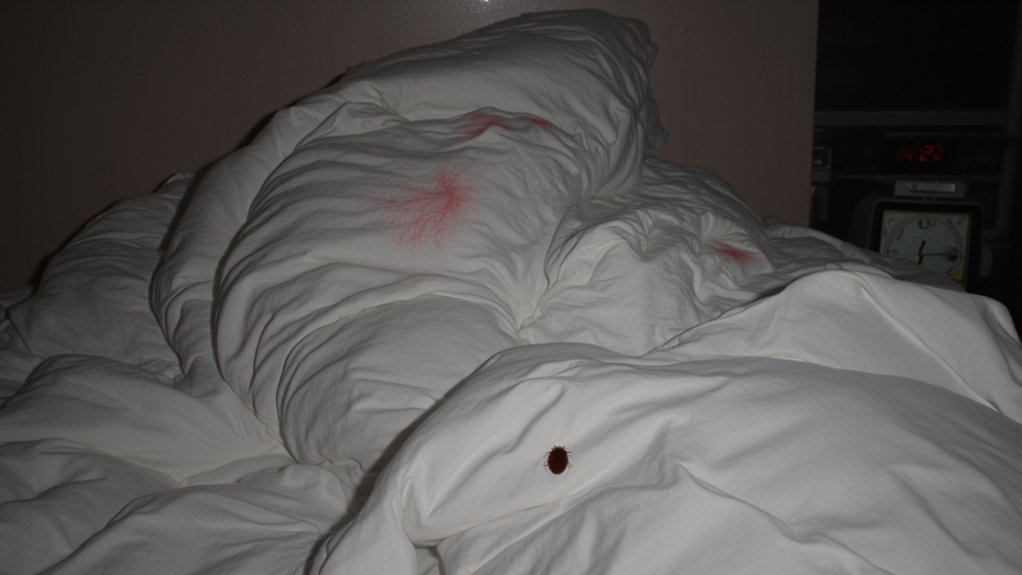
Those mysterious nighttime nibbles can leave you scratching your head – and various other body parts – come morning. While several nocturnal pests could be responsible for your discomfort, identifying the specific culprit requires careful observation of bite patterns and timing. As pest control expert Dr. Sarah Chen notes, “Different insects leave distinctive calling cards through their feeding habits.” By examining key evidence like bite clusters, skin reactions, and household signs, you’ll uncover which unwelcome visitor is disturbing your sleep.
Common Nighttime Biting Insects and Their Bite Patterns
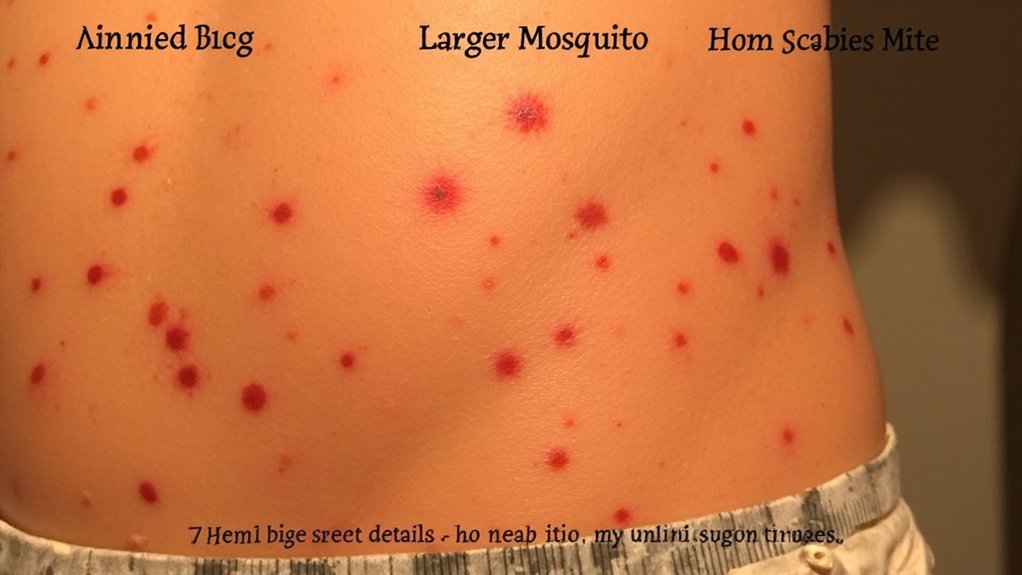
Several common insects can disrupt your sleep by biting at night, each leaving distinct patterns that help identify the culprit.
Bed bugs typically create clusters of 3-4 small, red bites in a line or zigzag pattern, often on exposed skin. These bites usually appear within hours and may become itchy welts. “The linear pattern is a telltale sign of bed bugs following blood vessels,” notes entomologist Dr. Sarah Chen.
Mosquito bites form single, puffy welts that appear randomly across your body. You’ll notice these raised bumps within minutes, and they’re usually 1/2 inch in diameter. Unlike bed bug bites, mosquito bites tend to be more spread out and isolated from each other, occurring where skin was exposed during sleep.
- Bed bugs: Linear clusters, 3-4 bites
- Mosquitoes: Random, isolated welts
- Timing: Minutes (mosquitoes) to hours (bed bugs)
Telltale Signs of Different Nocturnal Pests in Your Home
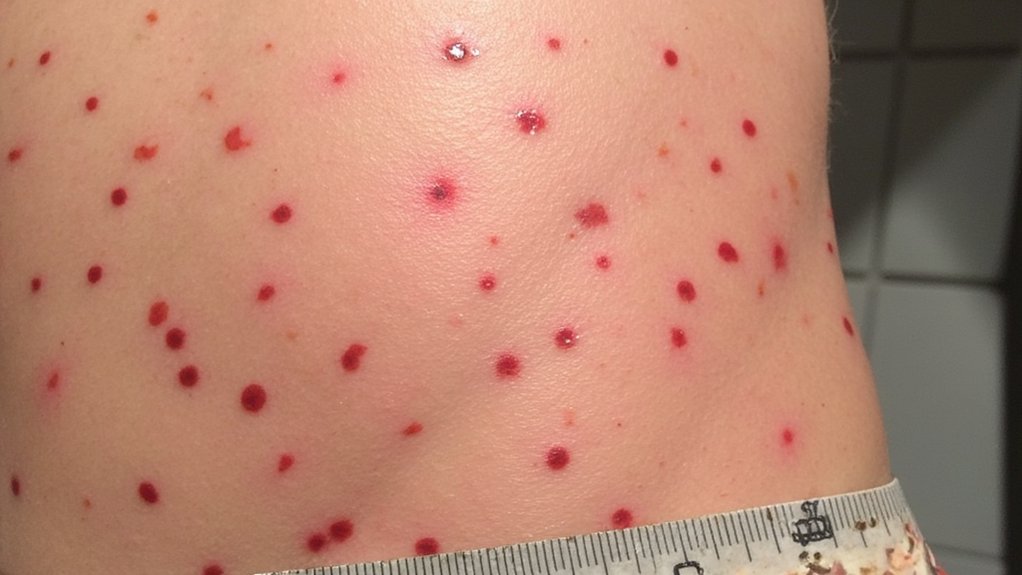
While bite patterns help identify what’s biting you, looking for physical evidence around your home can confirm which pest you’re dealing with. “The key is knowing exactly what signs to look for and where to find them,” explains pest control specialist Mike Rodriguez.
Key Signs to Check For:
- Bed bug signs: Look for dark spots (fecal matter) on mattress seams, tiny blood stains on sheets, and shed skins near baseboards
- Flea identification: Check for black specks (flea dirt) in pet bedding and carpet fibers
- Dry, reddish-brown droppings near walls indicate rodent activity
- Tiny piles of sawdust near wooden furniture point to carpenter ants
- Small, oblong eggs in closets or drawers suggest moth infestations
“Focus your inspection on warm, dark areas where pests typically hide during daylight hours,” advises Rodriguez.
How to Identify Your Mystery Biter Through Evidence
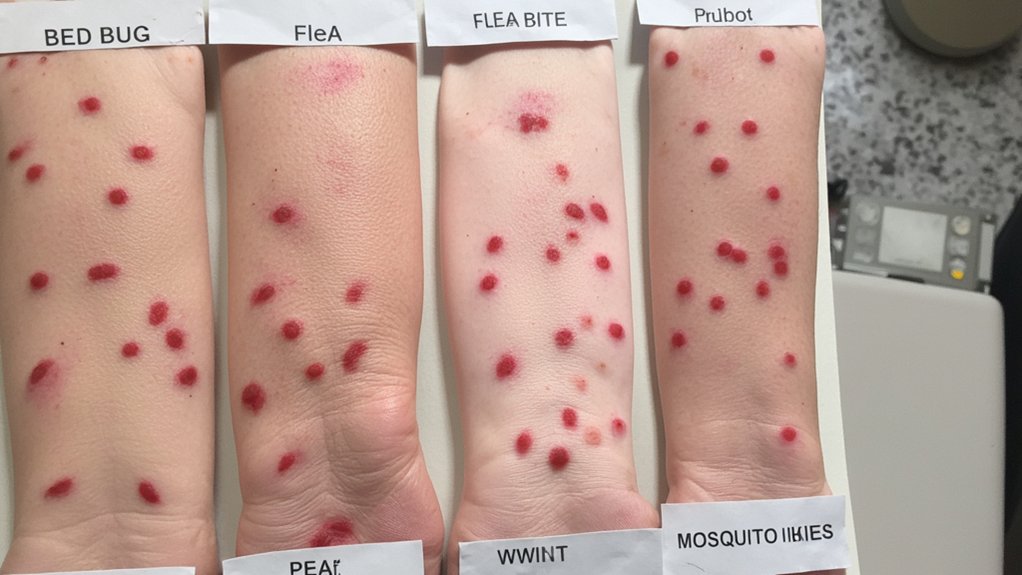
Identifying what’s biting you at night requires gathering specific evidence during your waking hours. “The first 24-48 hours after being bitten provide essential clues about your nighttime pest,” notes entomologist Dr. Sarah Chen.
Key Evidence to Document:
- Bite pattern (clustered, linear, or scattered)
- Bite size (measure with a ruler)
- Skin reaction timing (immediate vs. delayed)
- Location on your body
Essential Bite Identification Techniques:
- Photograph bites when they first appear
- Mark new bites with a pen to track patterns
- Record when itching begins
- Check bedding for signs of nocturnal pest behavior
“Different pests leave distinct calling cards,” explains Dr. Chen. “Bed bugs create lines of three bites, while spider bites are usually isolated and larger.”
Prevention Methods and Home Treatment Options
Once you’ve identified your nighttime pest, implementing preventive measures and treating existing bites becomes essential for restoring peaceful sleep. “Most household bite treatments involve items you likely already have in your medicine cabinet,” says Dr. Sarah Martinez, entomologist at State University.
Natural Bite Relief:
- Apply ice packs for 10 minutes to reduce swelling
- Dab calamine lotion or hydrocortisone cream on affected areas
- Mix baking soda with water into a paste and apply directly
Prevention Steps:
- Wash bedding weekly in hot water (130°F minimum)
- Vacuum mattresses and carpets thoroughly
- Use natural repellents like lavender or tea tree oil
Home remedies that deter pests:
- Sprinkle diatomaceous earth around bed legs
- Place cedar blocks in closets and drawers
- Create vinegar-water barriers along windowsills
When to Seek Professional Pest Control Help
Despite trying various home remedies, some pest problems require professional intervention to fully resolve. “When bites continue for more than two weeks or spread to multiple family members, it’s time to call an expert,” explains Mike Chen, certified pest control specialist at Urban Pest Solutions.
Consider booking a professional consultation if you notice:
- Bites occurring in clusters of 3 or more
- Blood spots on bedding that appear nightly
- Visible pests during daytime inspections
- Failed DIY treatments after 2-3 attempts
A pest control expert will conduct thorough pest identification using specialized equipment and UV lights. They’ll inspect your entire home, focusing on bedrooms and living areas within 48 hours of your call. Most companies offer same-day emergency services if you’re experiencing severe reactions to bites.
Frequently Asked Questions
Can Biting Insects Develop Resistance to Common Insecticides Over Time?
You’ll find that insects develop insecticide resistance mechanisms through genetic adaptation, and environmental factors influence how quickly they evolve to withstand your chemical treatments over multiple generations.
Why Do Some People Get Bitten More Frequently Than Others?
Like a magnet to metal, your genetic factors and skin chemistry make you more attractive to biting insects. You’re releasing specific compounds and carbon dioxide that they can’t resist.
Do Ultrasonic Pest Repellent Devices Actually Work Against Nighttime Biters?
You’ll find mixed results with ultrasonic devices. There’s an ongoing effectiveness debate, as research shows most nighttime biters don’t respond consistently to ultrasonic frequencies despite manufacturers’ claims.
How Long Can These Nocturnal Pests Survive Without Feeding?
Did you know bloodsucking pests can survive 2-3 months without a meal? You’ll find their starvation survival varies, but most need to maintain regular feeding frequency every 5-10 days for ideal health.
Are There Specific Seasons or Weather Conditions When Biting Is More Frequent?
You’ll notice more biting activity during warm, humid seasons. Summer months and rainy weather create ideal conditions, while seasonal patterns show increased pest activity from spring through fall.
