
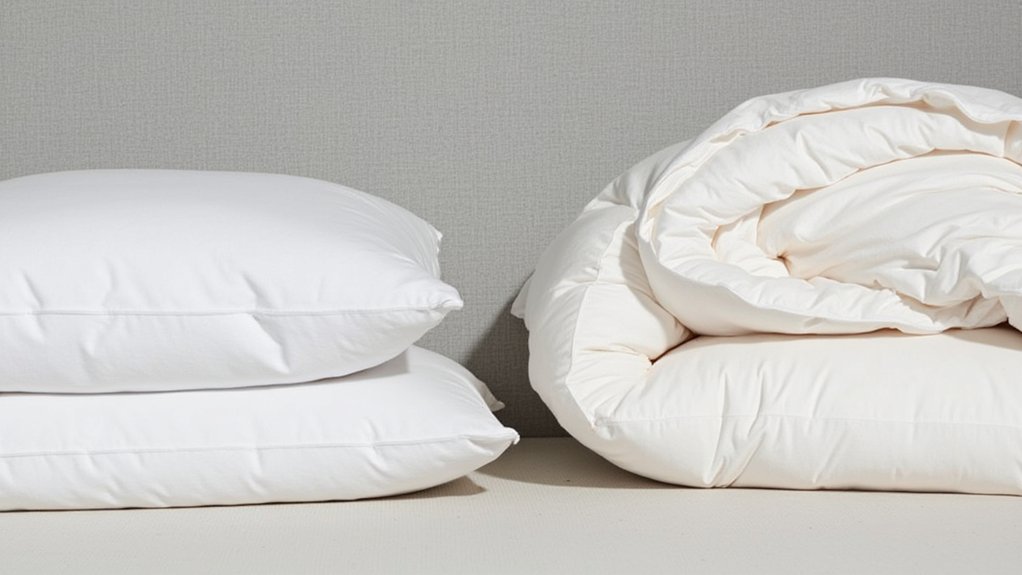
You’re facing one of bedding’s biggest decisions: choosing between feather down and down alternative fills for your pillows and comforters. While feather down offers natural insulation that’s kept people cozy for centuries, synthetic alternatives have evolved to match traditional down’s comfort at a fraction of the cost. Understanding the key differences in warmth, durability, and maintenance will help determine which option aligns with your sleep needs and lifestyle preferences.
Understanding the Core Differences
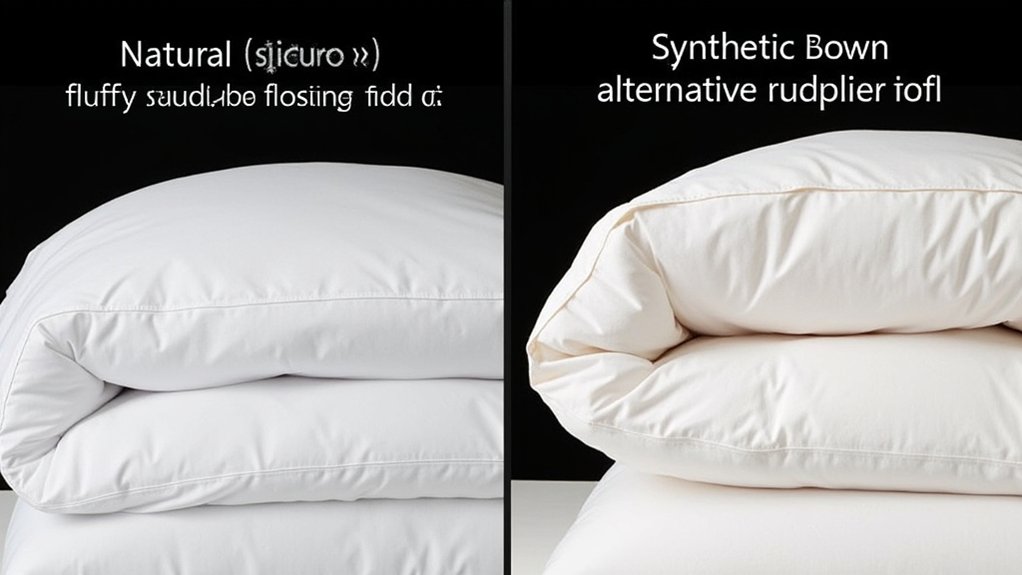
While both feather down and down alternative promise cozy comfort, they’re fundamentally different materials that affect your sleeping experience. When you’re examining feather characteristics, you’ll notice natural down clusters come from waterfowl like geese or ducks, creating lightweight, breathable insulation that traps warm air.
Down qualities include exceptional loft and compressibility, allowing your bedding to bounce back after being compressed. You’ll find that down alternative, made from synthetic polyester fibers, mimics these properties but offers:
- Hypoallergenic benefits
- Machine-washable convenience
- Lower cost
- More consistent fill power
If you’re sensitive to allergens or prefer animal-free products, down alternative provides reliable warmth without natural feathers. The synthetic clusters maintain their shape and insulating properties even after repeated washing.
Warmth and Insulation Properties
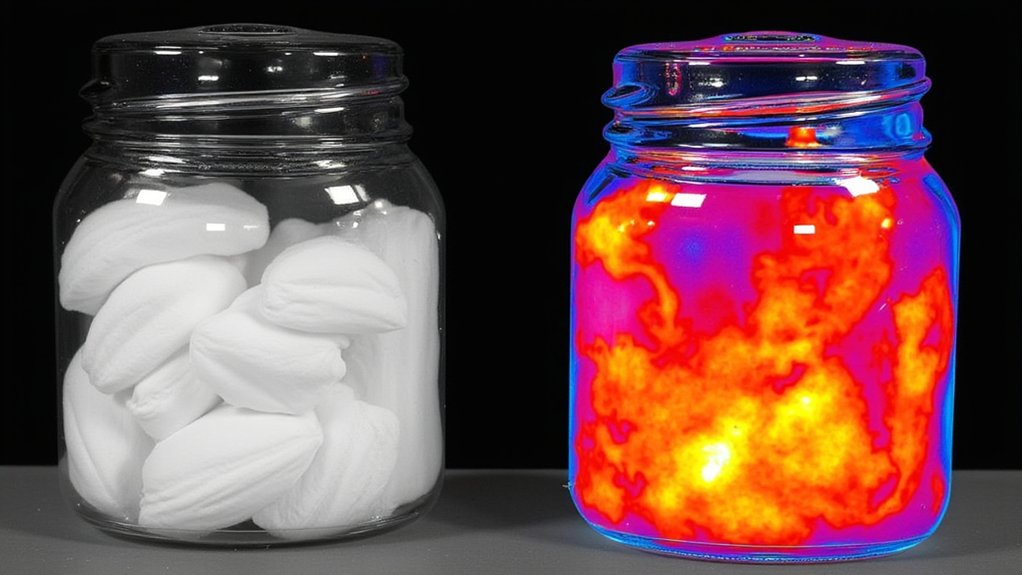
The natural loft structure of feather down creates superior insulation compared to most synthetic alternatives. When you’re wrapped in a down comforter, tiny air pockets between the feathers trap your body heat, creating multiple insulation layers that maintain warmth efficiently.
Down’s thermal efficiency rating typically exceeds that of synthetic materials by 15-20%. “Natural down clusters can achieve warmth ratings of 500-900 fill power, while most alternatives max out around 400,” notes bedding expert Sarah Chen.
You’ll find that down alternative requires more material to achieve similar warmth levels. A down alternative comforter needs to be about 20% thicker to match the insulating properties of its natural counterpart. However, down alternatives maintain consistent insulation even when compressed, unlike down which can develop cold spots.
Cost Comparison and Value
Natural feather down commands a substantially higher price point compared to synthetic alternatives, with premium down comforters typically ranging from $200-600. “You’re investing in a product that can last 15-20 years with proper care, versus 5-7 years for most alternatives,” explains bedding manufacturer Lisa Torres.
When you break down the annual cost, down alternatives in the $50-150 price range might seem more budget-friendly initially. However, you’ll need to replace them more frequently. If you divide the total cost by years of use, a $400 down comforter costs about $20-27 per year, while a $100 synthetic alternative costs $14-20 annually. “Consider the long term investment value – higher quality down products maintain their loft and warmth appreciably longer,” notes bedding specialist Mark Chen.
Care and Maintenance Requirements
Proper maintenance of feather down requires more careful attention compared to synthetic alternatives, though following specific guidelines helps preserve its quality.
When cleaning feather down items:
- Machine wash on gentle cycle at 30°C/86°F
- Use mild detergent specifically made for down
- Run an extra rinse cycle to remove all soap
- Dry on low heat with dryer balls for 2-3 hours
For down alternative products:
- Standard machine wash at 40°C/104°F
- Regular detergent works fine
- One normal rinse cycle suffices
- Tumble dry on medium heat for 1 hour
Storage tips for both:
- Keep in breathable cotton bags
- Store in cool, dry places
- Avoid plastic containers that trap moisture
- Air out items every 3-4 months
“Proper storage is essential for maintaining loft and insulation properties,” notes textile expert Dr. Sarah Chen.
Health and Allergy Considerations
Individuals with allergies or respiratory sensitivities must carefully consider their bedding choices, as feather down can trigger reactions in some people.
Down alternative fills offer several health benefits for allergy sufferers:
- Hypoallergenic materials resist dust mites and other allergy triggers
- Synthetic fills don’t harbor feather proteins that cause reactions
- Easy-to-wash materials reduce allergen buildup
If you’re using feather down but suspect allergies:
- Watch for symptoms like sneezing, congestion, or skin irritation
- Consider having an allergy test to confirm feather sensitivity
- Switch to down alternative bedding for 2-3 weeks to observe changes
Dr. Sarah Chen, allergist, notes: “While high-quality feather down undergoes extensive cleaning, approximately 10% of allergy sufferers still experience reactions. Down alternative provides a safer option for these individuals.”
Environmental Impact and Sustainability
Beyond personal health considerations, the choice between feather down and synthetic alternatives carries significant environmental implications.
When it comes to sourcing materials, feather down is a natural byproduct of the food industry, requiring minimal additional processing. However, you’ll want to verify that your down comes from ethical sources that don’t practice live-plucking.
Down alternatives, typically made from polyester, rely on petroleum-based materials that don’t biodegrade. While some manufacturers now use recycled plastics, the production process still generates a larger carbon footprint.
Consider these recycling options:
- Feather down products can be composted or repurposed
- Synthetic fills can be mechanically recycled into new fibers
- Some companies offer take-back programs for both materials
Expert tip: “Look for RDS (Responsible Down Standard) certification when choosing natural down products.”
Frequently Asked Questions
Do Feather Down Comforters Make Noise When You Move in Bed?
Yes, you’ll hear some rustling and crinkling sounds from your feather down comforter when you move in bed. The feather movement inside creates comforter noise through the fabric shell.
Can Down Alternative Be Used in Extreme Cold Weather Conditions?
While natural down provides 3x more warmth per ounce, you’ll find quality down alternative insulation can still keep you warm in cold weather, though you’ll need a higher fill weight for comparable performance.
How Long Does It Take for Down Products to Dry Completely?
You’ll need 24-48 hours for down products to dry completely. Using proper drying techniques like low heat and tennis balls helps, but down’s high moisture retention makes the process naturally time-consuming.
Is Down Alternative Better for Summer Use Than Natural Down?
You’ll find down alternative performs better in summer since it offers improved breathability. While natural down excels at temperature regulation in cold weather, synthetic fills won’t retain as much heat during warmer months.
Can You Mix Feather Down and Down Alternative in the Same Comforter?
While mixing materials is possible, it’s not recommended for your comforter. Different fill types have distinct properties and washing requirements, which can affect comforter compatibility and overall performance over time.
