
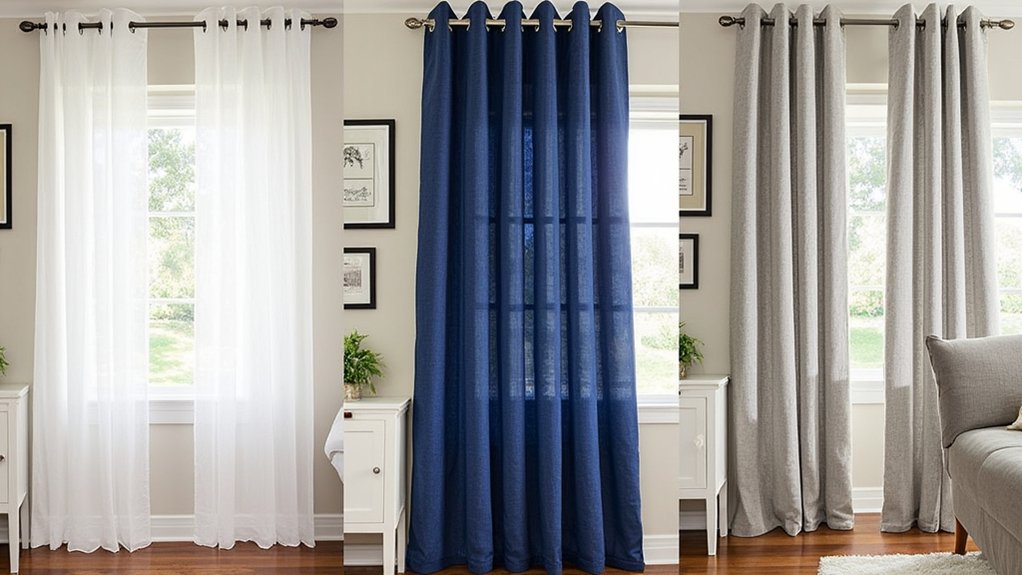
You’ve probably noticed how the right curtains can completely transform a living room, yet selecting them feels overwhelming with all the options available. From precise measurements to fabric choices, each decision shapes both the functionality and style of your space. Interior designer Sarah Chen notes, “Curtains are one of the most impactful design elements, affecting everything from natural light control to room proportions.” Let’s break down the essential steps to finding your perfect window treatments.
Measuring Your Windows for the Perfect Fit

Before shopping for curtains, you’ll need three essential window measurements – width, length, and mounting position – to achieve a proper fit.
To measure width, stretch your tape measure across the window from trim to trim, then add 4-6 inches on each side for proper coverage. “The extra width guarantees complete privacy and light control,” says interior designer Sarah Chen.
For length, measure from your chosen mounting position to where you’d like the curtains to end:
- Sill length: to the window sill
- Below sill: 4-6 inches below the sill
- Floor length: ½ inch above the floor
- Puddle length: 6-8 inches extra to pool on floor
For mounting position, measure 4-6 inches above your window frame for standard placement, or up to 12 inches for a heightened appearance.
Understanding Different Curtain Fabric Types
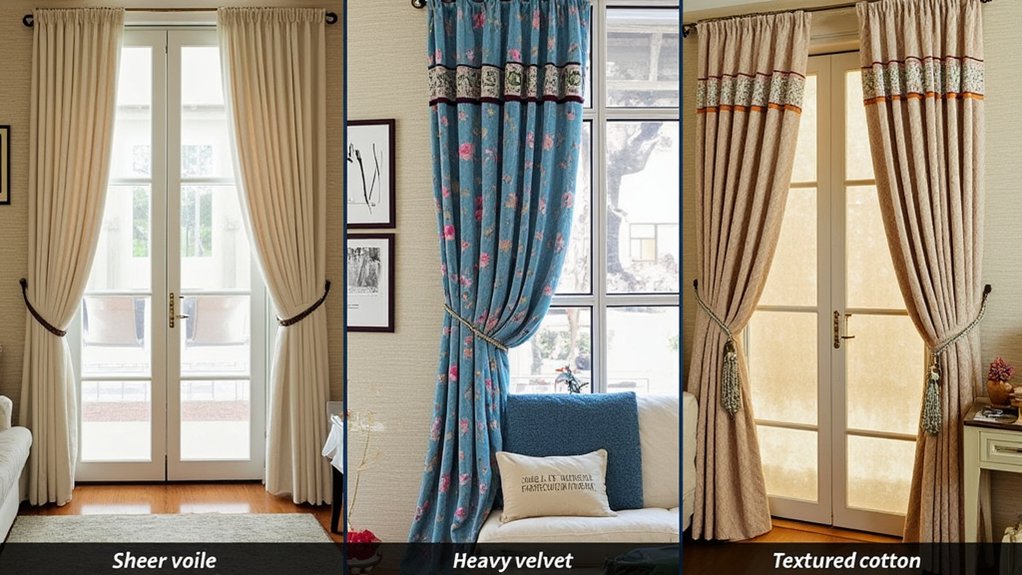
When selecting curtain fabric, you’ll discover several key materials that each serve different purposes in your living room. Here’s what you need to know about the most popular options:
Cotton
- Versatile and easy to clean
- Best for casual spaces
- Available in lightweight to medium weights
Linen
- Provides excellent light filtering
- Creates an elegant, natural look
- May wrinkle easily
Velvet
- Offers maximum light blockage
- Adds luxury and warmth
- Perfect for noise reduction
Silk
- Creates a formal atmosphere
- Requires professional cleaning
- May fade in direct sunlight
Polyester
- Highly durable and affordable
- Resists wrinkles and shrinking
- Easy to maintain
“The fabric you choose should align with both your lifestyle and the room’s function,” says interior designer Sarah Mitchell.
Selecting the Right Color and Pattern
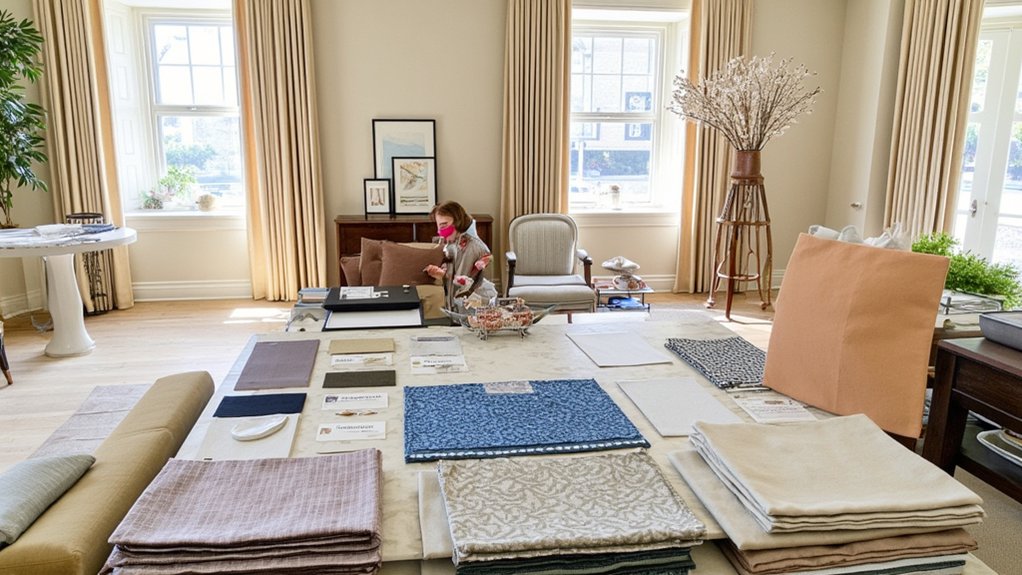
How do you select curtain colors and patterns that perfectly complement your living room’s existing decor? Start by analyzing your room’s color scheme, including wall paint, furniture, and accessories.
Key Color Selection Tips:
- Choose curtains 1-2 shades darker than your walls for subtle elegance
- Match curtain colors to existing accent pieces or artwork
- Consider neutral tones for versatility and longevity
Pattern Guidelines:
- Small rooms work best with solid colors or subtle patterns
- Large rooms can handle bold, dramatic patterns
- Follow the 60-30-10 rule: 60% dominant color, 30% secondary, 10% accent
“When selecting patterns, consider your room’s architectural style,” says interior designer Sarah Martinez. “Traditional spaces pair well with classic stripes or florals, while modern rooms suit geometric or abstract designs.”
Determining the Ideal Length and Width
Getting your curtain measurements right makes the difference between a polished, professional look and an awkward, ill-fitting window treatment.
For length:
- Floor-length: Measure from rod to floor, subtract 1/2 inch for clearance
- Sill-length: Measure to windowsill, adding 4-6 inches below
- Puddle-style: Add 6-12 inches to floor measurement for elegant pooling
For width:
- Multiply window width by 2-2.5 for proper fullness
- Include 4-6 inches on each side beyond window frame
- For blackout curtains, add 8-10 inches total overlap
“The most common mistake is choosing panels that are too narrow,” says interior designer Sarah Chen. “You’ll want enough fabric to create soft folds when closed, not a flat sheet appearance.”
Remember to account for rod placement, typically 4-6 inches above window frame.
Choosing Between Light Filtering Options
With your curtain measurements in hand, the next key decision involves selecting the right level of light control for your living room.
Light filtering options include:
- Sheer (10-25% light blockage)
- Perfect for daytime privacy while maintaining natural light
- Ideal for north-facing rooms
- Semi-sheer (25-50% light blockage)
- Offers moderate privacy and sun protection
- Works well in east/west-facing rooms
- Room darkening (75-95% light blockage)
- Reduces glare on screens and furniture
- Great for south-facing rooms
- Blackout (98-100% light blockage)
- Maximum privacy and light control
- Best for media rooms
“Choose a heavier fabric weight for better light control,” advises interior designer Sarah Chen. “Double-layered curtains let you adjust filtering throughout the day by combining sheer and room-darkening panels.”
Hardware and Hanging Styles
Since proper hardware installation impacts both function and aesthetics, selecting the right curtain rods and hanging style deserves careful consideration.
Choose from these common hanging styles:
- Rod pocket: Creates casual gathered look
- Grommet top: Offers modern, clean lines
- Tab top: Provides relaxed, informal appearance
- Pinch pleat: Delivers formal, tailored finish
“Select rods that extend 4-6 inches beyond window frames to maximize light,” advises interior designer Sarah Chen. You’ll need:
- Standard rods: Support lightweight fabrics
- Heavy-duty rods: Hold heavier drapes
- Double rods: Allow layering of sheers
Mount hardware 4-6 inches above window frames and guarantee brackets are installed into wall studs. For wide windows over 48 inches, use center support brackets to prevent sagging.
Coordinating With Room Design Elements
Beyond selecting the right hardware, your curtains need to harmonize with your living room’s overall design scheme. “The most successful window treatments complement existing elements rather than competing with them,” explains interior stylist Maria Torres.
Consider these key design elements when coordinating your curtains:
- Wall color: Choose curtains that are either 2-3 shades lighter or darker than your walls
- Furniture upholstery: Pick up secondary colors from your sofa or chairs
- Flooring: Match curtain undertones with wood stains or carpet hues
- Accent pieces: Echo colors from artwork, pillows, or rugs
- Architectural features: Complement crown molding or trim work
“For a cohesive look, select curtains that incorporate at least two colors already present in your room’s palette,” advises Torres. Remember to factor in both natural and artificial lighting, as they’ll affect how your chosen colors appear.
Maintenance and Care Considerations
Although curtains can transform your living room’s aesthetic appeal, they require regular maintenance to stay fresh and functional. Here’s how to properly care for your curtains:
Routine Care:
- Vacuum curtains monthly using the upholstery attachment
- Dust weekly with a microfiber duster or soft brush
- Spot clean stains immediately with appropriate fabric cleaners
Deep Cleaning Schedule:
- Wash machine-washable curtains every 3-6 months
- Dry clean delicate fabrics annually
- Steam clean heavy drapes every 6 months
“Regular maintenance extends your curtains’ lifespan by up to 5 years,” says interior designer Sarah Chen. Don’t forget to:
- Check care labels before cleaning
- Remove hooks before washing
- Let curtains dry completely before rehanging
- Address any repairs promptly to prevent further damage
