
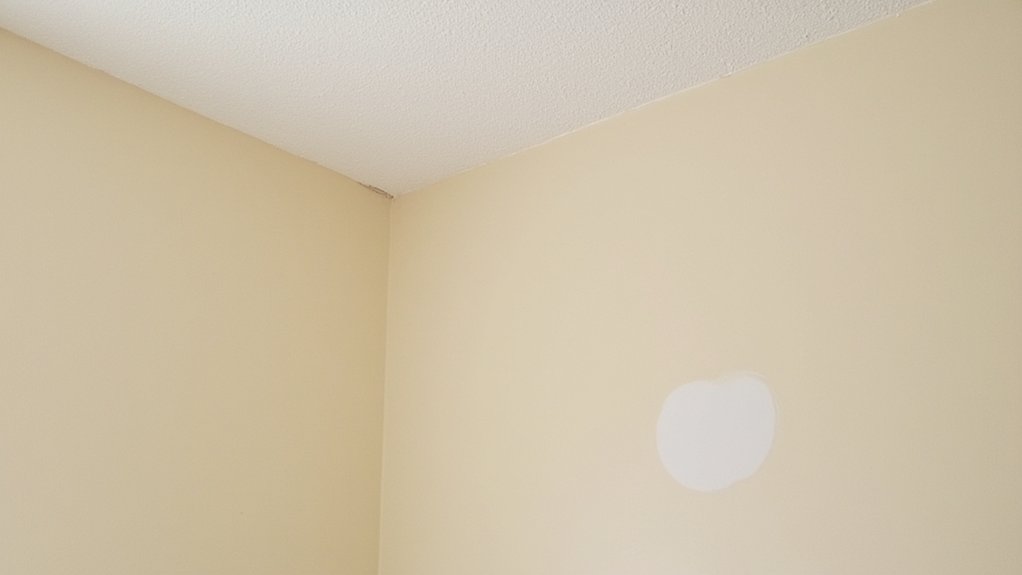
You’ve probably noticed those pesky wall marks that need a quick paint touch-up, but achieving an invisible fix isn’t as simple as it seems. Professional painter Mark Stevens explains, “Even minor variations in application technique can create noticeable differences in the final result.” From paint thickness to roller types, multiple factors determine whether your touch-up will blend seamlessly or stand out like a sore thumb – and knowing these essential elements can make all the difference.
Common Factors That Make Touch-Ups Visible
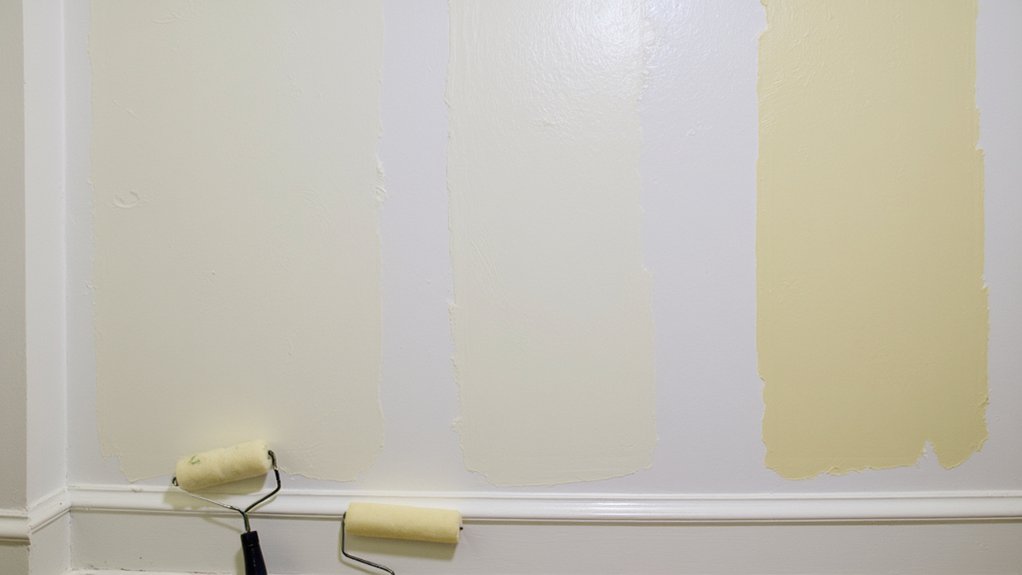
When you notice touch-up paint standing out on your walls, several common culprits are typically to blame for the obvious patches.
- Paint thickness variations: If you’ve applied the touch-up paint too thick or thin compared to the original coat, it’ll create noticeable differences in texture.
- Roller vs. brush application: “Using different application tools than the original paint job can create distinct texture patterns,” explains professional painter Mark Stevens.
- Paint age and fading: Your wall’s original paint has likely experienced UV exposure and environmental changes over time.
- Poor surface preparation: Failing to clean the repair area or sand rough spots creates an uneven base.
- Paint mixing inconsistencies: Even slight variations in paint color matching or sheen levels between batches will show through.
Best Techniques for Seamless Paint Matching
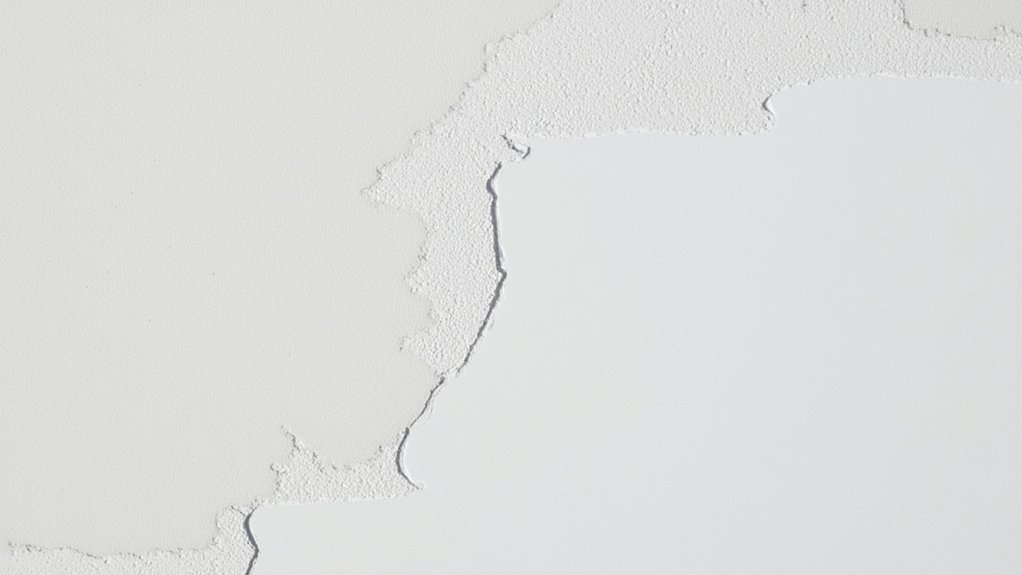
Achieving a flawless paint match starts with understanding how to properly sample and replicate your existing wall color. “The key to invisible touch-ups lies in collecting an accurate color sample from your wall,” says professional painter Sarah Chen.
For best results:
- Take a 2″x 2″ paint chip from an inconspicuous area
- Visit your paint store during daylight hours with your sample
- Use the same paint brand, finish, and batch number when possible
- Mix paint thoroughly for 2-3 minutes before applying
“Always test your matched paint on a small section first,” advises Chen. “Apply thin layers with a foam brush, feathering the edges to blend with existing paint.” Let each layer dry completely for 4 hours before deciding if you need another coat.
Understanding Paint Sheen and Its Impact
The sheen level of your touch-up paint must precisely match your existing wall finish for an invisible repair. Paint sheen ranges from flat (0-5% gloss) to high-gloss (85%+ gloss), with popular options like eggshell (10-25%) and satin (35-45%) in between.
Paint expert John Davis explains, “Even slight variations in sheen will catch light differently, making touch-ups visible under certain angles.” Here’s how sheen affects your touch-up work:
- Flat paint is most forgiving for touch-ups
- Eggshell shows slight variations in texture
- Satin reveals brush marks more easily
- Semi-gloss highlights any application inconsistencies
- High-gloss makes touch-ups extremely noticeable
To test your paint’s sheen, hold a flashlight at a 45-degree angle against the wall – matching sheens will reflect light identically.
Why Time and Environment Matter
Since paint naturally ages and reacts to its environment, matching touch-ups becomes trickier as time passes between the original application and repairs. Sunlight exposure can fade your walls unevenly, while cooking fumes and cigarette smoke might discolor certain areas more than others.
Environmental factors that affect paint appearance:
- Temperature fluctuations can cause paint to expand and contract
- Humidity levels influence how paint cures and ages
- UV rays break down paint pigments over time
- Air pollutants create a subtle film on surfaces
“Even identical paint from the same can won’t match perfectly after six months,” explains Bob Vila, home improvement expert. The key is timing – you’ll get the best results when you complete touch-ups within three months of the original paint job while storing leftover paint in a climate-controlled space.
Professional Tips for Invisible Touch-Ups
Professional painters have developed clever techniques over decades to make touch-ups virtually disappear, even when working with aged paint.
Key Tips for Invisible Results:
- Feather your edges by gradually thinning the paint as you move outward from the repair
- Use a small foam roller instead of a brush for better texture matching
- Apply paint at the same thickness as the original coat
Expert Application Steps:
- Clean the area with TSP solution and let dry completely
- Sand edges lightly with 220-grit sandpaper
- Dab paint with a stippling motion, don’t brush
- Roll outward 6-8 inches from the patch
- Let dry between coats (4 hours minimum)
“The secret is matching the original application technique,” says Tom Wilson, master painter with 30 years’ experience. “You’re fundamentally recreating the wall’s texture pattern.”
