
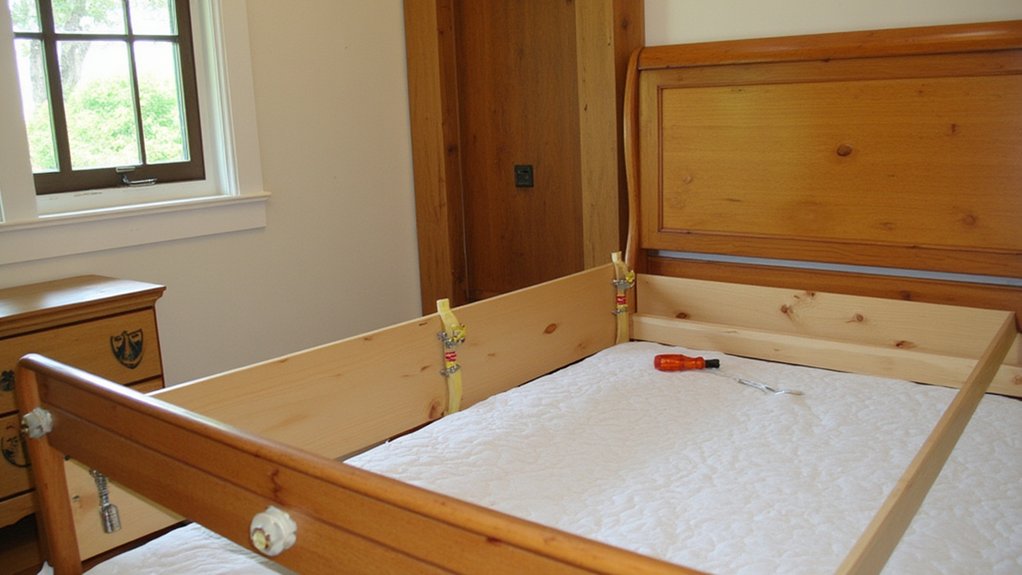
Just as fashion trends come and go, your bed’s footboard doesn’t have to be a permanent fixture. You’ll find that removing a footboard is often a straightforward process that can transform your bedroom’s look and functionality. According to interior designer Sarah Chen, “A footboard-free bed creates visual space and better accommodates taller sleepers.” Before you grab your tools, though, you’ll want to understand the key factors that guarantee a safe removal and stable bed frame.
Common Reasons to Remove a Bed Footboard
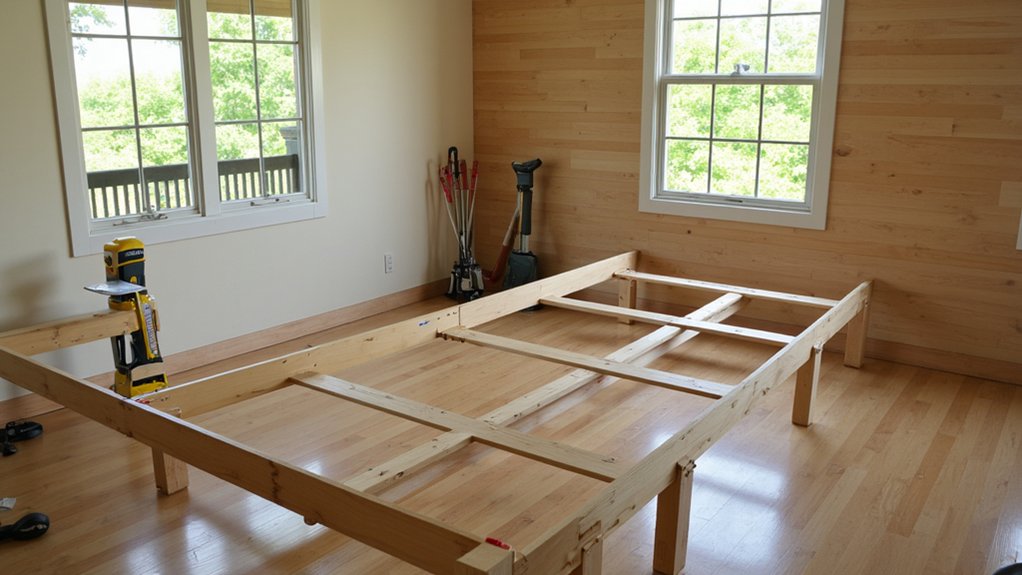
While footboards can add a decorative touch to your bed frame, there are several practical reasons you might want to remove one.
Common reasons include:
- Your aesthetic preferences have changed, and you’d like a more modern, minimalist look
- You need space optimization in a smaller bedroom (removing a footboard can free up 4-6 inches)
- The footboard interferes with viewing TV from bed
- You’re tall and need extra length for your feet
- Your bedding gets caught on the footboard when making the bed
“Footboards are purely decorative elements that aren’t structurally necessary,” explains furniture designer Mark Thompson. “Many homeowners remove them to create a more open feel or accommodate specific room layouts.” You’ll also find that cleaning and changing sheets becomes easier without a footboard in the way.
Tools and Materials Needed
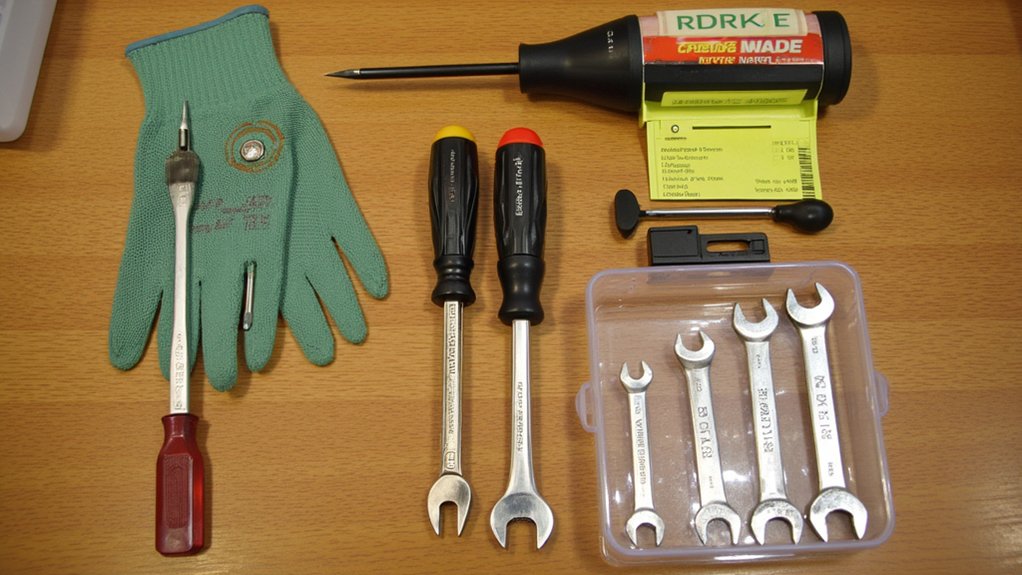
Before you start removing your footboard, gathering the right tools and materials will make the job straightforward.
Essential Tools:
- Phillips head screwdriver
- Flathead screwdriver
- Socket wrench set
- Adjustable wrench
- Work gloves
- Storage container for hardware
Optional Materials:
- Power drill with screwdriver bits
- Furniture blanket for protection
- Helper for heavy bed frame materials
“Different bed frame materials require specific tools,” explains furniture restorer Mark Jenkins. “Metal frames typically need wrenches, while wooden frames mainly require screwdrivers.” You’ll want to match your screwdriver types to your bed’s hardware – most modern beds use Phillips head screws, but older frames might have flathead screws or specialty fasteners. Keep all removed pieces in a labeled container for future reassembly.
Steps to Safely Remove Your Footboard
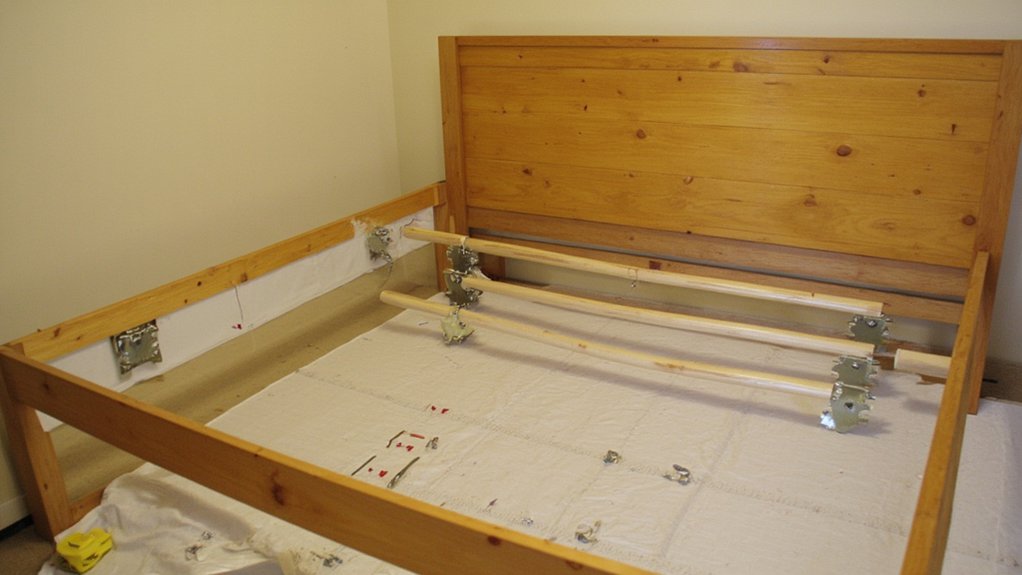
Removing your footboard requires a systematic approach to prevent damage to the bed frame and assure safety.
- Clear the area around your bed and remove all bedding
- Take proper safety precautions by wearing work gloves
- Locate the connecting bolts between footboard and side rails
- Inspect the mattress support system to ascertain stability after removal
- Unscrew the mounting bolts using your socket wrench (counterclockwise)
- Have a helper hold the footboard while you remove the final bolts
- Carefully lift the footboard away from the frame
- Store mounting hardware in a labeled plastic bag
- Check side rails and posts for stability
- Test the mattress support by pressing firmly on different areas
“Always inspect mounting points for wear and replace any stripped hardware before reassembly,” advises furniture restoration expert Mark Thompson.
Storing Your Removed Footboard
Proper storage of your footboard requires three key elements: adequate space, protective materials, and careful positioning.
Consider these storage options for your removed footboard:
- Under the bed (if you have 12+ inches of clearance)
- Against a wall in your garage or basement
- In a climate-controlled storage unit
To guarantee proper footboard protection:
- Wrap the entire piece in moving blankets or bubble wrap
- Secure the wrapping with packing tape
- Store vertically to minimize space usage
- Keep away from direct sunlight and moisture
“Always place foam corner protectors on exposed edges to prevent damage during storage,” advises furniture restoration expert Mark Thompson. If you’re storing in an unheated space, add a layer of plastic wrapping to guard against humidity changes.
Place a label with “fragile” and “this side up” arrows to prevent mishandling.
Alternative Bed End Solutions
Once you’ve removed your footboard, you’ll find several stylish and functional alternatives to finish the end of your bed:
- Upholstered bench – Place a padded storage bench at the foot of your bed for extra seating and storage
- Decorative screen – Install a folding room divider for visual interest and privacy
- Storage ottoman – Add a tufted ottoman that opens for blanket storage
- Low bookshelf – Position a horizontal bookcase for both display and organization
Interior designer Sarah Chen notes, “Space saving designs are essential in modern bedrooms. Alternative footboard styles like multi-purpose furniture maximize your room’s functionality.”
For a minimalist approach, you can:
- Leave the end open for a contemporary look
- Layer decorative pillows against the mattress
- Drape a textured throw blanket across the foot
- Add a simple bed runner
Maintaining Bed Stability Without a Footboard
After you take off your footboard, keeping your bed stable requires a few key adjustments to prevent shifting and sagging.
To maintain proper bed structure:
- Place heavy-duty rubber grips under each bed leg
- Install corner brackets to secure the side rails
- Add a center support beam for beds wider than queen size
“Weight distribution becomes critical without a footboard’s stabilizing effect,” says furniture expert Mark Reynolds. “You’ll need to guarantee even support across the entire frame.”
Additional stability measures:
- Check and tighten all frame bolts monthly
- Position the bed against a solid wall
- Install bed frame straps between the mattress and box spring
- Add corner braces if you notice any wobbling
These modifications will help maintain your bed’s integrity while enjoying the benefits of an open footboard-free design.
Design Tips for a Footboard-Free Bedroom
Consider these design strategies:
- Position your bed against a feature wall with compelling artwork above
- Layer textural elements like throws and pillows at the foot of the bed
- Add a decorative bench or storage ottoman to anchor the bed’s end
- Install wall sconces to draw the eye upward
The open space at your bed’s foot allows for:
- Better traffic flow around the bed
- Easier bed-making and linen changes
- More flexibility with furniture placement
- A cleaner, more contemporary look
Frequently Asked Questions
Will Removing the Footboard Void My Bed’s Warranty?
You’ll need to check your specific warranty conditions, as some manufacturers consider bed modifications like footboard removal a violation, while others allow it without voiding the warranty’s coverage.
Can I Reattach the Footboard Later if I Change My Mind?
You’ll have multiple footboard options when you want to reattach it. As long as you’ve kept the original hardware and mounting points intact, the reattachment process should be straightforward and reversible.
Does Removing the Footboard Affect the Bed’s Resale Value?
Beauty’s in the eye of the beholder, but you’ll find it won’t greatly impact resale value. Today’s resale trends show many buyers prefer both options, so your bed’s worth stays relatively stable.
Should I Remove Both the Headboard and Footboard Together?
You don’t need to remove both pieces together. Keep the headboard for bed aesthetics and back support, while removing just the footboard can give you more functional benefits and space.
Are There Any Building Codes That Require Beds to Have Footboards?
You won’t find any building codes or safety regulations that require footboards on beds. Bed design standards focus on structural integrity and mattress support rather than mandating footboard installation.
