
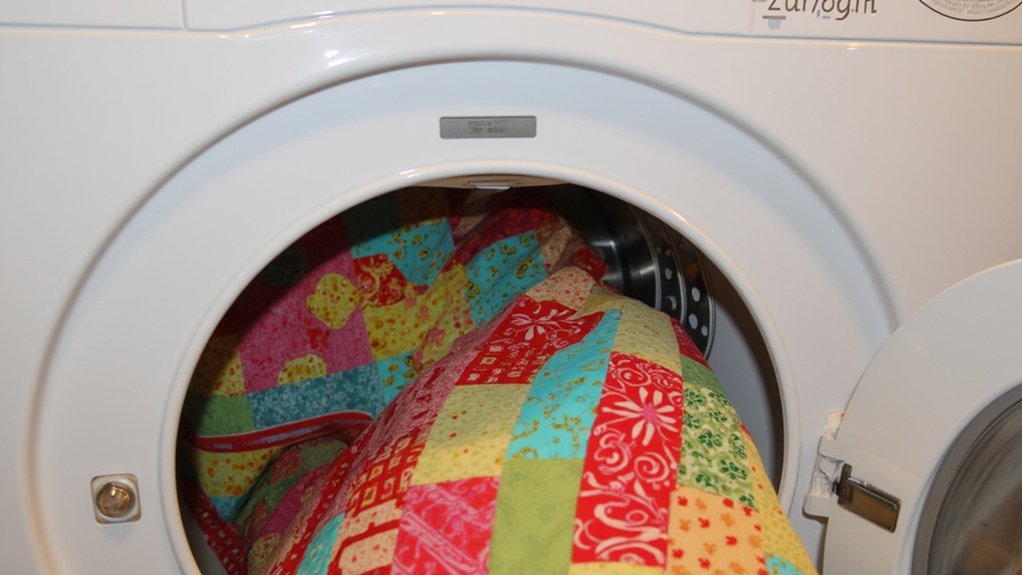
If you’ve just finished washing your cherished quilt, you might be tempted to toss it in the dryer for quick results. However, this common household decision requires careful consideration of your quilt’s materials, age, and construction. While some quilts can withstand machine drying, others may suffer permanent damage from the heat and tumbling action. Understanding the specific care requirements for your type of quilt will help you protect your investment and preserve its beauty for years to come.
Understanding Different Types of Quilts and Their Care Requirements

Quilts come in several distinct varieties, each requiring specific care based on their materials, construction method, and intended use.
When caring for your quilt, you’ll need to evaluate these main types:
- Cotton quilts: Machine-washable and most dryer-friendly
- Wool quilts: Often require dry cleaning or gentle hand washing
- Art quilts: Usually feature delicate embellishments needing special care
- Antique quilts: Need expert preservation methods
The quilt materials will determine your care approach. According to textile conservator Lisa Thompson, “Always check the care instructions tag first, as modern quilts often combine different fabrics and batting types.” You’ll find that contemporary machine-made quilts typically allow for standard washing, while hand-stitched or heirloom pieces may need professional cleaning to maintain their integrity.
Risks of Machine Drying Your Quilt
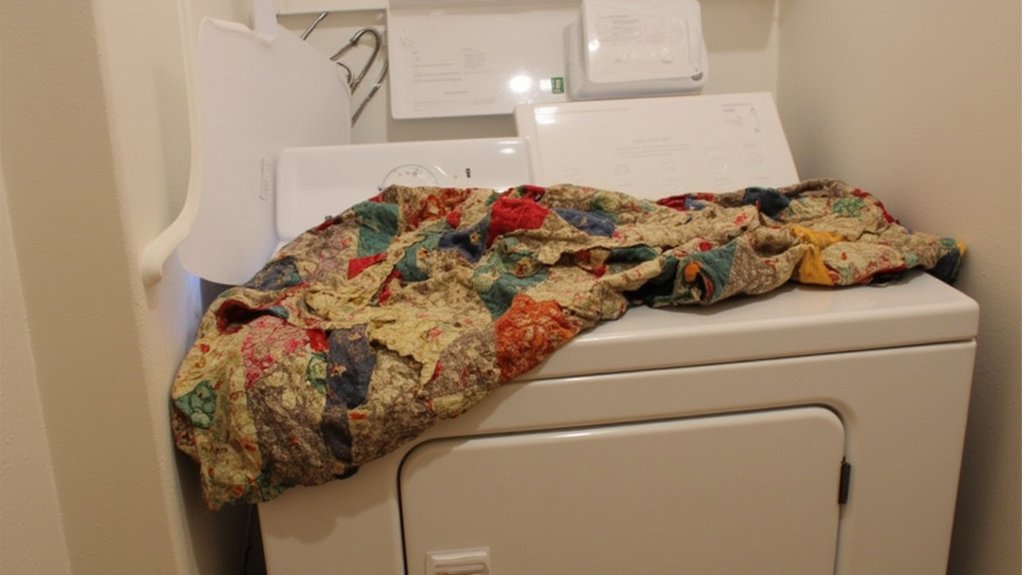
While standard dryers offer convenience, machine drying can pose several risks to your cherished quilts if not done correctly. During the drying process, your quilt might experience:
- Fiber damage from excessive heat
- Uneven shrinkage of batting and fabric
- Color bleeding or fading
- Weakening of stitches and seams
- Clumping or shifting of batting
“High heat and aggressive tumbling can permanently damage delicate quilt work,” says textile conservator Sarah Mitchell. Proper quilt care requires understanding these risks before choosing your drying techniques.
The most common problems occur when you:
- Use high temperature settings
- Overload the dryer
- Don’t remove the quilt while still slightly damp
- Allow the quilt to bunch up during tumbling
- Skip checking the care label’s specific instructions
Safe Methods for Drying Quilts
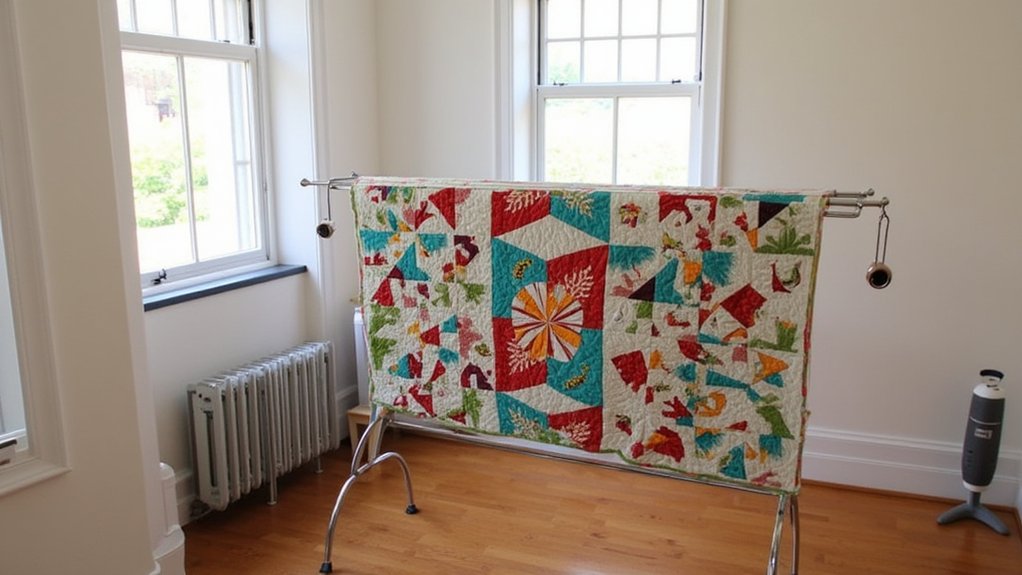
Given the potential risks of machine drying, you’ll want to focus on gentler methods to preserve your quilt’s beauty and durability. Professional quilter Sarah Thompson recommends these proven air drying techniques:
Method 1: Flat Drying
- Lay your quilt on a clean bed or table
- Guarantee even weight distribution
- Rotate every 6-8 hours for uniform drying
- Allow 24-48 hours for complete drying
Method 2: Line Drying
- Use multiple clotheslines for support
- Space lines 2 feet apart
- Drape quilt in accordion style
- Avoid direct sunlight
Method 3: Drying Rack
- Place quilt over a sturdy rack
- Position in a well-ventilated area
- Flip every 4-6 hours
- Use fans to improve circulation
Remember: Proper quilt care includes patient drying – rushing the process can lead to damage.
Best Practices for Machine Drying When Necessary
Although air drying remains the safest option, you’ll occasionally need to machine dry your quilt due to time constraints or weather conditions. When machine drying is necessary, follow these essential quilt care guidelines:
- Use the lowest heat setting or “delicate” cycle
- Add clean tennis balls or dryer balls to maintain even distribution
- Check every 20 minutes to prevent over-drying
- Remove while slightly damp to prevent fabric damage
“Never dry quilts on high heat, as this can weaken fibers and damage stitching,” advises textile conservator Sarah Mitchell. For best results, adjust your dryer settings to tumble dry low and avoid using fabric softener sheets, which can leave residue. If your quilt is particularly delicate or valuable, consider breaking up the drying process into multiple short cycles with cool-down periods in between.
Signs Your Quilt Should Never Go in the Dryer
Certain quilts demand extra caution and should never see the inside of your dryer, regardless of temperature settings or careful monitoring. Here are the key signs your quilt needs alternative drying methods:
- Delicate quilt materials like silk, wool, or vintage fabrics that can easily shrink or warp
- Hand-stitched quilts with intricate embroidery or beadwork
- Heirloom quilts over 25 years old
- Quilts with uneven dye patterns or bleeding colors
- Pieces containing metallic threads or decorative elements
“Any quilt showing signs of fragility or containing specialty materials should be air-dried flat on a clean surface,” advises textile conservator Sarah Mitchell. For these sensitive items, consider drying alternatives like:
- Laying flat on a clean sheet outdoors
- Using multiple drying racks
- Hanging over multiple clotheslines to distribute weight
Maintaining Your Quilt’s Quality Long-Term
While proper drying techniques matter greatly, you’ll need a thorough care routine to keep your quilt looking beautiful for years to come. Following essential quilt preservation techniques will protect your investment and maintain its integrity.
Store your quilt flat in a breathable cotton bag, away from direct sunlight and moisture. Professional quilter Sarah Thompson advises, “Rotate your stored quilts every three months to prevent permanent creasing.”
Key fabric care guidelines to follow:
- Vacuum your quilt gently every 2-3 months using low suction
- Spot clean stains immediately with a mild detergent solution
- Air out your quilt outdoors for 2-3 hours quarterly
- Keep pets away from quilted surfaces
- Wash only when visibly soiled, using proper techniques
- Maintain consistent room temperature and humidity levels where stored
Frequently Asked Questions
Can I Dry Multiple Quilts in the Dryer at the Same Time?
Like a bird needs space to spread its wings, your quilts need room to tumble. You shouldn’t dry multiple quilts together, as proper dryer capacity guarantees each quilt drying cycle is effective.
How Long Should I Wait Before Folding a Quilt After Drying?
Let your quilt cool completely for 15-30 minutes after drying. This essential quilt folding tip prevents wrinkles and guarantees proper shape retention when you’re storing your freshly dried blanket.
Does the Detergent Type Affect How a Quilt Dries in Machines?
Using harsh detergents causes 40% more wear on quilts. You’ll get better drying efficiency with gentle, liquid detergents that rinse clean and don’t leave residue to weigh down fabric fibers.
Should I Use Dryer Balls Specifically Designed for Quilts?
Regular wool or plastic dryer balls work perfectly for quilt care – you don’t need specialized ones. They’ll help with your drying techniques by reducing static, softening fabric, and preventing clumping while drying.
Can Outdoor Sun Drying Fade My Quilt’s Colors More Than Machine Drying?
Direct sun exposure can fade your quilt’s colors faster than machine drying. For better color preservation, dry your quilt in the shade or hang it inside away from direct sunlight.
