
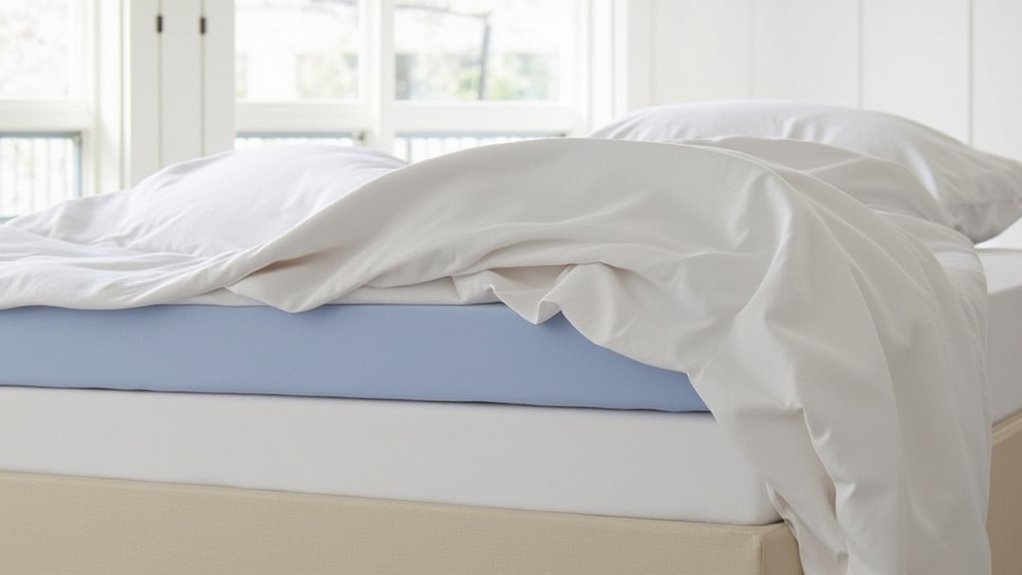
When setting up your bed with a mattress topper, you’ll want to get the layering sequence right for maximum comfort and protection. While you might think the topper goes directly against your skin, experts recommend placing a fitted sheet over both your mattress and topper. “The proper layering creates a barrier that extends the life of your sleep surface,” says sleep specialist Dr. Sarah Chen. Let’s explore the essential steps and common pitfalls of bedding arrangement.
The Correct Order of Bedding Layers
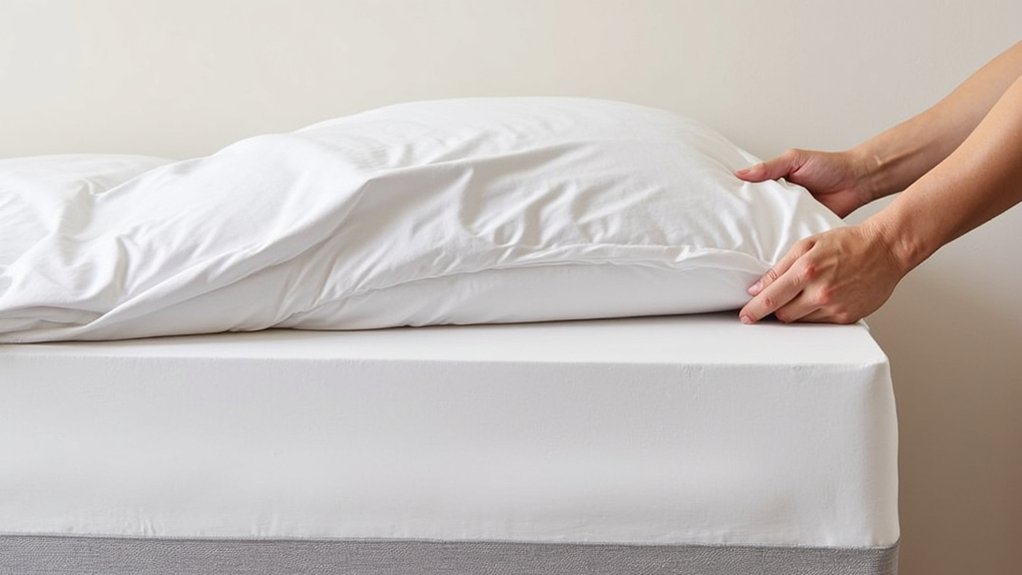
When setting up your bed with a mattress topper, it’s essential to layer the bedding components in the correct order for maximum comfort and functionality. Follow this sequence for ideal bedding organization:
- Start with your mattress as the base
- Place the mattress protector (if using one)
- Position your mattress topper
- Add the fitted sheet over both topper and mattress
“The fitted sheet should fully encase both your mattress and topper to prevent shifting during sleep,” explains sleep specialist Dr. Sarah Chen. This proper layering guarantees ideal sleeping comfort and extends the life of your bedding components.
Remember to:
- Secure all corners tightly
- Smooth out any wrinkles
- Check that the topper isn’t bunched up
- Use deep-pocket fitted sheets if your combined mattress and topper height exceeds 14 inches
Benefits of Putting a Fitted Sheet Over Your Mattress Topper
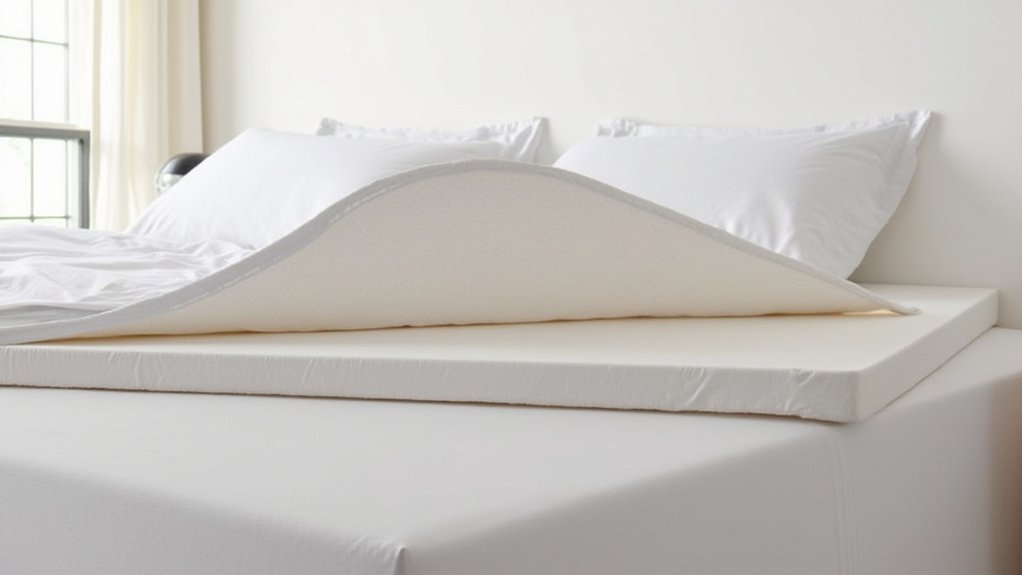
Placing a fitted sheet over your mattress topper provides multiple practical benefits that enhance both comfort and longevity. “A properly fitted sheet creates a protective barrier between you and your mattress topper, while keeping everything securely in place,” notes bedding expert Mark Thompson of the Sleep Products Association.
Key Benefits:
- Comfort enhancement through reduced shifting and bunching
- Hygiene protection from sweat, dust, and skin cells
- Extended topper lifespan by preventing direct wear
- Easier cleaning and maintenance of your bedding
Your fitted sheet acts as a vital layer that’ll keep your mattress topper clean and in position throughout the night. You’ll notice improved comfort since the sheet prevents direct contact with the topper material while maintaining the topper’s pressure-relieving properties.
How to Choose the Right Fitted Sheet Size
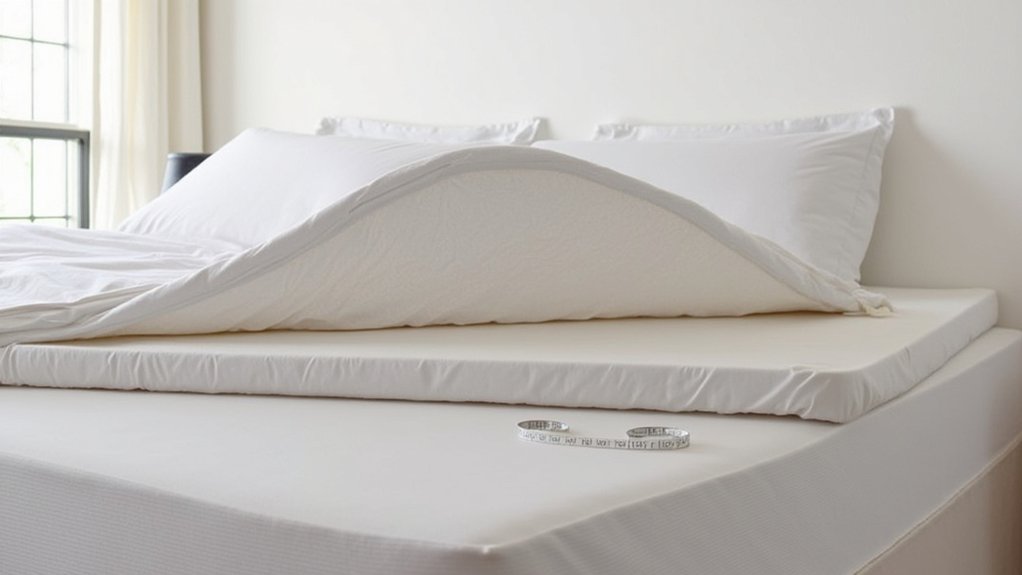
Selecting the right fitted sheet size requires careful measurement of both your mattress and mattress topper combined. “The total height of your mattress plus topper will determine the pocket depth you need,” explains Jennifer Chen, textile specialist at Better Sleep Labs.
To find the correct fitted sheet dimensions:
- Measure mattress width and length
- Add mattress topper thickness to mattress height
- Add 2-3 inches for tucking allowance
Standard pocket depths:
- Standard: 7-14 inches
- Deep: 15-18 inches
- Extra Deep: 19-22 inches
“If your combined height exceeds 16 inches, always opt for deep pocket sheets,” advises Chen. “And don’t forget to check the elastic quality – it should grip firmly around all corners without slipping.”
Common Mistakes When Layering Bedding
Even with the right fitted sheet size, many homeowners make several common layering mistakes that lead to bunching and slipping. “The order and technique of layering your bedding components can make or break your sleep setup,” notes bedding expert Marcus Wong of Sleep Solutions Institute.
Common mistakes to avoid:
- Putting the mattress protector over the topper instead of underneath
- Not accounting for total bedding thickness when selecting sheet depth
- Skipping the sheet-tucking process between the mattress and topper
- Using incorrect layering techniques that create air pockets
- Failing to secure all four corners properly
- Adding too many layers, which reduces sheet grip
- Not smoothing out wrinkles between each layer
- Using sheets with inadequate pocket depth for your combined mattress and topper height
Tips for Keeping Your Mattress Topper in Place
While many people struggle with sliding mattress toppers, you’ll find several proven methods to keep your topper securely in place throughout the night. “The key is creating friction between layers while maintaining proper alignment,” explains sleep specialist Dr. Sarah Chen.
To guarantee peak mattress topper stability:
- Use non-slip grip pads between your mattress and topper
- Secure all four corners with sheet straps or elastic bands
- Choose fitted sheets with deep pockets (at least 16 inches)
- Place mattress encasement covers over both pieces
Consider your bedding material choices carefully:
- Cotton sheets provide natural grip
- Stretchy jersey materials help prevent bunching
- Avoid silk or satin sheets, which reduce friction
- Select mattress toppers with non-slip bottom surfaces
Best Practices for Mattress Topper Care and Maintenance
Now that you’ve secured your mattress topper properly, maintaining it will guarantee years of comfortable sleep and peak performance. “Regular care of your mattress topper can extend its lifespan by 30-50%,” notes bedding expert James Martinez from the Sleep Research Institute.
To maximize your mattress topper lifespan, follow these essential care steps:
- Rotate your topper every 3 months to prevent uneven wear
- Spot clean spills immediately with mild soap and warm water
- Vacuum the surface monthly to remove dust and allergens
- Air out your topper for 2-3 hours every season in indirect sunlight
When cleaning mattress toppers, remember:
- Never machine wash memory foam toppers
- Use gentle, unscented cleaners only
- Allow 24 hours for complete drying
- Keep room ventilated during cleaning
Frequently Asked Questions
Can I Use Multiple Mattress Toppers Stacked on Top of Each Other?
Like building a wobbly sandwich, stacking multiple mattress toppers isn’t recommended. You’ll compromise mattress firmness and sleep comfort, as layers can shift and create uneven support during the night.
How Often Should I Rotate My Mattress Topper to Prevent Uneven Wear?
You should rotate your mattress topper every 3-4 months for proper mattress maintenance. Flipping it helps prevent wear patterns and extends its life by distributing your body weight evenly.
Will Using a Fitted Sheet Affect the Cooling Properties of Gel Toppers?
Your fitted sheet can slightly reduce the cooling technology’s effectiveness, but high-quality sheets won’t greatly impact mattress breathability. If you’re concerned, choose lightweight, breathable sheets made from natural fibers.
Can I Put an Electric Blanket Between the Topper and Fitted Sheet?
Picture your cozy bed setup – you shouldn’t place your electric blanket between the topper and fitted sheet. For proper electric blanket safety and ideal mattress topper placement, always lay the blanket on top.
Should I Air Out My Mattress Topper Before Adding Sheets and Covers?
Yes, you’ll want to air out your mattress topper for proper hygiene. Let it breathe for 24-48 hours after unpacking, and maintain this topper maintenance routine every few months while changing sheets.
