
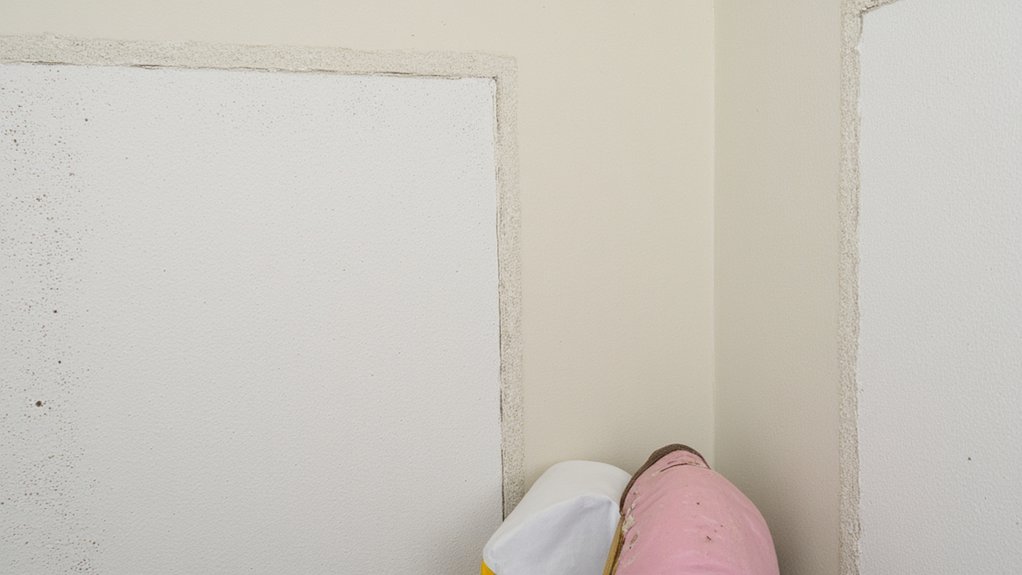
Just when you’re ready to sand your drywall project, you’ll discover that timing is everything. You’ve got different drying windows to take into account: 24-48 hours for all-purpose compound, 12-24 hours for lightweight varieties, and as little as 20 minutes for quick-setting mud. While these guidelines seem straightforward, several significant factors can dramatically affect your wait time – and getting it wrong could mean starting over from scratch.
Understanding Drywall Mud Types and Their Drying Times
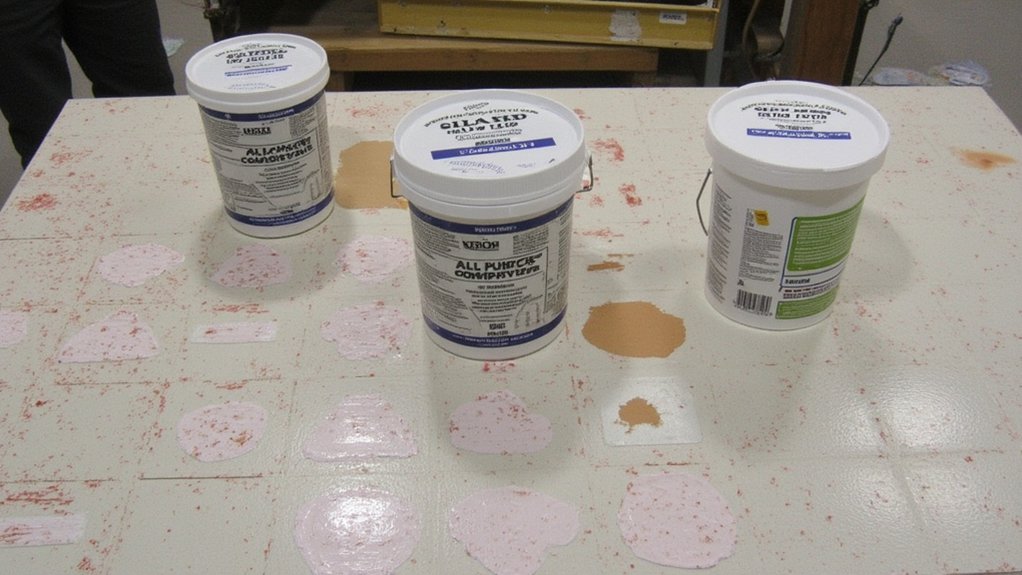
When you’re working with drywall mud, knowing the different types and their drying times is essential for achieving professional-quality results.
Common drywall mud types include:
- All-purpose compound (24-48 hours to dry)
- Lightweight all-purpose (12-24 hours to dry)
- Quick-setting compound (20-60 minutes to dry)
- Topping compound (24 hours to dry)
“The drying time depends heavily on humidity, temperature, and ventilation conditions,” says Tom Wilson, a 20-year drywall contractor. You’ll know your mud is ready for sanding when it’s completely white with no dark spots visible. For best results:
- Keep room temperature between 50-70°F
- Use fans to circulate air
- Maintain moderate humidity levels
- Apply thin coats rather than thick ones
Test readiness by pressing your fingernail into an inconspicuous spot – it shouldn’t leave an indentation.
Environmental Factors That Affect Drying Time
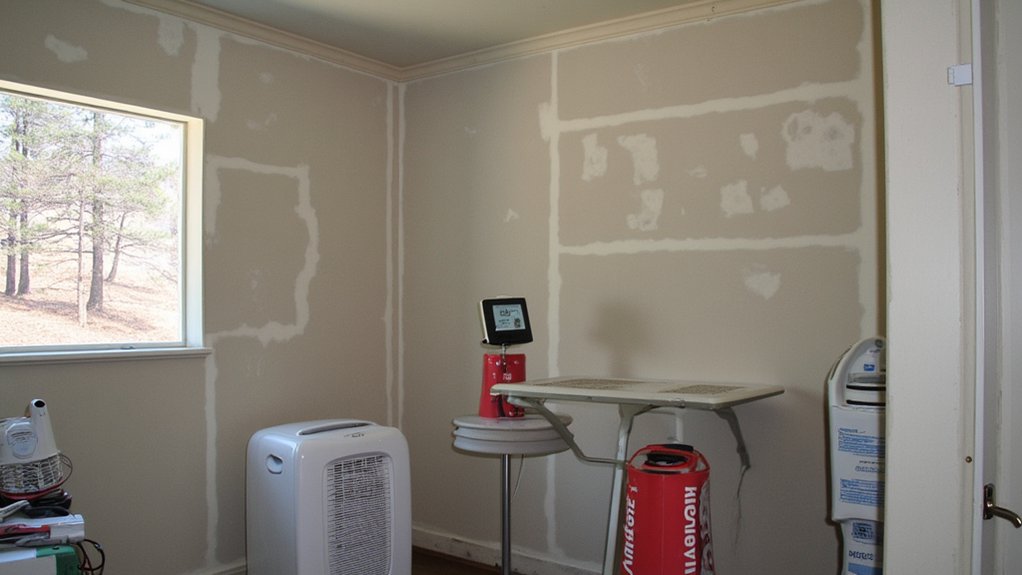
Several key environmental conditions directly impact how quickly your drywall mud will dry and cure properly.
Temperature: You’ll get the best drying results when your room stays between 70-80°F. Temperatures below 55°F will greatly slow the process, while those above 95°F may cause the mud to dry too quickly and crack.
Humidity: Keep relative humidity between 40-50% for ideal drying. High humidity above 60% extends drying time dramatically, while humidity below 30% can cause premature drying and surface issues.
Ventilation: Good airflow speeds up drying – use fans to circulate air, but don’t aim them directly at the wet mud. Open windows when possible, but avoid creating drafts that could cause uneven drying.
Seasonal Changes: You’ll need to adjust for seasonal moisture levels, as winter heating typically creates drier conditions than summer.
Signs Your Drywall Mud Is Ready for Sanding
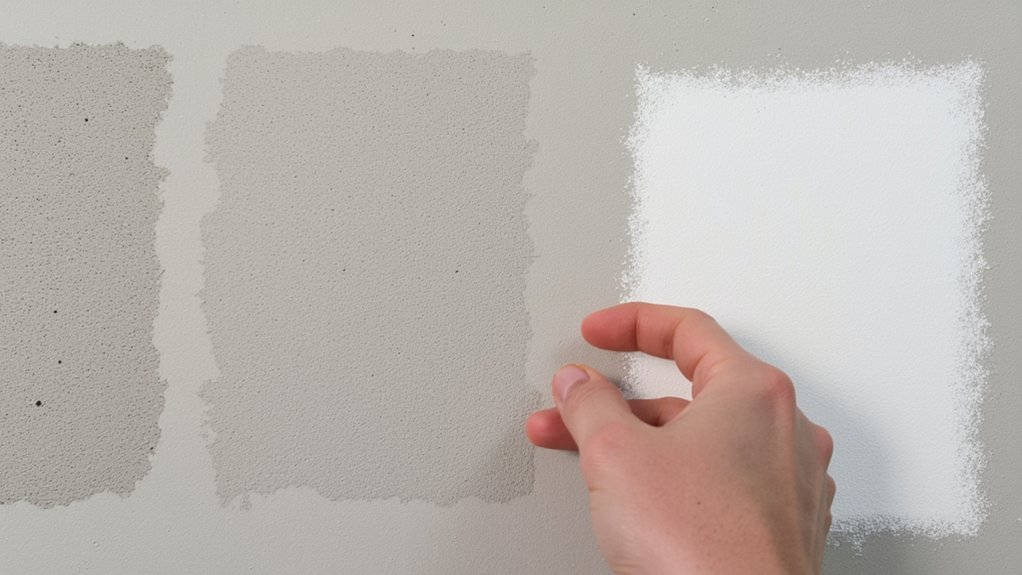
Before reaching for your sandpaper, you’ll need to verify that your drywall mud has completely dried through proper testing methods.
Here are the key indicators that your mud is ready:
- Color Change: The compound should appear uniformly lighter than when first applied, with no dark spots.
- Touch Test: Press firmly with your fingertip – the surface shouldn’t give or feel cool to the touch.
- Scrape Test: Gently scrape the edge with your fingernail. If it creates dust rather than leaving an indentation, it’s ready.
“A properly dried joint compound won.-t show any color variations and should feel room temperature,” explains Mike Thompson, a 20-year drywall professional. “If you’re unsure, wait an additional 24 hours – rushing this step will only create more work later.”
Common Mistakes to Avoid When Drying Mud
Many DIY enthusiasts make costly mistakes while waiting for their drywall mud to dry, even after following proper testing methods.
Common Pitfalls to Avoid:
- Don’t use fans directly on the mud – this creates uneven drying and surface cracks
- Avoid applying mud thicker than 1/8 inch per coat – thicker layers trap moisture
- Don’t sand too early – “Premature sanding ruins the entire finish,” warns contractor Mike Stevens
- Never skip temperature checks – mud won’t dry properly below 55°F
- Don’t rush between coats – wait at least 24 hours, regardless of surface appearance
Professional drywall expert Tom Wilson explains, “The biggest mistake I see is people trying to speed up drying with heat. This creates bubbles and weak spots that’ll show through paint.” Instead, maintain room temperature between 60-70°F and moderate humidity levels around 50%.
Tips to Speed Up the Drying Process Safely
While patience is essential when drying drywall mud, you can safely accelerate the process without compromising the finish quality. Here are proven methods to speed up drying:
- Run a dehumidifier in the room to pull moisture from the air
- Use fans to circulate air, positioning them at angles rather than directly on the mud
- Keep room temperature between 70-75°F using your HVAC system
- Open windows on dry days to promote airflow (avoid humid conditions)
- Apply thinner coats instead of thick layers
“You’ll get the best results using multiple thin coats rather than rushing with one thick application,” says Mike Thompson, a 20-year drywall contractor. Remember, don’t use heat guns or propane heaters, as they can cause cracking and create uneven drying patterns.
Best Practices for Multi-Coat Applications
Since proper layering is essential for a smooth finish, you’ll need to follow a systematic approach when applying multiple coats of drywall mud.
For your first coat, apply a thick layer to cover joints and screws, then wait 24 hours. “The initial coat needs complete drying to prevent cracking in subsequent layers,” explains contractor Mike Reynolds. Your second coat should be slightly thinner and extend 2-3 inches beyond the first coat’s edges.
Key timing guidelines:
- Base coat: 24-hour minimum dry time
- Second coat: 12-24 hours before next application
- Third (finish) coat: 24 hours before sanding
Remember to scrape away any ridges between coats. “Each layer should be smoother than the last,” notes Reynolds. “Don’t rush the process—proper drying between coats prevents bubbling and peeling.”
