
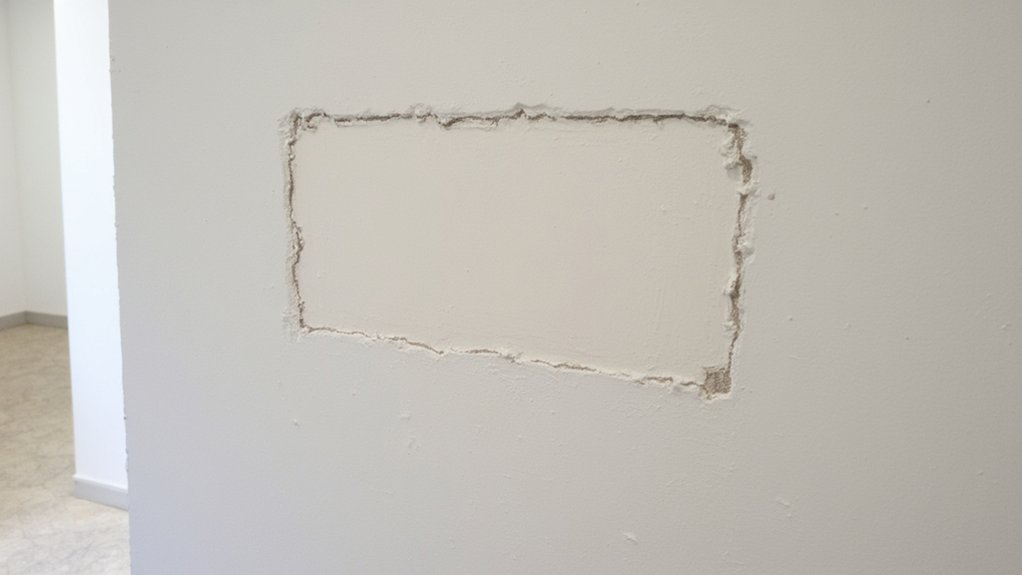
Studies show that over 80% of DIY painters struggle with visible drywall patches showing through their fresh paint job. You’re not alone if you’ve noticed those frustrating shadows and uneven spots where you’ve patched your walls. While paint flashing occurs primarily due to differences in surface texture and porosity, you’ll find several key factors that determine whether your patches blend seamlessly or stand out like a sore thumb. Understanding these elements will help transform your next paint project from amateur to professional-grade.
Understanding Paint Flashing and Surface Porosity
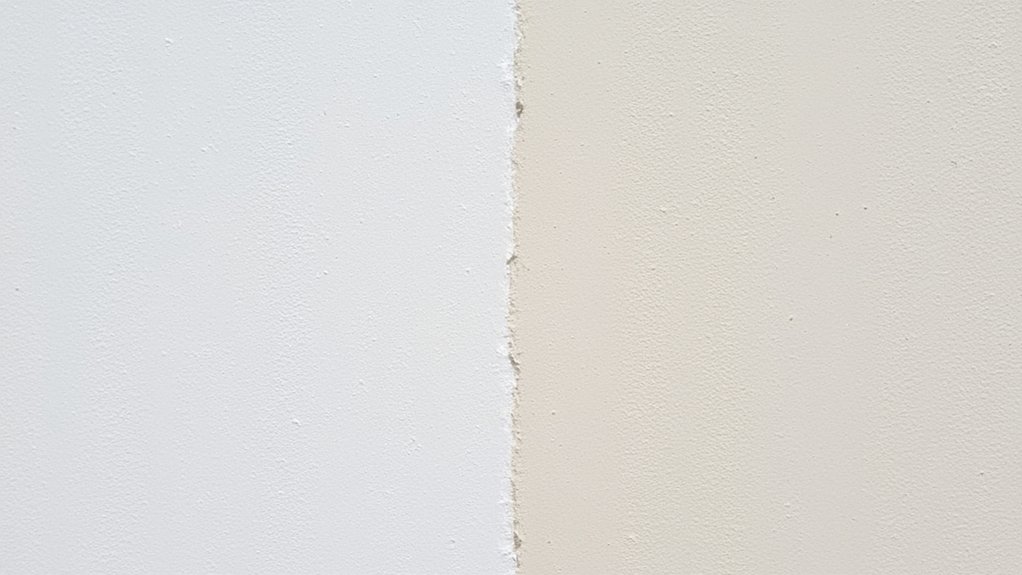
When you notice a drywall patch showing through your fresh paint, you’re likely dealing with a common issue called “paint flashing.” This occurs because your patched area has a different porosity level than the surrounding wall, causing light to reflect differently from the two surfaces.
Your drywall patch typically absorbs more paint than the surrounding area because:
- New joint compound is more porous than aged drywall
- Spackle and patching materials have different textures
- Surface variations create uneven paint absorption
“The key to preventing flashing is proper surface preparation and priming,” says Bob Vila, home improvement expert. You’ll need to prime any patched areas before painting to create a uniform surface. Different surfaces require specific primers:
- New drywall: PVA primer
- Patched areas: Oil-based primer
- Existing paint: Multi-surface primer
Common Causes of Visible Drywall Patches
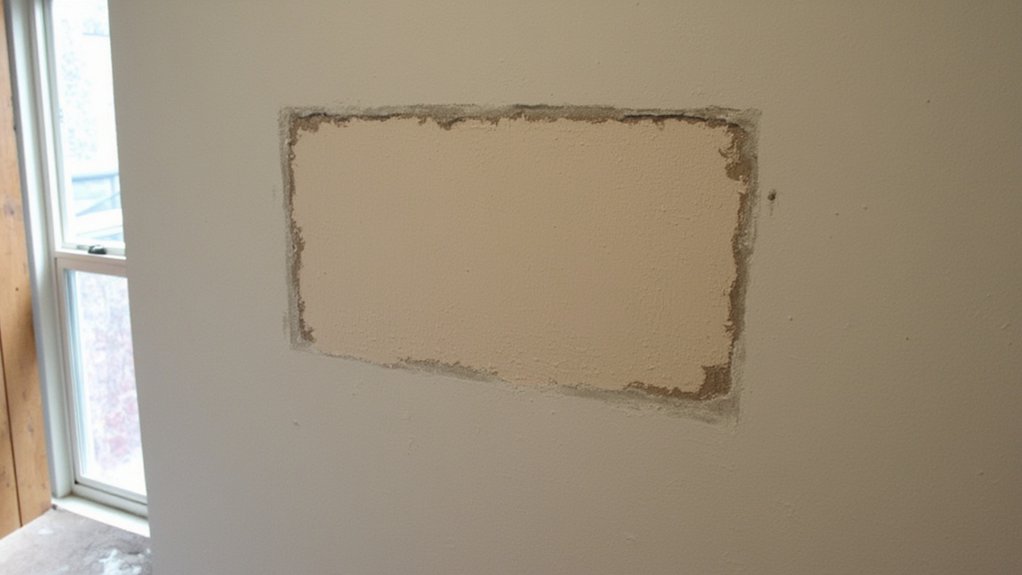
Beyond paint absorption issues, visible drywall patches can stem from several common installation and preparation mistakes. You’ll often notice patches showing through when:
- The joint compound wasn’t feathered out far enough (at least 12 inches from the patch edges)
- Multiple thin coats weren’t applied (you need 2-3 layers minimum)
- The surface wasn’t properly sanded between coats
- The patch material doesn’t match the surrounding texture
“Even slight variations in surface texture can create shadowing that becomes visible through paint,” explains Tom Martinez, a drywall contractor with 20 years’ experience. You might also see patches because:
- The wrong joint compound was used (all-purpose vs. lightweight)
- The patch area wasn’t properly primed
- The surrounding wall surface wasn’t cleaned before patching
Essential Surface Preparation Steps
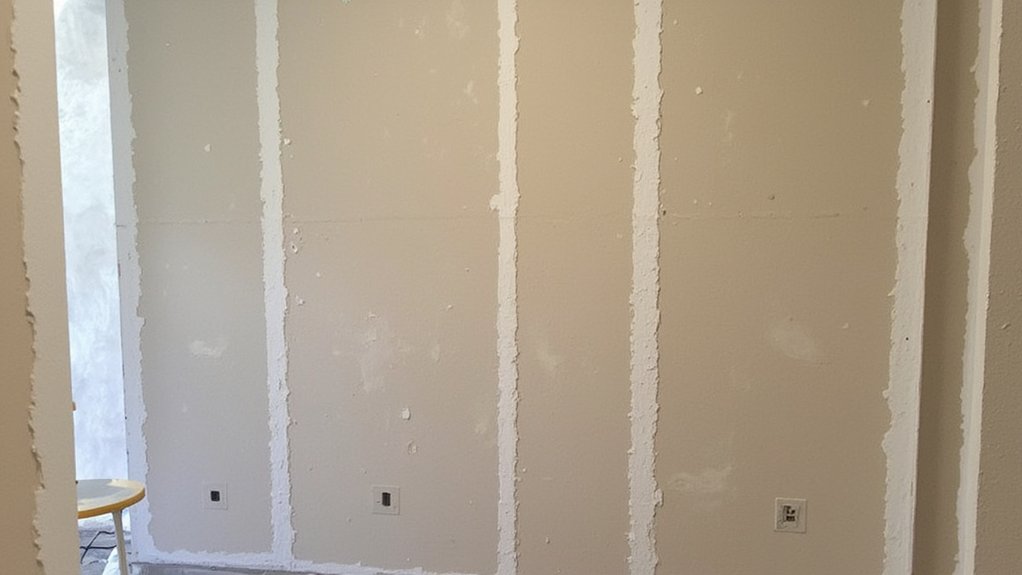
Proper surface preparation makes the critical difference between a visible patch and a flawless wall repair. Here’s what you’ll need to do:
- Clean the patched area thoroughly with a damp cloth to remove dust and debris
- Allow the surface to dry completely (typically 1-2 hours)
- Sand the patch with 120-grit sandpaper until smooth
- Wipe away sanding dust with a tack cloth
- Apply primer specifically designed for drywall
“The key is creating a consistent surface texture,” says John Martinez, professional painter. “You’ll want to feather the edges of your patch at least 2-3 inches beyond the repair area.”
After priming, check the surface under good lighting. Run your hand over the area – if you feel any roughness, sand lightly with 220-grit paper and clean again before painting.
Proper Priming Techniques for Seamless Results
The right priming technique builds on your careful surface preparation to guarantee a truly invisible patch. You’ll need to:
- Apply a high-quality drywall primer using a quality roller or brush
- Extend primer 2-3 inches beyond the patch edges
- Let each coat dry completely (typically 2-4 hours)
“A dedicated drywall primer seals the surface and creates uniform porosity between the patch and surrounding wall,” explains Mike Peterson, professional painter with 20 years’ experience.
For best results:
- Use thin, even coats rather than one thick layer
- Sand lightly between primer coats with 220-grit sandpaper
- Apply at least two primer coats, allowing proper drying time
- Check the surface in bright light for any remaining texture differences
Selecting the Right Paint and Tools
Selecting suitable paint and tools makes the critical difference between a visible patch and a flawless repair job.
Essential Tools:
- High-quality roller with 3/8-inch nap
- Premium angled paintbrush (2-3 inches)
- Paint tray and liners
Paint Selection:
- Choose the exact sheen as surrounding walls
- Use premium paint with good coverage (minimum 400 sq ft/gallon)
- Select paint with built-in primer for extra hiding power
“The paint’s quality directly affects how well it conceals repairs,” says Mark Stevens, professional painter of 20 years. “Don’t skimp on materials – invest in paint rated for excellent coverage and durability.”
For best results, use:
- Flat finish for low-traffic areas
- Eggshell/satin for living spaces
- Semi-gloss for high-moisture rooms
Professional Tips for Patch Blending
Successfully blending a drywall patch requires specific techniques that professional painters have refined through years of experience.
Key Blending Steps:
- Feather your compound at least 12 inches beyond the patch edges
- Sand in circular motions with 150-grit sandpaper until smooth
- Apply primer in a W-pattern, extending 2 inches past the compound
- Let each coat dry completely (4-6 hours minimum)
“The secret is in the layering technique,” says Mike Turner, a 20-year painting contractor. “You’ll want to apply paint in thin, even coats using a 3/8-inch nap roller.”
Pro Tips:
- Match the existing wall’s texture perfectly
- Use the same paint sheen as surrounding area
- Roll from the outer edges toward the center
- Apply two finish coats minimum
Troubleshooting Existing Patch Problems
When visible patches appear through your paint job, you’ll need to identify the root cause before attempting repairs. Here are the main issues to check:
- Texture mismatch – Run your hand over the patch. If it feels smoother or rougher than surrounding areas, you’ll need to sand or add texture to match.
- Insufficient primer – “Without proper priming, the patch will have different porosity and sheen,” explains contractor Mike Davis.
- Paint thickness variation – Check if you applied enough coats. Most patches need 2-3 layers of paint.
- Poor mud application – Look for raised edges or divots around the patch perimeter.
- Incorrect paint sheen – Higher-gloss finishes make patches more noticeable.
To fix these issues, sand the area smooth, prime with a high-build primer, and repaint the entire wall section from corner to corner.
