
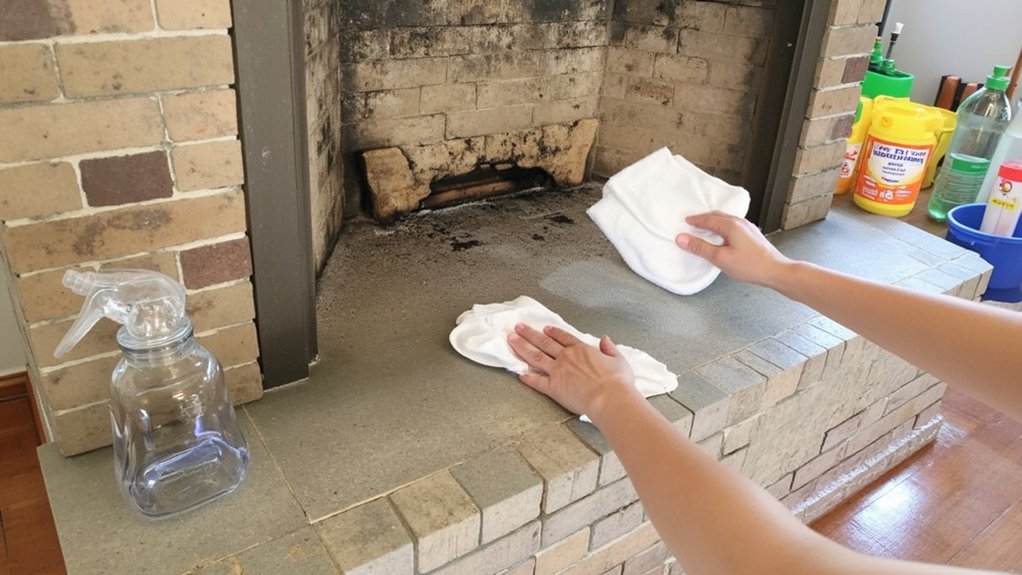
While soot removal might seem overwhelming, you don’t need expensive equipment or professional services to tackle this sooty situation effectively. The key lies in using the right tools and following a systematic approach that prevents spreading these stubborn black particles further into your home. Before you grab that regular sponge or start scrubbing, there’s a specific sequence of steps that’ll save you time, protect your surfaces, and guarantee you’re not just pushing the problem around.
Understanding Soot and Its Characteristics
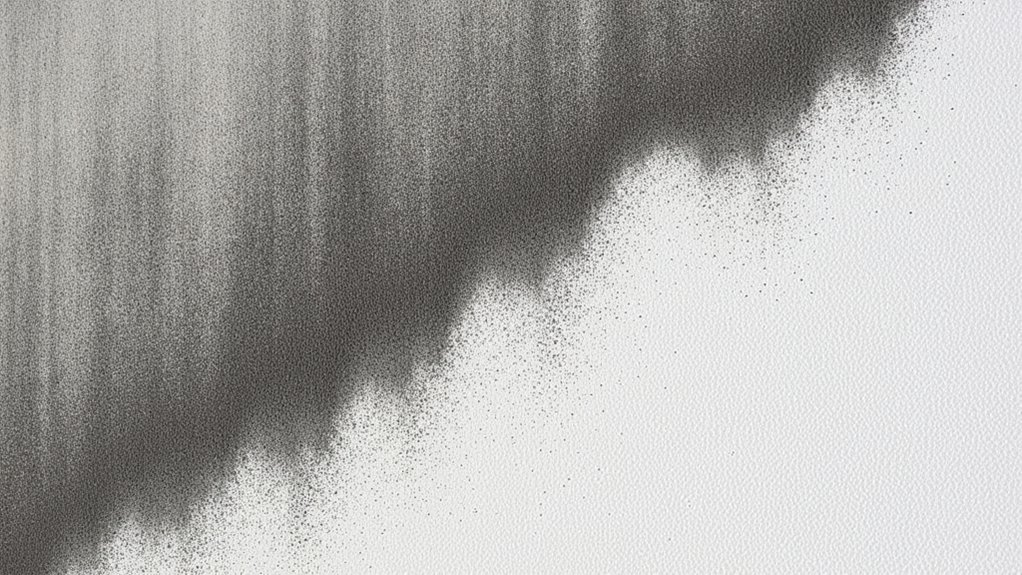
Soot, a black powdery substance formed by incomplete combustion, creates stubborn stains that can damage surfaces throughout your home. You’ll typically find it around fireplaces, candle holders, and areas affected by fire damage.
Key characteristics of soot include:
- Fine, oily particles that stick to surfaces
- Acidic composition that can etch materials
- Ability to spread easily when disturbed
When you’re dealing with soot, it is crucial to understand that it contains carbon particles and various chemicals. “Soot requires careful handling since aggressive cleaning can push particles deeper into porous surfaces,” explains restoration expert Mark Thompson.
Types of soot you might encounter:
- Dry soot (from paper and wood)
- Oily soot (from plastics and synthetics)
- Protein soot (from burning food)
Essential Safety Precautions Before Starting

Before tackling any soot cleanup project, you’ll need to take proper safety measures to protect yourself and prevent further damage. “The microscopic particles in soot can be harmful when inhaled or contacted directly with skin,” warns industrial hygienist Dr. Sarah Chen.
Essential Safety Equipment:
- N95 respirator mask
- Chemical-resistant gloves
- Long-sleeved clothing and pants
- Eye protection goggles
- Disposable shoe covers
Required Room Preparation:
- Open all windows for ventilation
- Turn off HVAC systems to prevent soot spread
- Cover unaffected surfaces with plastic sheeting
- Remove children and pets from the area
- Place wet towels under doors to contain particles
“Always test your safety equipment’s fit before starting and work in well-lit conditions,” advises Dr. Chen. “If the damage is extensive, consider calling professionals.”
Recommended Cleaning Tools and Materials
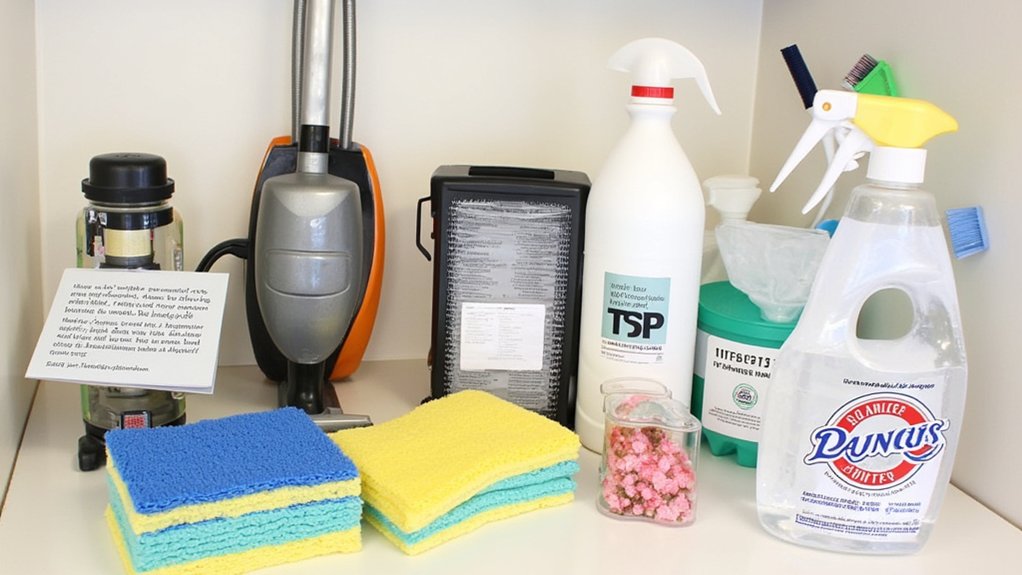
Proper cleaning supplies are essential for effectively removing soot damage while protecting your home’s surfaces. “Using the right tools can make the difference between successful restoration and permanent damage,” explains cleaning specialist Mark Rodriguez.
You’ll need:
- Chemical dry sponges (2-3 per room)
- Heavy-duty vacuum with HEPA filter
- White microfiber cloths
- Commercial soot cleaner
- Bucket of warm water
- Rubber gloves
- Protective goggles
- N95 mask
- Trisodium phosphate (TSP)
- Soft-bristled brush
“Don’t forget to have multiple sponges ready,” advises Rodriguez. “Soot cleaning requires frequent replacement of materials to avoid spreading the residue.” For larger jobs, you’ll also benefit from having:
- Drop cloths
- Degreasing solution
- Paint thinner
- Empty spray bottle
Step-by-Step Soot Removal Techniques
Following three essential steps will help you tackle soot removal systematically and prevent accidentally spreading the residue further.
1. Vacuum First
Use a HEPA vacuum with the brush attachment held 1/2 inch above the sooty surface. “Never press directly onto soot deposits, as this forces particles deeper into materials,” warns cleaning expert Sarah Chen.
2. Chemical Treatment
Apply a dry chemical sponge in straight, overlapping lines. Don’t scrub back and forth. When the sponge surface turns black, cut off the used portion.
3. Deep Clean
Mix 2 tablespoons of trisodium phosphate per gallon of warm water. Using a soft cloth, work from bottom to top in small 2×2 foot sections. “Always test cleaning solutions on an inconspicuous area first,” advises restoration specialist Mark Thompson.
Professional Methods for Stubborn Soot Stains
When stubborn soot stains persist after initial cleaning attempts, professional restoration specialists employ specialized techniques and commercial-grade products for complete removal. “Industrial-strength oxidizing agents and enzyme-based cleaners can break down even the most set-in soot damage,” explains certified restorer James Martinez.
Professional methods include:
- Chemical sponge cleaning with specialized rubber compounds
- Thermal fogging to neutralize odors and break down particles
- HEPA filtration systems to capture airborne soot
- Ultrasonic cleaning for delicate items
“For heavily damaged surfaces, we’ll use a two-step process combining alkaline pre-treatment and acidic neutralizers,” notes Martinez. You’ll need to let professionals handle these advanced treatments, as they require precise measurements and safety protocols. Most restoration companies complete deep soot removal within 24-48 hours, depending on damage severity.
Preventing Future Soot Buildup
To effectively prevent soot from accumulating in your home, you’ll need to implement several preventive maintenance steps throughout the year. “Regular chimney inspections and HVAC maintenance are vital safeguards against soot buildup,” says home safety expert Sarah Chen.
Key Prevention Steps:
- Schedule annual chimney cleaning and inspection
- Replace furnace filters every 60-90 days
- Install carbon monoxide detectors on each floor
- Keep fireplace damper closed when not in use
“Proper ventilation is important – make certain your kitchen exhaust fan vents outside and clean it monthly,” advises Chen. You’ll also want to:
- Trim candle wicks to 1/4 inch before lighting
- Use high-quality firewood with less than 20% moisture content
- Check weather stripping around doors and windows annually
- Clean or replace dryer vents every six months
When to Call a Professional Cleaner
While many soot problems can be tackled as DIY projects, certain situations demand professional expertise and specialized equipment. “Extensive soot damage covering more than 10 square feet requires professional assessment and remediation,” explains restoration specialist Mark Thompson.
Call a professional cleaner when you encounter:
- Soot damage from electrical fires
- Smoke residue throughout multiple rooms
- Discoloration on porous surfaces like drywall
- Soot inside your HVAC system
- Chemical-based fire extinguisher residue
“If you’re dealing with soot that’s been present for over 72 hours, you’ll need professional help,” says cleaning expert Sarah Chen. “The particles become more embedded over time, making removal increasingly difficult.” You’ll also want expert assistance if you’ve got valuable items like antiques or delicate fabrics affected by soot damage.
