
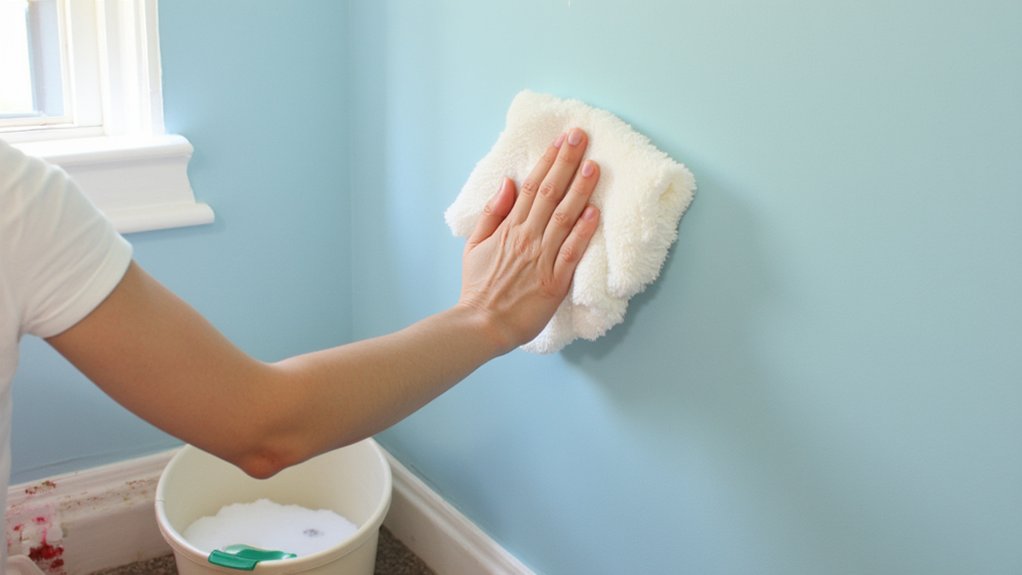
Whether you’re spring cleaning or tackling unsightly marks, washing painted walls requires the right approach to avoid damage. You’ll need to take into account your wall’s paint finish, choose appropriate cleaning solutions, and use proper techniques to maintain your home’s appearance. Professional house cleaners recommend starting with the gentlest method possible, as Sarah Miller, a 15-year cleaning expert, explains: “Different paint finishes require different cleaning methods – what works for glossy paint could ruin a matte finish.” Let’s explore how to safely clean your walls without compromising their beauty.
Understanding Different Paint Finishes
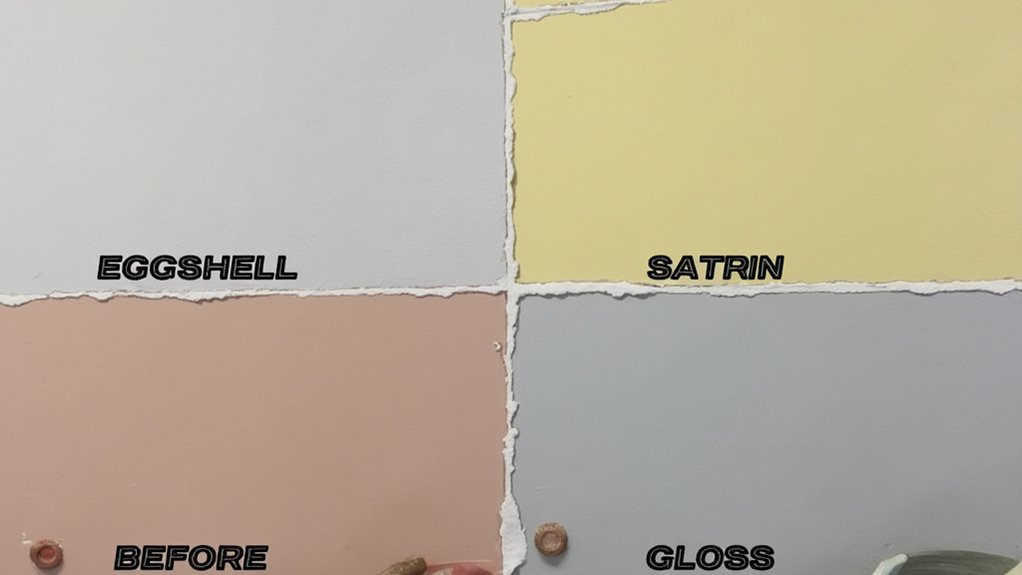
Before you begin cleaning your painted walls, it’s essential to identify the type of paint finish you’re working with since each requires different cleaning methods.
Here are the main paint finishes you’ll encounter:
- Flat/Matte: The most delicate finish that shows marks easily. “Flat finishes require the gentlest touch,” says interior specialist Sarah Chen.
- Eggshell/Satin: These mid-sheen finishes offer moderate durability and washability.
- Semi-gloss: Commonly used in kitchens and bathrooms, it’s highly washable and moisture-resistant.
- High-gloss: The most durable and easiest to clean, typically found on trim and doors.
You can identify your finish by looking at the wall’s sheen – flat has no shine, while high-gloss appears mirror-like. If you’re unsure, check a hidden spot near the baseboards where the original paint information might be written.
Essential Cleaning Supplies and Tools
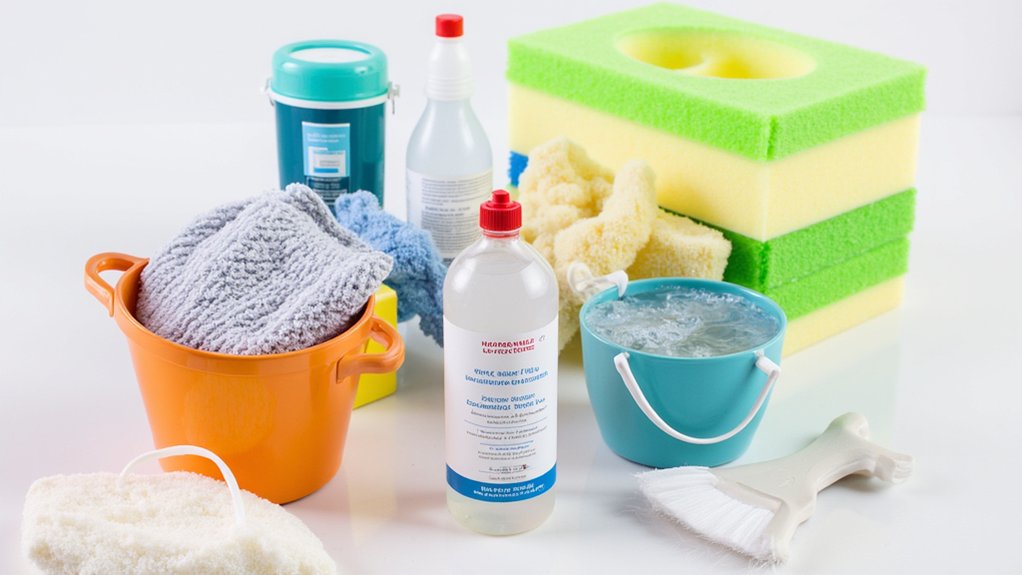
Now that you’ve identified your wall’s paint finish, you’ll need to gather the right cleaning supplies for a safe and effective wash.
Essential Items:
- Two buckets (one for cleaning solution, one for rinsing)
- Soft sponges or microfiber cloths
- White cleaning rags (avoid colored cloths that might transfer dye)
- Mild dish soap or all-purpose cleaner
- Extension pole with sponge attachment
- Drop cloths or old towels
- Step ladder or sturdy stool
- Protective gloves
- Spray bottle
“Always test your cleaning solution on an inconspicuous area first,” advises professional painter Mark Stevens. “The gentler your cleaning materials, the less risk you’ll have of damaging the paint finish.”
Optional but helpful:
- Long-handled duster
- Vacuum with brush attachment
- Rubber eraser for scuff marks
Pre-Cleaning Wall Preparation

Since proper preparation prevents poor results, you’ll need to protect your space and prepare the walls before diving into the actual cleaning process.
Before you start:
- Remove pictures, mirrors, and wall decorations
- Pull furniture away from walls (at least 3 feet)
- Cover floors with drop cloths or old sheets
- Put down towels along baseboards
Professional cleaner Sarah Martinez notes, “Always check for loose paint or wallpaper seams first – cleaning damaged areas can make them worse.”
Essential prep steps:
- Dust walls using a microfiber duster or vacuum with brush attachment
- Test cleaning solution on an inconspicuous spot
- Check wall surfaces for nail holes or damage
- Close windows to prevent dust from settling
- Turn off ceiling fans and HVAC temporarily
Gentle Cleaning Solutions for Regular Maintenance
While harsh chemicals can damage painted surfaces, you’ll find that most day-to-day wall cleaning needs only mild solutions. Here are three effective options you can make at home:
- Mix 1 tablespoon of white vinegar with 1 gallon of warm water
- Combine 2 tablespoons of gentle dish soap with 1 gallon of warm water
- Blend 1/4 cup of baking soda with 1 gallon of warm water
“These gentle solutions are safe for most paint finishes and won’t leave residue when properly rinsed,” says interior specialist Sarah Chen. Before using any solution, test it on a small, inconspicuous area first. You’ll want to avoid oversaturating the wall – wring out your cleaning cloth until it’s just damp. For best results, work from bottom to top to prevent drip marks and streaking.
Tackling Tough Stains and Marks
Regular cleaning solutions won’t always remove stubborn marks and set-in stains from your painted walls. For these tough spots, you’ll need specialized cleaning methods:
For Grease Stains:
- Mix 1 cup of white vinegar with 1 tablespoon of dish soap
- Dab gently with a microfiber cloth
- Wait 10 minutes, then wipe clean
For Crayon Marks:
- Apply baking soda paste (2 parts baking soda, 1 part water)
- Let sit for 5 minutes
- Wipe with damp cloth
For Scuff Marks:
“Use a melamine foam eraser, but test in an inconspicuous area first,” advises professional painter Mark Thompson. “Press lightly to avoid damaging the paint finish.”
Warning: Never use abrasive cleaners or scrub aggressively, as you’ll risk removing paint along with the stain.
Best Cleaning Techniques by Room
Different rooms in your home require unique wall-cleaning approaches based on their typical exposure to moisture, grease, and daily wear.
Kitchen Walls:
- Use degreasing solutions every 2-3 months
- Focus on areas near stove and sink
- Wipe in circular motions with microfiber cloth
Bathroom Walls:
- Clean monthly with mold-resistant cleaners
- Pay attention to areas above shower/tub
- Use squeegee after showers to prevent buildup
Bedroom/Living Room:
- Dust walls quarterly with extended duster
- Spot clean as needed with mild soap solution
- Test cleaners on hidden areas first
“High-traffic areas like hallways need attention every 4-6 weeks, while formal dining rooms can go 6 months between cleanings,” notes professional cleaner Sarah Martinez.
Common Mistakes to Avoid
Even though washing painted walls may seem straightforward, several common mistakes can damage your paint finish or leave unsightly marks behind.
Common Mistakes to Avoid:
- Using harsh scrubbing motions that can wear away paint
- Starting from the bottom up, which causes streaking
- Applying too much water or cleaning solution
- Skipping the spot-testing step on an inconspicuous area
- Using abrasive cleaning tools like scouring pads
“The biggest mistake I see is people rushing in with strong cleaners before testing them,” says interior painter Mark Stevens. “Always start with the gentlest solution possible.”
Don’t forget these critical errors:
- Neglecting to dust walls before washing
- Working on walls in direct sunlight
- Using hot water, which can damage certain finishes
- Failing to protect baseboards and flooring
Natural vs. Chemical Cleaning Methods
When choosing between natural and chemical cleaning solutions for your walls, you’ll want to weigh the benefits of each approach carefully.
Natural Options:
- White vinegar solution (1 cup vinegar per gallon of warm water)
- Baking soda paste (3 parts baking soda, 1 part water)
- Lemon juice mixture (½ cup lemon juice per gallon of water)
Chemical Options:
- All-purpose cleaners (follow manufacturer’s dilution ratios)
- TSP (trisodium phosphate) for heavy soil
- Commercial wall cleaners
“Natural solutions are gentler on paint and safer for households with children or pets,” says interior specialist Sarah Chen. However, chemical cleaners often work faster on tough stains. For best results, test your chosen solution on an inconspicuous area first. Chemical cleaners typically require better ventilation and protective gear, while natural solutions need minimal safety equipment.
Protecting Your Walls While Cleaning
Although cleaning walls can effectively remove dirt and grime, you’ll need proper techniques to avoid damaging the paint surface during the process. Here’s how to protect your walls:
- Test your cleaning solution on a small, hidden area first
- Don’t apply excessive pressure when scrubbing
- Keep water from pooling near baseboards and trim
- Use soft, lint-free cloths or sponges instead of abrasive materials
“The key is working from bottom to top to prevent drip marks and using gentle, circular motions,” says interior designer Sarah Martinez. You’ll want to:
- Support your cleaning hand with a dry cloth below
- Keep cleaning solutions away from electrical outlets
- Maintain proper ventilation while cleaning
- Allow walls to dry completely before replacing artwork
Tips for Maintaining Clean Walls Year-Round
Since regular maintenance prevents major cleaning projects down the road, you’ll want to establish good habits for keeping your walls pristine.
Quick Maintenance Tips:
- Dust walls monthly with a microfiber duster or soft cloth
- Vacuum baseboards every two weeks
- Wipe light switches and door frames weekly
- Address marks and scuffs immediately with a magic eraser
Preventive Measures:
- Install washable wallplates around switches
- Place furniture at least 2 inches from walls
- Use draft stoppers to prevent dust accumulation
- Apply clear caulk where walls meet trim
“Regular spot-cleaning and dusting can extend the life of your paint job by 2-3 years,” notes interior designer Sarah Matthews. Keep cleaning supplies readily available in a caddy, and schedule quarterly wall inspections to catch any developing issues.
