
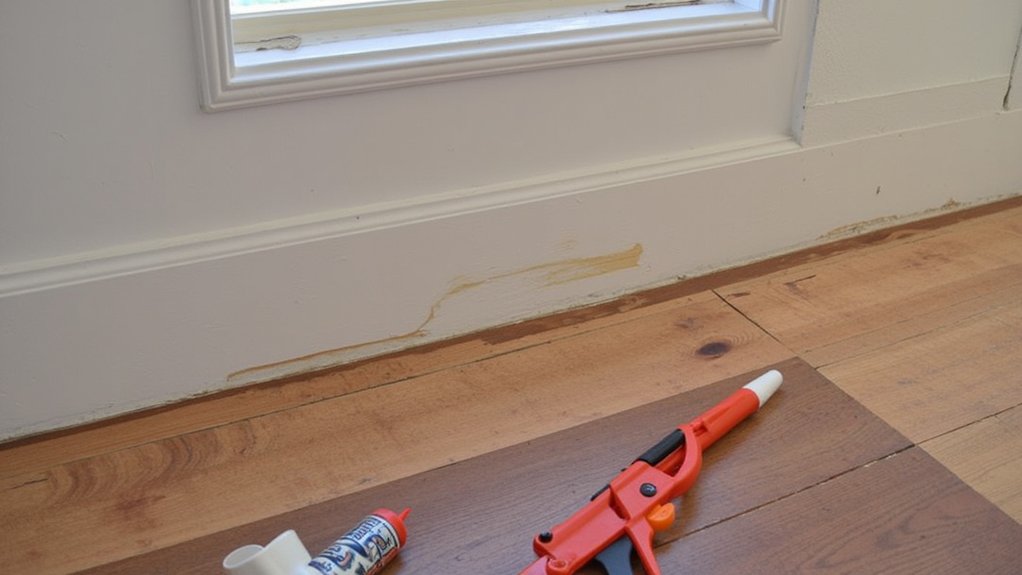
Studies show that up to 15% of your home’s heating and cooling costs escape through gaps between baseboards and floors. You’re likely wondering if caulking these spaces is worth your time and effort. While sealing these gaps can boost energy efficiency and create a polished look, there are essential factors to take into account before picking up that caulk gun. Your flooring type, gap size, and moisture levels will determine whether this common DIY fix is right for your home.
Understanding the Purpose of Baseboard Caulking
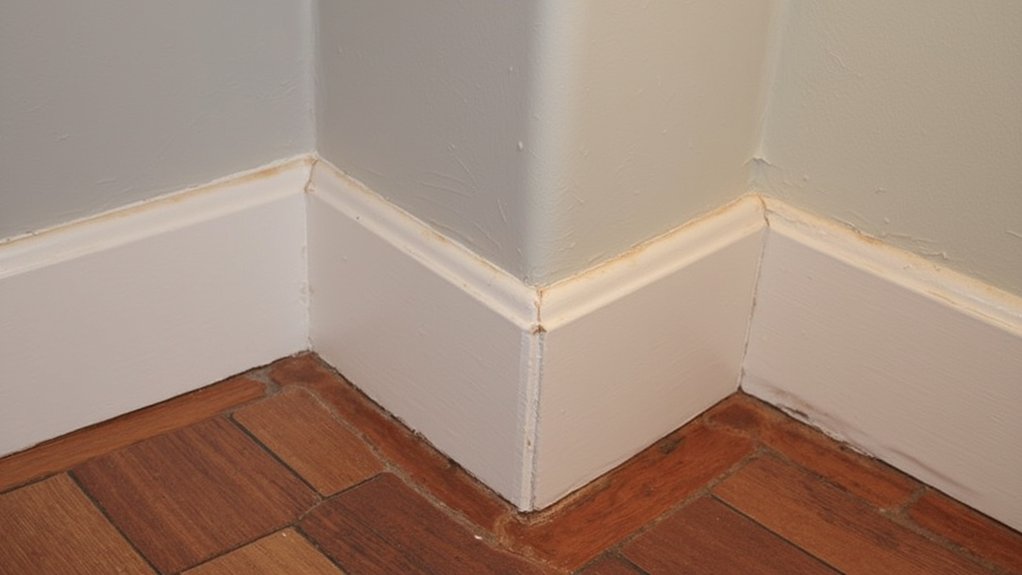
Understanding why you might want to caulk between your baseboards and floor can help you make the right decision for your home. The primary purposes include:
- Creating a seamless barrier against drafts, dust, and insects
- Preventing moisture from seeping underneath
- Improving your home’s energy efficiency
- Achieving a polished, finished look
“Properly sealed baseboards can reduce your energy bills by up to 15% by eliminating air leaks,” notes contractor Mike Reynolds. You’ll also protect your floors from potential water damage and keep pests from finding entry points into your living space.
The gap between baseboard and floor typically ranges from 1/8 to 1/4 inch – just enough space where unwanted elements can enter. In homes with uneven floors or settling issues, these gaps may be even larger, making caulking particularly beneficial.
Pros and Cons of Caulking Floor Gaps
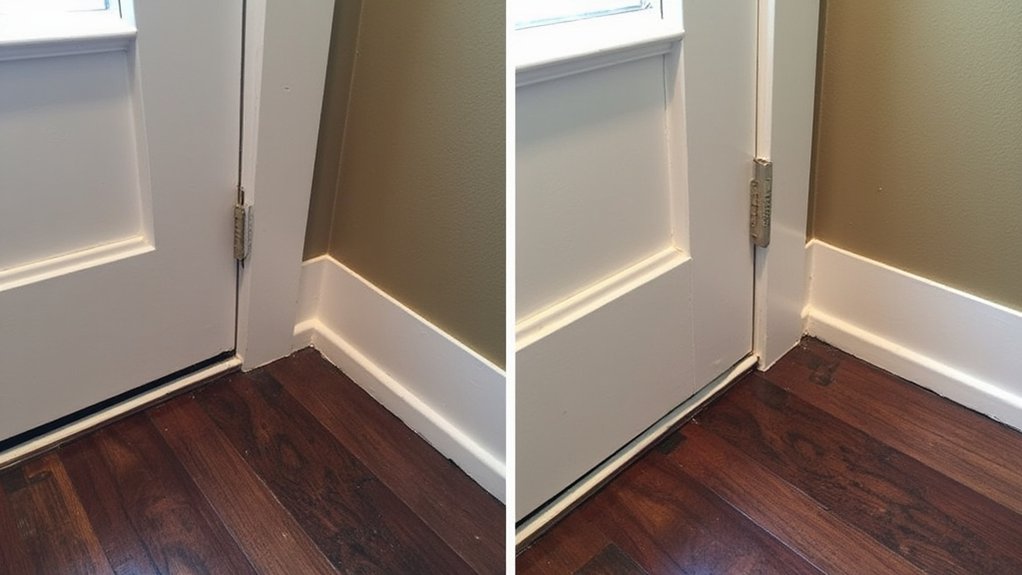
Before deciding whether to caulk between your baseboards and floor, you’ll need to weigh several important factors that could impact your home’s maintenance and appearance.
Pros:
- Prevents insects and dust from entering through gaps
- Creates a cleaner, more polished look
- Reduces drafts and improves energy efficiency
- Protects against moisture damage in bathrooms and kitchens
Cons:
- May trap moisture behind baseboards if water leaks occur
- Can make baseboard removal difficult during future renovations
- Requires regular maintenance as caulk ages and cracks
- Won’t work well with floating floors that need expansion space
“Caulking decisions should account for your flooring type,” says contractor Mike Stevens. “While it’s great for tile and hardwood, you’ll want to skip it with laminate floors that need room to expand and contract.”
Best Practices for Baseboard-to-Floor Caulking
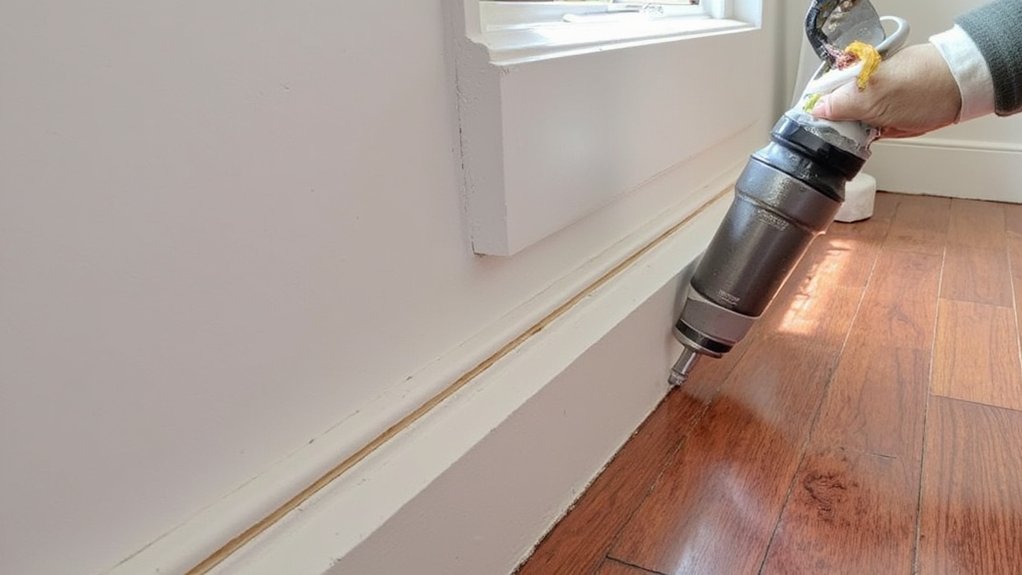
When you’re ready to caulk between your baseboards and floor, following proper techniques will guarantee long-lasting, professional results.
Key steps for proper application:
- Clean the gap thoroughly with a vacuum and rubbing alcohol
- Apply painter’s tape along both edges for clean lines
- Choose a latex or silicone caulk matching your baseboard color
- Cut the caulk tube tip at a 45-degree angle, making a 1/8-inch opening
- Hold the gun at a consistent 45-degree angle while applying
- Apply steady pressure for an even bead
“The secret to professional results is maintaining consistent pressure and speed,” says contractor Mike Bennett. “Work in 3-foot sections, and smooth the bead with your finger or caulking tool immediately after application.” Allow 24 hours for complete curing before removing the tape.
When to Skip Caulking Your Baseboards
Although caulking baseboards can enhance your home’s appearance, several situations exist where you should skip this finishing step entirely.
Skip caulking when:
- You have floating hardwood or laminate floors that need room for expansion
- The gap between floor and baseboard exceeds 1/4 inch
- You’re working with carpet edges that meet the baseboards
- Your baseboards are in high-moisture areas like bathrooms
- The flooring material requires ventilation underneath
“Caulking can actually damage certain flooring types by restricting natural movement,” explains contractor Mike Harrison. “In homes with engineered wood floors, you’ll want at least a 3/8-inch expansion gap that remains uncaulked.”
Remember that historic homes often feature uncaulked baseboards to preserve their original character and allow proper airflow through the building envelope.
Choosing the Right Caulk for Your Flooring Type
Selecting the appropriate caulk for your baseboards directly impacts the durability and visual appeal of your flooring project. Consider these material-specific recommendations:
For Hardwood Floors:
- Use 100% silicone caulk in clear or wood-matched colors
- Choose paintable acrylic latex for painted baseboards
For Tile or Stone:
- Select sanded caulk that matches your grout
- Apply mildew-resistant silicone in bathrooms
For Carpet:
- Use flexible latex caulk that won’t crack
- Choose colors matching your carpet or baseboard
For Vinyl or Laminate:
- Apply paintable acrylic caulk
- Select clear silicone for expansion gaps
“Professional-grade caulks with at least 35-year durability ratings provide the best long-term results,” notes Tom Wilson, master carpenter with 20 years of installation experience.
Essential Tools and Application Techniques
Successful baseboard caulking requires four essential tools and proper preparation before you begin the application process.
Required Tools:
- Caulking gun ($5-15)
- Painter’s tape
- Utility knife
- Clean rags
Application Steps:
- Clean the gap thoroughly with a damp cloth
- Apply painter’s tape along both edges for clean lines
- Load your caulk tube at a 45-degree angle
- Move steadily while maintaining even pressure
“The key to professional results is consistent bead size and smooth tooling,” says Tom Martinez, master carpenter. You’ll want to pull the gun at a steady pace while applying gentle pressure. After application, use your finger or a caulk-smoothing tool to create a concave finish. Remove the painter’s tape within 30 minutes, before the caulk starts to set.
