
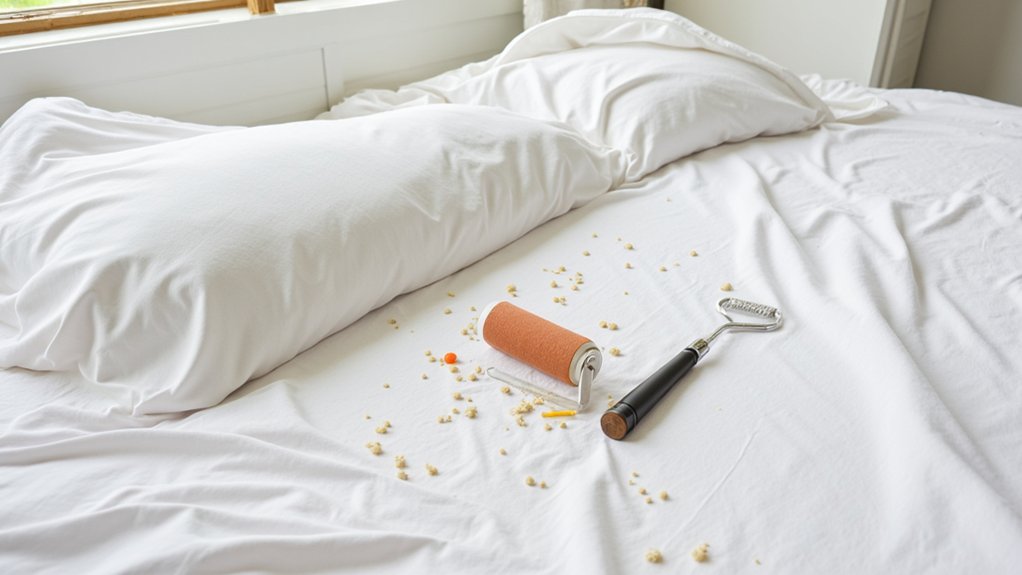
You’ve just pulled fresh sheets from the dryer, and coincidentally, they’re covered in the same pesky lint that plagued your last load. Those annoying fabric fibers don’t have to ruin your crisp, clean bedding experience. While you might think laundering removes all unwanted particles, lint actually becomes more stubborn with each wash cycle. Three proven techniques can tackle this frustrating problem, but the method you choose depends on your lint’s severity and stubbornness.
Materials Needed
Success in removing lint from your bed sheets depends on having the right tools within arm’s reach before you begin. These common household items will transform your linty bedding into smooth, clean sheets that feel comfortable against your skin.
Gather these essential materials before starting your lint removal process:
- Lint roller – Choose one with at least 30 sheets for thorough coverage
- Dryer balls – Use 3-4 wool balls to prevent future lint buildup
- White vinegar – Keep 1/2 cup ready for fabric softener replacement
- Microfiber cloth – Select a clean, dry cloth for gentle surface treatment
Having everything organized saves time and guarantees effective results.
3 Ways To Do It
You’ve got several proven methods at your disposal to tackle stubborn lint on your bed sheets effectively. The lint roller technique offers quick spot-cleaning, while the dryer sheet rubbing method provides gentle fabric-safe removal. For heavy lint buildup, the fabric shaver technique delivers professional-grade results that’ll restore your sheets completely.
1. Lint Roller Technique
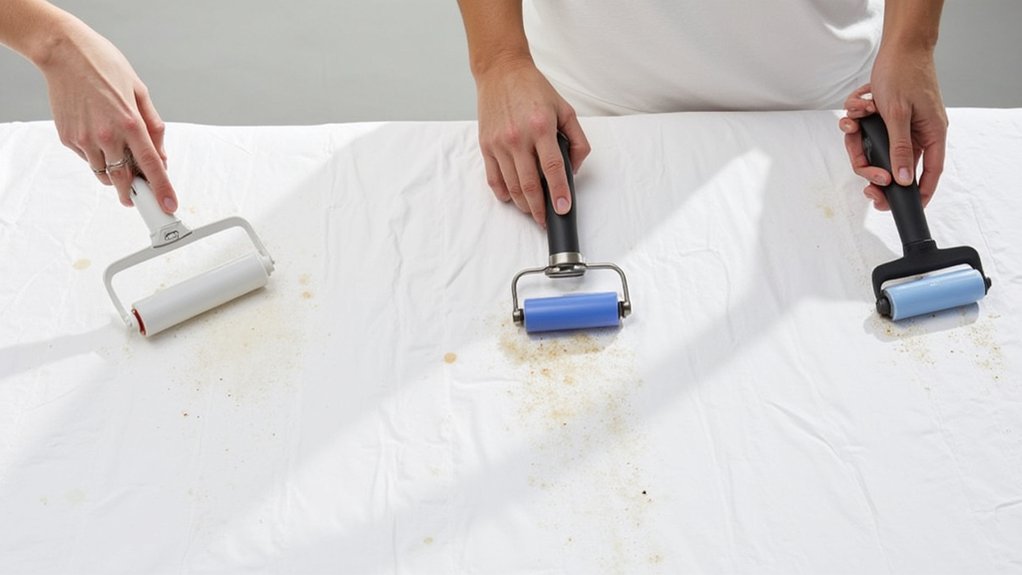
Three types of lint rollers can effectively tackle stubborn lint on your bed sheets, each offering distinct advantages for different fabric types.
Standard adhesive rollers work best on cotton and cotton-blend sheets, requiring 3-4 passes per section. Reusable silicone rollers excel with delicate fabrics like bamboo or microfiber, lasting up to 12 months with proper care. Electric lint removers handle heavy-duty situations but need careful 2-inch distance maintenance.
Follow this systematic approach:
- Strip sheets completely and lay flat on clean surface
- Roll in overlapping strokes covering 6-inch sections methodically
- Apply moderate pressure for 2-3 seconds per stroke
- Clean roller surface every 10-15 strokes for ideal effectiveness
2. Dryer Sheet Rubbing Method
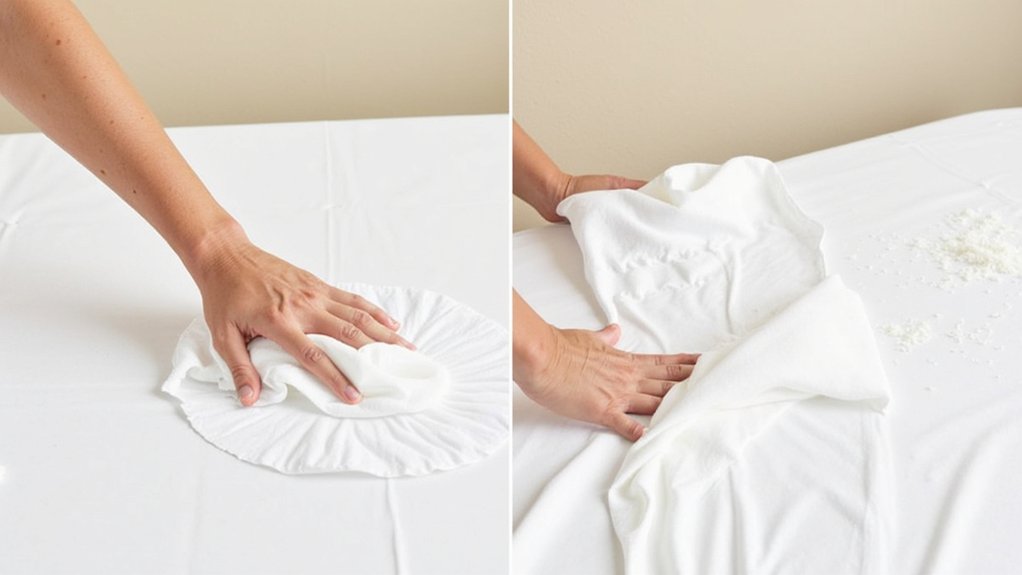
Two simple dryer sheet methods can eliminate lint from your bed sheets without requiring specialized equipment or products.
Fresh Dryer Sheet Method
Use a new dryer sheet to gently rub across your bedding in circular motions. The anti-static properties attract loose fibers effectively.
Used Dryer Sheet Alternative
Previously used dryer sheets work equally well for lint removal while being more economical.
- Rub systematically across the entire sheet surface using light pressure
- Focus on problem areas where lint accumulates most heavily
- Work in 12-inch sections to guarantee thorough coverage
- Shake out collected lint from the dryer sheet every few passes
This method takes approximately 3-5 minutes per sheet.
3. Fabric Shaver Technique
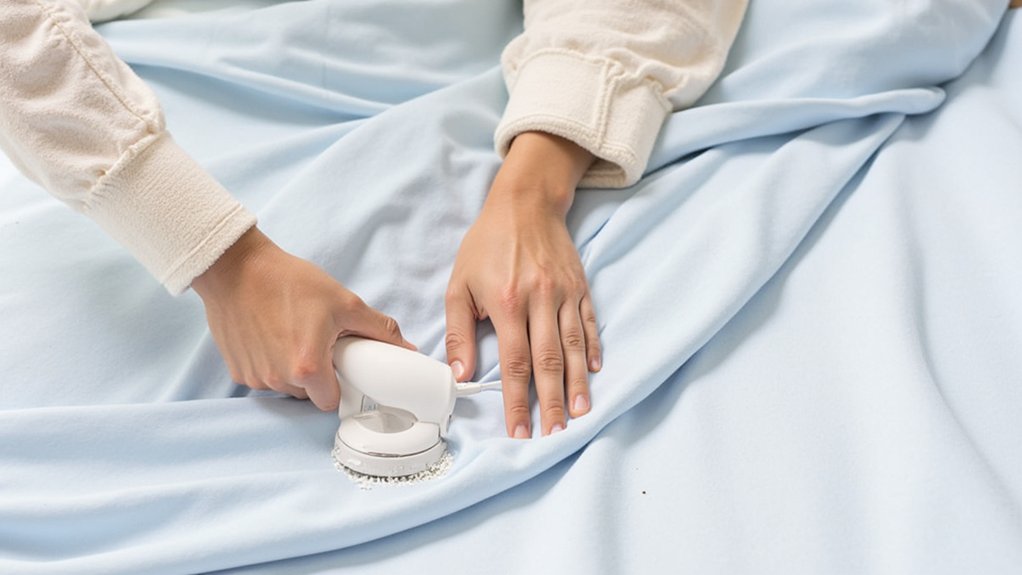
While dryer sheets work well for light lint removal, fabric shavers offer a more powerful solution for stubborn lint and pilling on sheets.
These battery-operated devices safely cut away fabric pills without damaging your bedding. “Fabric shavers provide consistent results when used with gentle, circular motions,” notes textile care specialist Maria Rodriguez.
Follow these steps for best results:
- Lay sheets flat on a hard surface to create tension
- Turn on the shaver and glide gently across fabric surface
- Work in 12-inch sections using overlapping circular patterns
- Empty collection chamber every few minutes to maintain suction power
Clean your shaver’s blade after each use.
Persistent Lint After Multiple Attempts
Even after following standard lint removal methods, some bed sheets continue to attract and hold onto stubborn fibers that resist your best cleaning efforts.
When Standard Methods Fail:
- Vinegar rinse: Add one cup white vinegar to your washing machine’s rinse cycle
- Tennis ball technique: Include three clean tennis balls during the dryer cycle for 45 minutes
- Cold water wash: Switch to cold water washing to prevent fiber damage and shedding
“Persistent lint often indicates fabric breakdown or incompatible laundry mixing,” explains textile expert Dr. Sarah Mitchell.
Final Solutions:
- Separate lint-producing items permanently
- Replace heavily damaged sheets after 200+ wash cycles
- Consider fabric softener elimination
