
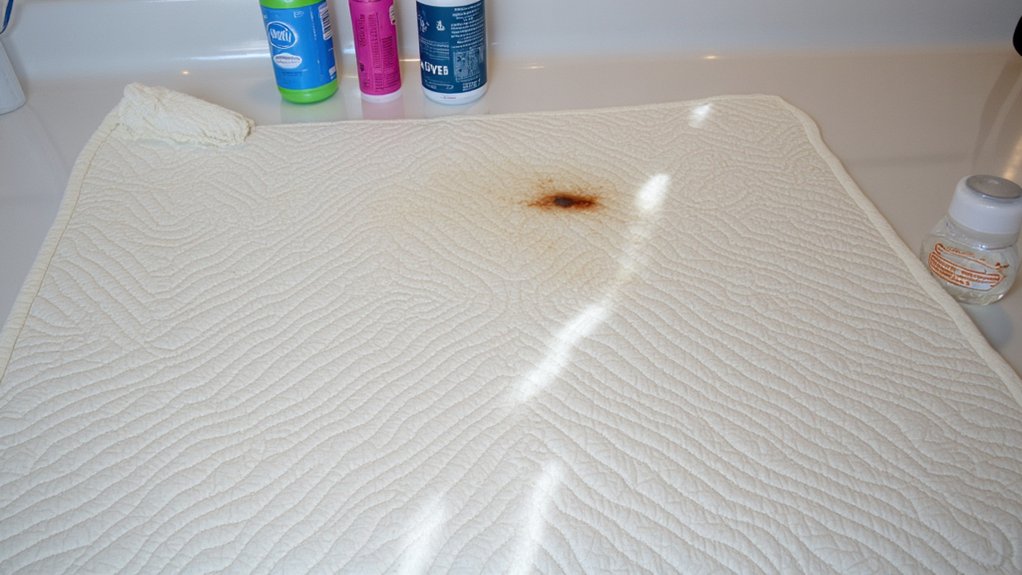
When you discover blood on your cherished quilt, don’t panic—you can remove it completely with the right approach. The key is acting quickly and choosing the correct method based on how fresh the stain is. “Blood stains respond best to immediate treatment with cold water, never hot,” explains textile restoration expert Maria Santos. Whether you’re dealing with a fresh accident or an older stain, three proven methods will restore your quilt without damaging the delicate fibers or causing permanent discoloration.
Materials Needed
Before you start removing blood stains from your quilt, you’ll need to gather several common household items. Most of these supplies are already in your home, making this cleaning process convenient and cost-effective.
Vital Cleaning Supplies:
- Cold water – Use only cold water, as hot water will set the protein-based blood stain permanently
- Hydrogen peroxide (3% solution) – This oxygen-based bleach breaks down blood effectively without damaging fabric fibers
- Clean white cloths or paper towels – These absorb loosened blood without transferring additional colors onto your quilt
“Cold water is vital for blood removal because heat coagulates proteins,” explains textile care specialist Dr. Maria Santos.
3 Ways To Do It
You’ll need to choose the right blood removal method based on how long the stain has been sitting on your quilt. Fresh blood responds best to cold water rinsing, while older stains require hydrogen peroxide treatment or enzyme detergent soaking. Each method targets blood proteins differently, so you’ll want to match your approach to the stain’s age and severity.
1. Cold Water Rinse Method
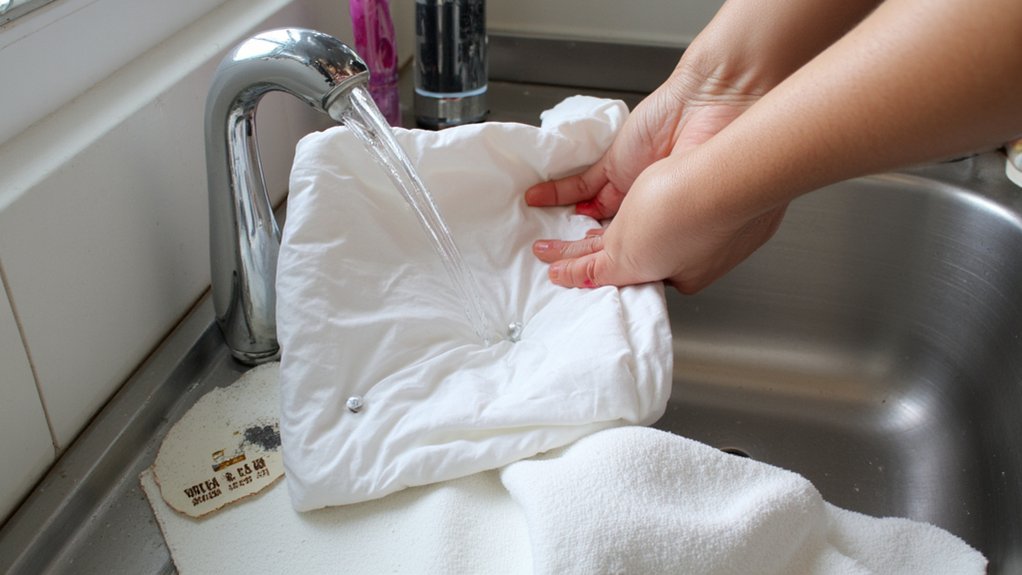
Follow these steps to remove fresh blood:
- Rinse immediately – Hold the stained area under cold running water for 2-3 minutes
- Blot gently – Use clean white cloth to absorb loosened blood without rubbing
- Repeat process – Continue rinsing and blotting until water runs clear
2. Hydrogen Peroxide Treatment Method
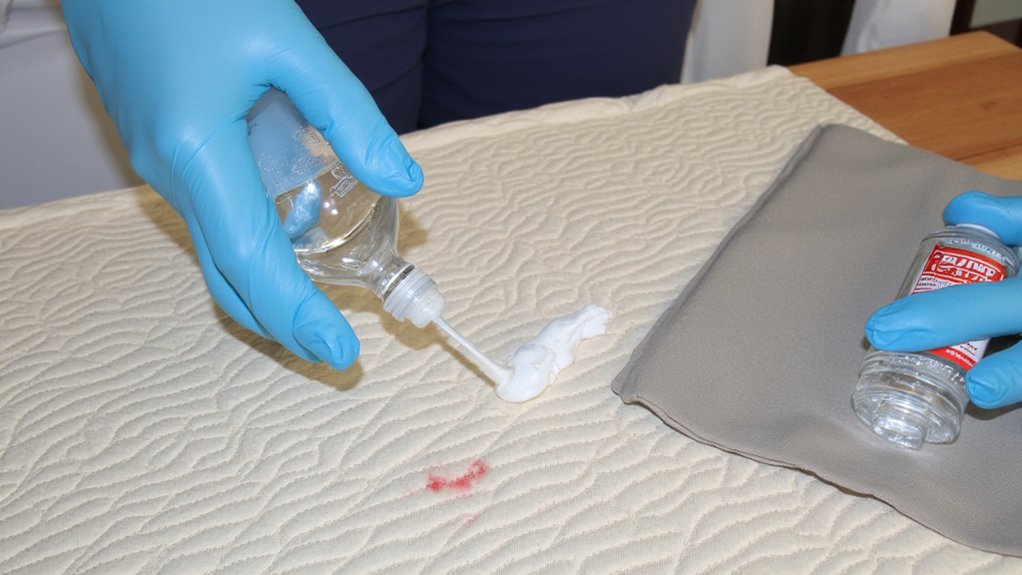
Hydrogen peroxide offers a powerful solution for stubborn blood stains that cold water alone can’t eliminate from your quilt.
Apply 3% hydrogen peroxide directly onto the blood stain using a clean cloth or cotton swab. The peroxide will bubble and foam as it breaks down the protein in the blood. Let it sit for 30 seconds before blotting with a clean, damp cloth.
Follow these steps for best results:
- Test peroxide on an inconspicuous area first to check for fabric damage
- Work from stain edges toward the center to prevent spreading
- Rinse thoroughly with cold water after treatment
3. Enzyme Detergent Soaking Method
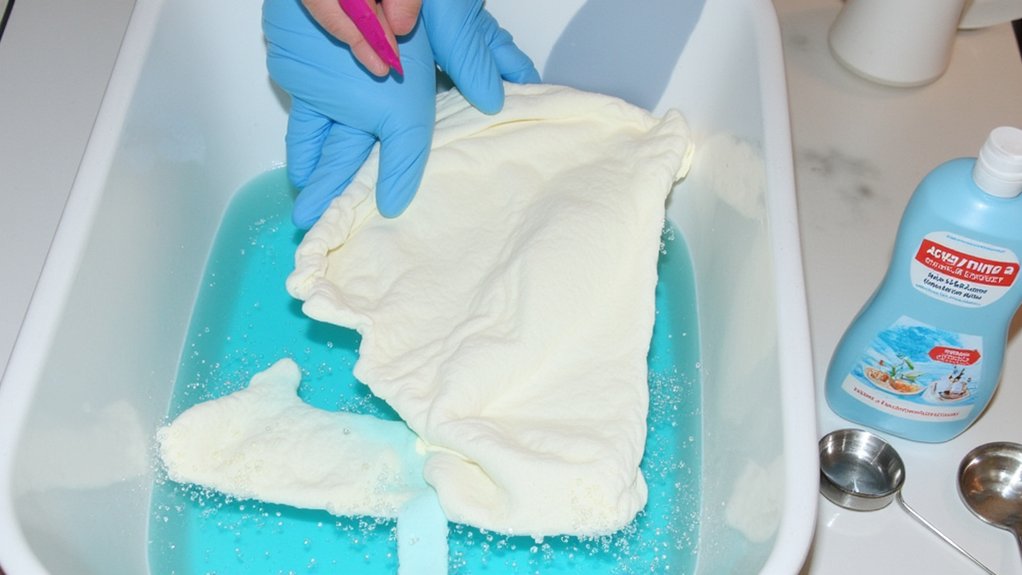
When cold water and hydrogen peroxide aren’t enough to tackle set-in blood stains, enzyme detergents provide a biological approach that breaks down protein-based stains at the molecular level. These specialized cleaners target hemoglobin proteins effectively.
Follow this soaking process:
- Mix solution: Combine 2 tablespoons enzyme detergent with 2 cups cool water in basin
- Submerge stained area: Let quilt section soak for 30 minutes minimum
- Gentle agitation: Lightly work fabric every 10 minutes to activate enzymes
“Enzyme detergents work best at temperatures below 80°F,” explains textile specialist Dr. Sarah Chen. Rinse thoroughly afterward.
Antique or Heirloom Quilts
Before attempting any cleaning methods on antique or heirloom quilts, you’ll need to assess the fabric’s condition and age carefully. These precious textiles require gentler approaches than modern quilts.
Safety Steps:
- Test any cleaning solution on a hidden corner first
- Wait 24 hours to check for fabric damage or color bleeding
- Consult a textile conservator for quilts over 75 years old
“Never use enzyme detergents on silk or wool antique quilts,” advises textile expert Dr. Sarah Mitchell. Instead, try cold water dabbing with a clean white cloth. Work from outside the stain inward using gentle pressure for 30-second intervals.
