
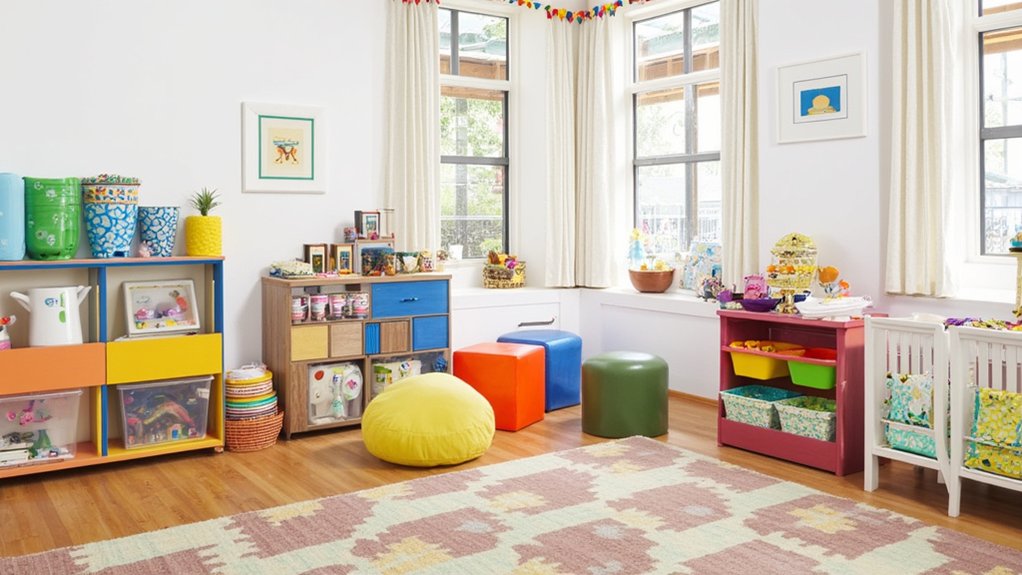
When you’re ready to transform a room into the ultimate kid-friendly space, you’ll want to focus on creating distinct activity zones that encourage both play and learning. Interior designer Sarah Mitchell notes, “A well-designed playroom combines functionality with imagination, incorporating storage solutions alongside creative spaces.” The key elements include cozy reading corners, organized toy stations, and adaptable play areas – but the real magic lies in how you’ll bring these components together to match your child’s unique interests and developmental needs.
1. Create Reading Nook Corner
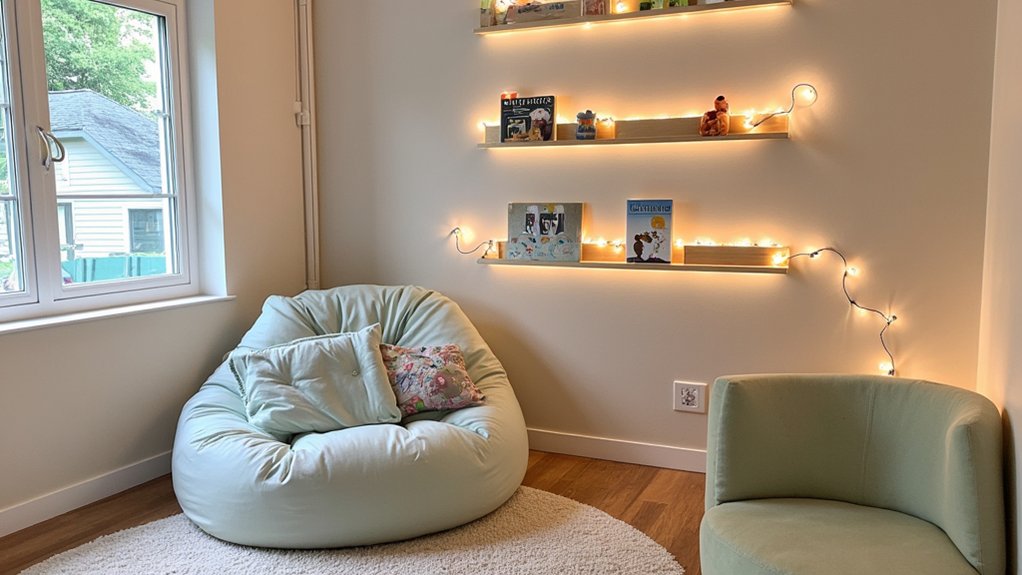
When designing a reading nook for your child’s playroom, start by selecting a quiet corner that’s at least 4×4 feet to create a cozy retreat. You’ll want to establish a comfortable space that encourages reading and imagination.
- Install a plush area rug (minimum 3×3 feet) in neutral tones to define the space and provide cushioning
- Add a child-sized bean bag or cushioned chair with back support, positioned 18 inches from the wall
- Mount floating shelves at your child’s eye level (24-36 inches from floor) to display books
- Incorporate soft lighting with a battery-operated LED reading lamp or string lights positioned 5 feet high
2. Install Educational Wall Decals
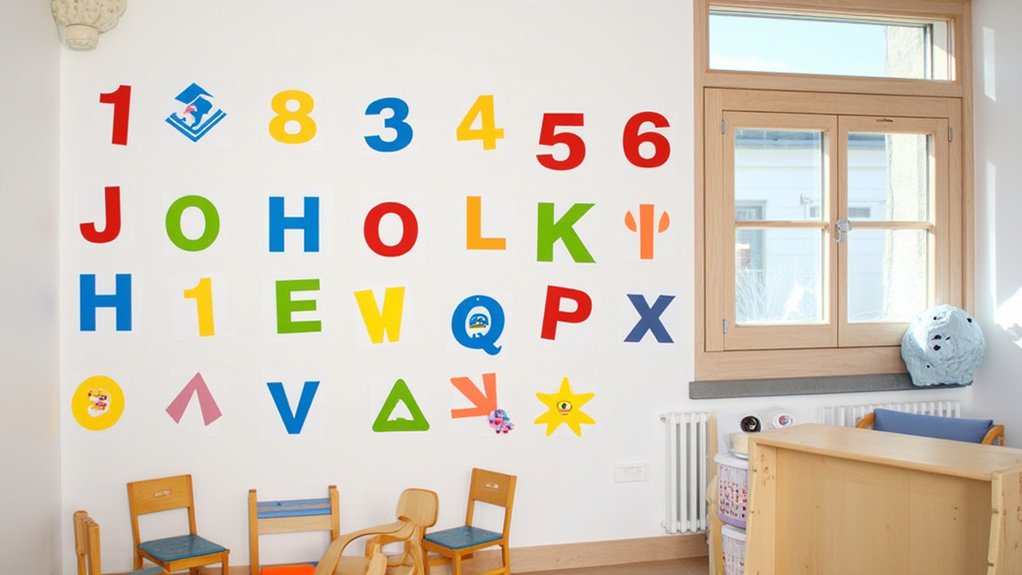
Educational wall decals serve as both decorative elements and learning tools that can transform blank walls into interactive surfaces for child development. When choosing and installing these decals, focus on placement at your child’s eye level for maximum engagement.
- Select alphabet decals with uppercase and lowercase letters (4-6 inches tall) to help with letter recognition
- Install number sequences (0-20) with corresponding imagery, spacing them 8 inches apart
- Add world map decals (3×5 feet) with labeled countries and capitals for geography lessons
- Place simple shape decals in various colors and sizes (2-8 inches) to teach basic geometry
Apply decals to clean, dry walls using a squeegee to prevent air bubbles.
3. Add Colorful Storage Bins
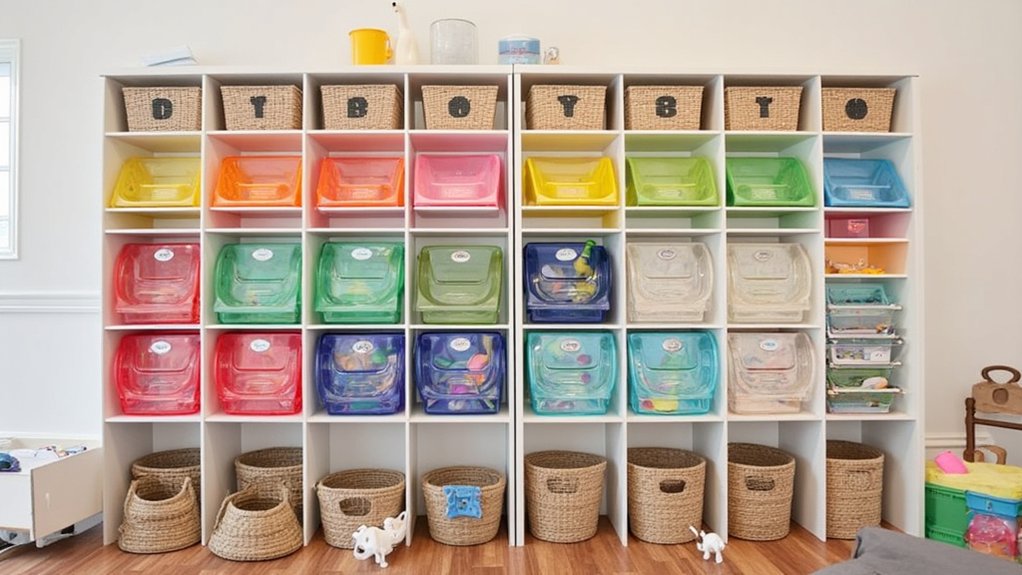
Colorful storage bins provide essential organization while adding vibrant pops of color to enliven your child’s playroom space. You’ll want to choose sturdy containers that can withstand daily use while keeping toys easily accessible.
- Select clear-front bins (12″ x 12″) for quick identification of contents
- Line up coordinating cube organizers (13″ cubes) along the walls at your child’s height
- Use labeled baskets (15″ x 10″) with handles for larger toys and sports equipment
- Install rolling bins (24″ x 16″) under tables for quick cleanup during playtime
“Proper bin placement at child-level encourages independent cleanup habits,” says professional organizer Sarah Chen.
4. Hang Child-Height Activity Board
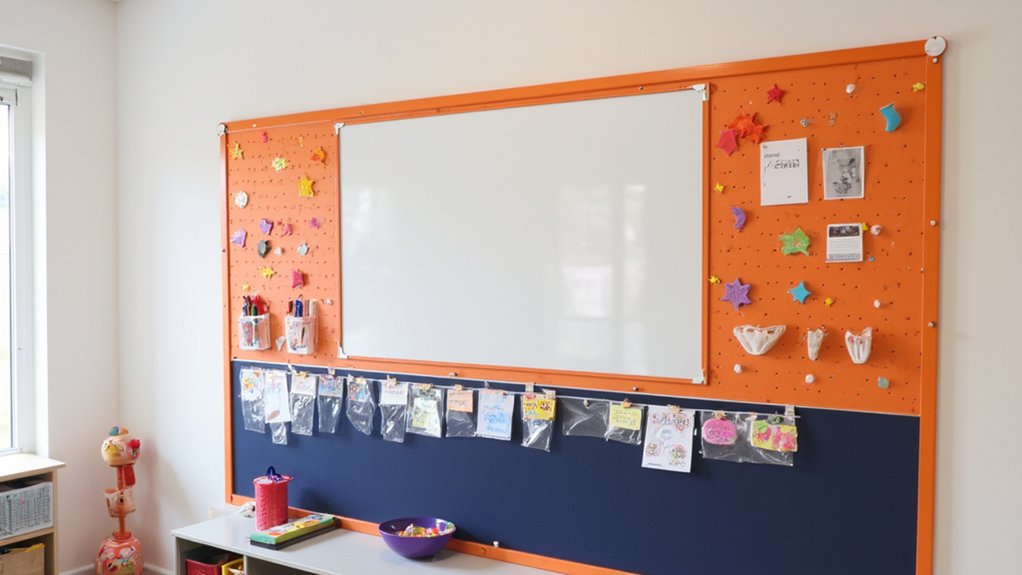
A child-height activity board serves as an engaging centerpiece that lets you maximize vertical wall space while encouraging creative play. Install your board 24-36 inches from the floor, ensuring it’s easily accessible for little hands.
- Mount a 4×6 foot magnetic whiteboard as your base, securing it firmly with wall anchors rated for 50+ pounds
- Add clear acrylic paper holders to display rotating artwork at eye level
- Install colorful pegboard sections for hanging creative supplies like markers and paintbrushes
- Incorporate a fabric-covered bulletin board strip for pinning up schedules and achievements
5. Add Floor Cushions
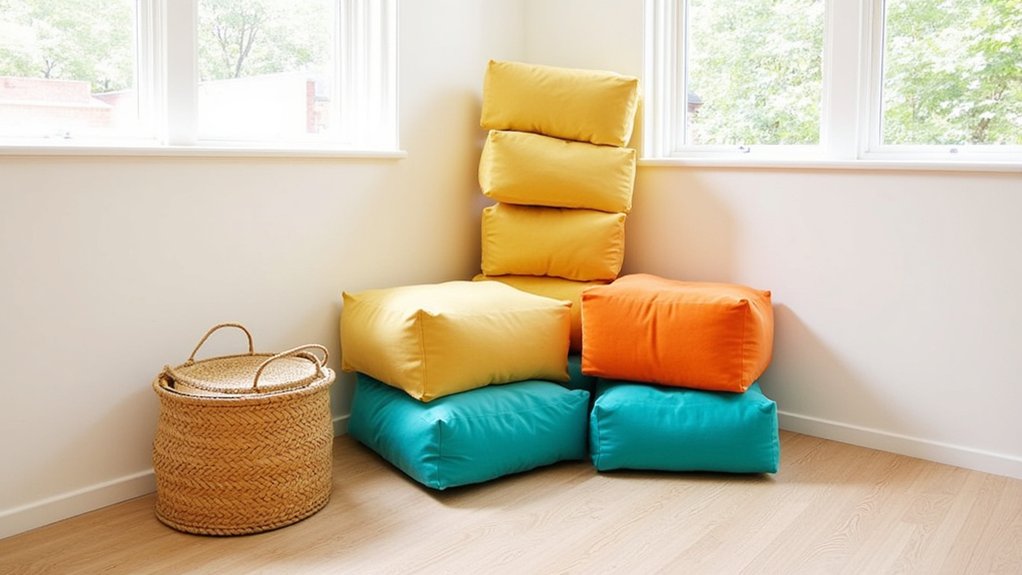
Since comfort plays a key role in any playroom, soft floor cushions create inviting spaces where kids can relax, read, and play. You’ll want to select cushions that are durable, washable, and sized appropriately for your children’s age group.
- Choose oversized 24-inch square cushions with removable, machine-washable covers in spill-resistant fabrics
- Layer different textures by mixing plush velvet, sturdy cotton, and weather-resistant outdoor materials
- Arrange cushions in a cozy corner, leaving 36 inches of clear space for traffic flow
- Include storage solutions like a decorative basket or bench to keep cushions tidy when not in use
6. Mount Display Art Gallery
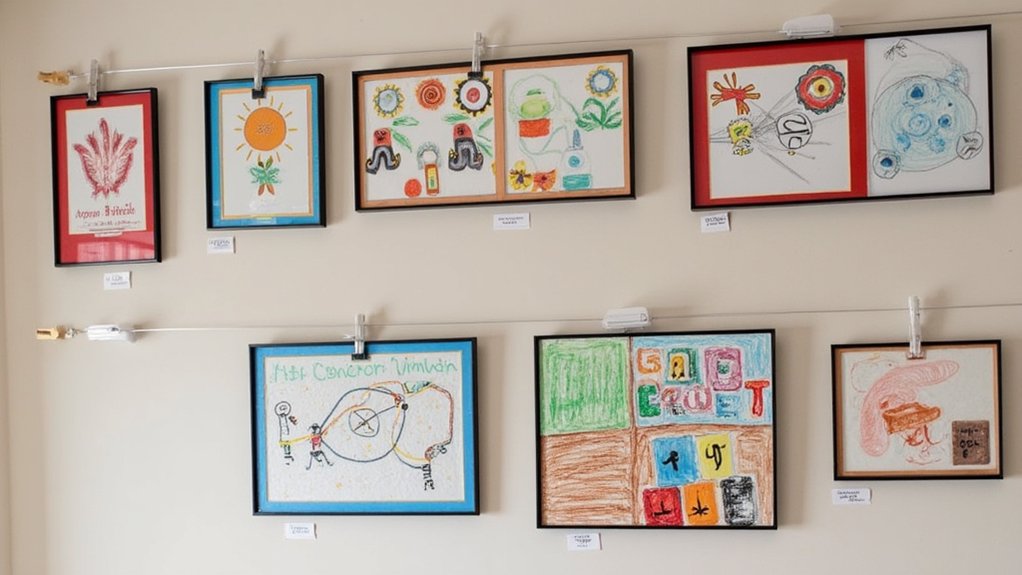
Creating an art gallery wall transforms any playroom into a vibrant showcase for your children’s creative masterpieces. To build an engaging display that grows with your child’s artistic journey, consider these essential steps:
- Install an adjustable hanging system with clear fishing line at 48 inches height for easy artwork rotation
- Mount lightweight acrylic frames (8×10 inches) using removable command strips to protect walls
- Create a designated “Artist of the Week” spotlight area with LED picture lights
- Label each piece with artist name and date using decorative cardstock tags
Update displays monthly to maintain enthusiasm and celebrate new achievements.
7. Create Child-Height Bookshelves
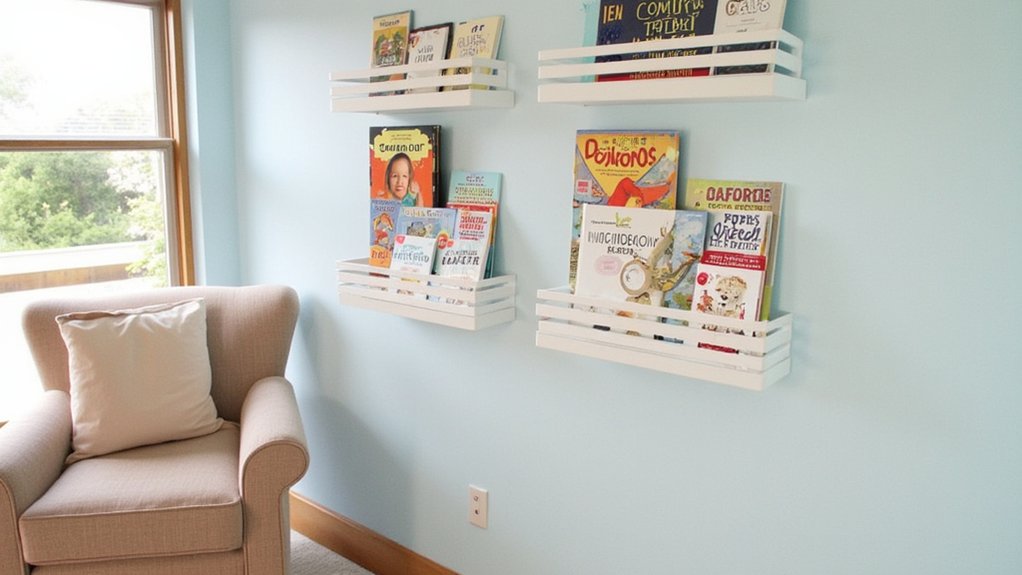
Well-designed bookshelves at your child’s height will complement their art display while sparking a love of reading and independent exploration. Child development expert Dr. Sarah Chen recommends installing shelves between 24-36 inches from the floor for ideal accessibility.
- Mount floating shelves with rounded corners at toddler eye level (28 inches) to display book covers facing forward
- Install a combination of deeper shelves (8 inches) for larger books and shallow rails (3 inches) for paperbacks
- Space shelving units 12-16 inches apart vertically to prevent overcrowding
- Add cushioned seating nearby with a cozy reading nook that’s 36 inches from the nearest shelf
8. Build Sensory Play Table
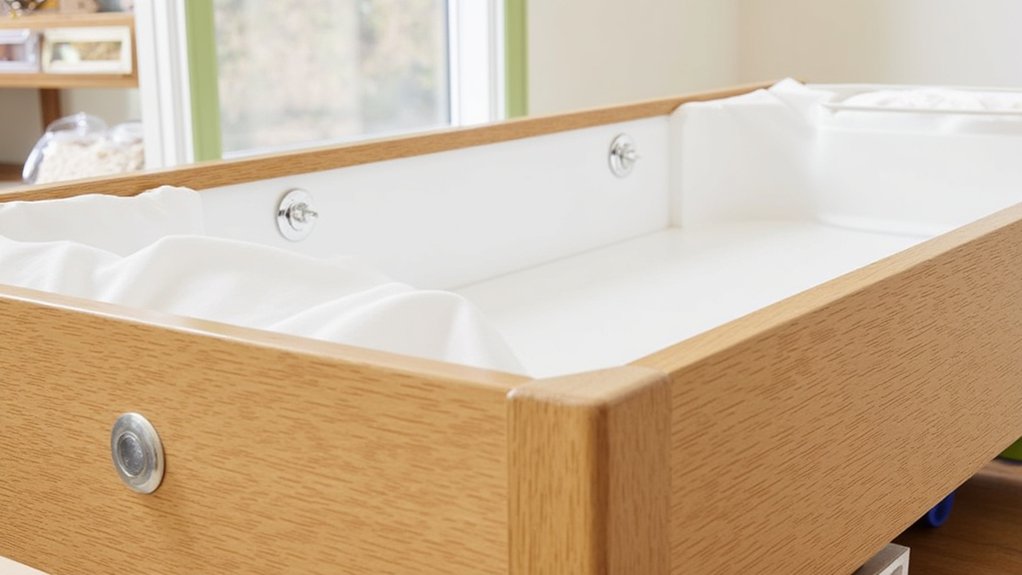
A sensory play table serves as the centerpiece of any well-designed playroom, offering endless opportunities for tactile exploration and learning. You’ll want to build a table that’s 24 inches high – perfect for toddlers and young children to reach comfortably while standing.
- Start with a sturdy base: Create a 3×4 foot frame using weather-resistant lumber
- Install a removable plastic bin (6 inches deep) to hold sensory materials
- Add a lip around the edges to prevent spills and contain materials
- Include storage underneath for extra supplies like rice, beans, and sand
“The ideal sensory table combines durability with easy cleanup,” says child development expert Dr. Sarah Chen.
9. Add Window Seat Bench
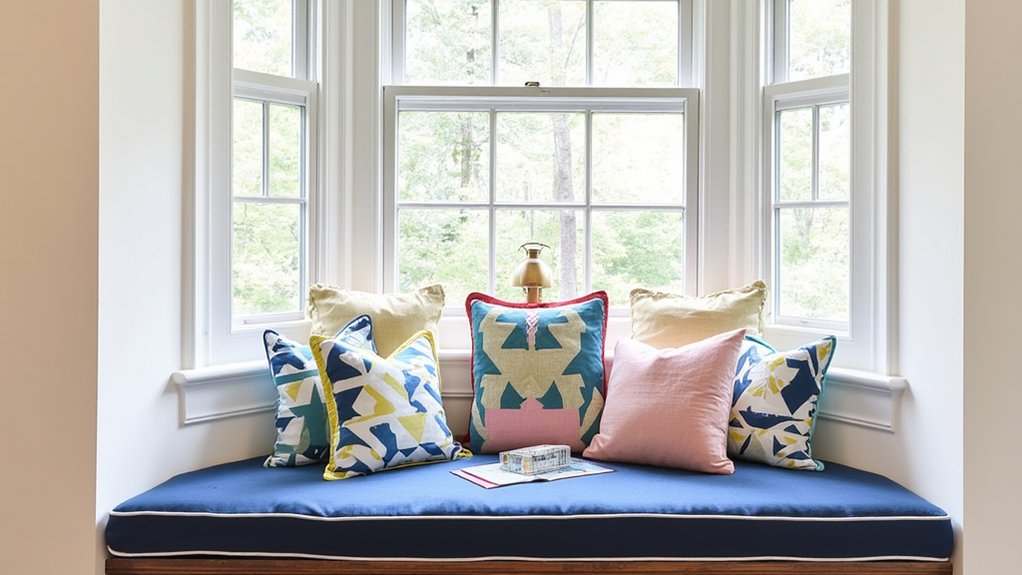
- Install a bench frame 18-24 inches deep and 16-18 inches high, ensuring it fits snugly between window alcoves
- Add hinged storage compartments beneath the seat for toys and books
- Layer with a 3-inch cushion covered in durable, washable fabric
- Complete the space with throw pillows and a small reading lamp mounted nearby
10. Create Fun Light Features
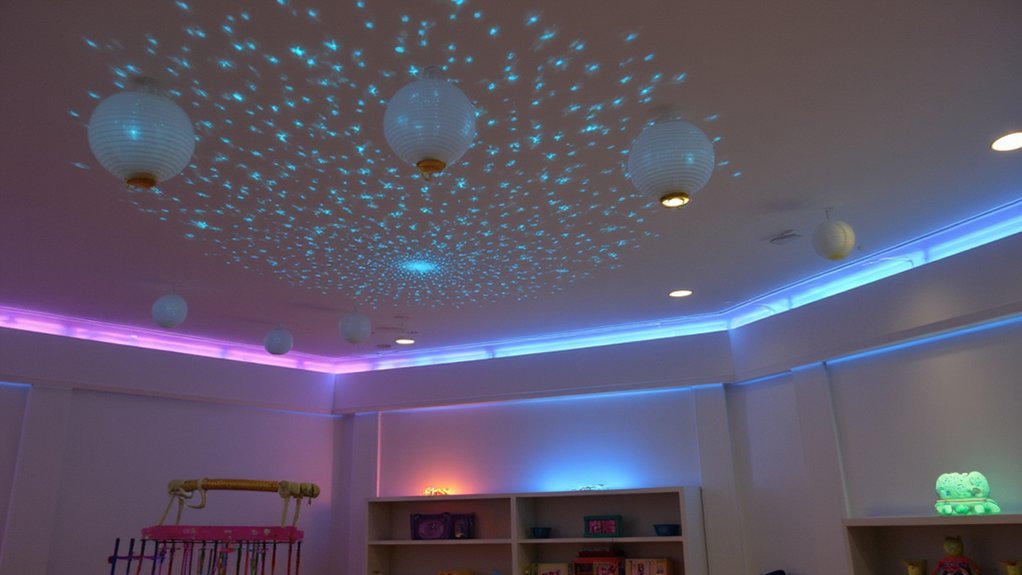
Proper lighting transforms an ordinary playroom into a magical space where kids can let their imaginations soar during playtime and creative activities. To create enchanting light features that’ll spark creativity while maintaining safety, consider these illuminating options:
- Install color-changing LED strip lights along baseboards or shelving ($25-40 per 16ft strip)
- Mount battery-operated paper lanterns from the ceiling at varying heights (12-24 inches apart)
- Add a dimmer switch to control overhead lighting for different activities and moods
- Place constellation night light projectors in corners to create starry displays during quiet time
“Layered lighting provides both function and whimsy in children’s spaces,” notes interior designer Sarah Chen.
