
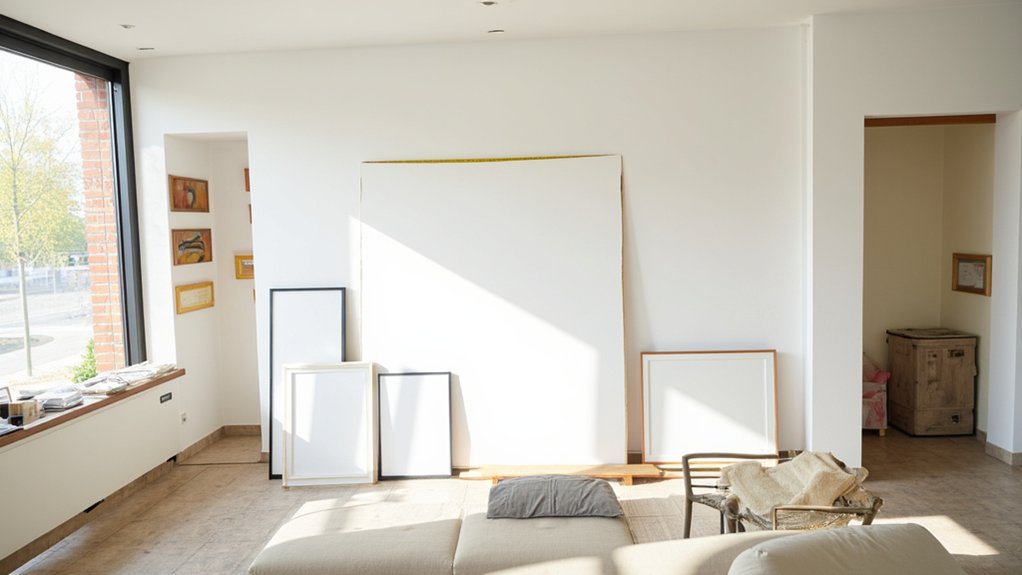
You’re about to transform your living room walls from blank canvases into personalized galleries that reflect your style and enhance your space. Interior designer Sarah Jenkins notes, “Wall art isn’t just decoration – it’s the soul of your room.” Before you start hanging pieces, you’ll need to ponder significant factors like size requirements, color coordination, and proper placement techniques. Understanding these fundamentals will help you avoid common mistakes and create a display that truly elevates your home’s atmosphere.
Determining the Right Size and Scale
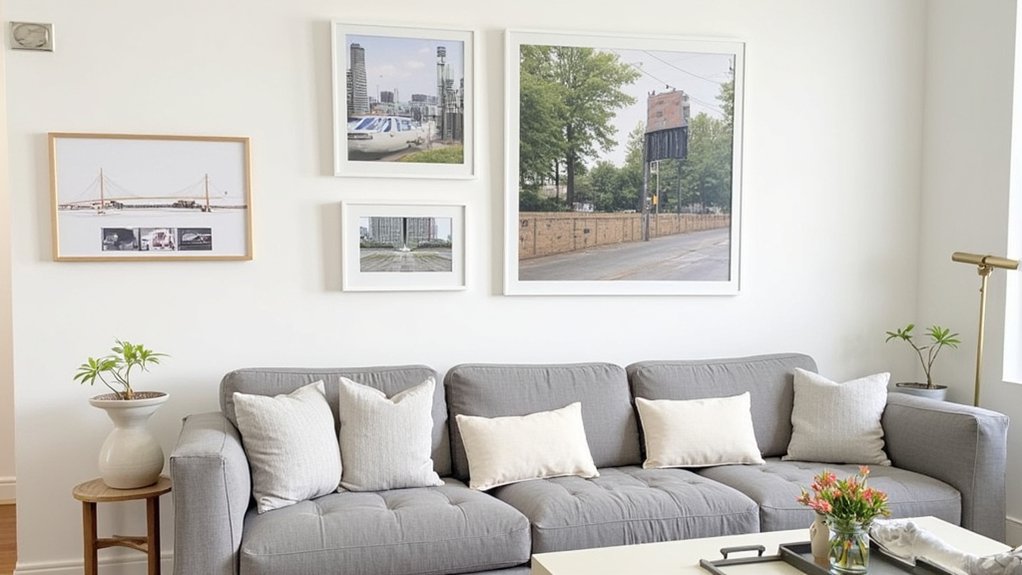
Scale serves as the foundation for selecting living room wall art that truly enhances your space. When choosing artwork size, follow these essential guidelines:
- For large walls (10+ feet), select pieces that fill 2/3 to 3/4 of the available width
- Above sofas, choose art that’s 2/3 to 3/4 the length of your couch
- Allow 6-8 inches of breathing room between furniture and artwork
“The most common mistake is choosing pieces that are too small for the space,” says interior designer Sarah Chen. Here’s a quick sizing guide:
8-foot wall: 24-36 inch artwork
10-foot wall: 36-48 inch artwork
12-foot wall: 48-60 inch artwork
For gallery walls, maintain 2-3 inches between frames and guarantee the entire arrangement follows the 2/3 rule for your wall space.
Understanding Your Room’s Color Scheme
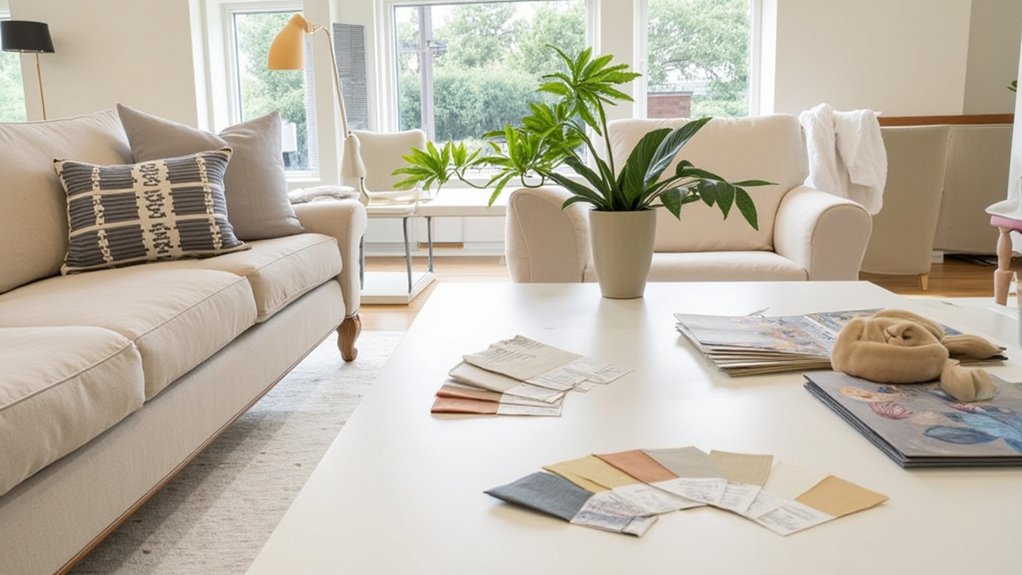
Follow these color guidelines:
- Choose art that contains 60% of your room’s dominant color
- Include 30% of your secondary color
- Add 10% of an accent color for visual interest
Your wall art doesn’t need to match perfectly, but it should complement your space. If you’ve got a navy blue sofa, look for pieces that incorporate deep blues or complementary colors. For neutral rooms, you can be bolder with your art choices – try vibrant pieces that add energy to the space.
Exploring Different Art Styles and Mediums
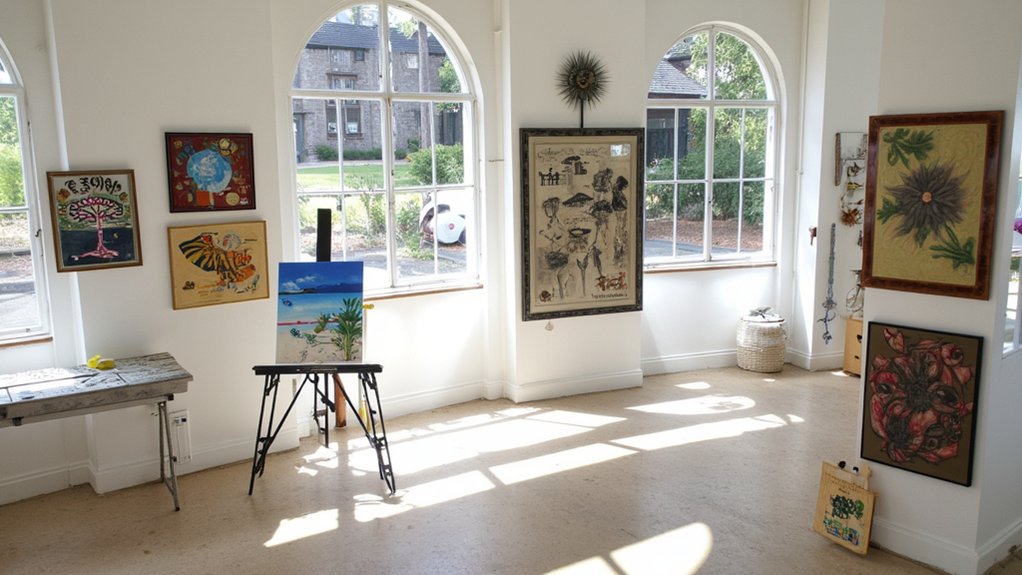
When selecting wall art, you’ll want to contemplate the wide variety of styles and mediums available to create your desired aesthetic. Consider these popular options:
Traditional Art
- Oil paintings
- Watercolor pieces
- Hand-drawn illustrations
- Photography
Modern Mediums
- Metal wall sculptures
- Digital art prints
- Mixed media pieces
- Canvas prints
Interior designer Sarah Chen notes, “Don’t limit yourself to just paintings. Three-dimensional pieces can add unexpected depth to your walls.” You’ll find that mixing different mediums creates visual interest – try combining a large canvas print with smaller framed photographs, or pair metal wall art with traditional paintings. For contemporary spaces, consider abstract pieces or geometric designs, while classical rooms often benefit from landscape paintings or vintage photographs.
Considering Room Layout and Viewing Angles
The perfect artwork placement starts with understanding how your room’s layout affects viewing experiences. Consider these key factors when positioning your wall art:
Viewing Height
- Hang artwork at eye level, typically 57-60 inches from the floor to the center of the piece
- For seating areas, adjust height based on whether viewers will be standing or sitting
Distance and Scale
– Step back 2-3 times the artwork’s width to evaluate proper viewing distance
- Allow 6-8 inches of space between furniture and art pieces
- “The size of your art should take up about two-thirds of the wall space above furniture,” notes interior designer Sarah Mitchell
- Avoid placing detailed pieces in high-traffic areas where viewers can’t pause
- Position statement pieces where guests naturally stop or gather
- Consider multiple viewing angles from different room entry points
- For modern interiors: Choose abstract prints, geometric patterns, or black-and-white photography
- For traditional spaces: Opt for classical landscapes, still life paintings, or antique maps
- For coastal themes: Select watercolors, seascapes, or nautical prints
- For industrial style: Install vintage advertisements, architectural drawings, or metal wall sculptures
- Center your largest piece at eye level (57-60 inches from the floor)
- Use odd numbers of artwork for asymmetrical groupings
- Keep similar frames within collections for cohesion
- Laying pieces on the floor first
- Creating paper templates
- Testing different configurations
- Marking nail positions with painter’s tape
- Family photos transformed into canvas prints
- Travel mementos that capture special memories
- Local artwork from places you’ve lived
- Cultural pieces that represent your heritage
- Children’s artwork professionally framed
- Allocate 10-15% of your room’s decorating budget for wall art
- Factor in framing costs ($50-300 per piece)
- Include installation expenses ($100-200 for professional hanging)
- Browse local art fairs and student exhibitions for unique, affordable pieces
- Check online marketplaces during seasonal sales (typically January and July)
- Consider buying artwork in sets to save 20-30% on multiple pieces
- Position artwork at eye level, typically 57-60 inches from the floor to the center
- Leave 6-8 inches of space between furniture and art pieces
- Allow 2-3 inches between multiple frames in a grouping
- Use two hooks for pieces over 30 pounds
- Measure twice before making holes
Traffic Flow
Matching Art With Your Interior Design Theme
Selecting wall art that harmonizes with your interior design theme creates a cohesive, polished look throughout your living space. Consider these key elements when matching artwork to your decor:
“The artwork should echo your room’s color palette, incorporating 2-3 of your accent colors,” says interior designer Sarah Chen. You’ll want to mirror existing shapes and patterns – if you’ve got curved furniture, look for pieces with soft, rounded elements. For rooms with straight lines, geometric art works best.
Creating Balance With Multiple Pieces
Creating visual harmony with multiple art pieces requires careful attention to spacing, proportion, and arrangement patterns. When hanging several pieces together, maintain 2-3 inches between frames for smaller groupings and 4-6 inches for larger works.
Follow these key principles for balanced arrangements:
“The rule of thirds helps divide your wall space effectively,” says interior designer Sarah Chen. “Imagine your wall split into a 3×3 grid when planning layouts.”
For gallery walls, start with:
Incorporating Personal Taste and Meaning
While professional design principles provide valuable guidance, your personal style and meaningful connections should ultimately drive artwork selection for your living space. Your wall art should tell your unique story and reflect what matters most to you.
Consider these personal elements when selecting pieces:
“Choose art that sparks conversation and shares your journey,” suggests interior designer Sarah Chen. Don’t feel pressured to select pieces just because they’re trendy. Instead, focus on artwork that resonates with you emotionally and complements your lifestyle. When guests enter your living room, they should get a genuine sense of who you are through your carefully curated wall displays.
Setting a Budget and Shopping Strategy
Before you start shopping for wall art, it’s essential to establish a realistic budget and develop a smart purchasing strategy.
Setting Your Budget:
Smart Shopping Tips:
“Start with one statement piece that costs 40% of your art budget, then build around it with smaller works,” suggests interior designer Sarah Martinez. You’ll want to set aside 15% of your budget for unexpected finds that perfectly complement your collection.
Proper Placement and Installation Tips
Now that you’ve selected and purchased your wall art, proper placement and installation will make all the difference in your room’s final look. “The right height and spacing can transform even budget-friendly pieces into a gallery-worthy display,” says professional art installer James Chen.
Follow these essential hanging guidelines:
For gallery walls, lay out your arrangement on the floor first. “Test your design by tracing paper templates and taping them to the wall,” suggests Chen. “It’ll prevent unnecessary holes and guarantee perfect spacing.”
