
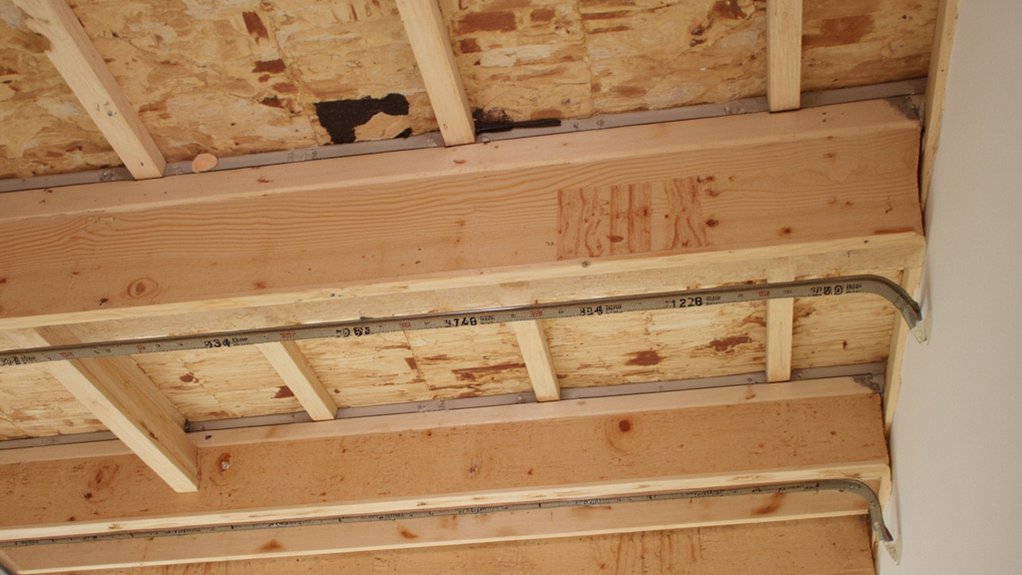
If you’ve ever wondered about those hidden supporting members above your head, you’re not alone. While ceiling studs (or joists) typically follow standard spacing measurements, you’ll need to understand the specific requirements for your home. You’ll find that most residential ceilings use 16-inch spacing between joists, but factors like building codes and load requirements can alter this measurement. Let’s explore why these specifications matter for your next home project.
Standard Ceiling Joist Spacing Measurements
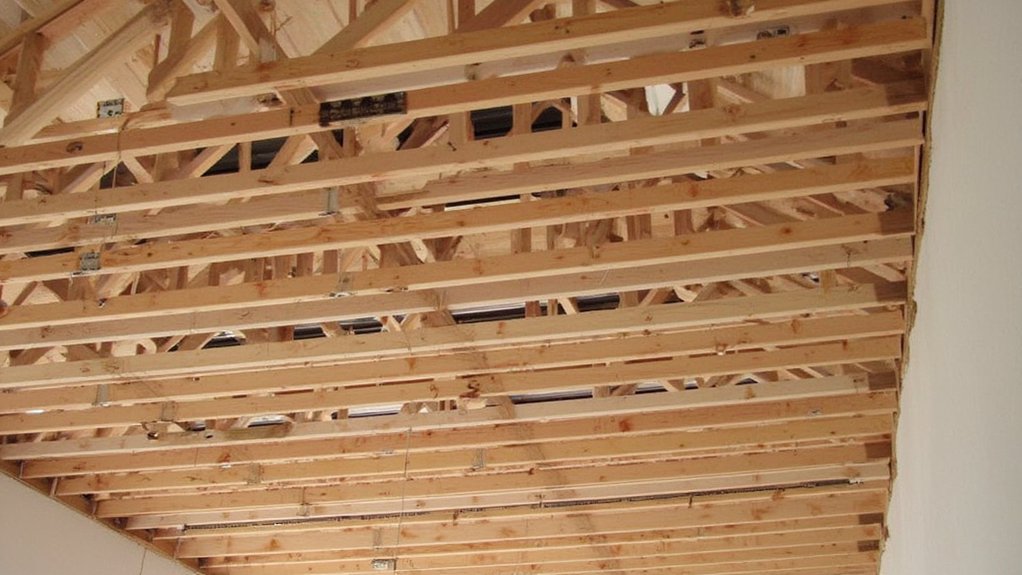
Ceiling joists in modern homes typically follow two standard spacing measurements: 16 inches on center and 24 inches on center.
The 16-inch spacing is the most common measurement you’ll find, as it provides ideal support for drywall and other ceiling materials. You’ll see this spacing in most residential construction where standard 4×8 sheets of drywall are used.
For areas with lighter loads, you might find 24-inch spacing, which can save on material costs. According to building expert Mike Johnson, “24-inch spacing works well in spaces where you won’t be hanging heavy fixtures or installing recessed lighting.”
Here’s what determines your joist spacing:
- Local building codes
- Ceiling load requirements
- Joist size and material
- Span distance between walls
Factors That Affect Ceiling Stud Placement
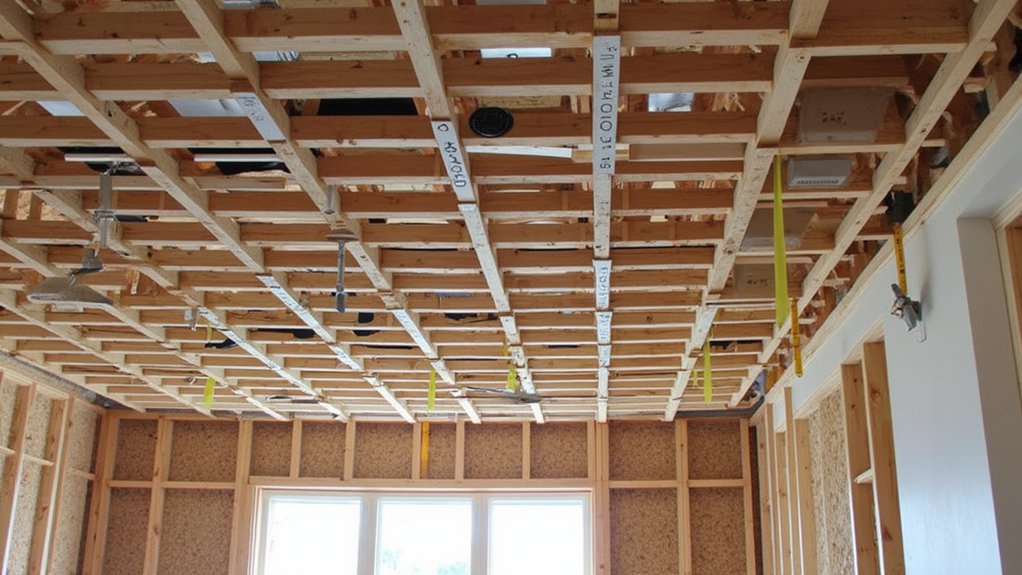
While planning your ceiling construction, several key factors will determine exactly where you’ll need to place the supporting studs.
Key factors include:
- Overall span length of your ceiling
- Type and weight of materials you’re using
- Local building codes and requirements
- Whether you’re installing fixtures or ceiling fans
“The load requirements of your specific project will greatly impact stud spacing decisions,” says Tom Miller, master carpenter with 30 years of experience. You’ll need to take into account:
- Dead loads (permanent weight)
- Live loads (temporary weight)
- Snow loads (for top floor ceilings)
Additional considerations include:
- Direction of existing joists
- Insulation requirements
- HVAC system placement
- Electrical wiring paths
These factors work together to determine your ideal stud placement configuration.
Using Tools to Locate Ceiling Joists
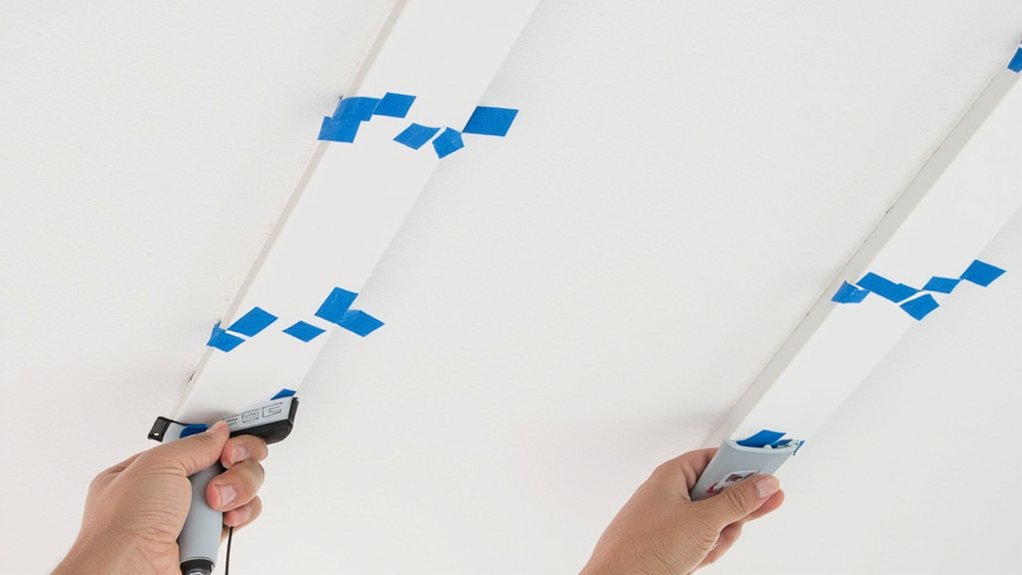
Before you begin any ceiling work, you’ll need reliable tools to accurately locate the joists hidden behind your drywall or plaster. Here are the most effective tools for finding ceiling joists:
- Electronic stud finder: The most accurate modern option that detects density changes
- Magnetic stud finder: Locates metal fasteners in the joists
- Knocking method: Tap the ceiling and listen for solid spots
- Pilot hole technique: Make tiny test holes to verify joist location
“Always start your search near walls where joists typically connect,” says master carpenter Tom Silva. “Mark each joist location with painter’s tape or light pencil marks.”
Pro tip: Most electronic stud finders have different modes for detecting wood versus metal, so select the appropriate setting for your ceiling type.
Regional Building Code Requirements
Building codes across North America set specific requirements for ceiling joist spacing, which you’ll need to understand after locating your joists.
The International Residential Code (IRC) specifies these common spacing requirements:
- 16 inches on center for most residential ceilings
- 24 inches on center for some engineered systems
- 12 inches on center for heavy-load areas
Your local requirements may vary, so you’ll want to check with your municipality. As building inspector Tom Richards notes, “While 16 inches is standard, factors like ceiling material and load requirements can alter the spacing requirements.”
Key considerations for your region:
- Snow loads in northern climates
- Seismic zones in earthquake-prone areas
- Wind resistance requirements in coastal regions
- Local amendments to standard building codes
Load-Bearing Considerations for Ceiling Studs
Understanding the load capacity of your ceiling studs remains critical since they must support both dead loads and live loads above. Dead loads include insulation, drywall, and permanent fixtures, while live loads account for people walking in attic spaces or stored items.
Master carpenter Jim Stevens notes, “Your ceiling joists need proper spacing based on their intended load. For typical residential ceilings, you’ll want:
- 12-inch spacing for heavy loads (HVAC, storage)
- 16-inch spacing for standard loads
- 24-inch spacing for light loads only”
Remember that span length affects required spacing – longer spans need closer spacing. A 2×6 ceiling joist can typically span 10 feet at 16-inch spacing, while a 2×8 can span up to 13 feet under normal residential loads.
Common Installation Mistakes to Avoid
When installing ceiling studs, you’ll want to avoid several critical mistakes that can compromise your ceiling’s structural integrity and safety.
Common Mistakes to Watch For:
- Incorrect spacing: Don’t exceed the 24-inch maximum spacing requirement
- Poor alignment: Failing to keep studs parallel and properly squared
- Inadequate fastening: Using too few nails or the wrong size screws
- Missing blocking: Skipping critical cross-bracing between joists
“The most frequent error I see is homeowners rushing the layout process,” says Mike Thompson, master carpenter. “Take time to mark your lines precisely.”
Additional Pitfalls:
- Installing studs without checking for electrical or plumbing obstacles
- Using damaged or warped lumber
- Neglecting to verify load calculations
- Skipping proper end-bearing support at walls
Follow your local building codes and don’t hesitate to consult a professional when unsure.
Safe Mounting Guidelines for Heavy Fixtures
Proper support becomes essential when mounting heavy fixtures like chandeliers or ceiling fans to your ceiling studs. For fixtures over 50 pounds, you’ll need to install a heavy-duty mounting bracket that spans across at least two ceiling joists.
Follow these weight-based guidelines:
- Up to 15 lbs: Standard electrical box
- 15-50 lbs: Fan-rated box with brace
- 50+ lbs: Heavy-duty mounting bracket
“Always check your fixture’s weight rating and multiply it by 1.5 for safety margin,” advises Tom Miller, master electrician. When installing:
- Use appropriate lag bolts (minimum 3/8 inch)
- Pre-drill pilot holes
- Verify bracket is level
- Tighten all hardware completely
- Test support by hanging from mounting point before attaching fixture
