
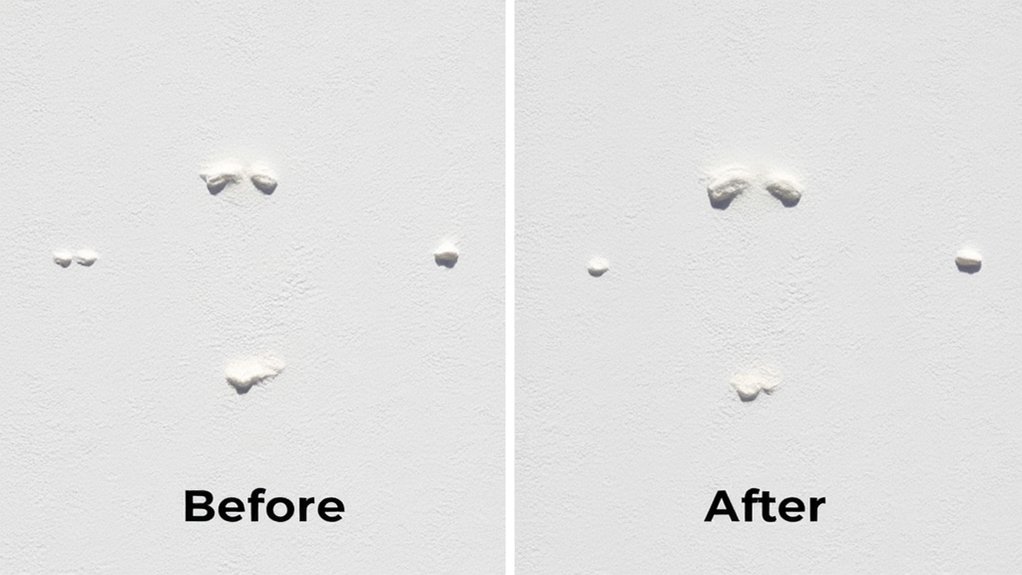
Many DIY painters don’t realize that unfilled nail holes can remain visible even after multiple coats of fresh paint. These tiny imperfections create subtle shadows that catch the eye and detract from your walls’ appearance. As professional painter Mark Davidson explains, “Skipping proper hole-filling is like leaving tiny craters that will haunt your paint job for years.” Before you grab that paintbrush, you’ll want to understand the critical steps and tools needed for a flawless finish.
Why Filling Nail Holes Matters
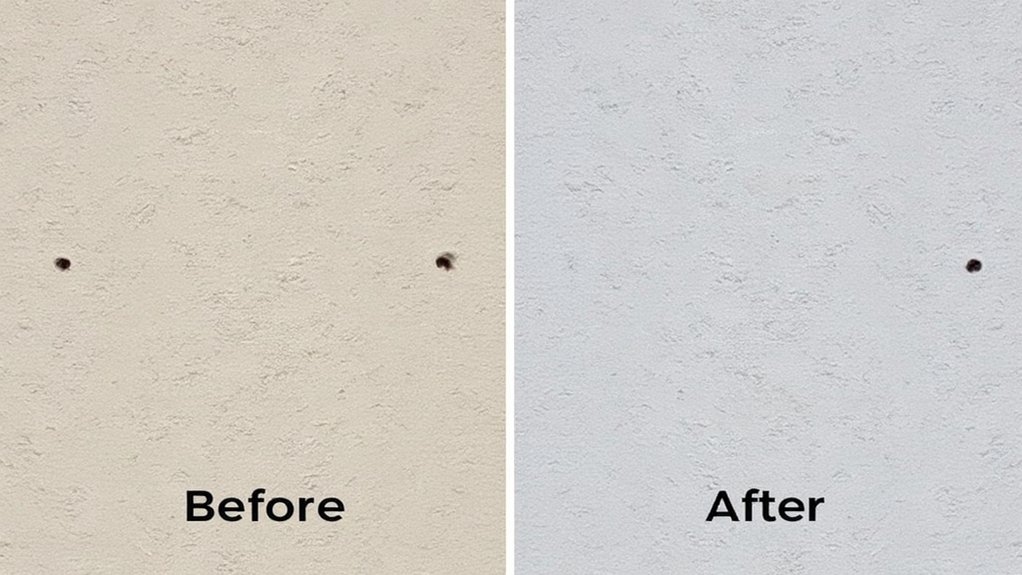
When you’re preparing to paint a room, those small nail holes in your walls can greatly impact the final results if left unfilled. Even tiny holes can cast noticeable shadows and create distracting imperfections in your freshly painted surface.
“Unfilled nail holes collect dust and dirt over time, making them more visible against light-colored walls,” explains Tom Martinez, professional painter with 20 years of experience.
Here’s why filling nail holes is vital:
- Prevents paint from sinking into holes and creating dimples
- Guarantees a smooth, professional-looking finish
- Provides better protection against moisture infiltration
- Makes future nail placement easier
- Creates a proper surface for paint adhesion
- Helps maintain your home’s value with professional results
Don’t skip this vital step – proper preparation leads to superior results.
Common Types of Wall Damage
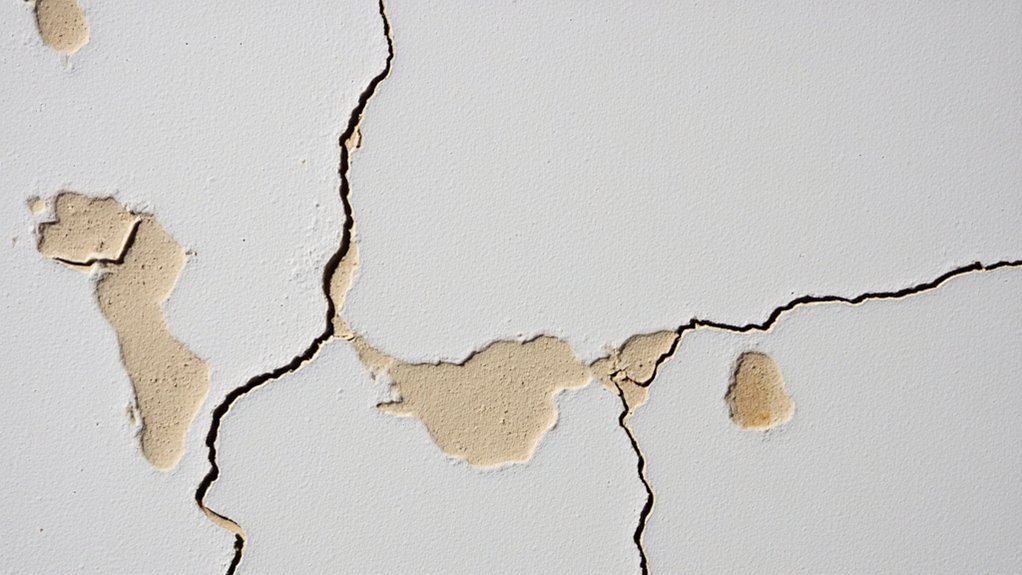
Before tackling those nail holes, you’ll want to assess all the common wall damage that needs repair in your space. Look for these typical issues:
- Nail holes (1/16 to 1/8 inch diameter)
- Picture hanger holes (1/4 to 1/2 inch)
- Door knob damage (2-3 inch dents)
- Anchor holes from shelving (3/8 to 1/2 inch)
- Corner bead cracks
- Settling cracks (hairline to 1/4 inch wide)
“The most frequent wall repairs we encounter are simple nail holes and minor drywall dings,” says Tom Carter, professional painter with 20 years’ experience. You’ll also want to check for water stains, which indicate deeper problems that need addressing before painting. Pay special attention to areas behind furniture and around light switches where damage often goes unnoticed.
Essential Tools and Materials
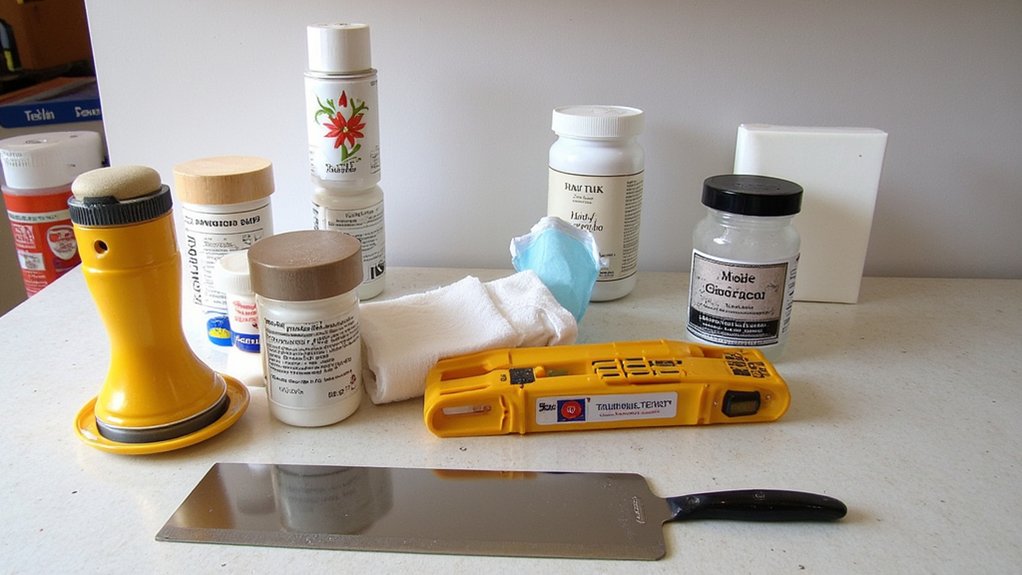
Success with nail hole repairs starts with gathering the right supplies and tools for your project. To properly fill holes before painting, you’ll need these essential items:
Basic Tools:
- Putty knife (1-2 inch flexible blade)
- Fine-grit sandpaper (150-220 grit)
- Clean cloth or rag
- Small paint brush
- Spackle tool or scraper
Filling Materials:
- Spackling compound
- Drywall joint compound
- Wood filler (for wood surfaces)
- Painter’s caulk
“Always choose your filling material based on the wall surface and hole size,” says Tom Rogers, professional painter with 20 years’ experience. “Spackling works best for holes under ¼ inch, while joint compound is better for larger repairs.”
Don’t forget these helpful extras:
- Drop cloth
- Dust mask
- Safety glasses
- Work gloves
Step-by-Step Hole Filling Process
Now that you’ve gathered your supplies, the proper filling technique will make all the difference in achieving a smooth, paintable surface.
Follow these steps:
- Clean the hole area with a damp cloth and let dry completely
- Apply spackling compound using your putty knife at a 45-degree angle
- Press firmly to work the compound into the hole
- Scrape excess material, leaving it slightly raised above the surface
“Always fill slightly proud of the wall,” says contractor Mike Wilson. “You’ll sand it flush later.”
Wait 2-4 hours for the compound to dry fully. Once dry:
- Sand the area with 220-grit sandpaper using gentle circular motions
- Wipe away dust with a clean tack cloth
- Check surface level with your fingertips
- Apply a second coat if needed
Best Products for Different Wall Types
While different wall materials require specific repair products, choosing the right filler will guarantee long-lasting results that won’t crack or shrink over time.
For Drywall:
- Lightweight spackling compound
- DAP DryDex (pink-to-white formula)
- All-purpose joint compound for larger holes
For Plaster Walls:
- Setting-type joint compound
- Plaster of Paris
- Lime-based patching plaster
For Wood Surfaces:
- Wood filler or putty
- Stainable wood filler for natural finishes
- Epoxy wood filler for exterior repairs
For Concrete/Masonry:
- Hydraulic cement
- Vinyl concrete patch
- Quick-setting mortar mix
Expert tip: “Always match your filler to your wall type – using drywall compound on plaster or concrete will lead to premature failure,” says contractor Mike Stevens.
Tips for Achieving a Smooth Finish
Getting a flawlessly smooth finish starts with proper preparation and attention to detail when filling nail holes before painting.
Key steps for ideal results:
- Sand the filled holes gently with 220-grit sandpaper until they’re level with the wall
- Wipe away dust with a slightly damp microfiber cloth
- Allow surface to dry completely (15-20 minutes)
“The key is checking your work under good lighting,” says Tom Peterson, professional painter. “Hold a flashlight at an angle to spot any remaining imperfections.”
Additional tips:
- Apply filler in thin layers rather than one thick application
- Press filler 1/8 inch beyond the hole’s edge
- Let each layer dry according to product instructions
- Use a putty knife wider than the hole for smoother application
Common Mistakes to Avoid
Even with proper sanding techniques and careful preparation, homeowners often make several preventable mistakes when filling nail holes before painting. “I’ve seen DIYers rush through hole-filling and end up with visible dimples or bumps that show right through the paint,” explains Sarah Martinez, a 15-year painting contractor.
Common mistakes to avoid:
- Using too much filler – Apply sparingly to prevent excess sanding
- Skipping the pre-fill inspection – Remove loose debris and wood particles first
- Rushing the drying time – Wait 2-4 hours between coats
- Using the wrong filler type – Match the filler to your surface material
- Sanding too aggressively – Use 220-grit sandpaper with light pressure
- Filling holes wider than 1/4 inch with spackling – Use wood filler instead
- Painting before the filler fully cures – Allow 24 hours in most cases
