
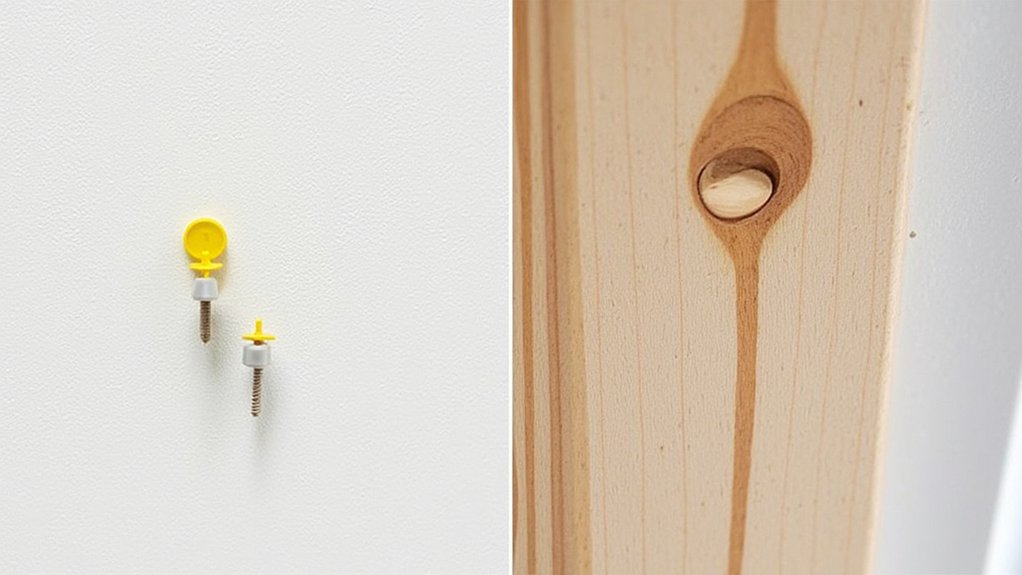
If you’re hanging items on your walls, you’ll want to know whether drywall anchors require studs for proper support. The answer isn’t a simple yes or no – it depends on what you’re mounting and how much weight it needs to hold. As professional contractor Mike Stevens explains, “Drywall anchors are specifically engineered to work without studs, but understanding their limits is essential for safe installation.” Let’s examine when you can skip the studs and when you absolutely need them.
Understanding How Drywall Anchors Work
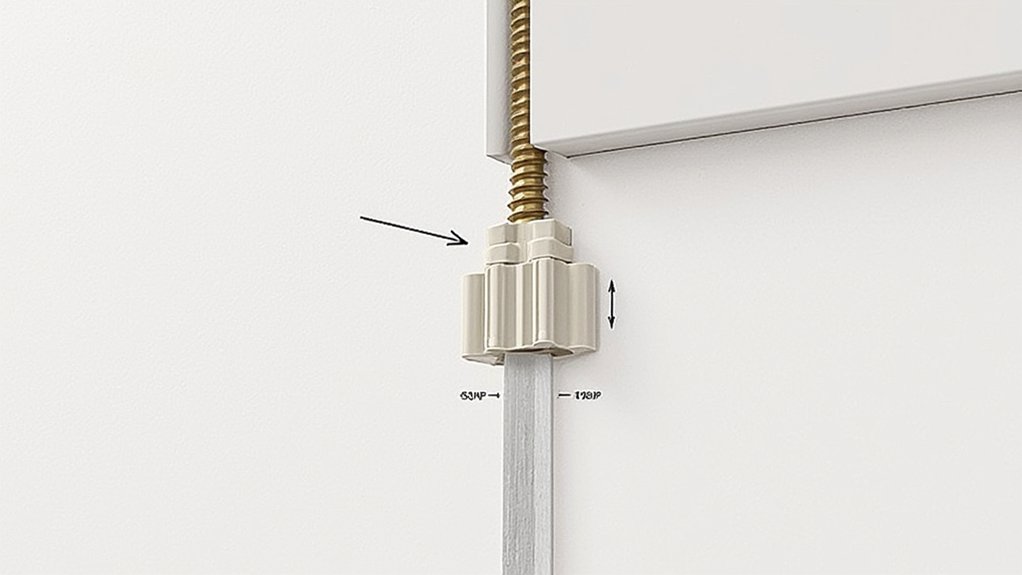
When you need to hang items on drywall, drywall anchors serve as sturdy mounting points that distribute weight across the wall surface. These clever devices work by expanding behind your wall’s surface, creating a strong grip that prevents pull-out.
Here’s how drywall anchors function:
- The anchor’s body spreads out as you insert a screw
- Wings or toggles unfold behind the drywall
- Pressure gets distributed across a wider area
“Proper installation creates a mechanical lock between the anchor and drywall,” explains contractor Mike Roberts. “It’s this spreading action that gives anchors their holding power.”
You’ll find different types of anchors rated for various weight capacities:
- Plastic anchors: 10-25 pounds
- Metal toggles: 25-50 pounds
- Molly bolts: 25-55 pounds
- Snap toggles: up to 100 pounds
When to Use Drywall Anchors vs. Studs
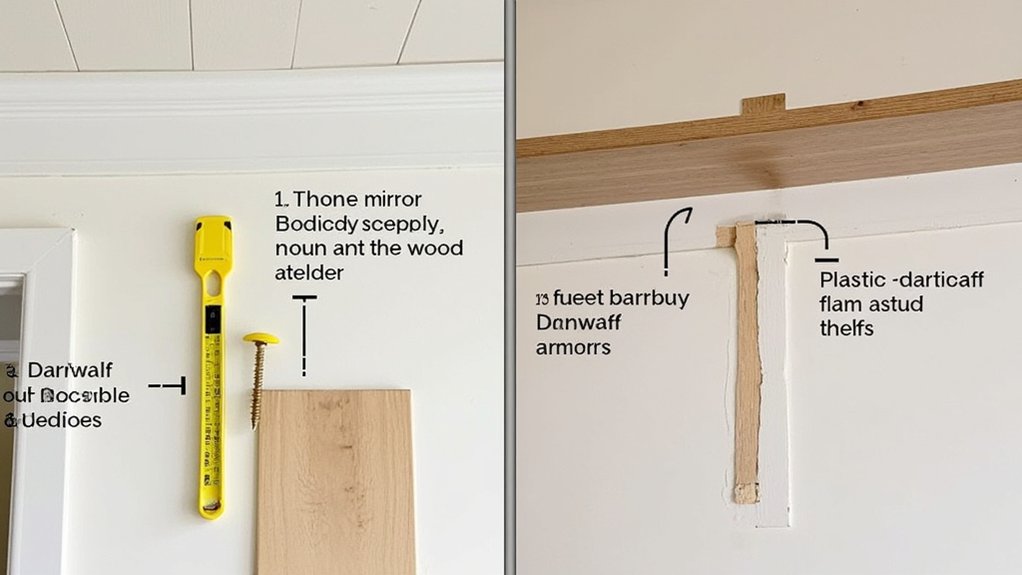
Choosing between drywall anchors and studs depends primarily on what you’re planning to mount and how much weight it’ll bear. Here’s when to use each option:
Use Studs When:
- Mounting items over 50 pounds
- Installing TV mounts or heavy shelving
- Hanging cabinets or large mirrors
- Supporting dynamic loads (pull-up bars)
Use Drywall Anchors When:
- Mounting items under 50 pounds
- Installing lightweight shelves
- Hanging pictures or decorative items
- Can’t locate studs where you need support
“For ideal safety, always choose studs for heavy loads,” says contractor Mike Roberts. “But quality drywall anchors are perfect for lighter items when studs aren’t available.” Remember that plastic anchors typically support 10-25 pounds, while toggle bolts can hold up to 50 pounds in standard drywall.
Types of Drywall Anchors and Their Weight Limits
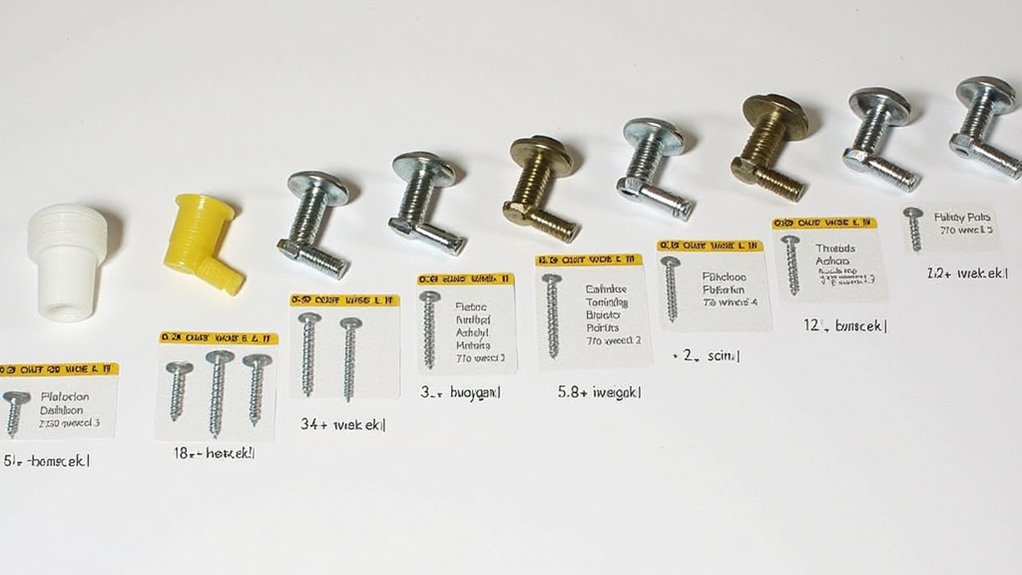
Different types of drywall anchors offer varying levels of support for your mounting needs. Here’s what you can expect from common varieties:
- Plastic expansion anchors: Hold 10-25 pounds
- Toggle bolts: Support 50-100 pounds
- Molly bolts: Handle 25-50 pounds
- Threaded anchors: Carry 25-75 pounds
- Self-drilling anchors: Hold 25-35 pounds
“The key is matching the anchor to your item’s weight and wall composition,” says contractor Mike Bennett. For lightweight items like pictures, plastic anchors work well. But when you’re mounting shelves or TV brackets, you’ll want toggle bolts or molly bolts for better support.
Remember to check your anchor’s specific weight rating, as capacities vary by manufacturer. Always factor in the wall’s condition and the item’s weight distribution when selecting your anchor type.
Proper Installation Techniques for Secure Mounting
To guarantee your drywall anchors provide maximum support, you’ll need to follow proper installation steps from start to finish. “The success of any wall mounting project depends on careful preparation and precise technique,” explains home repair specialist Sarah Martinez.
Follow these essential steps:
- Mark your mounting point with a pencil
- Pre-drill a pilot hole slightly smaller than your anchor
- Insert the anchor until it’s flush with the wall
- Tap gently with a hammer if needed
- Insert your screw, leaving 1/4 inch exposed
“Always check the manufacturer’s specifications for exact drill bit sizes,” advises Martinez. “Using the wrong size can compromise the anchor’s holding power.” When you’re installing multiple anchors, keep them at least 6 inches apart to maintain wall integrity.
Common Mistakes to Avoid When Using Wall Anchors
Even with proper installation steps, many DIY enthusiasts make preventable mistakes that can lead to anchor failure. “I’ve seen countless repair jobs where wall anchors pulled out simply because people overlooked basic precautions,” notes contractor Mike Chen.
Here are the critical errors you’ll want to avoid:
- Drilling holes that are too large or too small for your anchor
- Using the wrong anchor type for your wall material
- Skipping the pilot hole step
- Installing anchors too close to the edge of drywall (less than 1.5 inches)
- Exceeding the anchor’s weight rating
- Not checking for hidden pipes or wires before drilling
- Reusing old anchor holes
“Always measure twice and check your anchor’s weight rating,” advises Chen. “A properly sized hole and the right anchor type will hold securely for years.”
