
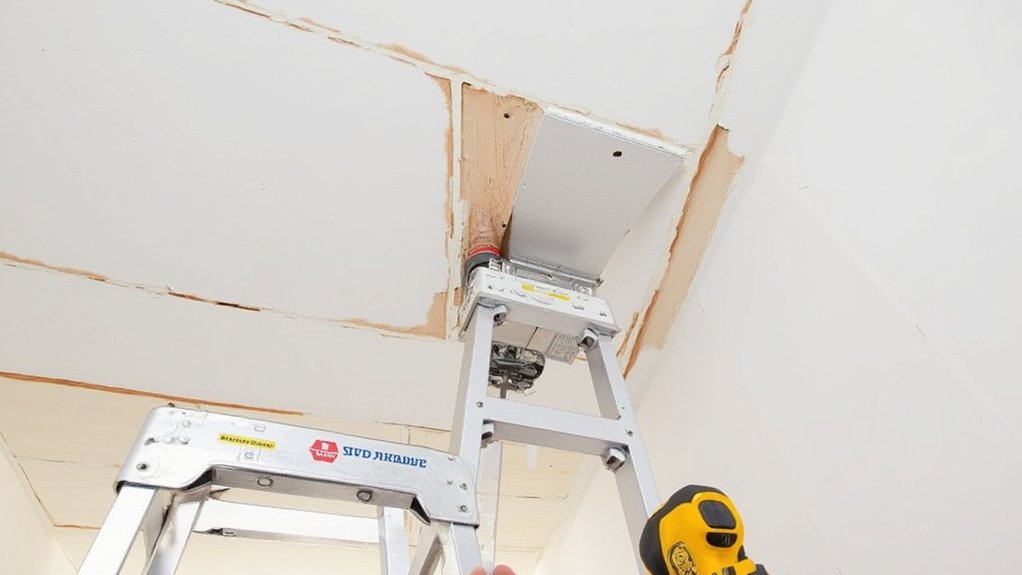
While screwing into a ceiling might seem like a straightforward task, it requires careful planning and precise execution to avoid costly mistakes. You’ll need to navigate between essential support structures and potential hazards like electrical wiring before you pick up your drill. As professional contractor Mike Stevens notes, “The difference between a secure mounting and a ceiling disaster often comes down to the first five minutes of preparation.” Let’s explore how you can safely tackle this home improvement project.
Understanding Your Ceiling Type
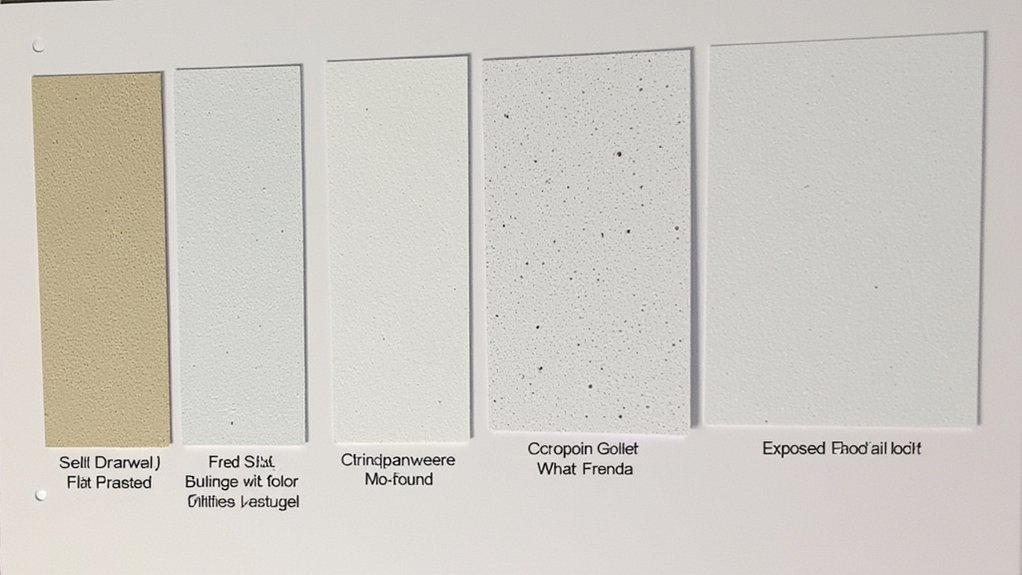
Before you start drilling holes in your ceiling, it’s essential to identify what type of ceiling material you’re working with. Your ceiling will typically be one of these common types:
- Drywall/Sheetrock – The most common ceiling material, consisting of gypsum panels
- Plaster – Found in older homes, harder than drywall and requires special anchors
- Drop/Suspended – Removable tiles supported by a metal grid system
- Concrete – Solid concrete slab common in apartments and commercial buildings
“Understanding your ceiling composition determines which fasteners and techniques you’ll need,” says Tom Richards, master carpenter with 20 years’ experience. You can identify your ceiling type by:
- Tapping it – Drywall sounds hollow, plaster sounds solid
- Pushing a pin – Drywall gives easily, plaster resists
- Looking for seams or grid patterns
Essential Tools and Materials
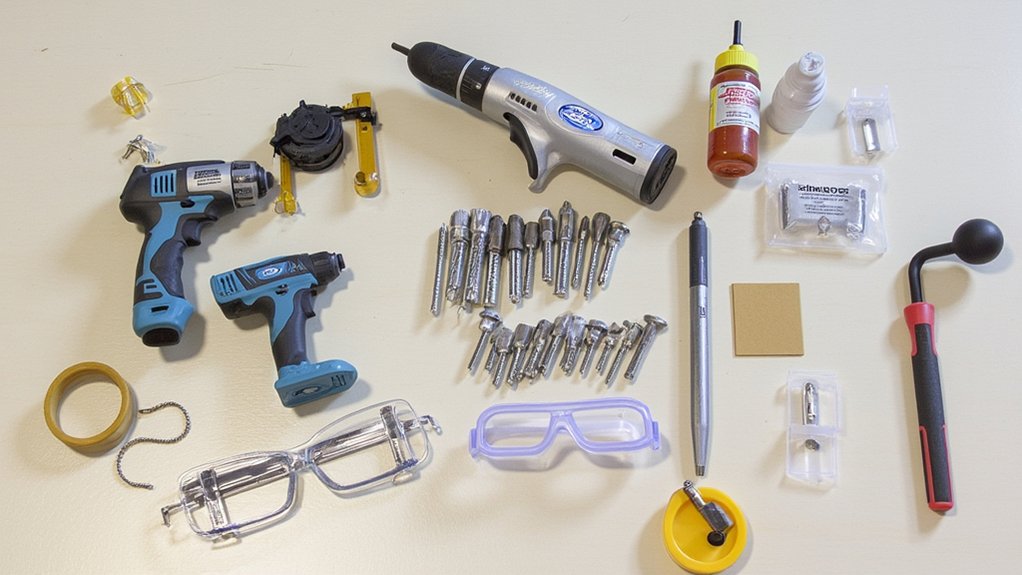
You’ll need three categories of essential tools to properly secure items to your ceiling: mounting hardware, basic tools, and safety equipment. “Having the right tools ready before you start means you won’t have to stop mid-project when you discover you’re missing something critical,” explains Sarah Chen, licensed contractor and home improvement expert.
Basic Tools:
- Power drill with various drill bits
- Stud finder
- Measuring tape and pencil
- Level
Mounting Hardware:
- Appropriate screws (1.5-3 inches long)
- Anchors rated for your ceiling type
- Toggle bolts (if needed)
Safety Equipment:
- Safety glasses
- Dust mask
- Sturdy ladder
- Work gloves
- Drop cloth for debris
“Always match your hardware to both your ceiling type and the weight of what you’re mounting,” advises Chen.
Safety Precautions Before You Start
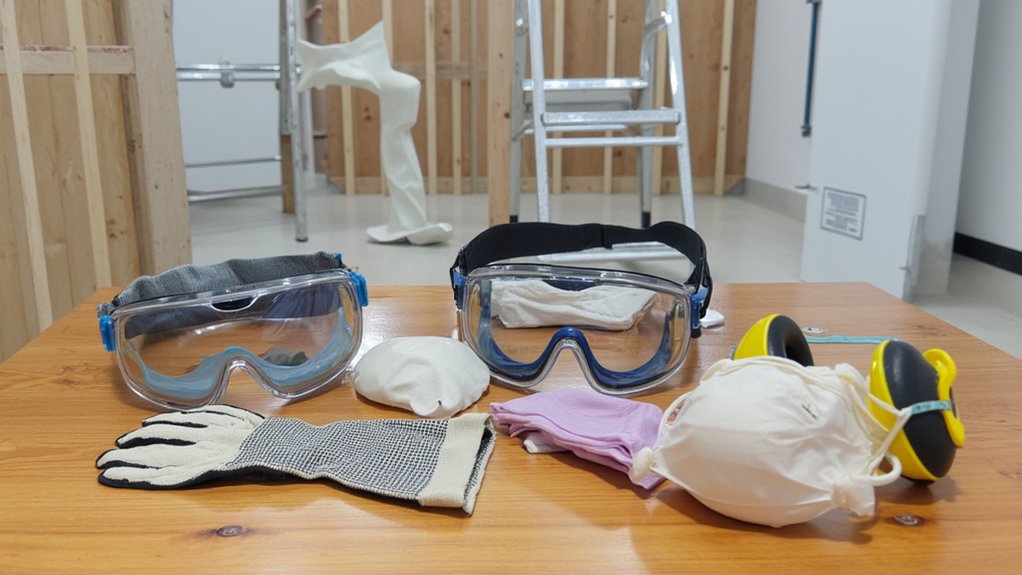
Now that you’ve gathered your tools and materials, taking proper safety measures can mean the difference between a smooth project and an emergency room visit. “Safety isn’t just about wearing protective gear – it’s about creating a stable work environment and knowing what’s behind your ceiling,” says Robert Martinez, a safety coordinator with 15 years of construction experience.
Before you start:
- Put on safety goggles and a dust mask
- Set up a sturdy ladder or scaffolding on level ground
- Turn off power to any electrical circuits in the work area
- Use a stud finder to locate ceiling joists
- Check for pipes and wiring with an electronic detector
- guarantee proper lighting in your work area
- Clear the floor of obstacles within 6 feet of your work zone
- Have someone nearby to assist if needed
Finding Ceiling Joists and Support Beams
Locating the ceiling joists precisely can make or break your ceiling installation project. Here’s how to find them:
- Use a stud finder – Run it slowly across your ceiling until it beeps or lights up
- Knock test – Tap the ceiling; solid sounds indicate joist locations
- Mark each joist – Use a pencil to create reference points
“Most residential ceiling joists are spaced 16 or 24 inches apart,” says contractor Mike Peterson. You’ll want to:
- Measure from a corner
- Look for existing fixtures as guides
- Double-check with a thin nail test
For extra accuracy:
- Use a magnetic stud finder to detect nails
- Mark both edges of each joist
- Verify your findings with a small drill hole
- Connect the marks with a straight line
Choosing the Right Screws and Anchors
Selecting the proper screws and anchors for your ceiling project depends heavily on both the mounting weight and ceiling material type. You’ll need different hardware based on whether you’re working with drywall, plaster, or exposed beams.
For drywall ceilings:
- Use toggle bolts for items 15-25 pounds
- Choose molly bolts for 10-15 pound loads
- Install plastic anchors for items under 10 pounds
For plaster ceilings:
- Install sleeve anchors for heavy items (25+ pounds)
- Use screw-in metal anchors for medium weights
- Select spiral plastic anchors for light fixtures
“Always choose screws that penetrate at least 1 inch into the joist when mounting directly to wood,” says contractor Mike Roberts. “For metal studs, use self-tapping screws with appropriate load ratings.”
Step-by-Step Installation Guide
With your screws and anchors ready, proper installation follows a systematic approach that will help you avoid common ceiling-mounting mishaps.
- Mark your mounting point with a pencil
- Use a stud finder to locate ceiling joists
- Drill a pilot hole at the marked spot
- If hitting a joist, drive the screw directly in
- For drywall areas, insert the anchor first
“Always drill your pilot hole slightly smaller than your screw or anchor diameter,” says contractor Mike Stevens. “For most residential ceilings, a 1/8-inch pilot hole works well.”
Remember to:
- Wear safety glasses during drilling
- Keep drill perpendicular to the ceiling
- Test the anchor’s stability before hanging items
- Clean up any drywall dust immediately
For heavier items over 10 pounds, double-check your anchor’s weight rating and consider using multiple mounting points.
Common Mistakes to Avoid
When tackling ceiling installations, even experienced DIYers can make critical errors that compromise safety and stability. Here are the most common pitfalls you’ll want to avoid:
- Skipping stud location: Don’t guess where ceiling joists are – use a stud finder.
- Using wrong anchor types: “Always match your anchor to both the ceiling material and item weight,” says contractor Mike Peters.
- Over-tightening screws: You’ll strip the hole or crack the drywall.
- Forgetting to check wiring: Before drilling, scan for electrical lines.
- Using drywall screws for fixtures: These aren’t rated for heavy loads.
- Working alone: Have someone spot you, especially with heavy items.
- Drilling too deep: Measure your screw length against ceiling thickness first.
- Ignoring weight limits: Each anchor type has specific capacity ratings.
