
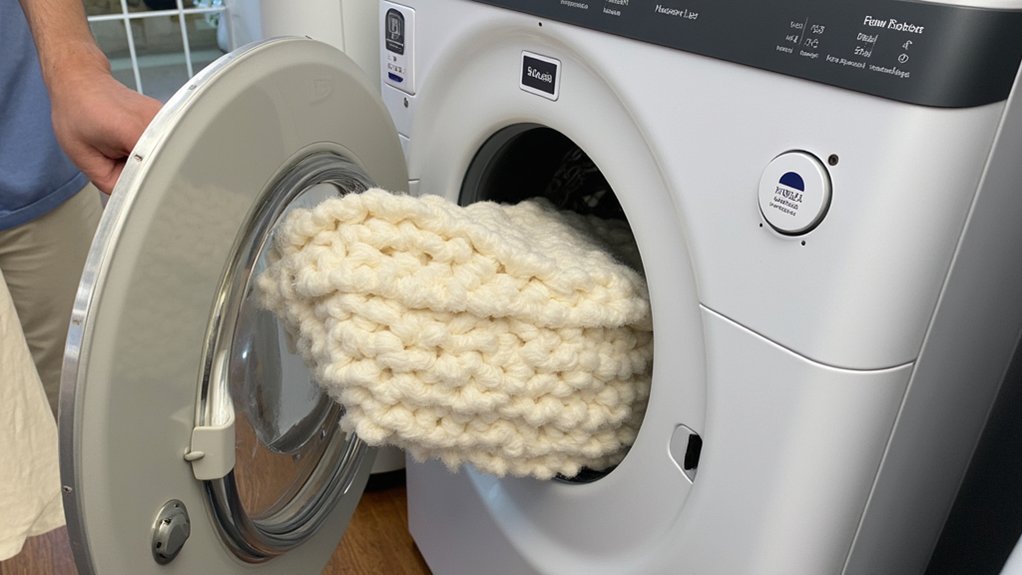
You’ve probably wondered if it’s safe to toss your wool blanket into the washing machine, especially when faced with a stubborn stain or musty odor. While traditional wisdom might suggest dry cleaning only, modern washing machines can handle wool – if you follow the right steps. The key lies in understanding your specific blanket’s needs and using proper techniques to prevent damage. Let’s uncover the essential methods that textile experts recommend for keeping your wool blanket clean and well-maintained.
Types of Wool Blankets and Their Care Requirements
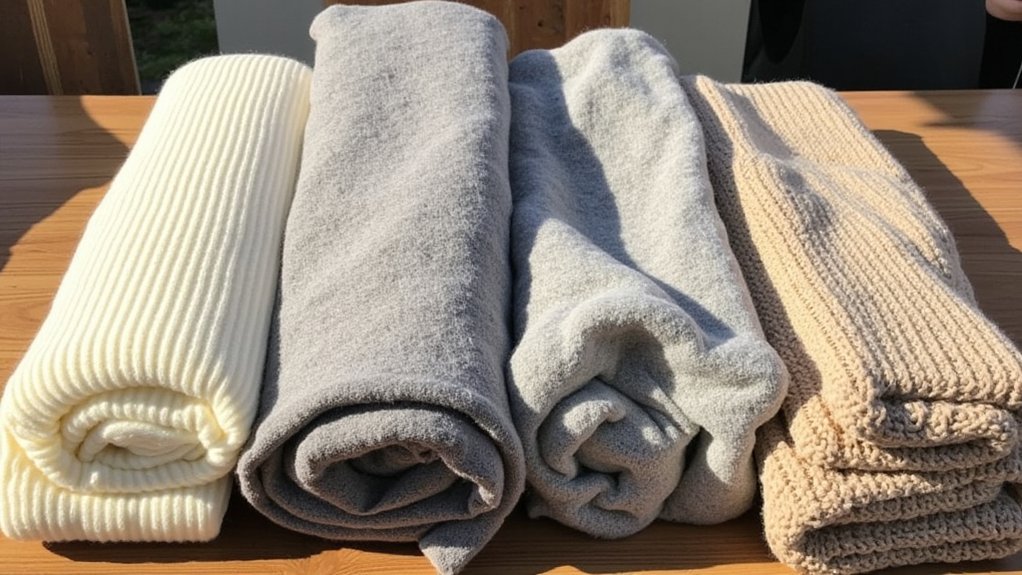
Wool blankets come in several varieties, each requiring specific care to maintain their quality and longevity. The main wool blanket types include:
- Merino – Requires gentle hand washing or delicate machine cycle
- Lambswool – Needs professional dry cleaning
- Cashmere – Demands hand washing only
- Virgin wool – Can handle machine washing on wool cycle
- Wool blend – Follow care instructions for dominant fiber
Your wool care methods should match your specific blanket type. “Different wool varieties have unique fiber structures that determine their cleaning needs,” explains textile expert Dr. Sarah Chen. You’ll need to check the care label carefully, as some wool blankets contain special treatments that affect washing requirements. For machine-washable varieties, use a wool-specific detergent and cold water to prevent shrinkage and maintain fiber integrity.
Pre-Washing Checks and Preparation Steps

Before starting any cleaning process, you’ll need to carefully inspect your blanket and gather the right supplies for washing.
Start with a thorough pre-wash inspection, checking for:
- Holes, tears, or loose threads
- Stains or soiled areas
- Signs of moth damage
- Weak or worn spots in the fabric
Next, locate the blanket labeling, which typically appears on a sewn-in tag. “Always check the care label first,” advises textile expert Sarah Chen. “Some wool blankets are marked ‘dry clean only’ while others can handle machine washing.”
If the label is missing or illegible, test for colorfastness by dabbing a small hidden area with a damp white cloth. You’ll also want to measure your blanket before washing to guarantee it maintains its original size through the cleaning process.
The Right Machine Settings for Washing Wool
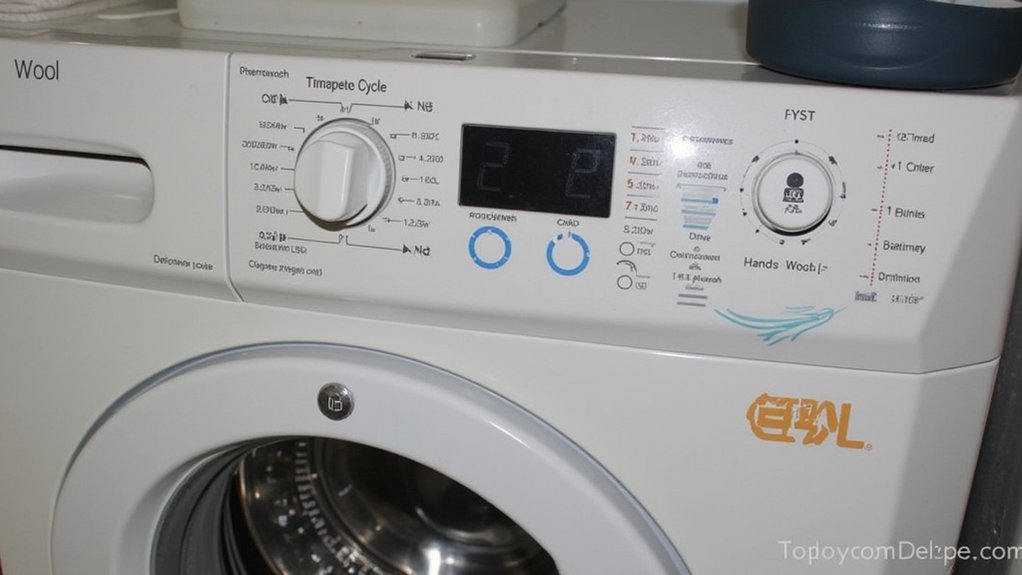
When it comes to protecting your wool blanket during machine washing, selecting the right settings is absolutely critical for preventing damage.
Here are the best machine settings for wool:
- Select “Wool,” “Delicate,” or “Hand Wash” cycle
- Set water temperature to cold (30-40°F)
- Choose low spin speed (600-800 RPM maximum)
- Keep cycle length under 30 minutes
“Gentle agitation is key to maintaining wool fiber integrity,” explains textile expert Sarah Chen. You’ll want to avoid these harmful settings:
- Hot water temperatures
- Normal or heavy-duty cycles
- High spin speeds
- Extended wash times
If your machine doesn’t have a designated wool cycle, use these washing techniques:
– Manual temperature control
- Shortest possible cycle
- “Delicate” setting with minimal agitation
- Extra rinse option to remove all soap
- Gentle detergents labeled “wool wash” or “delicates”
- pH-neutral liquid cleaners
- Specialized wool softeners
- Regular laundry detergents
- Bleach or oxygen-based cleaners
- Fabric softeners not made for wool
- Lay the blanket flat on a large clean towel
- Roll the towel and blanket together to remove excess water
- Unroll and transfer to a fresh dry towel
- Reshape the blanket to its original dimensions
- Gently stretch any contracted areas
- Square off corners and edges
- Measure sides to verify even proportions
- Place small weights along edges if needed
- Using water above 85°F
- Adding bleach or oxygen-based cleaners
- Wringing or twisting the blanket
- Washing more frequently than every 3-6 months
- Using regular laundry detergent
- Putting the blanket in the dryer
- Hanging wet wool directly in sunlight
Best Detergents and Products for Wool Care
Selecting the proper detergent matters just as much as using the right machine settings for keeping your blankets soft and damage-free. “You’ll want to use a mild detergent specifically formulated for wool fibers,” recommends textile care specialist Dr. Sarah Chen.
Choose from these wool-safe options:
Avoid these harmful products:
“Use only 1-2 tablespoons of wool detergent per blanket to prevent residue buildup,” advises Dr. Chen. For best results, add a capful of wool softener during the rinse cycle to maintain the fiber’s natural oils.
Drying and Reshaping Your Wool Blanket
After washing your wool blanket, proper drying technique is critical to prevent shrinkage and maintain its shape. “Never put wool blankets in the dryer, as the heat and tumbling action can permanently damage the fibers,” warns textile expert Dr. Sarah Chen.
Follow these drying techniques:
Reshaping methods:
Allow 24-48 hours for complete air drying, depending on humidity levels. Keep the blanket away from direct sunlight and heat sources during this process.
Common Mistakes to Avoid When Washing Wool
Many wool owners inadvertently damage their blankets by making simple yet avoidable mistakes during the washing process. “The most frequent errors I see involve using hot water, harsh agitation, and inappropriate detergents,” explains textile conservator Marie Thompson.
Common wool blanket myths lead people to overwash their items, which can cause unnecessary wear. You’ll want to avoid these critical mistakes:
“The key is gentle treatment,” Thompson advises. “Most people don’t realize that wool naturally repels dirt and requires minimal washing when properly spot-cleaned.”
Frequently Asked Questions
Can I Wash a Wool Blanket With Other Laundry Items?
You shouldn’t mix wool blankets with regular laundry. Following washing guidelines, wool’s unique laundry compatibility requires separate washing to prevent damage, shrinkage, and fiber transfer to other garments.
How Often Should I Wash My Wool Blanket?
You should wash your wool blanket once or twice per year for proper wool blanket care. If it’s not visibly soiled or smelly, airing it outside regularly reduces washing frequency.
Will Washing a Wool Blanket Affect Its Fire-Resistant Properties?
Wondering about your wool’s protective qualities? You’ll be glad to know that proper washing won’t greatly impact your blanket’s natural fire resistance, though repeated aggressive cleaning could gradually reduce its protective properties.
Can I Use Fabric Softener on My Wool Blanket?
Don’t use fabric softener on your wool blanket as it can damage the fibers. Instead, try wool blanket care alternatives like white vinegar or hair conditioner to keep it soft and fresh.
Why Does My Wool Blanket Smell Like Wet Sheep When Damp?
Your wool blanket’s sheepy smell comes from natural lanolin oils in wool fibers releasing their odor when wet. The moisture retention of wool enhances these scents until it’s completely dry.
