
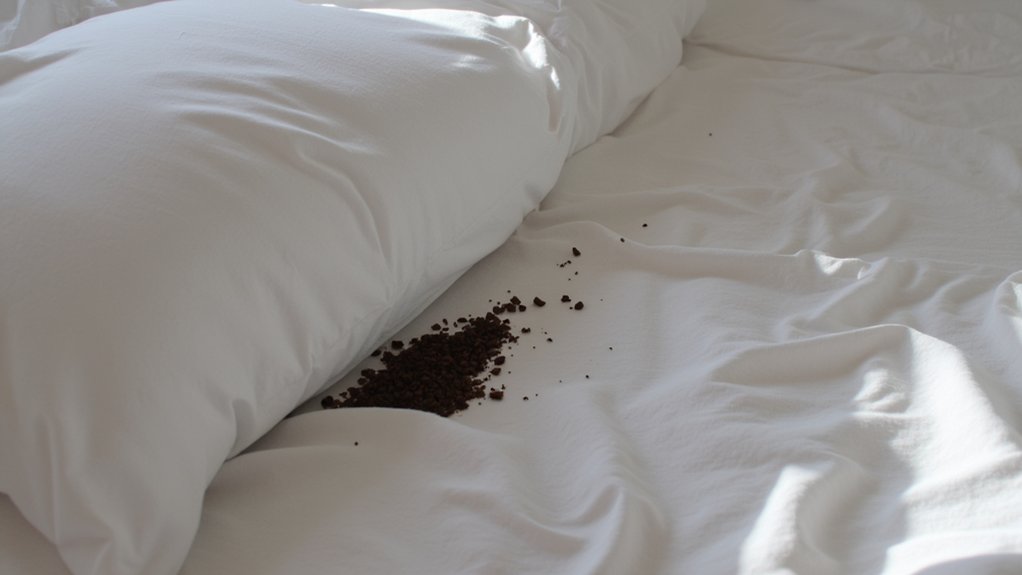
According to the CDC, mice invade an estimated 21 million American homes each year, with many homeowners discovering droppings in unexpected places – including their beds. If you’ve spotted those telltale dark pellets between your sheets, you’re facing more than just an unsettling situation. Mouse droppings carry serious health risks that require immediate attention, and knowing the right steps to take can mean the difference between a quick resolution and a persistent problem.
Health Risks Associated With Mouse Droppings

Finding mouse droppings in your bed poses several significant health risks, as these rodents can transmit over 35 different diseases to humans. You’re at risk through several exposure routes:
- Direct contact with droppings
- Breathing in contaminated dust
- Contact with contaminated bedding
Disease transmission can occur through viruses like Hantavirus and bacteria like Salmonella. According to Dr. Sarah Chen, CDC epidemiologist, “Even dried mouse droppings can release dangerous particles when disturbed.”
Allergen exposure is another serious concern. Mouse proteins found in their droppings, urine, and dander can trigger:
- Severe asthma attacks
- Respiratory problems
- Skin reactions
- Eye irritation
You’ll need to address this issue immediately, as continued exposure increases your risk of developing chronic respiratory conditions.
Signs of Mouse Activity in Your Bedroom
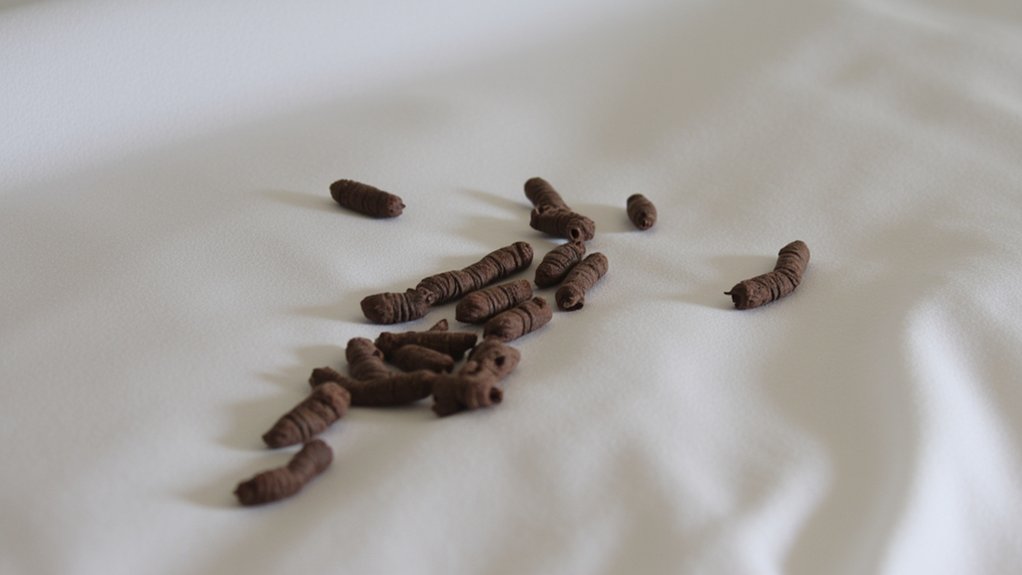
Sharp-eyed homeowners can spot several telltale indicators of mice inhabiting a bedroom beyond just droppings. You’ll notice these signs particularly during nighttime activity when mice are most active:
- Greasy rub marks along baseboards and walls
- Small holes (1/4 inch or larger) in corners or closets
- Gnaw marks on furniture legs and wooden trim
- Shredded paper, fabric, or insulation for nesting
- Musty, ammonia-like odors from urine
- Scratching sounds in walls between 10 PM and 4 AM
“Mouse behavior patterns typically include establishing regular feeding and travel routes,” explains pest control expert Dr. James Chen. “You’ll often find these paths marked by urine trails and droppings, particularly along walls where mice prefer to travel.”
Immediate Steps to Take After Finding Droppings
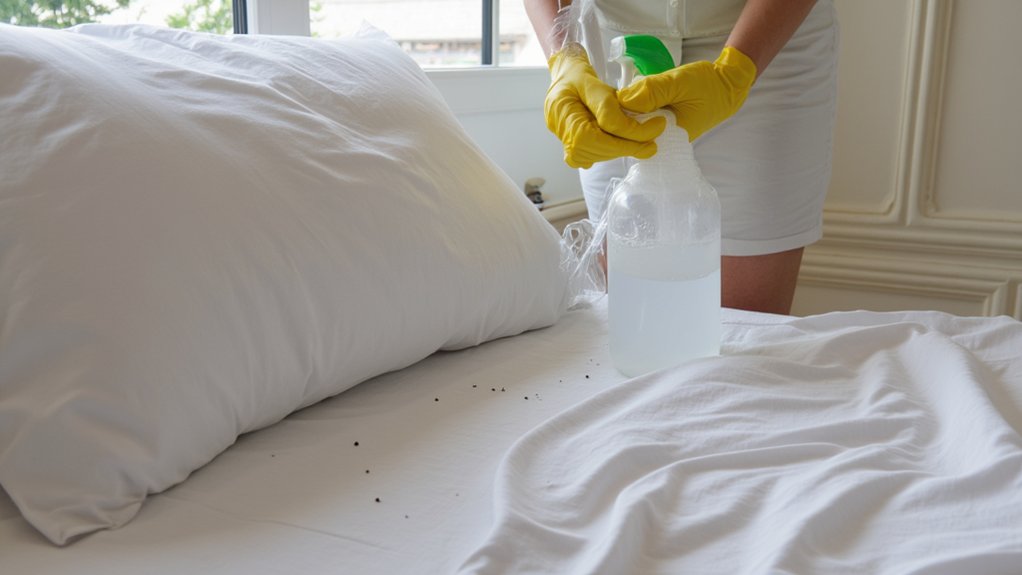
When mouse droppings appear in your bed, you’ll need to take immediate action to protect your health and sanitize the area.
Follow these emergency actions immediately:
- Strip all bedding and seal it in plastic bags
- Don’t shake the bedding to avoid airborne particles
- Wear disposable gloves and a face mask
- Vacuum thoroughly with a HEPA filter vacuum
For proper mouse identification and sanitization:
- Photograph droppings for pest control reference
- Wash all bedding in hot water (at least 140°F)
- Disinfect the mattress with a bleach solution (1:10 ratio)
- Let the mattress air dry completely (4-6 hours minimum)
“Proper handling of contaminated bedding is essential to prevent exposure to harmful pathogens,” notes Dr. Sarah Mitchell, CDC pest management specialist.
How to Clean and Sanitize Your Bed Area
Once you’ve identified mouse droppings in your bed, proper sanitization requires a thorough, systematic approach to eliminate harmful bacteria and viruses.
Essential cleaning supplies:
- Heavy-duty rubber gloves
- Disinfectant spray or solution
- Clean microfiber cloths
- HEPA vacuum
- Hot water
Sanitizing techniques:
- Strip all bedding and wash in hot water (minimum 140°F)
- Vacuum mattress thoroughly, paying special attention to seams and crevices
- Spray mattress surface with EPA-registered disinfectant
- Allow disinfectant to sit for 10 minutes
- Wipe with clean, damp cloth
- Air-dry completely (minimum 4 hours)
“Always treat mouse-contaminated areas as biohazards,” warns Dr. Sarah Chen, infectious disease specialist. “Complete disinfection is vital to prevent hantavirus and other rodent-borne illnesses.”
Prevention Methods to Keep Mice Away
After thoroughly cleaning your mouse-contaminated bed area, you’ll need to implement robust prevention strategies to guarantee the unwanted visitors don’t return.
Essential prevention methods:
- Seal all holes and gaps larger than 1/4 inch with steel wool and caulk
- Store food in airtight metal or glass containers
- Set up humane traps along walls and entry points
- Place natural repellents like peppermint oil-soaked cotton balls every 6 feet
“Prevention is most effective when you combine multiple deterrent methods,” says rodent expert Dr. Sarah Chen. “Focus on eliminating both food sources and entry points.”
Additional measures:
- Keep bedroom floors clear of food debris
- Install door sweeps under bedroom doors
- Trim tree branches within 6 feet of your house
- Remove outdoor wood piles near your home’s foundation
Professional Pest Control Solutions
While DIY prevention methods work for minor infestations, professional pest control services offer thorough solutions for persistent mouse problems in bedrooms.
When you hire a pest control expert, they’ll implement extensive pest management strategies that target both active infestations and potential entry points. They’ll:
- Conduct thorough property inspections
- Set professional-grade traps and bait stations
- Seal entry points with industrial materials
- Apply long-lasting deterrent treatments
- Monitor activity with specialized equipment
Professional rodent control techniques often include multi-phase treatments scheduled over 2-3 months. “Most residential mouse problems require at least three treatment visits to guarantee complete elimination,” explains certified pest control technician Mark Stevens. You’ll receive detailed reports after each visit, plus ongoing maintenance recommendations to prevent future infestations. Many companies also offer warranties for their services, giving you peace of mind.
Frequently Asked Questions
What Color Are Mouse Droppings in Different Types of Bedding Materials?
You’ll find that mouse droppings appear dark brown to black against any bedding color. When conducting droppings identification, they’ll maintain their color regardless of whether they’re on white, dark, or patterned materials.
Can Mice Climb up Bed Frames Made of Different Materials?
You’ll find mice can climb virtually any bed frame due to their exceptional agility. They’ll scale wood, metal, plastic, or upholstered materials using their sharp claws and flexible bodies.
How Long Can Mouse Droppings Remain Infectious in Bedroom Environments?
You’ll need to be cautious as mouse health risks can persist for months. Droppings remain infectious for up to 3 weeks, but contamination longevity extends longer when droppings aren’t properly cleaned.
Do Mice Prefer Specific Types of Bedding Materials or Mattresses?
Like tiny architects, mice don’t care about your bedding preferences or mattress types. They’ll nest in whatever’s warm and soft, whether it’s memory foam, cotton, or synthetic materials.
What Sounds Do Mice Typically Make When Moving Through Bedroom Furniture?
You’ll hear scratching, scurrying, and light squeaking as mice move through furniture. Their tiny claws create rustling sounds against wood, while they’ll make pattering noises crossing surfaces at night.
