
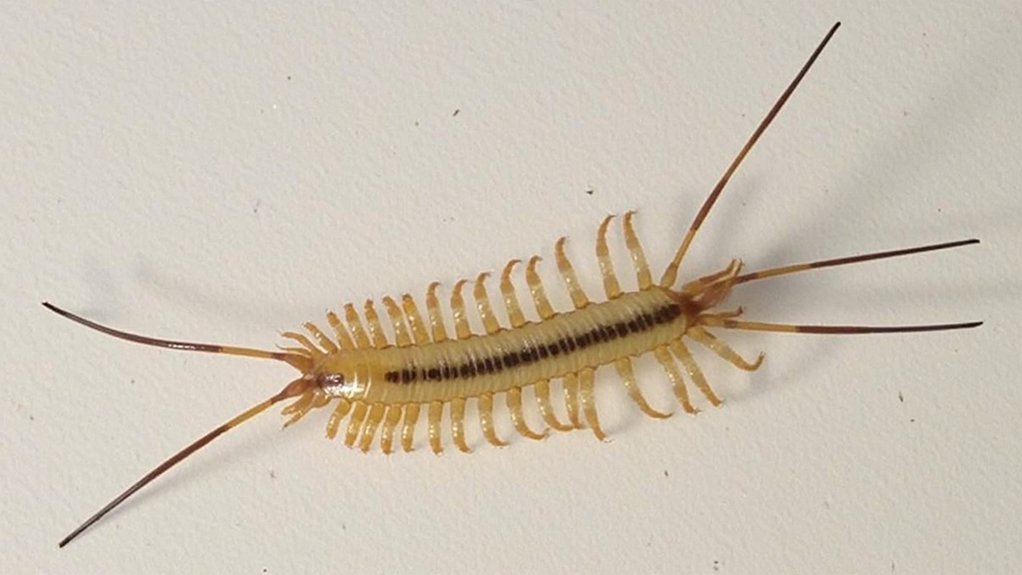
Just when you think those quick-moving house centipedes are temporary visitors, they’re actually settling in for the long haul. These resilient creatures can live between 3 to 7 years in your home, with some hardy specimens surviving up to 8 years under ideal conditions. Dr. Sarah Chen, urban entomologist, notes that “their impressive lifespan rivals that of many household pets.” Understanding their longevity reveals vital insights about managing these persistent houseguests effectively.
The Average Lifespan of House Centipedes
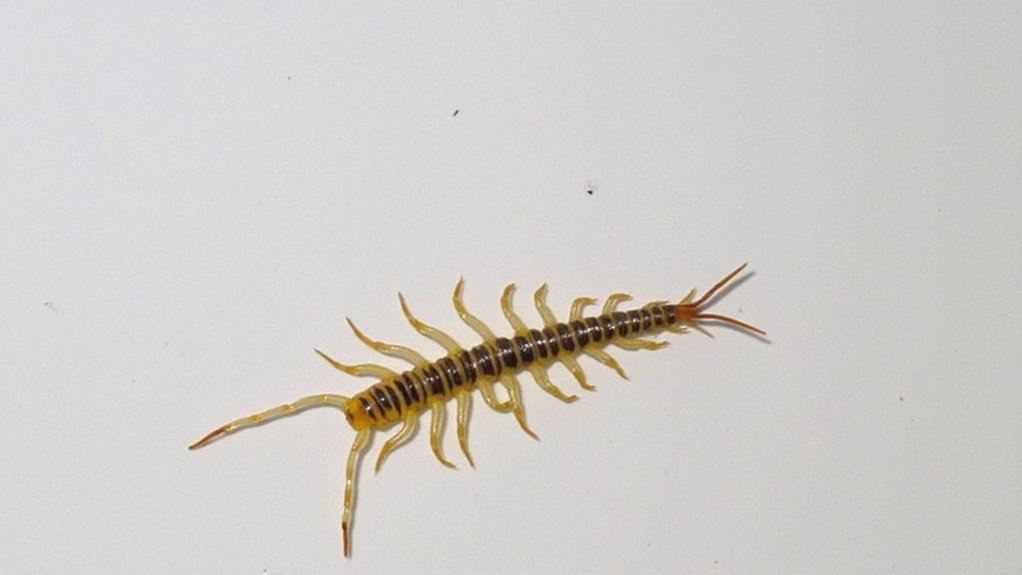
While most household pests have relatively short lifespans, house centipedes can live surprisingly long lives when they find suitable living conditions. You’ll typically find that these resilient creatures survive 3-7 years in your home, though some can reach up to 8 years with ideal care and environment.
Lifespan variability depends heavily on several factors:
- Temperature (65-75°F is ideal)
- Humidity levels (above 50%)
- Available food sources
- Protection from predators
Centipede reproduction also affects their longevity. Females lay 35 to 60 eggs per batch and can produce multiple batches annually. Once they reach maturity at age 3, they’ll continue reproducing throughout their lives, which contributes to their persistent presence in homes. These arthropods grow slowly, molting 5-6 times before reaching adulthood.
Environmental Factors Affecting Centipede Longevity
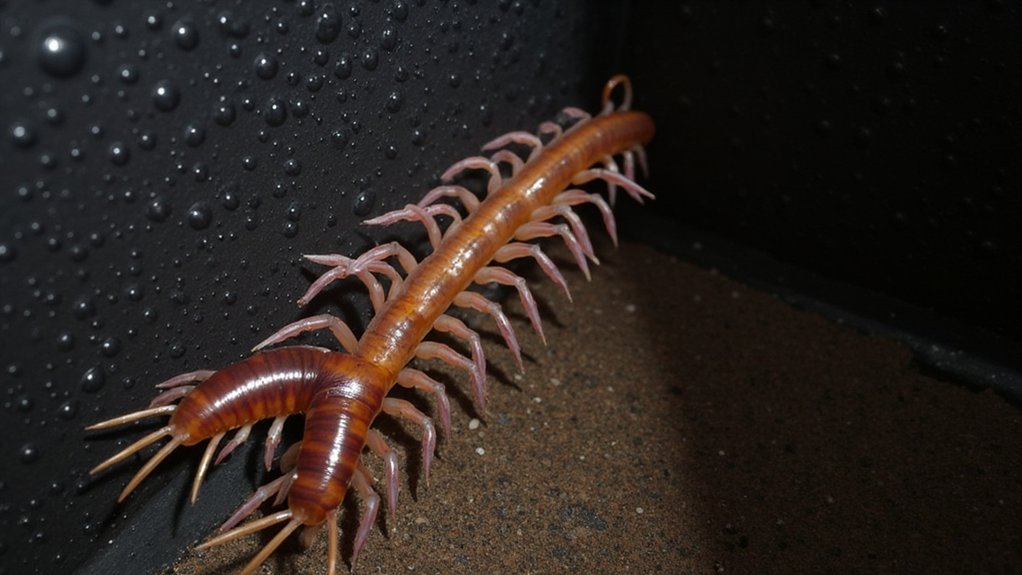
Several key environmental factors greatly influence how long house centipedes survive in your home’s ecosystem.
Temperature effects play an essential role in their lifespan, with house centipedes thriving best between 68-75°F (20-24°C). If your home gets too cold or hot, you’ll notice these creatures seeking more suitable conditions, which can impact their survival rate.
Humidity levels are equally important for house centipede longevity. “These arthropods require moisture levels between 60-70% to maintain their exoskeletons and prevent desiccation,” notes entomologist Dr. Sarah Chen. You’ll find they’re most active in damp areas like:
- Basements
- Bathrooms
- Laundry rooms
- Crawl spaces
When humidity drops below 50%, centipedes may struggle to survive, leading to shorter lifespans or migration to more suitable environments.
Life Cycle Stages and Development
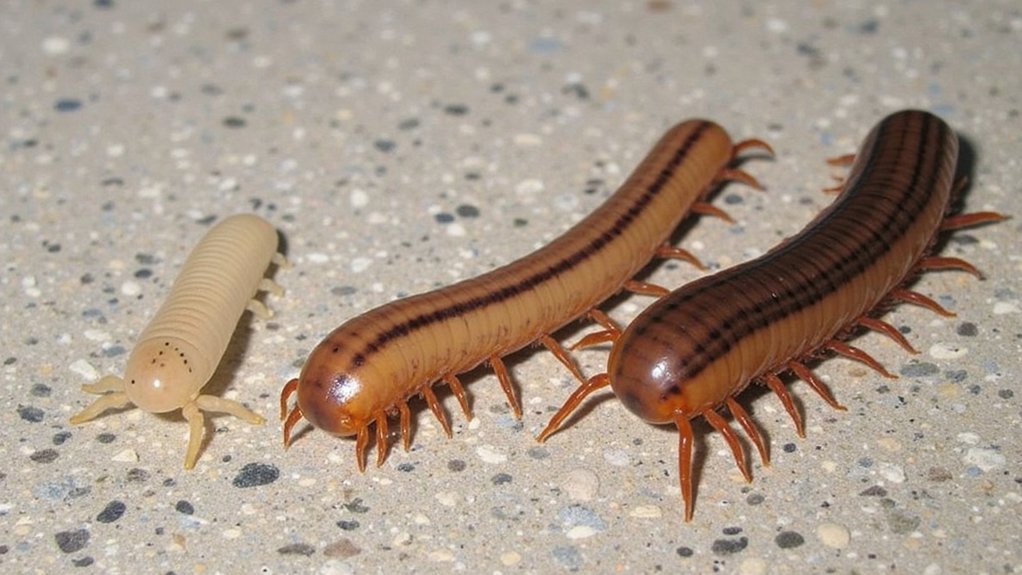
House centipedes progress through distinct developmental phases from egg to adult, with their growth heavily influenced by the environmental conditions previously mentioned. You’ll find they undergo several life stages in their developmental process, starting when females lay 35-150 eggs in damp soil during spring or summer.
The key stages include:
- Eggs (incubating 2-3 weeks)
- First instar (4 pairs of legs)
- Multiple molts (adding 2 leg pairs per molt)
- Juvenile stage (5-6 molts)
- Sexual maturity (around 3 years)
During each molt, you’ll notice the centipede’s body length increases and they gain additional leg pairs until reaching their full adult complement of 15 pairs. They’ll continue molting throughout adulthood, typically every 1-2 months when young and annually as adults.
Survival Rates in Different Habitats
Although house centipedes can adapt to various environments, you’ll find their survival rates differ considerably based on specific habitat conditions. Their survival strategies are most successful in dark, damp areas with temperatures between 70-80°F (21-27°C).
Indoor Survival Rates:
- Basements: 85-90% survival rate
- Bathrooms: 75-80% survival rate
- Kitchens: 65-70% survival rate
Outdoor Survival Rates:
- Garden soil: 40-50% survival rate
- Under rocks/logs: 60-65% survival rate
- Mulched areas: 55-60% survival rate
According to entomologist Dr. Sarah Miller, “House centipedes’ habitat preferences strongly favor indoor environments, where they’re protected from temperature extremes and predators.” You’ll notice they survive best in spaces that provide both moisture and protection, typically living 3-5 years in ideal conditions.
Predators and Threats to House Centipedes
Despite their impressive speed and defensive capabilities, house centipedes face numerous threats from both natural predators and human-related hazards in their environment. Birds, spiders, and larger insects will actively hunt these creatures, while cats and small dogs often chase and kill them when found inside homes.
Natural predators aren’t their only concern – you’ll find that human interventions pose significant risks to house centipede populations. Common threats include:
- Pesticide exposure
- Dehydration from low humidity
- Getting trapped in bathtubs or sinks
- Accidental crushing
- Chemical cleaning products
As entomologist Dr. Sarah Chen explains, “While house centipedes are resilient creatures, they’re particularly vulnerable to modern pest control methods and changes in their microhabitat conditions.” You’ll notice they’re especially at risk during home renovations or seasonal cleaning when their hiding spots are disturbed.
Tips for Creating Centipede-Friendly Environments
When creating an ideal habitat for beneficial house centipedes, you’ll want to focus on maintaining proper humidity levels and providing suitable hiding spots.
To establish effective centipede habitats:
- Keep humidity between 50-65% using a dehumidifier
- Place flat stones or bark in garden areas
- Maintain dark, damp areas in basements or crawl spaces
- Leave gaps under doorways (1/4 inch minimum)
For natural pest control benefits:
- Avoid chemical pesticides that harm centipedes
- Create access points near problem areas
- Stack firewood or mulch 6 inches from walls
“House centipedes thrive in environments that balance moisture and shelter,” notes entomologist Dr. Sarah Chen. “They’ll naturally control insects while staying mostly out of sight if given appropriate hiding spaces.”
Common Myths About House Centipede Lifespans
Many widespread misconceptions exist about how long house centipedes actually live, leading homeowners to misunderstand these beneficial creatures.
Common centipede myths you’ll often hear include:
- They only live for a few weeks
- They die after laying eggs
- They can’t survive more than one season
- Cold temperatures always kill them
The truth contradicts these lifespan misconceptions. Research shows house centipedes typically live 3-7 years when provided proper conditions. Dr. Sarah Collins, an entomologist at State University, notes: “House centipedes can survive multiple years, not mere months as commonly believed.”
You’ll also hear that centipedes age quickly, but they actually molt throughout their lives and can regenerate lost legs. In ideal indoor environments with steady temperatures and humidity, these arthropods often outlive many household pets.
Frequently Asked Questions
Can House Centipedes Swim or Survive Underwater?
While house centipedes can’t swim efficiently, they’ll survive underwater for up to 24 hours. You’ll find they avoid water but can escape if submerged, thanks to their water-resistant exoskeleton.
Do House Centipedes Make Any Sounds or Communicate With Each Other?
You won’t hear house centipedes making sounds, as they don’t use sound communication. They rely on other forms of sensory perception, like chemical signals and touch, to interact with each other.
Are House Centipedes Active During Winter Months?
You’ll notice less house centipede activity during winter as they become dormant. They’ll seek warmth inside your home’s walls and basement, only emerging occasionally when temperatures allow movement.
Can House Centipedes Regrow Their Antennae if Damaged?
Like a lizard’s remarkable tail, your house centipede can regenerate lost antennae. You’ll witness nature’s resilience as these creatures adapt, growing new sensory tools within a few molting cycles.
What Colors Can House Centipedes See Through Their Compound Eyes?
You’ll find house centipedes have limited color perception through their compound eyes. They mostly detect light and dark contrasts, as their vision capabilities aren’t designed for distinguishing complex colors.
