
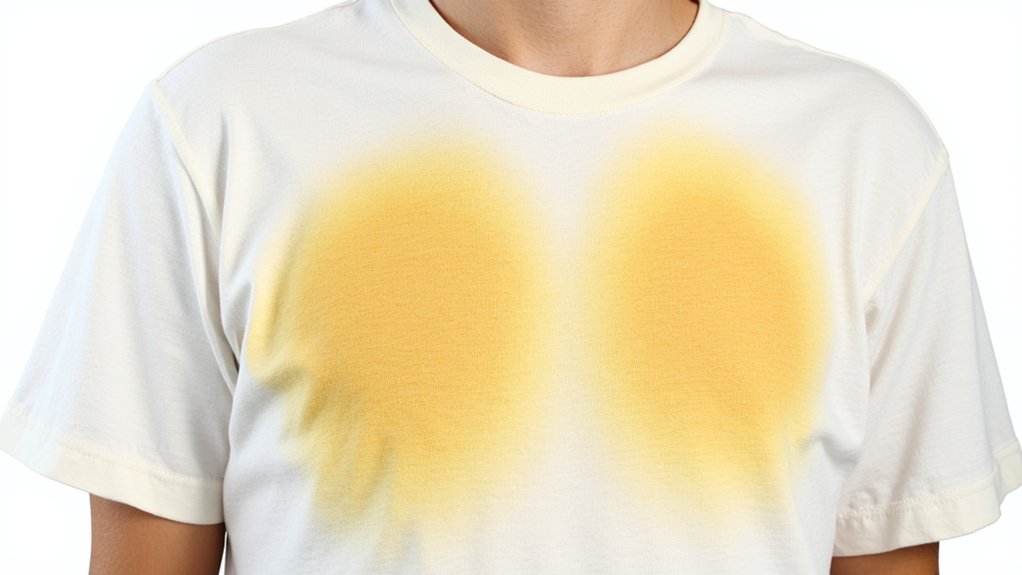
Did you know that 90% of yellow sweat stains aren’t actually caused by sweat alone? You’ll find that your antiperspirant, not your perspiration, is the real culprit behind those stubborn yellow marks on your favorite white shirts. The aluminum compounds in your daily antiperspirant react with the proteins in your sweat, creating that tell-tale discoloration that’s ruined countless garments. Understanding this chemical reaction is your first step toward preventing those pesky stains.
The Science Behind Yellow Pit Stains
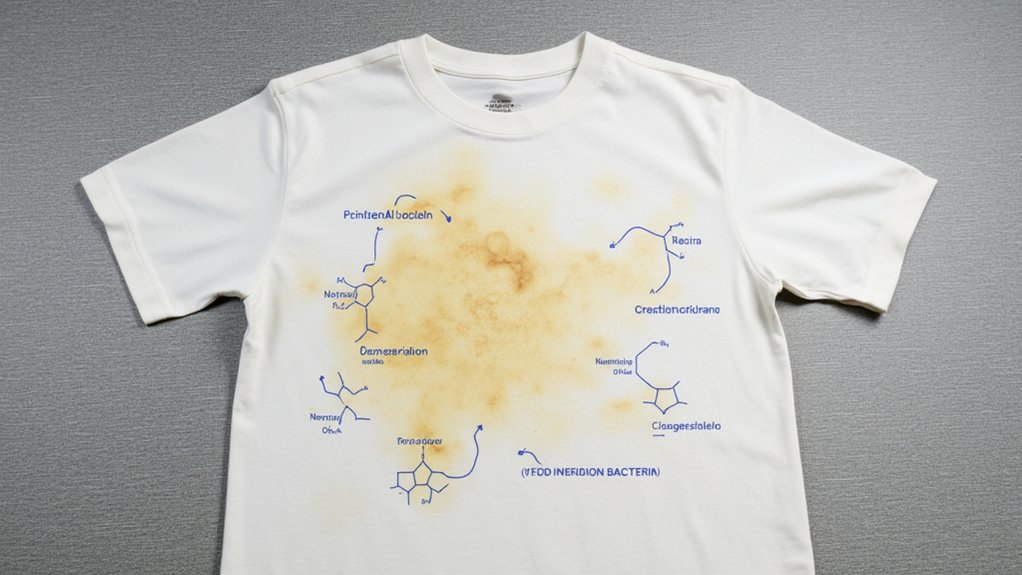
When you notice those unsightly yellow stains appearing on your light-colored shirts, you’re actually witnessing a chemical reaction between your sweat and the aluminum compounds in antiperspirants.
Your sweat composition plays a significant role in this process. While sweat itself is colorless, it contains proteins and fatty acids that react with antiperspirant ingredients. Dr. Sarah Chen, a textile chemist, explains: “The yellowing occurs when aluminum chloride bonds with sweat proteins on fabric fibers.”
The fabric interaction intensifies when:
- Cotton absorbs more sweat than synthetic materials
- Heat from dryers bakes the stains deeper into fibers
- Antiperspirant buildup accumulates over time
- Sweat pools in underarm areas
You’ll notice these reactions happen faster in warm weather, when your body produces more acidic sweat that accelerates the yellowing process.
Common Ingredients That Trigger Discoloration
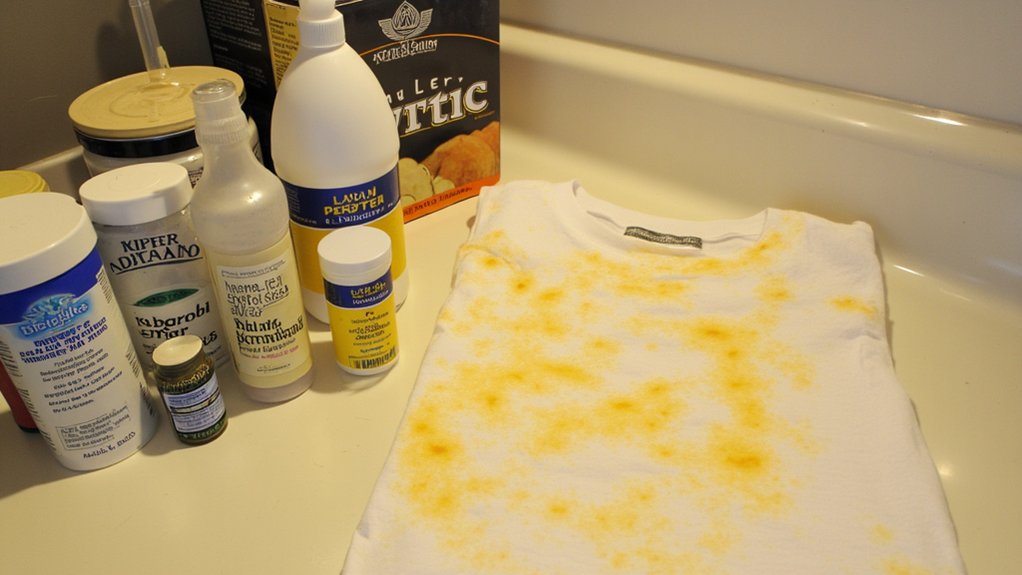
Several common ingredients in your personal care products can react with perspiration to create those dreaded yellow stains. Your sweat composition naturally contains proteins and fatty acids, but when these mix with certain product ingredients, yellowing occurs.
The main culprits in your daily routine include:
- Aluminum compounds in antiperspirants
- Heavy fragrances in deodorants
- Silicone-based fabric softeners
- Harsh laundry detergents with optical brighteners
Dr. Sarah Chen, textile chemist, explains: “When aluminum-based antiperspirants interact with sweat proteins, they create a chemical reaction that bonds to fabric fibers.” You’ll notice this reaction most commonly with:
- White cotton shirts
- Light-colored synthetic blends
- Natural fiber uniforms
To minimize staining, check product labels for aluminum chloride, aluminum chlorohydrate, or aluminum zirconium tetrachlorohydrex.
Prevention Tips and Best Practices
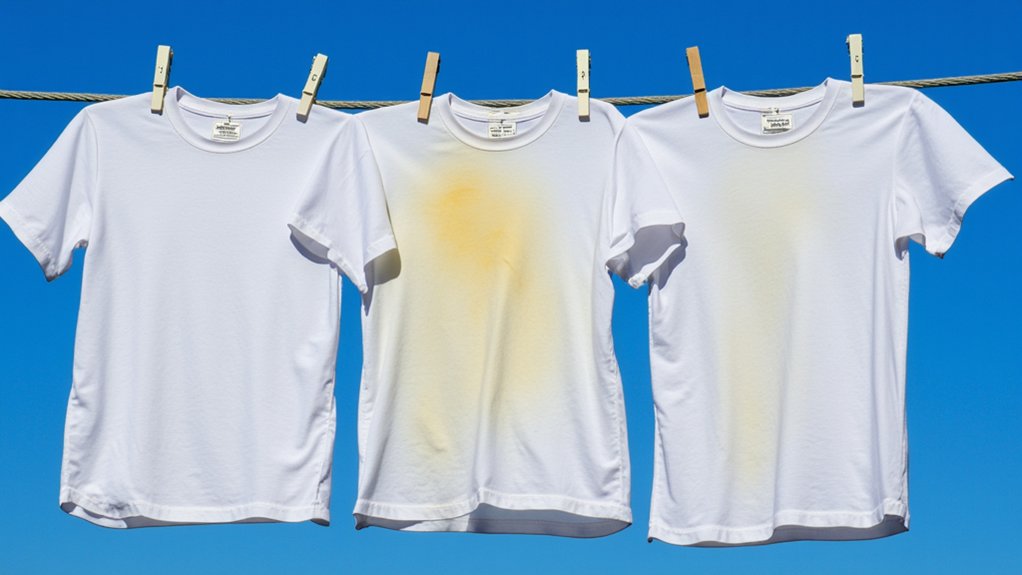
Although preventing yellow sweat stains requires some planning, you’ll find it’s easier than dealing with set-in discoloration later.
Key Sweat Prevention Steps:
- Wear an undershirt to create a protective barrier
- Apply antiperspirant at night, letting it fully absorb
- Wait 5-10 minutes after applying before dressing
Smart Fabric Care:
- Pre-treat underarm areas with white vinegar before washing
- Wash clothes within 24 hours of wearing
- Use warm water (not hot) to prevent setting stains
- Avoid bleach, which can actually worsen yellowing
“The key to preventing yellow stains is addressing both perspiration and proper garment care,” says textile expert Dr. Sarah Chen. “Choose breathable fabrics and wash items promptly to maintain their original appearance.”
Treating and Removing Existing Stains
Even the best prevention methods can’t always stop yellow stains from appearing, but you can tackle existing discoloration with the right approach.
For effective stain removal, try these proven methods:
- Mix 1 part white vinegar with 2 parts water
- Create a paste using 1/4 cup each of baking soda and hydrogen peroxide
- Apply enzyme-based laundry pretreatment directly to stains
“The key to successful fabric care is treating stains immediately and testing solutions on an inconspicuous area first,” says textile expert Sarah Chen. Follow these steps:
- Soak the stained area for 30 minutes
- Gently scrub the solution into the fabric
- Wash in the hottest water safe for the garment
- Air dry to confirm the stain is gone
- Repeat if necessary before machine drying
Alternative Products for Sweat Management
Many people don’t realize that traditional antiperspirants aren’t their only option for managing sweat and preventing yellow stains. You’ll find several effective alternatives that can keep you dry without aluminum compounds.
Natural deodorants containing ingredients like baking soda, arrowroot powder, and essential oils can effectively control odor while allowing your body to sweat normally. These products won’t block your pores or react with fabric to create stains.
For heavy sweating, you can try clinical-strength sweat blockers that use alternative compounds like peptides or natural astringents. Dr. Sarah Chen, dermatologist, notes: “Plant-based sweat reducers containing sage or witch hazel can decrease perspiration by up to 30% without the risk of yellow staining.”
Consider these options:
- Mineral salt crystals
- Charcoal-based deodorants
- Prescription-strength botanical solutions
Frequently Asked Questions
Can Yellow Sweat Stains Appear on Dark-Colored Clothing?
You’ll be shocked to know that your dark clothes aren’t immune! While fabric dyes mask yellow stains, your sweat composition still creates them, though they’re tougher to spot against darker fabrics.
Do Certain Medical Conditions Make People More Prone to Yellow Sweat Stains?
You’re more likely to get yellow stains if medical conditions like hyperhidrosis or hormonal imbalances affect your sweat composition, producing higher amounts of proteins and fatty acids when sweating.
Are Yellow Sweat Stains Contagious Through Shared Laundry or Direct Contact?
With 90% of sweat being water, you can’t catch yellow stains through shared laundry or contact. They’re simply a reaction between your unique sweat composition and fabric, not a contagious condition.
Does Excessive Sweating Always Lead to Yellow Stains?
No, you won’t always get yellow stains from heavy sweating. Your sweat composition and the fabric types you wear matter more – natural fibers like cotton are more prone to staining.
Why Do Some People Never Get Yellow Stains Despite Sweating Heavily?
You might never get yellow stains because of genetic factors affecting your sweat composition. Some people’s sweat contains fewer proteins that react with antiperspirants to create those yellowish marks.
