
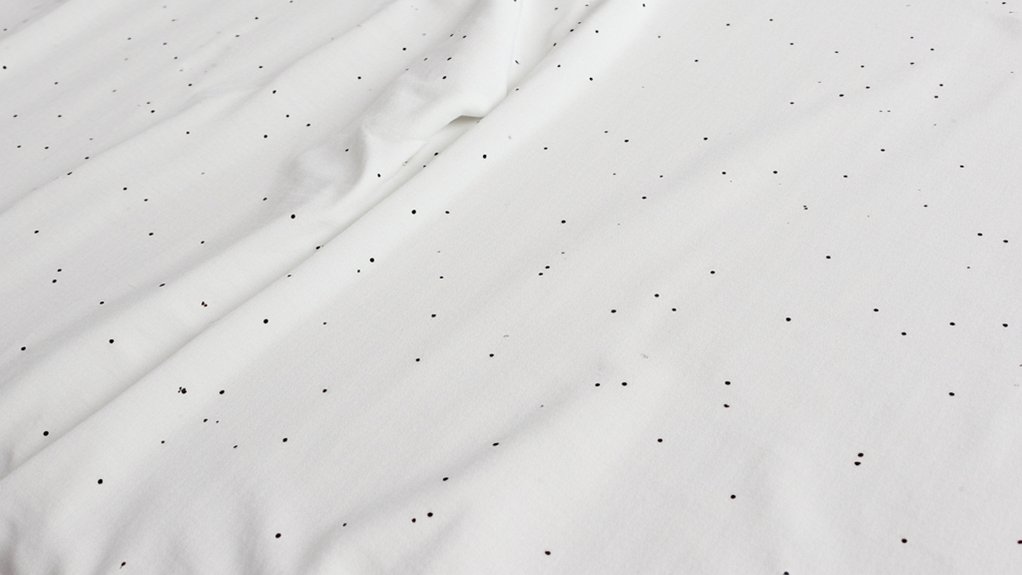
Like unwanted guests crashing your peaceful night’s sleep, those mysterious black dots on your sheets can signal various household concerns. When you spot these tiny specks dotting your bedding, you’re likely dealing with one of three common culprits: bed bug droppings, mold growth, or ink stains. According to entomologist Dr. Sarah Chen, “The specific pattern and texture of these marks often tell a revealing story.” Understanding what you’re facing will determine your next essential steps.
Common Causes of Black Dots on Bed Sheets
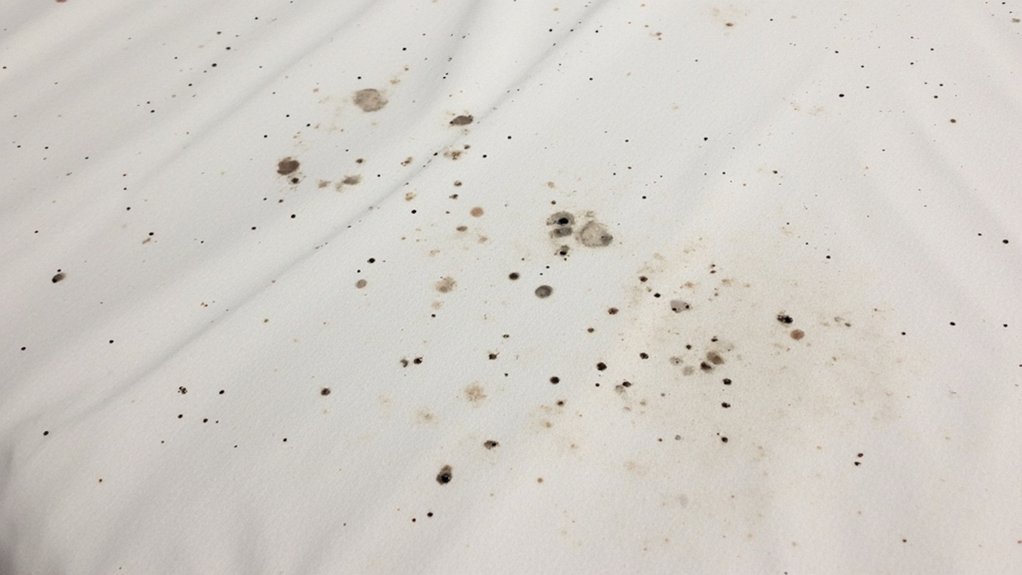
When you discover mysterious black dots on your bed sheets, several common culprits could be to blame. The most concerning cause might be bed bug droppings, which appear as dark spots about the size of a pencil point and often cluster near seams and corners.
Other common causes include:
- Mold growth from high humidity or damp sheets
- Ink stains from pens left in pockets
- Dirt or debris tracked into bed
- Dead skin cells mixed with moisture
“Black spots that smear when wiped with a damp cloth typically indicate bed bug activity,” says entomologist Dr. Sarah Chen. “If the spots don’t smear and have a musty odor, you’re likely dealing with mold growth.” You’ll want to inspect these dots carefully to determine the right treatment approach.
Identifying Different Types of Black Spots
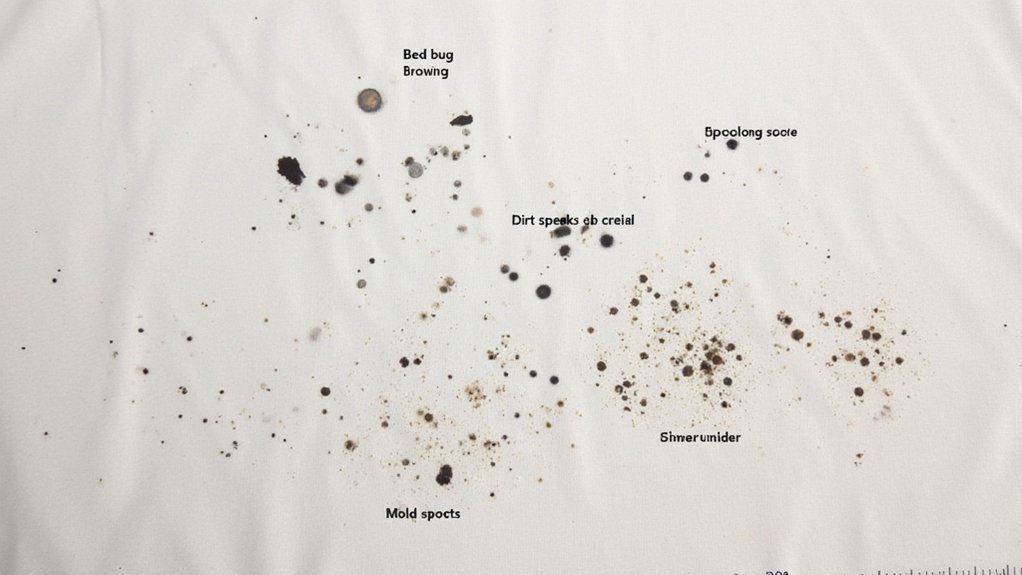
Here’s how to identify common types of black spots:
- Bed bug spots: Small, dark dots that cluster near mattress seams
- Mold spots: Fuzzy texture with irregular edges, often spreading in patches
- Ink stains: Sharp edges with consistent color throughout
- Food stains: Irregular shapes with faded edges
- Dirt: Grainy texture that brushes off easily
Test suspicious spots by dabbing them with a damp white cloth to observe their reaction.
How to Test and Diagnose the Source
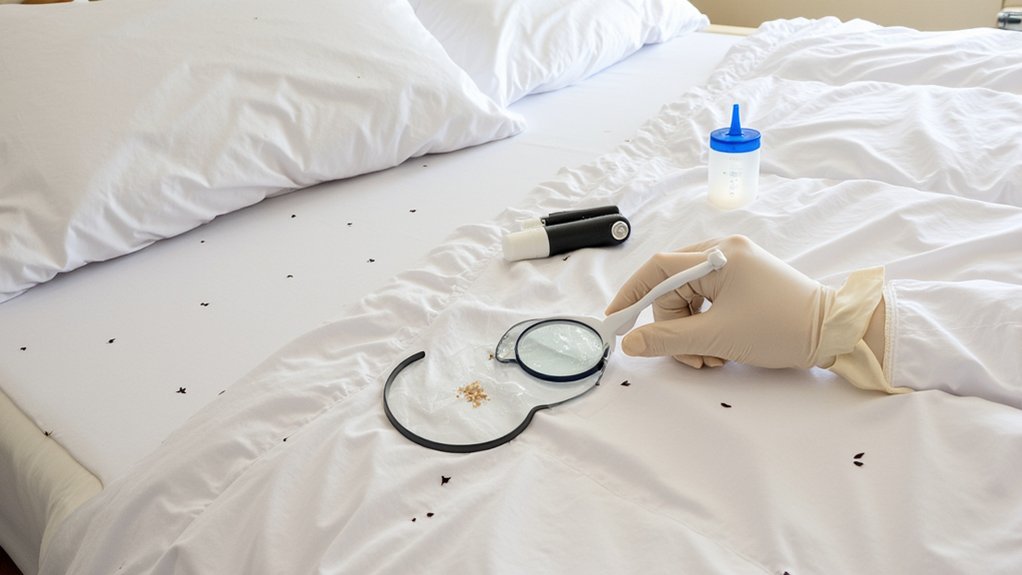
To accurately diagnose those mysterious black spots on your sheets, you’ll need to perform a few simple tests using common household items.
Simple Tests for Source Identification:
- Press a damp white cloth against spots – if color transfers, it’s likely mold
- Shine UV light over spots – bed bug droppings will fluoresce
- Rub spots with hydrogen peroxide – blood stains will bubble
Professional stain analysis tips:
- Place clear tape over spots and examine with magnifying glass
- Take photos of spots’ patterns for comparison with pest guides
- Test fabric with water droplets – if spots spread, they’re oil-based
“Most black spots can be identified through these basic tests,” explains textile expert Sarah Chen. “Document size, pattern, and reaction to cleaning agents for accurate diagnosis.”
Cleaning Methods and Stain Removal
Once you’ve identified the source of those pesky black spots, removing them effectively depends on choosing the right cleaning method for each specific type. “Different spots require different approaches – using the wrong cleaning solution can actually set the stain permanently,” warns cleaning specialist Maria Rodriguez.
For most common black dots, follow these proven stain removal techniques:
- Mold spots: Mix equal parts white vinegar and water, spray directly on spots, wait 10 minutes, then wash normally
- Ink marks: Dab with rubbing alcohol using a white cloth, working from outside toward center
- Bed bug droppings: Apply hydrogen peroxide with a cotton swab, let sit for 5 minutes
- Food/drink stains: Pre-treat with enzymatic cleaner for 15 minutes before laundering
- Unknown spots: Test cleaners on a small hidden area first
Always wash in the hottest water safe for your fabric type.
Prevention Tips and Best Practices
While regular cleaning helps eliminate black dots on sheets, implementing preventive measures can stop these spots from appearing in the first place. “Prevention is much easier than trying to remove stubborn stains later,” explains textile care expert James Chen of the National Bedding Association.
Key Prevention Steps:
- Wash new sheets before first use to remove manufacturing residue
- Change sheets weekly and pillowcases every 3-4 days
- Use a mattress protector and wash it monthly
- Keep bedroom humidity below 50% using a dehumidifier
- Shower before bed to reduce body oils and dead skin cells
Proper Bedding Maintenance:
- Follow fabric care labels exactly
- Avoid eating in bed
- Store clean sheets in a cool, dry place
- Use white or light-colored sheets to spot issues early
- Inspect bedding weekly for early signs of spots
When to Replace Your Bedding
Even with proper care and maintenance, your bedding won’t last forever and requires regular replacement to maintain hygiene and comfort. “Most people keep their sheets far longer than they should,” says Dr. Lisa Chen, sleep hygiene specialist at the Sleep Research Institute.
Replace your bedding according to this timeline:
- Sheets and pillowcases: Every 1-2 years
- Duvet covers: Every 2-3 years
- Pillows: Every 1-2 years
- Mattress protectors: Every 1-2 years
- Mattress: Every 7-10 years
Watch for these signs that indicate immediate replacement:
- Visible stains that won’t wash out
- Thinning or torn fabric
- Lingering odors despite washing
- Yellowing or discoloration
- Loss of shape or elasticity
- Increased allergy symptoms
Remember that proper mattress care can extend your bedding lifespan considerably.
Frequently Asked Questions
Can Tiny Black Dots on Sheets Cause Allergic Reactions in Sensitive People?
You can experience allergy symptoms like itching and skin reactions from tiny black dots caused by mold, dust mites, or bed bugs if you’re sensitive to these common household allergens.
Do Black Spots Appear More Frequently on Certain Sheet Colors or Materials?
You’ll notice black spots more easily on light-colored sheets, but they can appear on any material type. Cotton and synthetic blends tend to show these marks more prominently.
Are Black Dots on Sheets More Common in Specific Climate Conditions?
You’ll notice more black dots when humidity levels are high and temperature variations create condensation. These conditions promote mold growth and can attract moisture-loving insects to your bedding.
Can Black Spots Transfer From Sheets to Clothing During Washing?
You’ll find black spots can transfer during laundry if you’re not separating items properly. Use hot water and appropriate washing methods to prevent spreading these stains between fabrics.
Do Ultraviolet Light Protective Sheets Prevent the Formation of Black Dots?
You won’t prevent black dots by using ultraviolet light protective sheets, as these spots typically form from mold, mildew, or fabric breakdown rather than UV damage.
