
While acrylic fabric offers the warmth of wool at a fraction of the cost, it requires specific care to maintain its quality in the washing machine. You’ll find that this synthetic fiber can be surprisingly durable yet delicate – making proper washing techniques essential for its longevity. From water temperature settings to spin cycle speeds, understanding the right approach will help you avoid common pitfalls that can leave your acrylic garments stretched, misshapen, or damaged.
Understanding Acrylic Fabric Properties
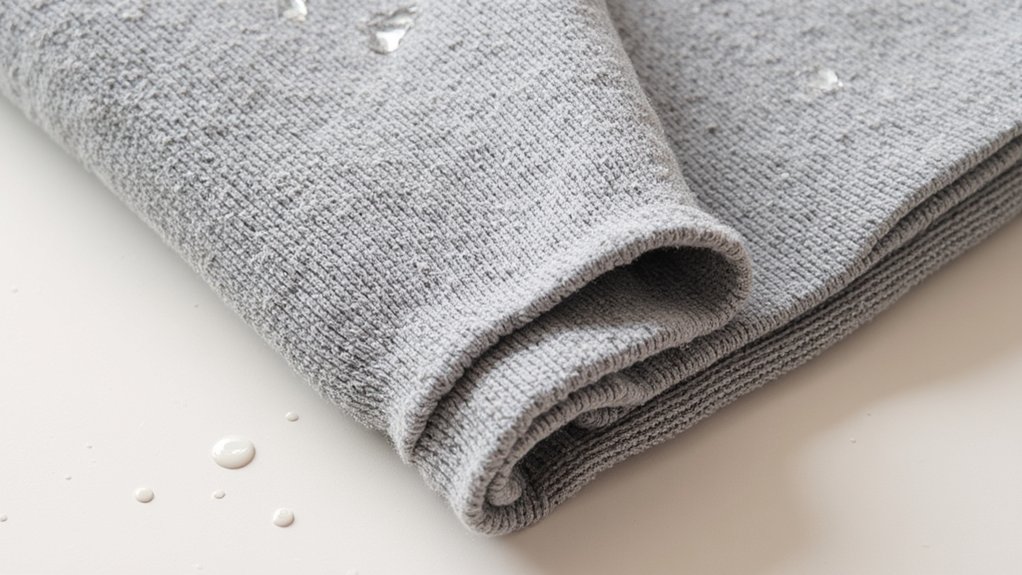
Acrylic fabric, a synthetic material made from polymer fibers, combines durability with softness while offering excellent resistance to wrinkles, sunlight, and outdoor elements.
Key acrylic fiber characteristics include:
- Lightweight and warm
- Quick-drying properties
- Resistance to moths and mildew
- Color retention
- Non-allergenic qualities
When it comes to durability factors, you’ll find that acrylic holds up well under regular use. “Acrylic fibers maintain their shape and resist pilling when properly cared for,” notes textile expert Dr. Sarah Chen. The fabric’s synthetic nature means it won’t shrink easily and maintains its structure through multiple washes.
The material’s main strengths lie in its:
- Heat retention similar to wool
- Ability to withstand repeated washing
- Strong resistance to everyday wear and tear
- Exceptional colorfastness
Proper Machine Washing Techniques
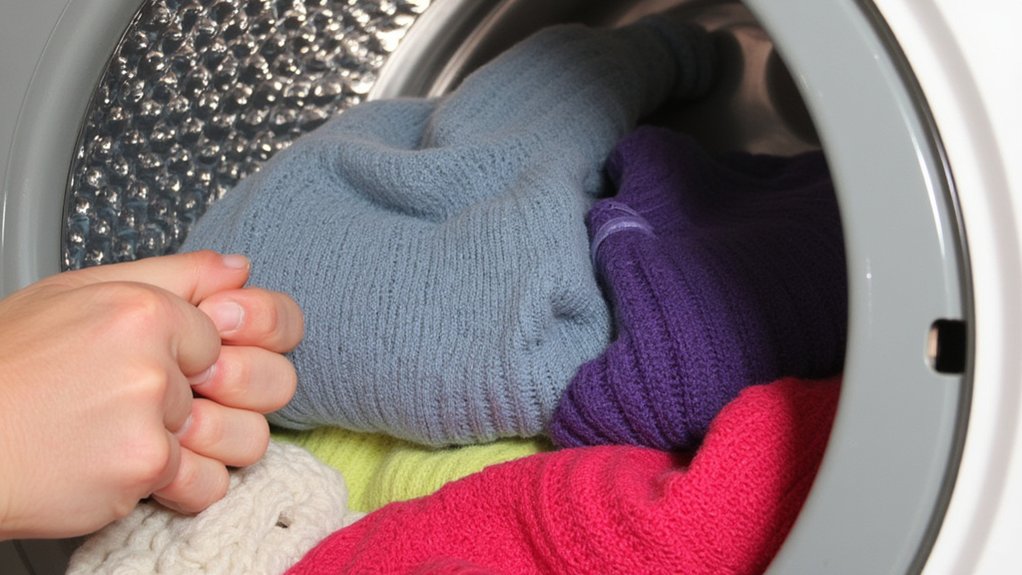
Three key steps guarantee successful machine washing of your acrylic garments.
First, turn your items inside out and sort them by color. Professional fabric care expert Lisa Chen notes, “This prevents friction damage and color bleeding between garments.”
Second, select cold or warm water (max 104°F/40°C) and use the gentle cycle. Add a mild detergent – about 2 tablespoons for a full load.
Third, reduce the spin speed to 800 RPM or lower. “High spin speeds can stretch and distort acrylic fibers,” warns textile specialist Dr. James Morton.
Essential washing tips:
- Never use bleach
- Avoid fabric softeners
- Don’t mix with heavy items
- Remove promptly after cycle ends
- Reshape while damp
- Air dry flat or hang
These steps will help maintain your acrylic garments’ shape and texture through multiple washes.
Temperature and Detergent Guidelines
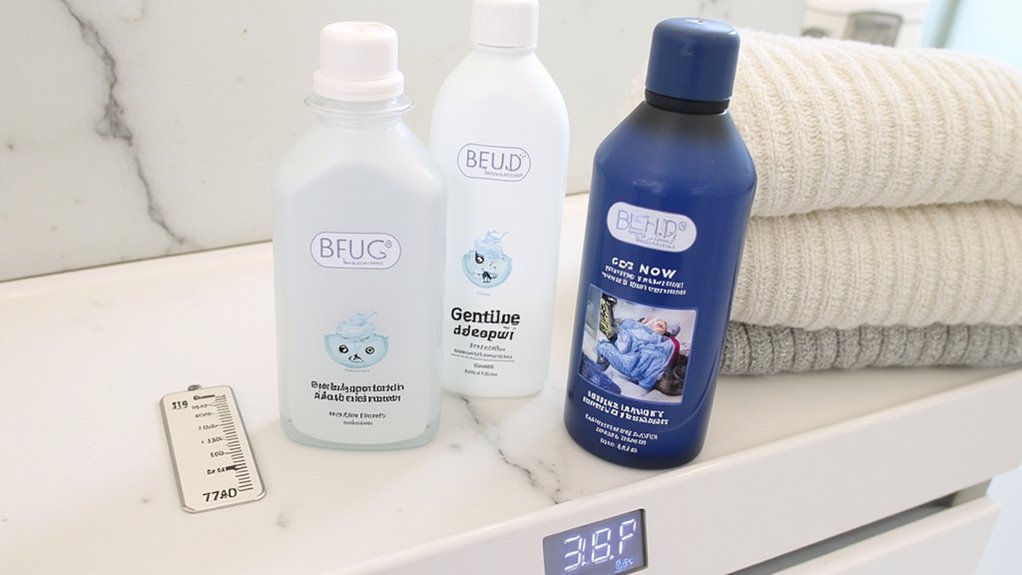
When washing your delicate acrylic items, you’ll need to be strategic about both water temperature and detergent selection. For best results, use warm or cold water settings between 30-40°C (85-104°F).
Select temperature settings based on these guidelines:
- Cold water: Best for dark colors and preventing shrinkage
- Warm water: Ideal for light-colored items and moderate soil
- Never use hot water: Can damage fibers and cause warping
Choose appropriate detergent types:
- Mild liquid detergent
- Gentle wool wash formulas
- Avoid harsh powders or bleach
“A gentle, pH-neutral detergent will protect acrylic’s fiber structure while effectively cleaning the garment,” notes textile expert Sarah Chen. Always measure detergent carefully – use only half the recommended amount to prevent soap residue buildup in acrylic fibers.
Common Washing Mistakes to Avoid
Although proper care can extend the life of acrylic garments, many people inadvertently damage their items through common laundry mistakes.
Key mistakes to avoid:
- Using hot water, which can warp and shrink fibers
- Over-washing your items (limit washing frequency to every 2-3 wears)
- Adding fabric softener, which creates buildup and reduces durability
- Wringing or twisting wet garments
- Drying on high heat settings
“Proper fabric care means treating acrylic with gentle handling,” says textile expert Sarah Chen. “Many people assume it’s as durable as cotton, but it requires specific care.”
Additional don’ts:
- Hanging wet items, which stretches them out
- Using bleach or harsh stain removers
- Ignoring care labels
- Mixing with heavy items like jeans
- Storing in direct sunlight
Air Drying Vs Machine Drying Methods
Since proper drying techniques can make or break your acrylic garments, choosing between air drying and machine drying requires careful consideration.
Air Drying:
- Lay your garment flat on a clean towel
- Reshape while damp to maintain proper form
- Keep away from direct sunlight to prevent fading
- Allow 24-48 hours for complete drying
Machine Drying:
- Use low heat setting (maximum 120°F)
- Remove promptly when slightly damp
- Never use high heat, which can cause shrinkage
- Limit drying time to 15-20 minutes
“The safest approach is always air drying,” says textile expert Sarah Chen. “If you must use a dryer, remove the garment while it’s still slightly damp and finish air drying to prevent damage to the acrylic fibers.”
Frequently Asked Questions
Can Acrylic Fabric Be Bleached Safely Without Damaging the Material?
You shouldn’t bleach acrylic fabric as it’ll damage the fibers. For safe fabric care, use color-safe oxygen bleach or alternative bleaching techniques like lemon juice and sunlight instead.
Does Acrylic Clothing Shrink More in Hard Water Compared to Soft Water?
Sharp as a tack, you’ll find that water hardness isn’t a significant shrinkage factor for your acrylic garments. You’ll experience similar results whether you’re washing in hard or soft water.
Is It Safe to Iron Acrylic Garments While They’re Still Damp?
You shouldn’t iron damp acrylic garments as it can damage the fibers. For proper fabric care, let them dry completely and use low heat with ironing techniques like pressing through a cloth.
How Long Does Acrylic Fabric Typically Maintain Its Original Shape After Washing?
You’ll find that acrylic’s shape retention depends on your washing frequency. With proper care, it can maintain its original form for 1-2 years before showing signs of stretching or distortion.
Can Acrylic Be Washed Together With Wool Without Causing Static Electricity?
You’d think wool and acrylic would get along, but they’re notorious static magnets. It’s best to wash them separately and use fabric softener or dryer sheets for static prevention.
