
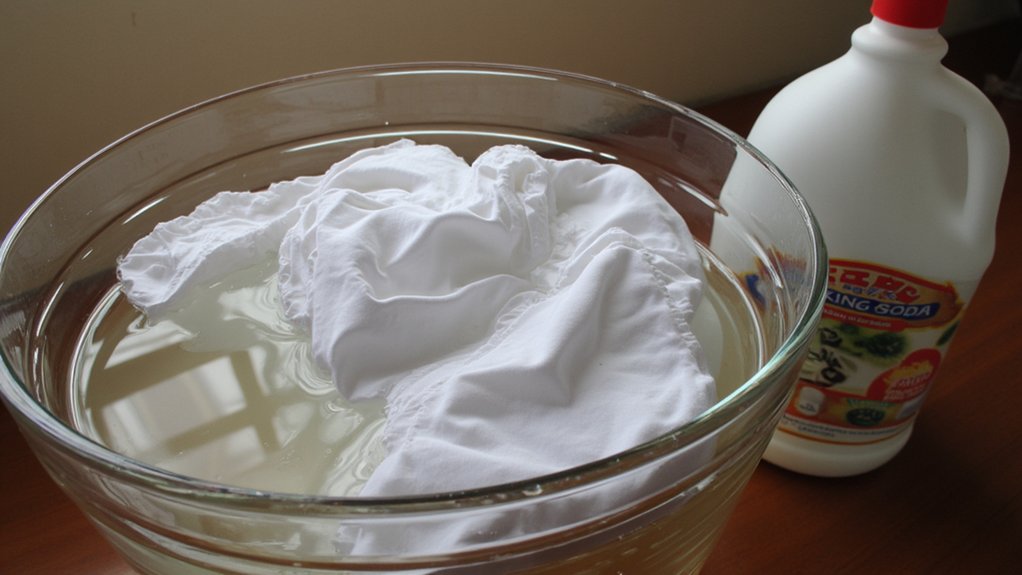
If you’re dealing with stiff, uncomfortable polyester fabric, you’ll be glad to know there are several proven methods to soften it. Textile expert Sarah Chen notes that “polyester’s molecular structure makes it naturally rigid, but proper treatment can greatly improve its feel.” From vinegar soaks to specialized enzyme treatments, you can transform scratchy synthetic fabrics into smooth, wearable pieces – once you understand the right techniques and temperature requirements for each method.
Understanding Polyester’s Texture Properties
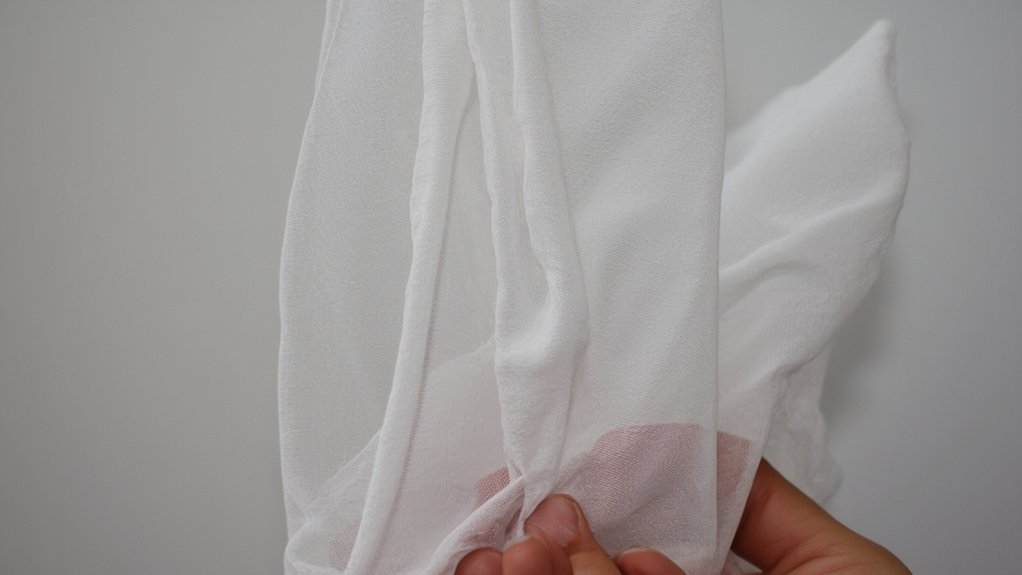
Polyester’s notorious stiffness and scratchy texture come from its synthetic manufacturing process, where plastic-based fibers are woven tightly together. These artificial fibers create a durable material that’s resistant to wrinkles and shrinking, but they lack the natural softness of cotton or silk.
Key polyester characteristics include:
- High thread density
- Strong fiber bonds
- Water-resistant properties
- Static cling tendency
The fabric’s resilience makes it popular for outdoor clothing and athletic wear, but it’s this same durability that creates its rigid feel. “Polyester’s molecular structure prevents natural breakdown of fibers,” explains textile expert Dr. Sarah Chen. “This stability means the fabric maintains its shape but also its initial stiffness without proper treatment.”
You’ll notice polyester feels especially firm when new, but there are several methods to improve its texture.
Washing Methods to Soften Polyester
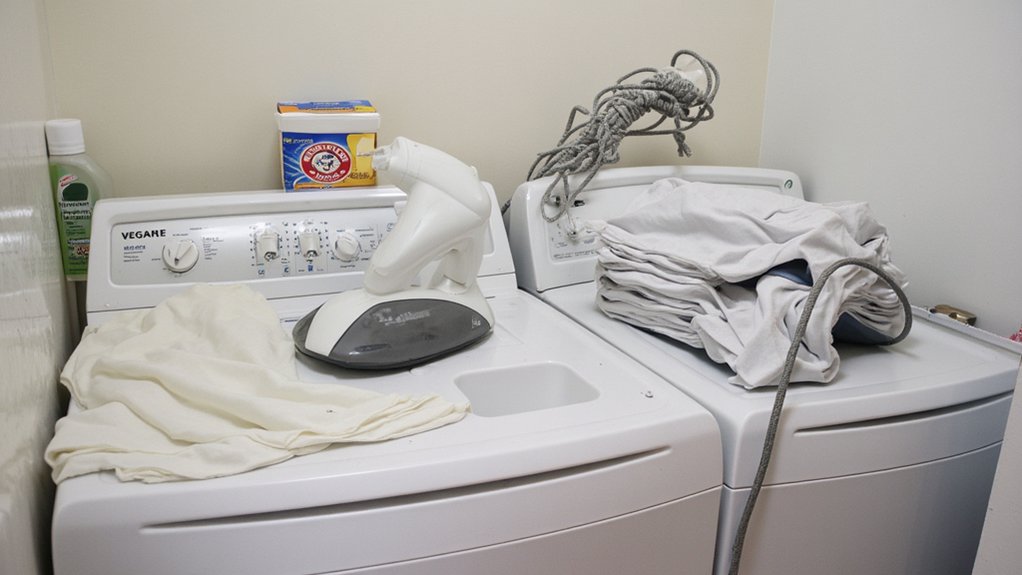
While stiff polyester can feel uncomfortable against your skin, proper washing techniques will help break down the rigid fiber structure.
To effectively soften your polyester garments, you’ll need to adjust your washing temperatures strategically. Start by washing the fabric in warm water (105-120°F) with 1 cup of white vinegar during the rinse cycle. This natural softening technique helps relax the synthetic fibers.
Here are key washing methods to try:
- Use a gentle cycle with mild detergent
- Add 1/2 cup of baking soda to your wash
- Dry on medium heat (135°F maximum)
- Remove items while slightly damp
“Regular warm water washing, combined with natural softeners, gradually improves polyester’s texture without damaging the fabric structure,” explains textile expert Sarah Chen. Remember to avoid hot water, which can set wrinkles and make fibers more rigid.
Natural Fabric Softening Solutions
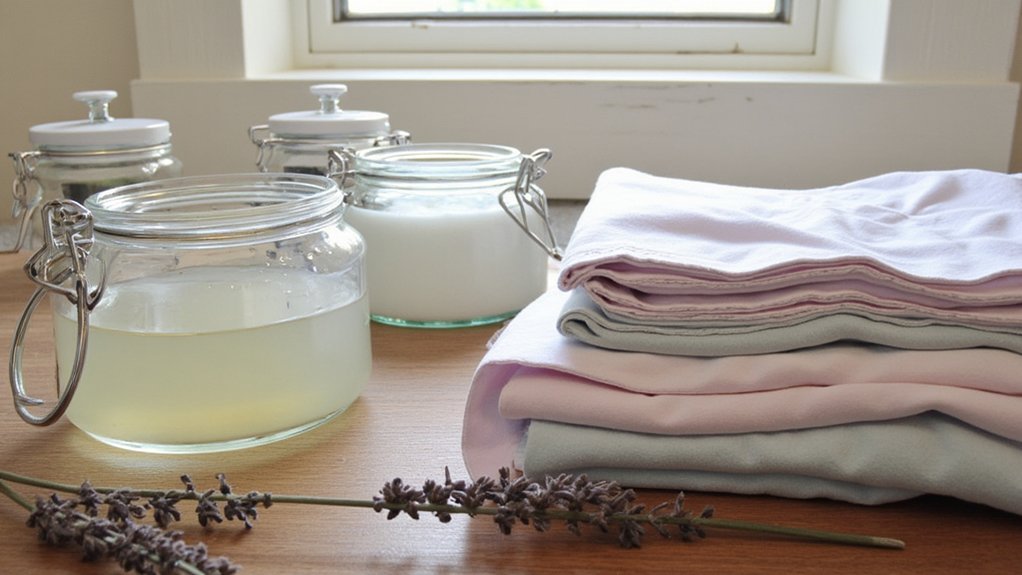
Three natural ingredients from your kitchen can effectively soften polyester fabrics without harsh chemicals.
Natural Softening Solutions:
- White vinegar solution: Add 1 cup of white vinegar to your rinse cycle. You’ll notice your polyester becoming softer after just one wash.
- Baking soda method: Dissolve 1/2 cup of baking soda in warm water before adding it to your wash cycle.
- Salt treatment: Mix 1/3 cup of table salt into your regular wash.
“These natural solutions work by breaking down the rigid fibers in polyester while removing buildup that causes stiffness,” explains textile expert Sarah Chen. Combine these methods for best results:
- Pre-soak in vinegar solution (30 minutes)
- Wash with baking soda
- Add salt to final rinse
- Air dry to prevent heat-induced stiffness
Chemical Treatments and Commercial Products
Although natural methods work well, commercial fabric softeners and chemical treatments offer convenient alternatives for softening stubborn polyester fabrics. For best results, try these proven chemical solutions:
- Use liquid fabric softeners during the rinse cycle, adding 1-2 capfuls depending on load size
- Apply commercial softening sprays directly to damp fabric before drying
- Consider enzyme-based treatments specifically formulated for synthetic fibers
Textile expert Sarah Chen recommends: “When using chemical softeners, always check the product’s polyester compatibility and follow dilution instructions carefully to avoid damage.”
Remember these key tips:
- Never use more than the recommended amount
- Test products on a small, hidden area first
- Avoid mixing different chemical solutions
- Always wash treated items separately for the first wash
Special Tips for Different Polyester Items
Since different polyester items have unique care requirements, you’ll need to adjust your softening approach based on the specific garment or fabric type.
For casual polyester shirts:
- Use warm water and gentle cycle
- Add fabric softener during the rinse cycle
- Air dry on a hanger to prevent wrinkles
For polyester blends in formal wear:
- Hand wash in cool water
- Skip harsh softeners that might damage delicate fibers
- Lay flat to dry on a clean towel
For heavy polyester fabrics (curtains, blankets):
- Wash in warm water with white vinegar
- Run through two rinse cycles
- Tumble dry on low heat
For athletic wear:
- Use sports-specific detergent
- Avoid fabric softeners that can trap odors
- Air dry away from direct sunlight
Maintaining Softness Over Time
Once you’ve successfully softened your polyester fabric, you’ll want to keep it feeling that way through repeated washing and wearing. Follow these fabric care steps to maintain that softness:
- Wash in cold or lukewarm water (never hot)
- Use gentle, liquid detergent without fabric softeners
- Avoid overloading the washing machine
- Choose the delicate cycle
- Skip the dryer when possible; air dry instead
For ongoing softness maintenance:
- Turn garments inside out before washing
- Add 1/2 cup white vinegar to the rinse cycle monthly
- Store items flat or hung up, not compressed
- Brush items gently with a soft-bristled clothes brush after washing
“Regular gentle care is key to preserving polyester’s softness,” notes textile expert Sarah Chen. “Harsh washing methods can quickly undo your softening efforts.”
Frequently Asked Questions
Can Polyester Fabric Softening Methods Affect Its Moisture-Wicking Properties?
You’ll notice that fabric softening can reduce polyester’s moisture-wicking abilities. Harsh softeners affect moisture retention and fabric breathability, making your garment less effective at keeping you dry during activities.
Does Softening Polyester Make It More Prone to Static Electricity?
You’ll be shocked to know that fabric treatments actually help with static reduction! When you soften polyester properly, you’re decreasing its static-prone nature rather than making it worse.
Will Softening Treatments Change the Color or Fade Patterns on Polyester?
Most softening treatments won’t affect color stability or pattern preservation in polyester. You’ll maintain your fabric’s appearance as long as you don’t use harsh chemicals or excessive heat-based methods.
Can Polyester Be Softened Without Using a Washing Machine?
While 85% of polyester softening happens in machines, you can soften it through hand washing with warm water and fabric conditioner, gently kneading the material for 10-15 minutes.
Does Ironing Help in Softening Polyester Permanently?
While ironing techniques can temporarily smooth polyester, they won’t permanently soften it. You’ll need to use low heat settings to avoid damaging the fabric’s synthetic fibers.
