
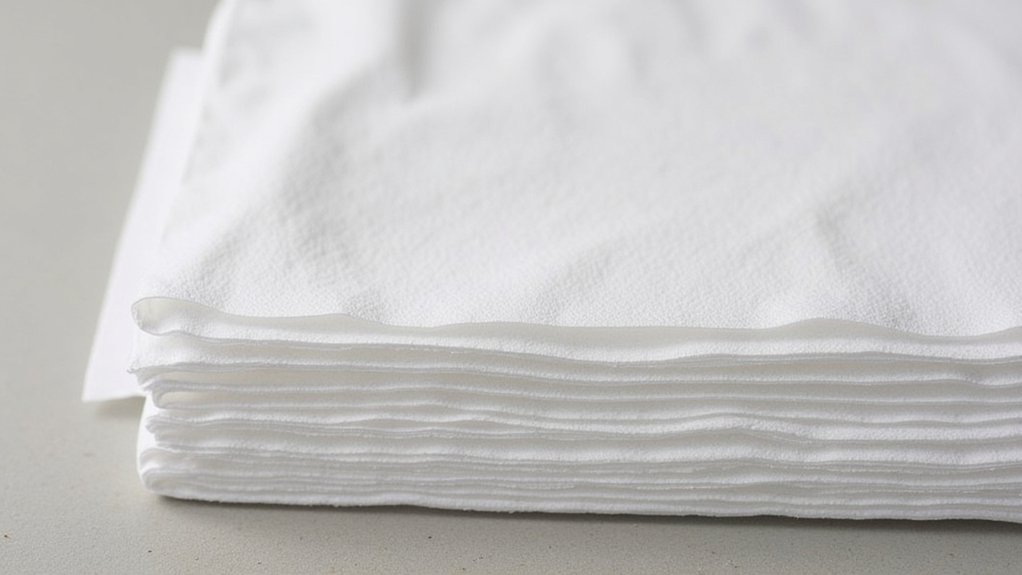
You’ve likely used dryer sheets countless times, but have you ever wondered what gives these thin fabric squares their magical softening powers? Behind their simple appearance lies a precise blend of synthetic materials and specialized chemicals. While the base layer consists of polyester or cellulose fibers, it’s the coating of quaternary ammonium compounds and heat-activated fragrances that transforms your laundry. Understanding their composition reveals both benefits and potential concerns worth exploring.
The Basic Components of Dryer Sheets
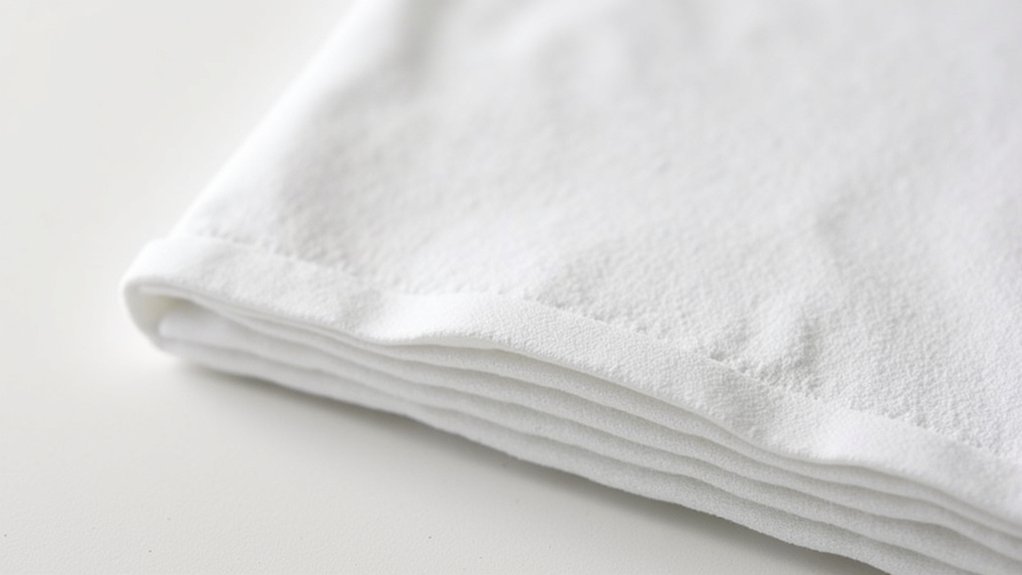
Dryer sheets consist of three primary components that work together to soften fabrics and reduce static cling during the drying cycle. The foundation is a polyester or cellulose-based sheet that’s been specially designed to withstand high temperatures. You’ll find that these sheets are coated with fabric softeners, which typically include quaternary ammonium compounds that help reduce static and make clothes feel softer.
The third key component includes scent additives that give your laundry that fresh-from-the-dryer smell. “These fragrances are specially formulated to be heat-activated and long-lasting,” explains Dr. Sarah Chen, textile chemist at the American Fabric Research Institute. Additional ingredients may include fatty acids and special emulsifiers that help distribute the softening agents evenly across your clothes during the drying process.
Chemical Compounds and Active Ingredients
While many consumers focus on scents, the real workhorses in dryer sheets are specific chemical compounds that actively fight static and soften fabrics.
Key Chemical Components:
- Quaternary ammonium compounds
- Fatty acids and alcohols
- Dipalmethyl hydroxyethylammonium methosulfate
When you’re doing laundry, chemical reactions occur as these ingredients transfer from the sheet to your clothes. Here’s the ingredient breakdown of how they work:
- The fatty acids coat fibers to reduce friction
- Quaternary compounds neutralize static electricity
- Softening agents penetrate fabric weaves
“These compounds work together in a carefully balanced formula,” explains Dr. Sarah Chen, textile chemist. “They’re designed to activate at specific temperatures during the drying cycle, ensuring even distribution across your laundry.”
How Heat Activates Dryer Sheet Technology
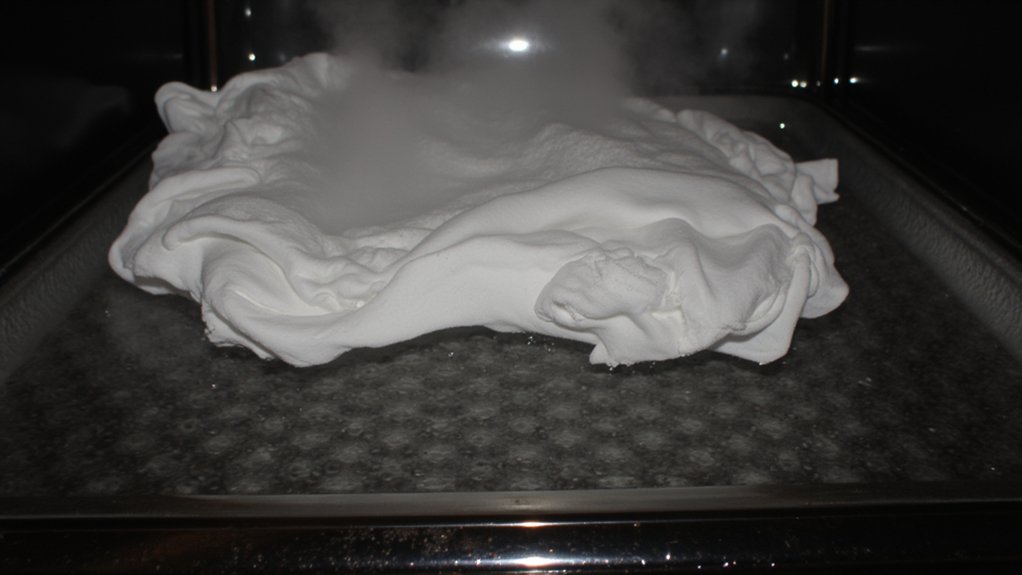
As your clothes tumble in temperatures between 120-150°F, the heat triggers a precise sequence of chemical reactions within the dryer sheet’s coating. “The melting point of most dryer sheet compounds occurs at 125°F,” notes Dr. Sarah Chen, textile chemist at the Fabric Care Institute.
When your dryer reaches this critical temperature, you’ll notice the heat activation process beginning. The sheet’s waxy coating gradually liquefies, releasing fabric softening agents that bond with your garments. During the cycle, these compounds spread evenly across your laundry, coating each fiber with a microscopic layer of softener. At around 135°F, you’ll get peak performance as the sheet’s active ingredients fully disperse. This controlled release guarantees you’re getting consistent fabric softening throughout the entire drying cycle.
Health and Safety Considerations
Since many consumers have sensitivities to fragrances and chemicals, you’ll want to carefully review the safety information before using dryer sheets. “About 30% of people report skin or respiratory reactions to common fabric softener ingredients,” explains Dr. Sarah Chen, dermatologist at Cleveland Clinic.
Common health risks include:
- Skin irritation and rashes
- Headaches from strong fragrances
- Respiratory issues, especially in those with asthma
- Allergic reactions to synthetic chemicals
If you have allergy concerns, consider these alternatives:
- Use unscented, hypoallergenic dryer sheets
- Switch to wool dryer balls
- Skip fabric softeners entirely
Always test new dryer sheets on a small load first and discontinue use if you experience any adverse reactions. Keep sheets away from children and pets.
Environmental Impact and Alternatives
Although conventional dryer sheets offer convenience, they create significant environmental concerns through non-biodegradable synthetic fibers and chemical runoff. “Traditional dryer sheets can take 50-100 years to decompose in landfills,” notes Dr. Sarah Chen, environmental scientist.
You’ll find several sustainable alternatives that reduce your environmental impact:
- Wool dryer balls (reusable for up to 1,000 loads)
- Organic cotton dryer balls
- White vinegar in your washer’s fabric softener compartment
- Line-drying your clothes outdoors
These eco-friendly options help you:
- Eliminate synthetic waste
- Reduce energy consumption
- Lower chemical pollution in waterways
- Save money long-term
For best results, replace your dryer sheets with three to six wool dryer balls per load, depending on load size.
Proper Usage and Storage Guidelines
While proper usage of dryer sheets seems straightforward, following specific guidelines will maximize their effectiveness and extend their shelf life. “Most people use twice as many sheets as they actually need,” explains laundry expert Maria Thompson, who recommends using just one sheet for regular loads and two for larger loads.
For proper usage, you’ll want to:
- Place sheets on top of wet clothes before starting the dryer
- Remove sheets promptly after cycle completion
- Never reuse sheets, as they lose effectiveness
Storage tips to maintain quality:
- Keep unused sheets in their original box
- Store in a cool, dry place away from direct sunlight
- Seal the box between uses to prevent moisture absorption
- Use within one year of purchase for best results
Frequently Asked Questions
Can Dryer Sheets Help Eliminate Pet Hair From Clothes?
Perfectly practical dryer sheets effectively reduce pet hair removal problems. You’ll find they battle static cling, making fur fall free from fabrics during the drying cycle, untangling troublesome pet hair.
How Long Do Unused Dryer Sheets Maintain Their Effectiveness?
You’ll get the best shelf life from your dryer sheets when stored in a sealed container – they’ll stay effective for about a year. Keep them away from moisture and heat for ideal results.
Why Do Some Dryer Sheets Leave Blue Stains on Clothes?
Like a painter’s palette gone wrong, your blue stains come from dryer sheet dyes reacting with certain fabric types, especially when they’re trapped against clothes in high heat.
Can Dryer Sheets Be Used to Repel Insects Outdoors?
You can use dryer sheets as an insect repellent for outdoor use, but they’re not as effective as proper repellents. Try rubbing them on your skin or placing them nearby while outside.
Do Dryer Sheets Lose Effectiveness if Torn in Half Before Use?
You’ll notice reduced dryer sheet effectiveness when tearing them in half, since they’ll cover less surface area. However, they’ll still work for smaller loads with slightly diminished performance.
