
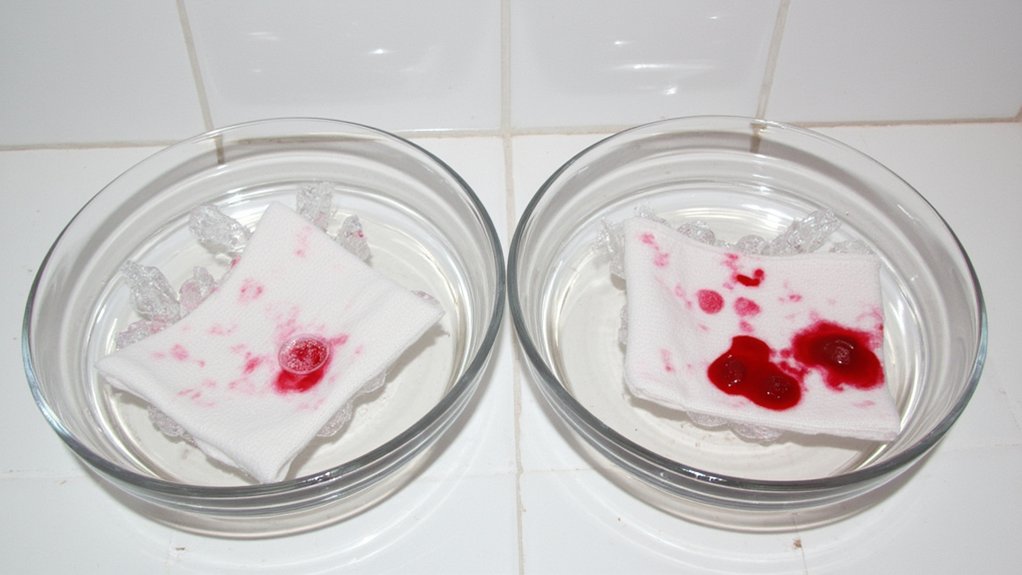
Whether you’re dealing with a nosebleed, a scraped knee, or an accidental cut, knowing the right water temperature for washing blood stains can mean the difference between salvaging or ruining your fabric. The science behind blood stain removal comes down to protein chemistry – using the wrong temperature will chemically bond those proteins to your clothes forever. You’ll want to understand the essential temperature ranges and timing before you attempt to tackle that stubborn red stain.
The Science Behind Blood Stains
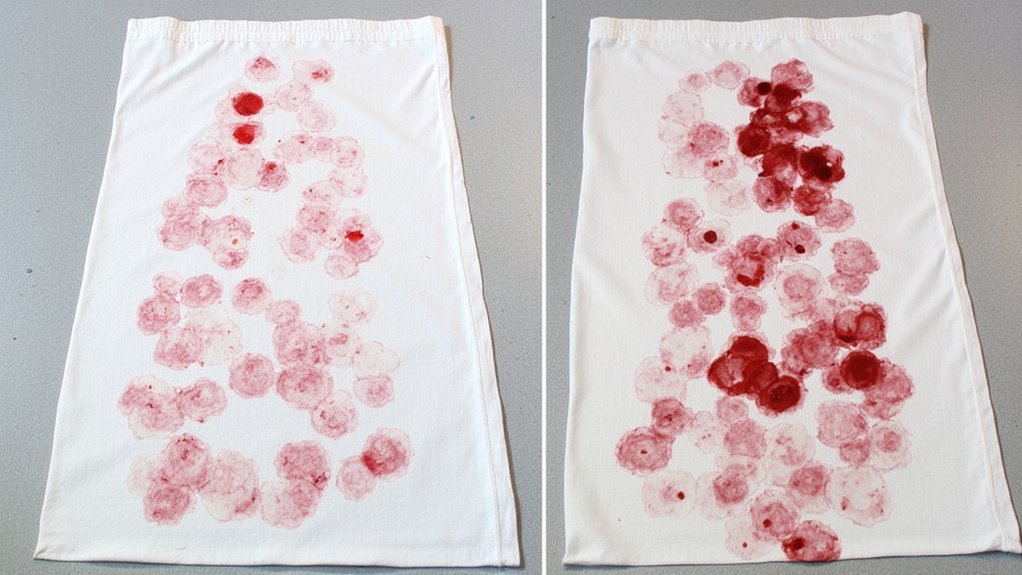
When blood comes into contact with fabric, it creates a complex protein bond that makes cleaning particularly challenging. Understanding blood composition helps you tackle these tough stains effectively – blood contains proteins, red blood cells, and plasma that all react differently to cleaning methods.
The stain chemistry becomes more complex as time passes. You’ll notice that fresh blood stains appear bright red, while dried blood turns brown due to oxidation. This chemical change affects how you’ll need to treat the stain.
Key Facts About Blood Stains:
- Proteins coagulate and set when exposed to heat
- Cold water prevents protein bonds from strengthening
- Blood contains iron that can permanently bond with fabric
- Enzymes in modern detergents target protein-based stains
Temperature choice is essential – you’ll want to avoid hot water initially, as it can permanently set the stain.
Why Temperature Matters in Blood Removal
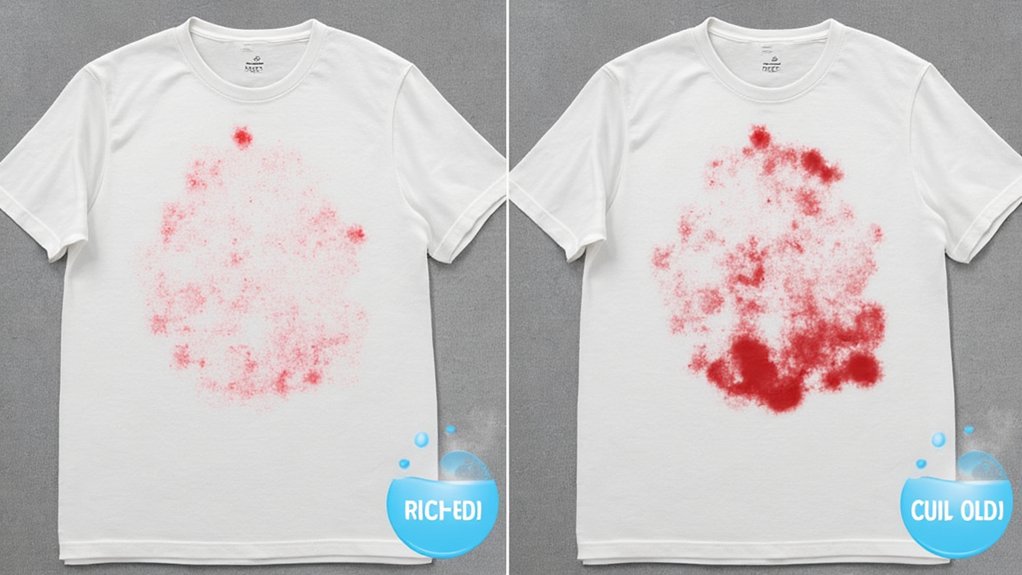
Because proteins in blood react differently at various temperatures, selecting the right water temperature is essential for successful stain removal.
Cold Water Treatment (Under 70°F):
- Use for fresh blood stains
- Prevents protein coagulation
- Allows easier removal before setting
Warm Water Treatment (85-100°F):
- Best for dried or set-in stains
- Helps break down proteins without cooking them
- Enhances detergent effectiveness
“Temperature effects on blood removal depend entirely on the stain’s age,” notes textile expert Dr. Sarah Chen. “You’ll want to avoid hot water above 120°F, as it can permanently set the stain by cooking the proteins.”
Cleaning techniques vary by fabric type, but following these temperature guidelines will greatly improve your chances of complete stain removal.
Step-by-Step Guide to Treating Blood Stains
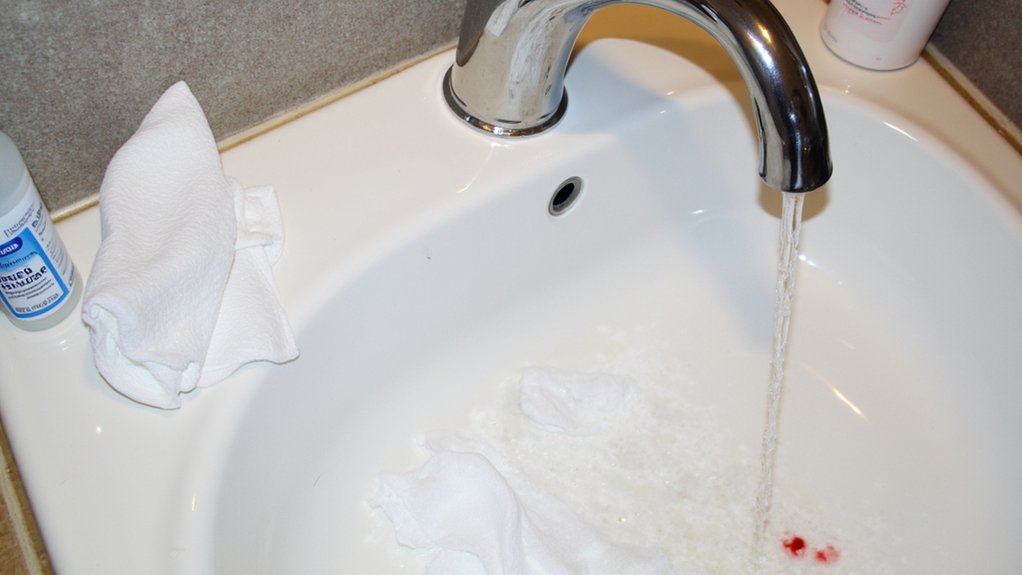
Three key phases guide the process of treating blood stains effectively: pre-treatment, washing, and post-wash inspection.
Pre-treatment:
- Blot the stain with cold water and a clean white cloth
- Apply hydrogen peroxide or enzymatic cleaning agents directly to the spot
- Let the solution sit for 5-10 minutes
Washing:
– Use cold water (60-65°F) for the main wash cycle
- Add your regular detergent according to garment size
- “Never use hot water, as it can set the proteins in blood permanently,” notes textile expert Dr. Sarah Chen
- Check the stain before drying
- Repeat the process if any traces remain
- Air dry only after the stain is completely gone
- Using hot water, which cooks the proteins and sets the stain
- Rubbing the stain aggressively instead of blotting
- Waiting too long before treating the spot
- Applying cleaning techniques in the wrong order
- Using bleach as a first treatment option
- Work from the outside of the stain inward
- Keep the fabric as dry as possible while treating
- Avoid putting stained items in the dryer
- Use enzymatic cleaners specifically designed for protein-based stains
- Mix 1/2 cup white vinegar with cool water
- Create a paste using meat tenderizer powder
- Apply hydrogen peroxide directly to the stain
- Use salt paste for fresh stains
- Enzyme cleaners specifically designed for protein-based stains
- Oxygen bleach solutions (mix 1 tablespoon per cup of cool water)
- Color-safe bleach alternatives
Post-wash inspection:
These removal techniques work best when you act quickly and follow each step precisely.
Common Mistakes to Avoid When Cleaning Blood
Despite good intentions, many people make critical errors when tackling blood stains that can permanently set the mark into fabric.
Common Mistakes to Avoid:
“The most damaging mistake is not testing cleaning solutions on a hidden area first,” says textile expert Sarah Chen. For effective stain prevention, you’ll want to:
Alternative Methods and Products for Blood Stain Removal
While commercial stain removers work well, you’ll find several effective household items that can tackle stubborn blood stains naturally.
Alternative blood stain removal methods:
For tough stains, try these specialty products:
“Enzyme-based cleaners break down proteins in blood most effectively when used before the stain sets,” says textile expert Sarah Morton. Always test any cleaning solution on a hidden area first, and never mix cleaning products together, as this can create harmful fumes.
Frequently Asked Questions
Can Dried Blood Stains Be Used to Determine How Old They Are?
You can determine blood stain age through dried blood analysis, as forensic scientists examine chemical changes, color shifts, and degradation patterns that occur in bloodstains over time.
Do Blood Stains From Different Species Require Different Cleaning Approaches?
Like ancient hieroglyphs, you’ll find each bloodstain is unique. Species-specific cleaning methods vary, but standard stain removal techniques work well regardless of whether it’s human or animal blood.
Will Cleaning Blood Stains Damage the DNA Evidence Needed for Investigations?
You’ll destroy essential DNA evidence through most cleaning methods. Standard washing, scrubbing, and chemical treatments cause DNA degradation, making it impossible for investigators to analyze blood samples effectively.
How Long Can Blood-Borne Pathogens Survive in Dried Blood Stains?
You’ll be shocked – blood-borne pathogens can survive weeks or even months in dried blood! HIV lasts up to 7 days, while Hepatitis B’s blood survival extends to an incredible 4 months.
Can UV Light Help Detect Blood Stains That Aren’t Visible to Naked Eyes?
You can use UV detection to spot invisible blood stains that aren’t apparent to your eyes. The light makes blood residue fluoresce, helping investigators locate trace evidence in crime scenes.
