

Whether you’re washing your comforter after a spill or during routine cleaning, knowing the correct drying time can protect your bedding and save you energy. Your comforter’s drying duration depends heavily on its material composition and size – ranging from 30 minutes for silk to over 2 hours for down filling. Professional dry cleaner Sarah Chen notes, “The key to properly drying any comforter lies in understanding its specific care requirements.” With various factors affecting drying time, you’ll want to explore the exact specifications for your particular bedding type.
Average Drying Times for Different Comforter Types
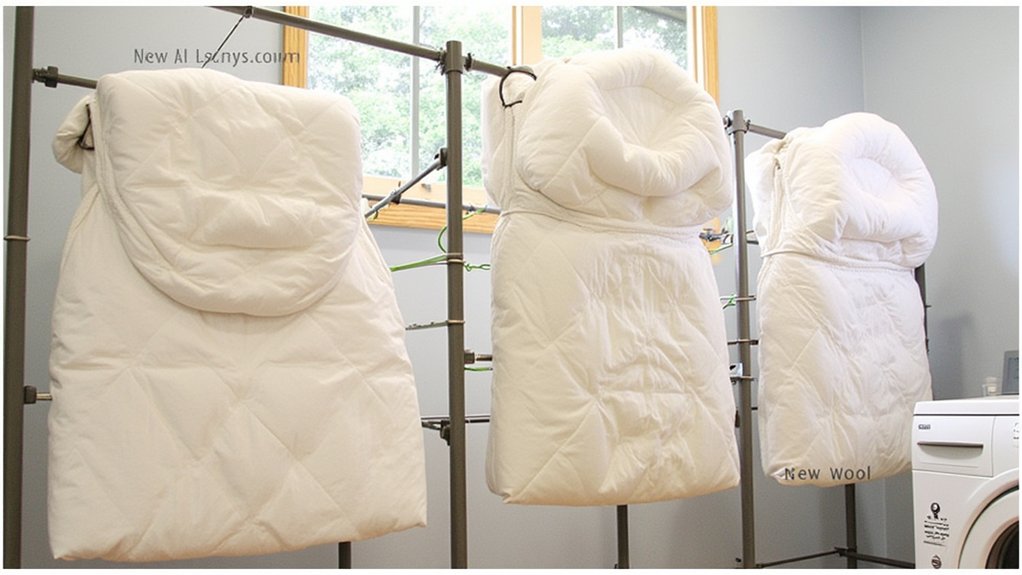
When it comes to drying times, your comforter’s filling material and size play the biggest role in how long you’ll need to run the dryer.
Average Drying Times by Material:
- Down alternative: 60-90 minutes on medium heat
- Cotton fill: 45-75 minutes on high heat
- Silk comforters: 30-45 minutes on low heat
- Natural down: 90-120 minutes on low heat
“For best results, remove your comforter every 30 minutes to fluff and redistribute the filling,” explains textile expert Sarah Chen. You’ll know your comforter is completely dry when it feels consistently warm and fluffy throughout, with no cool or damp spots. King-size comforters typically need 15-30 minutes longer than queen or full sizes. Remember to add dryer balls to speed up the process and prevent clumping.
Factors That Affect Comforter Drying Time
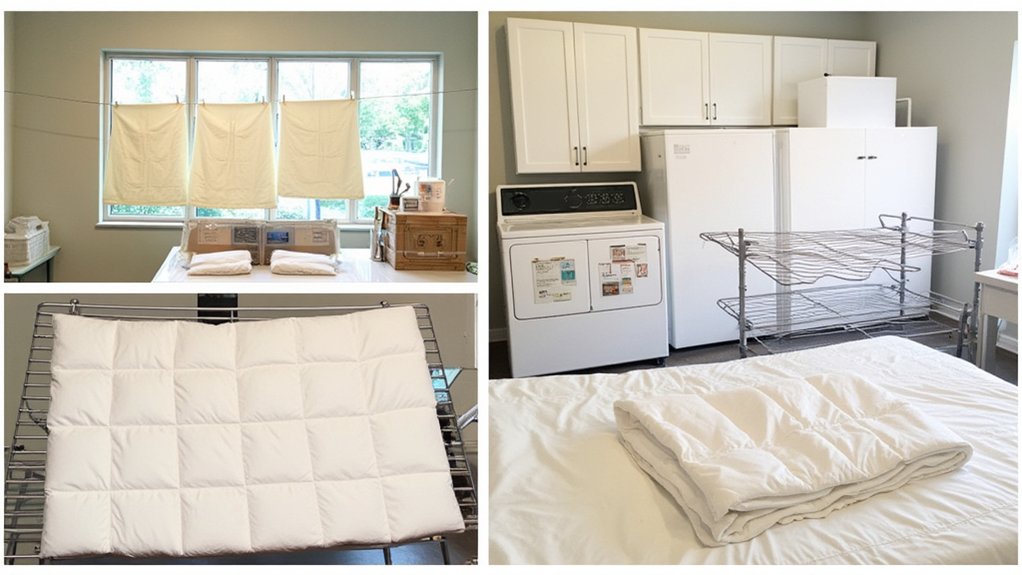
Several variables work together to determine exactly how long your comforter will take to dry completely. The material thickness plays an essential role – thicker comforters naturally require more drying time than thinner ones. Your comforter’s moisture retention ability also impacts drying duration greatly.
Key factors affecting drying time:
- Fill material (down takes longer than synthetic)
- Size and weight of the comforter
- Dryer capacity and heat settings
- Humidity level in your home
- Air circulation quality
- Whether you’re using dryer balls
“The most efficient drying comes from matching your dryer’s capacity to your comforter’s size,” says laundry expert Sarah Thompson. You’ll get better results if you don’t overcrowd your dryer and periodically redistribute the comforter during the drying cycle.
Best Dryer Settings for Optimal Results
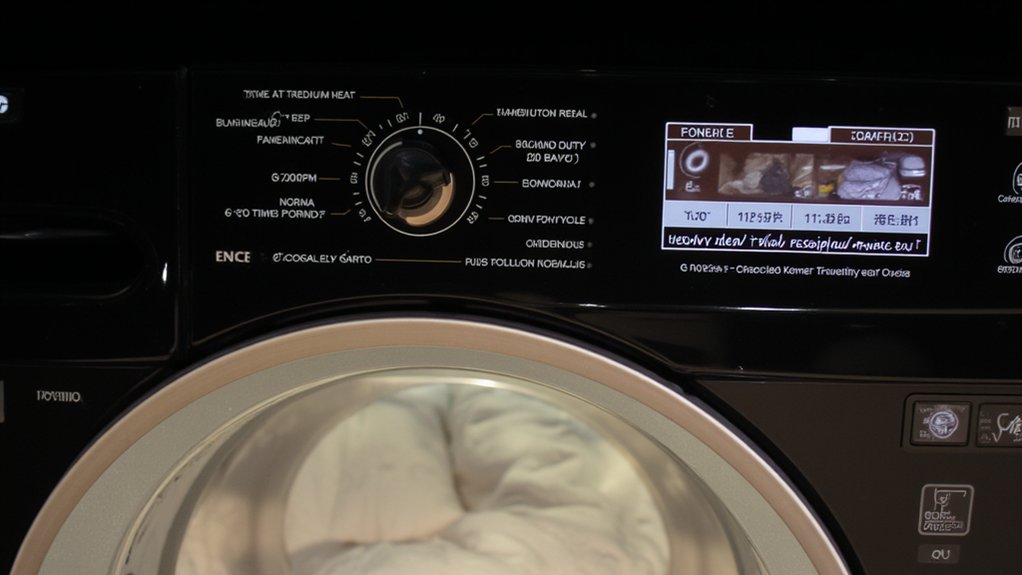
To maximize your comforter’s drying efficiency, you’ll want to select the proper temperature and cycle settings on your dryer.
For down and feather comforters, use medium heat (around 130°F) and select the “bulky items” or “bedding” cycle. You’ll need to stop the dryer every 20-30 minutes to fluff and redistribute the filling.
For synthetic comforters:
- High heat setting (140-150°F)
- Regular tumble dry cycle
- Add dryer balls to prevent clumping
“Different drying temperatures suit different comforter materials,” explains laundry expert Sarah Chen. “Cotton and polyester blends can handle higher heat, while delicate materials like silk require low heat settings to prevent damage.”
Remember to check your comforter’s care label, as some materials may need special temperature considerations to maintain their quality.
Signs Your Comforter Is Completely Dry
Knowing if your comforter is fully dry can be trickier than monitoring regular laundry items. Here are reliable drying indicators to check for complete dryness:
- Feel the center and corners for cold or damp spots
- Shake the comforter – it should feel light and fluffy
- Check for clumped filling, which indicates moisture
- Smell for any musty odors that suggest remaining dampness
“The most reliable test is reaching deep into the comforter’s middle sections,” says laundry expert Sarah Chen. “If you feel any cool spots, continue drying.”
For ideal comforter freshness, you’ll want to:
- Remove promptly when dry
- Fluff vigorously to distribute filling
- Let it air out for 15-20 minutes before making the bed
If you notice any lingering moisture, run an additional 20-minute drying cycle.
Tips to Speed Up the Drying Process
While drying a comforter can take several hours, you’ll dramatically reduce the drying time by following proven acceleration techniques.
Try these effective drying hacks for better comforter care:
- Add 3-4 dryer balls or clean tennis balls to break up clumps
- Remove and shake the comforter every 30 minutes to redistribute filling
- Clean the lint filter before and during the drying cycle
- Set your dryer to medium heat instead of high to prevent damage
- Place a dry bath towel in with your comforter to absorb moisture
“The key to faster drying is creating space for air circulation,” says laundry expert Sarah Chen. “Don’t overload your dryer—your comforter should have room to tumble freely.” For extra-large comforters, consider using a commercial dryer at your local laundromat, which offers more space and stronger airflow.
Alternative Methods for Drying Comforters
If your dryer isn’t available or working properly, you’ll find several effective ways to dry your comforter without using a machine. Here are proven alternatives for proper fabric care:
- Hang your comforter outdoors on a sturdy clothesline on a sunny, breezy day
- Spread it across multiple drying racks indoors near open windows
- Drape it over a shower rod in a well-ventilated bathroom
“Air drying can take 24-48 hours depending on humidity levels and ventilation,” says textile expert Sarah Chen. To guarantee even drying:
- Flip the comforter every 4-6 hours
- Gently shake it to redistribute filling
- Position fans nearby to increase airflow
- Choose a location away from direct heat sources
- Check for dampness in multiple spots before storing
Frequently Asked Questions
Can I Dry Multiple Comforters Together in One Load?
Want fluffy, well-dried bedding? You shouldn’t dry multiple comforters together, as it reduces drying efficiency and exceeds your dryer’s load capacity. Dry them separately for the best results.
How Often Should I Wash and Dry My Comforter?
You should wash your comforter every 2-3 months following care label instructions. If you’re using a duvet cover, you can extend washing frequency to 4-6 months between cleanings.
Will Drying My Comforter Damage or Shrink the Filling Material?
Your comforter’s filling type affects shrinkage risk. Down and synthetic fillings can withstand proper drying techniques, but high heat may damage them. Use low heat and dryer balls for best results.
Can I Put a Wet Comforter Directly in the Dryer?
While you can put a wet comforter in the dryer, you’ll get better results if you first run it through an extra spin cycle to reduce moisture levels. Choose low dryer settings to protect the filling.
Is It Safe to Dry a Comforter With Decorative Elements or Sequins?
You’ll need to check the care label first. Most decorative elements and sequins shouldn’t go in the dryer. Instead, air dry your comforter to prevent damage and maintain the embellishments’ appearance.
