
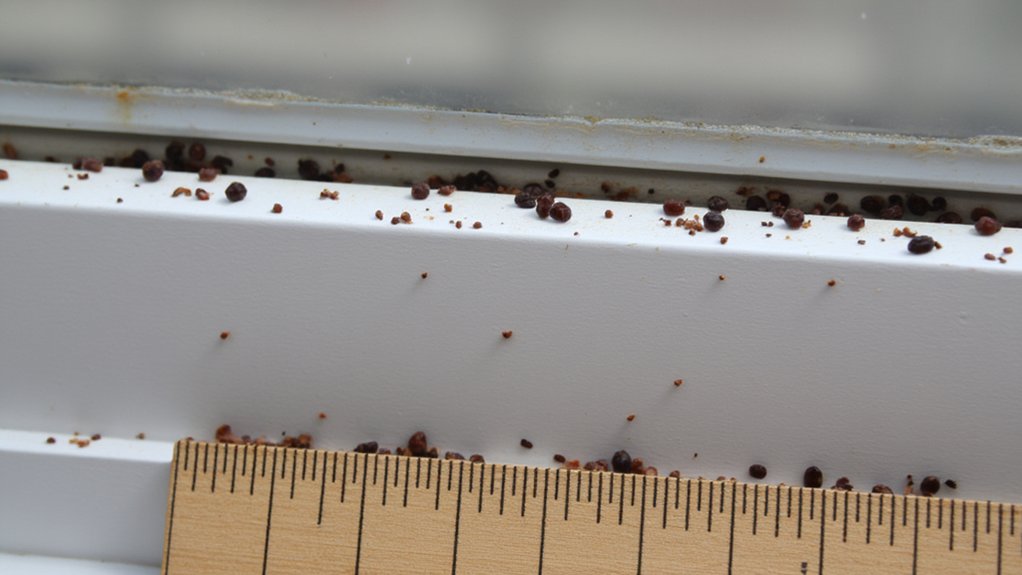
You’ll find that many household pests leave distinctive calling cards in the form of droppings, each with unique characteristics that tell a revealing story about your unwanted guests. While cockroach specks might look like scattered pepper and mouse droppings resemble dark rice grains, other insects produce waste that’s harder to identify without expert knowledge. Understanding these telltale signs can help you tackle an infestation before it becomes a serious problem in your home.
Common Types of Insect Droppings in Homes
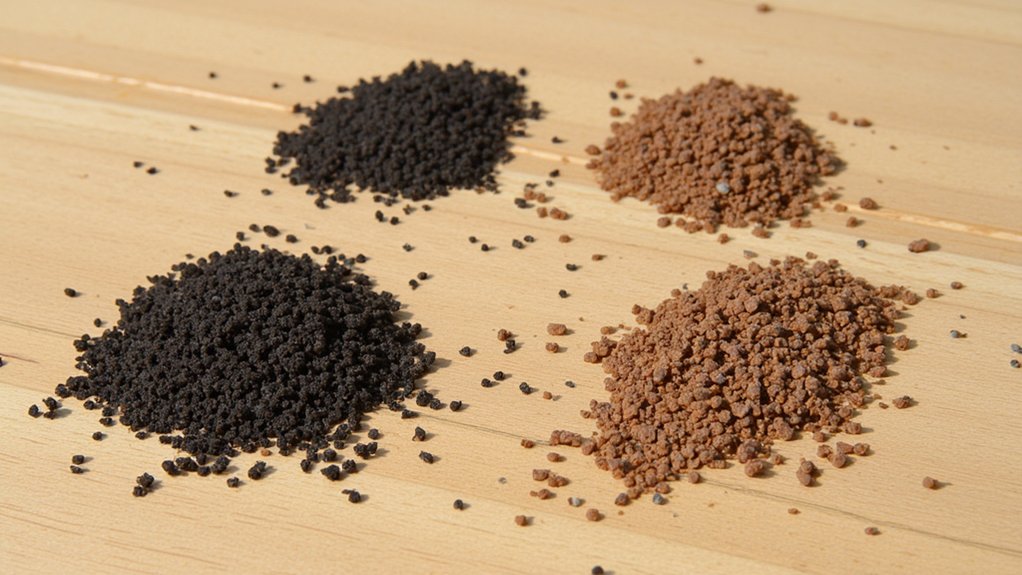
Homeowners often discover mysterious droppings around their living spaces, which can indicate the presence of various household pests. You’ll typically find these unwanted signs in kitchens, bathrooms, and dark corners.
Common pest droppings you might encounter include:
- Cockroach droppings: These appear as small, dark specks resembling coffee grounds or black pepper. They’re usually found near baseboards and under sinks.
- Mouse droppings: Look for dark, rod-shaped pellets about 1/8 to 1/4 inch long with pointed ends.
- Bed bug droppings: These leave tiny black dots on mattresses and furniture.
“The location and appearance of droppings are key identifiers for determining which pest you’re dealing with,” explains entomologist Dr. Sarah Chen. Early identification helps you choose the right treatment method and prevent further infestation.
Health Risks Associated With Bug Waste
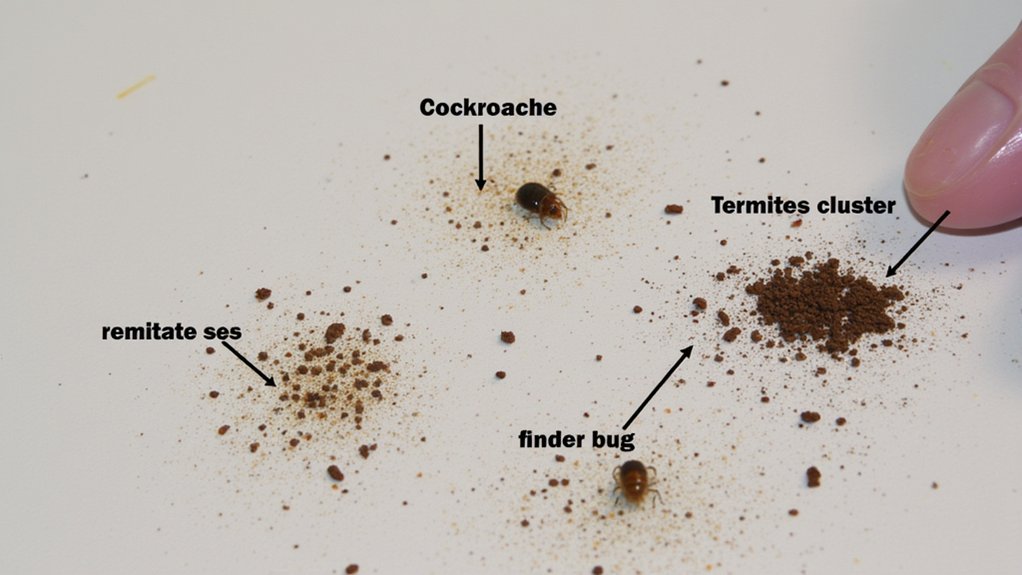
While many people consider bug droppings merely a nuisance, these waste materials can pose serious health risks to you and your family. The health implications of exposure to insect waste can range from mild respiratory issues to severe infections.
According to Dr. Sarah Chen, entomologist, “Bug droppings can trigger allergic reactions and asthma attacks, especially in children and elderly individuals.” You’ll need to be particularly cautious of:
- Cockroach droppings that spread bacteria and trigger asthma
- Bed bug waste that causes skin irritation and allergic reactions
- Fly specks that contaminate food and surfaces
- Stored product pest droppings that spoil food items
Disease transmission occurs through:
- Direct contact with droppings
- Inhaling contaminated dust particles
- Consuming contaminated food or water
Identifying Pest Problems Through Droppings
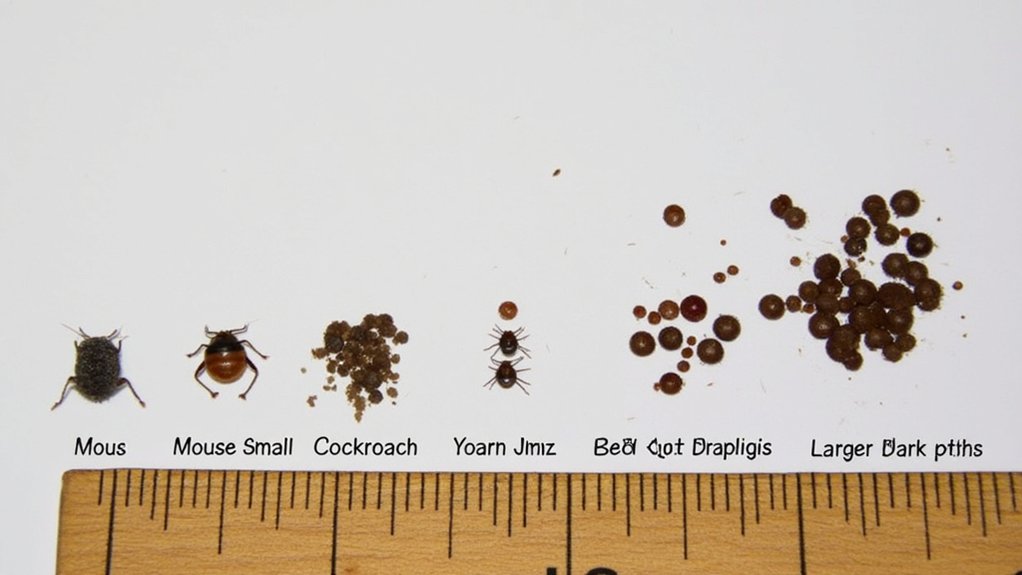
How can you spot an unwanted pest invasion before it becomes a major problem? One of the most reliable pest identification techniques involves analyzing droppings you find around your home.
Look for these key dropping characteristics:
- Size: Measure the length and width (1-2mm for small insects, up to 15mm for rodents)
- Shape: Note whether pellets are round, cylindrical, or irregular
- Color: Fresh droppings appear dark and moist; old ones are gray and crumbly
- Location: Map where you find droppings to determine travel patterns
Expert entomologist Dr. Sarah Chen recommends these droppings analysis methods:
- Document quantity and frequency of new droppings
- Photograph specimens for professional identification
- Clean areas thoroughly to monitor fresh activity
- Check common gathering spots daily (baseboards, corners, cabinets)
Where to Look for Bug Droppings
Knowing where to search for bug droppings can make all the difference in catching pest problems early. Different insect habitats require specific inspection points throughout your home.
Check these common droppings locations daily:
- Along baseboards and in corners
- Behind appliances and furniture
- Inside cabinets and pantries
- Around window frames and doorways
- Under sinks and near water sources
“Most insects prefer dark, undisturbed areas near their food sources,” explains entomologist Dr. Sarah Chen. You’ll need to inspect both high and low spaces:
- Ceiling corners for spider evidence
- Floor-level cracks for roach activity
- Cabinet shelves for pantry pest signs
- Wooden surfaces for termite pellets
- Mattress seams and headboards for bed bug traces
Cleaning and Sanitizing Insect Droppings
Once you’ve identified insect droppings in your home, it’s crucial to clean and sanitize the affected areas properly to prevent health risks.
Basic cleaning methods:
- Wear protective gloves and a face mask
- Vacuum droppings using a HEPA filter vacuum
- Wipe surfaces with disposable paper towels
- Double-bag all waste materials
Sanitizing techniques:
- Mix 1 cup of bleach with 1 gallon of water
- Spray the solution on affected areas
- Let it sit for 10 minutes
- Wipe with clean, damp cloths
“Always treat insect droppings as potential health hazards,” says entomologist Dr. Sarah Miller. “Using EPA-registered disinfectants and maintaining proper ventilation during cleanup will help guarantee safe and effective removal.”
Remember to clean your cleaning tools thoroughly afterward and wash your hands with soap and warm water.
Prevention and Long-Term Control Strategies
While cleaning up existing insect droppings addresses immediate concerns, implementing strong prevention methods will keep these unwanted visitors from returning to your home. “The best defense against insect infestations starts with sealing entry points and removing what attracts them in the first place,” explains pest control specialist James Chen.
To establish effective pest exclusion:
- Seal cracks and holes with caulk or foam
- Install door sweeps and window screens
- Repair damaged weather stripping
For habitat modification:
- Store food in airtight containers
- Fix leaky pipes within 48 hours
- Remove cardboard and paper debris
- Keep outdoor vegetation 18 inches from walls
- Clean kitchen counters nightly
- Reduce indoor humidity below 50%
- Empty trash regularly and maintain sealed bins
“Monthly inspections of these preventive measures will guarantee long-term success,” adds Chen.
Frequently Asked Questions
Do Bug Droppings Glow in the Dark When Exposed to UV Light?
You’d think bug droppings would make great disco lights, but they don’t naturally glow. However, some insects’ waste contains proteins that’ll show UV fluorescence when exposed to blacklight, thanks to bug biology.
Can Insect Droppings Be Used as Fertilizer for Indoor Plants?
You can use insect droppings as organic fertilizer for your indoor plants. They’re rich in nitrogen and minerals. However, you’ll want to properly compost them first for the best benefits.
Why Do Some Bug Droppings Change Color After Being Exposed to Air?
You’ll notice color changes in bug droppings when they’re exposed to air because of oxidation, similar to how an apple browns. The droppings’ compounds react with oxygen over time.
Do Insects Leave Droppings Even During Their Dormant Winter Phase?
You’ll find most insects don’t produce droppings during winter dormancy since they’re not eating. Their insect behavior and seasonal activity typically pause until temperatures warm up again.
Can Bug Droppings Attract Beneficial Insects to Your Garden?
Like tiny breadcrumbs in your garden, insect droppings can actually help with attracting pollinators and boosting garden biodiversity, as they release nutrients and pheromones that draw beneficial insects.
