
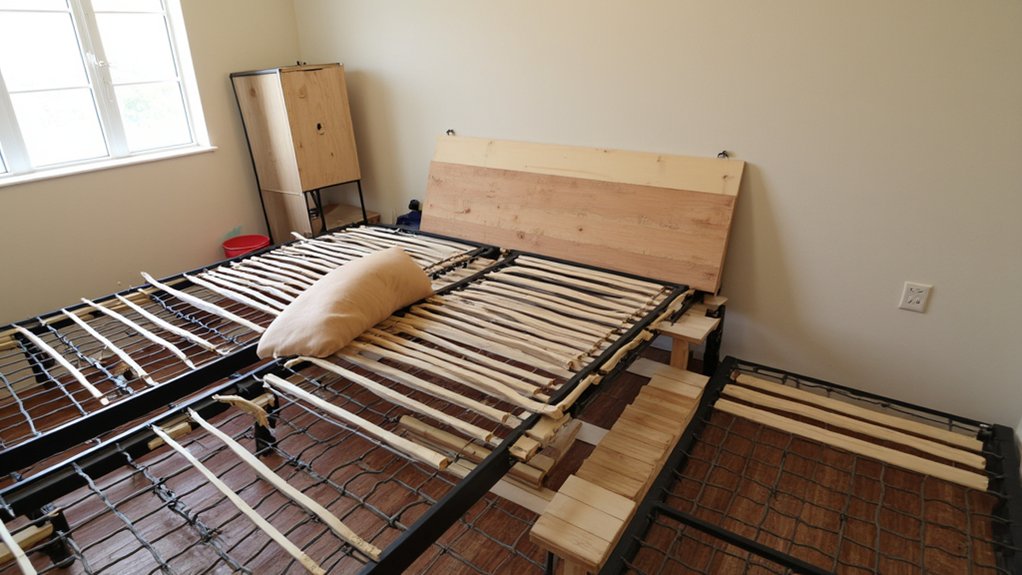
Ever wondered if those wooden strips under your mattress are really necessary? While not all beds require slats, your choice of mattress and bed frame will determine whether you need them. According to sleep specialist Dr. Sarah Chen, “Proper support is essential for both mattress longevity and your comfort.” You’ll want to understand your bed’s support needs before making a decision that could cost you hundreds in premature mattress replacement.
Understanding Bed Slats and Their Purpose
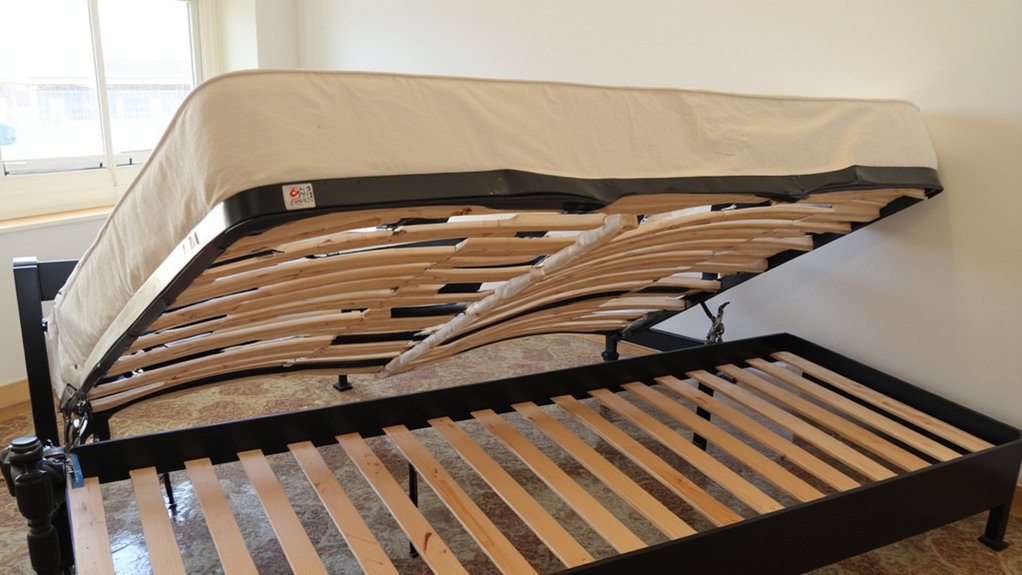
Bed slats serve as the essential foundation between your mattress and bed frame, providing important support to prevent sagging and extend mattress life. When choosing slats, you’ll find them made from different bed slat materials including:
- Solid pine
- Spruce wood
- Metal
- Composite materials
The spacing between slats is critical for proper mattress support. Most manufacturers recommend slat spacing between 2.5 to 3 inches apart. “Proper slat spacing guarantees even weight distribution and prevents mattress damage,” explains furniture expert Mark Thompson.
You’ll need to take into account the weight capacity of your slats based on:
- Mattress type
- Combined sleeper weight
- Frame compatibility
When installing slats, make sure they’re securely fastened to prevent shifting during use. Metal brackets or grooved frame edges help keep slats in position.
Types of Bed Support Systems
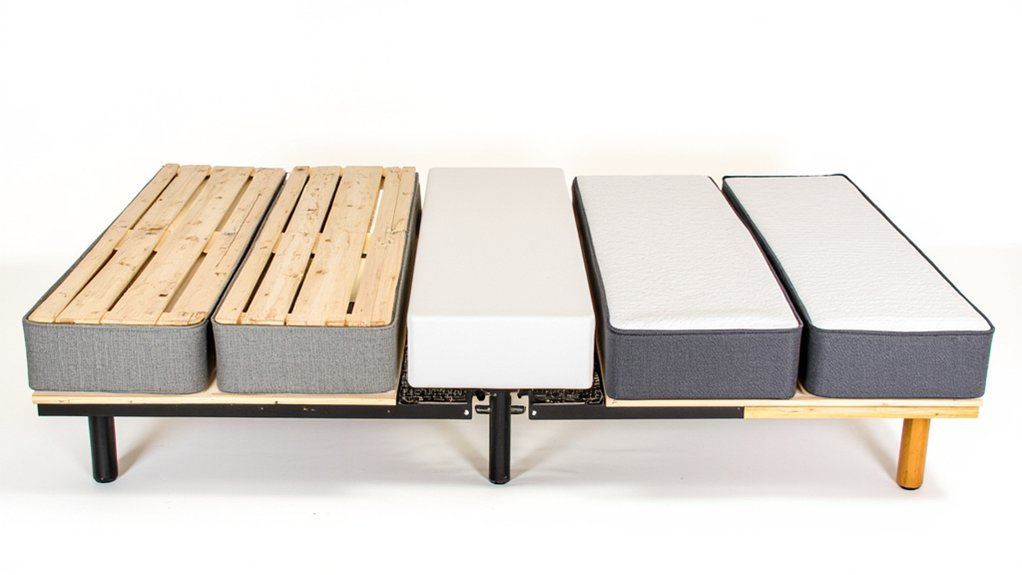
While slats offer reliable support, they’re not the only option for keeping your mattress properly elevated and supported. You’ll find several bed frame types with different support system materials designed for specific needs.
Common support systems include:
- Box springs: Traditional metal or wood frames paired with a specific foundation
- Platform beds: Solid base requiring no additional support
- Bunkie boards: Thin, solid panels that replace box springs
- Metal grids: Integrated support systems in modern bed frames
- Foundation bases: Flat, rigid surfaces often made of wood or metal
Each system provides unique benefits. For instance, platform beds eliminate the need for additional support pieces, while box springs offer extra height and traditional aesthetics. Your choice should depend on your mattress type, preferred bed height, and specific support requirements.
When Slats Are Essential for Your Bed
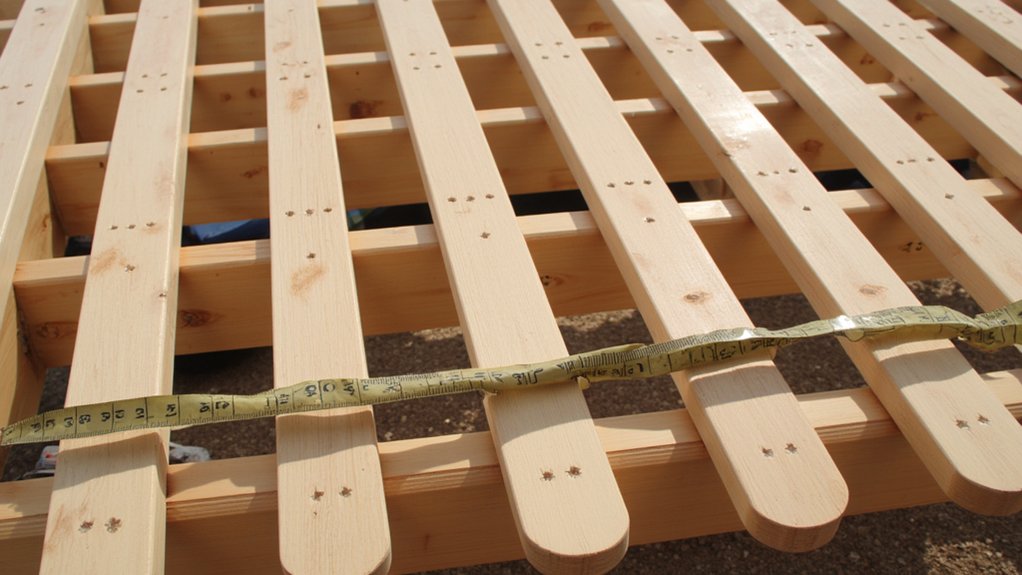
Although not every bed requires slats, certain mattress types and bed frame designs absolutely need them for proper support and longevity. You’ll need slats if you’re using a memory foam or latex mattress, as these require consistent, even support across their entire surface.
Platform beds and beds without box springs particularly depend on slats for structural integrity. When installing slats, you’ll need to take into account both slat materials and slat spacing. “Hardwood slats spaced no more than 3 inches apart provide ideal support for most mattresses,” says furniture expert Mark Thompson.
Key situations requiring slats:
- Memory foam mattresses
- Latex mattresses
- Platform beds
- Beds without box springs
- European-style bed frames
- Adjustable bed bases with removable supports
Alternative Support Options to Consider
Since slats aren’t the only way to support your mattress properly, you’ll find several reliable alternatives that can work just as effectively.
Consider these proven support options:
- Box springs: Traditional metal and wood foundations that add 8-10 inches of height
- Bunkie boards: Low-profile solid panels, typically 2-3 inches thick
- Platform beds: Built-in solid or slatted surfaces requiring no additional support
- Mattress foundations: Rigid frames with solid tops or closely spaced supports
- Adjustable bases: Mechanical foundations that can raise head and foot sections
“The key is ensuring your mattress has consistent, gap-free support across its entire surface,” explains sleep specialist Dr. Sarah Chen. You’ll want to check your mattress warranty requirements, as some manufacturers specify particular support systems to maintain coverage.
Choosing the Right Support for Your Mattress Type
Different mattress types need specific support systems to perform their best and last longer. Here’s what your mattress requires:
Memory Foam & Latex
- Maximum slat spacing: 3 inches
- Solid platform or closely spaced slats
- Even weight distribution essential
Innerspring
- Can handle wider slat spacing (up to 4 inches)
- Box spring compatible
- Support materials should match mattress weight
Hybrid
- Slat spacing: 3-4 inches
- Reinforced center support
- Platform or slat foundation acceptable
“The key is matching support strength to mattress weight,” explains bedding expert Lisa Chen. “A king-size memory foam mattress weighing 100 pounds needs more substantial support than a 60-pound twin innerspring.” Always check your manufacturer’s guidelines, as using incorrect support can void your warranty.
Installing and Maintaining Bed Support Systems
When you’re ready to install bed support systems, proper setup and regular maintenance will extend their lifespan considerably. Follow these essential steps for successful slat installation:
- Measure spacing between slats (2-3 inches maximum)
- Secure end caps or brackets to prevent shifting
- Check that slats lie flat and level
- Test stability before adding mattress
For ongoing bed frame maintenance:
- Inspect slats monthly for cracks or warping
- Tighten all hardware every 3-4 months
- Clean under slats twice yearly
- Replace damaged slats immediately
“Regular maintenance checks help prevent structural issues that could compromise your mattress support,” says furniture expert Mark Stevens. If you notice squeaking or sagging, don’t wait – address these issues right away to protect both your bed frame and mattress investment.
Frequently Asked Questions
Can Bed Slats Be Painted or Stained to Match Bedroom Decor?
You can customize bed slat colors through painting or staining. Consider using non-toxic finishes and sealants for slat finish options that complement your bedroom’s aesthetic while maintaining durability.
How Far Apart Should Bed Slats Be Spaced for Optimal Support?
For ideal support, you’ll want to space your bed slats 2.5-3 inches apart. If you’re using a memory foam mattress, keep slat spacing closer to 2 inches for better stability.
Do Bed Slats Make Noise When You Move During Sleep?
Like a creaky old rocking chair, your bed slats can squeak and groan. You’ll notice slat noise during movement, causing sleep disturbances. Tightening hardware and adding cushioning can reduce these unwanted sounds.
Can You Use Slats From One Bed Frame on Another?
You can reuse slats on different frames if they match the bed’s dimensions and slat types. Check for proper compatibility, as width, length, and mounting systems vary between manufacturers.
What’s the Weight Capacity of Typical Wooden Bed Slats?
While light pine slats might support 200 pounds, hardwood slats can hold 500+ pounds. You’ll find slat thickness impacts capacity considerably – thicker 1-inch slats support twice what 1/2-inch slats can handle.
