
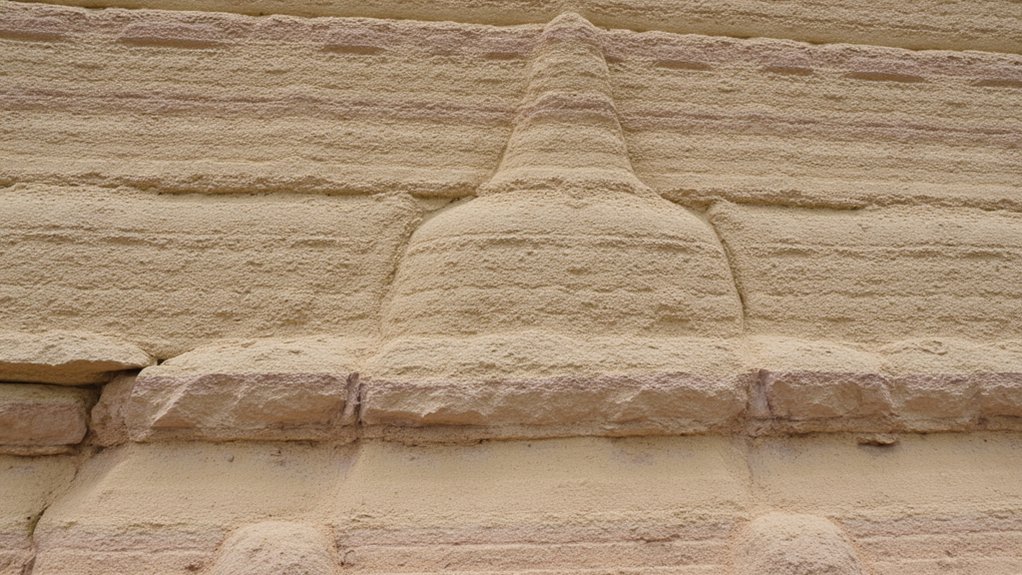
You’ll discover that horizontal bedding represents one of Earth’s most fascinating record-keeping systems. When sediments settle in water, they create distinct flat layers that stack like pages in nature’s history book. Dr. Sarah Chen, lead geologist at Stanford University, explains: “These parallel bands tell us exactly how ancient environments changed over millions of years.” The process continues today in lakes, oceans, and riverbeds – but what forces determine which particles settle first?
The Formation Process of Horizontal Bedding
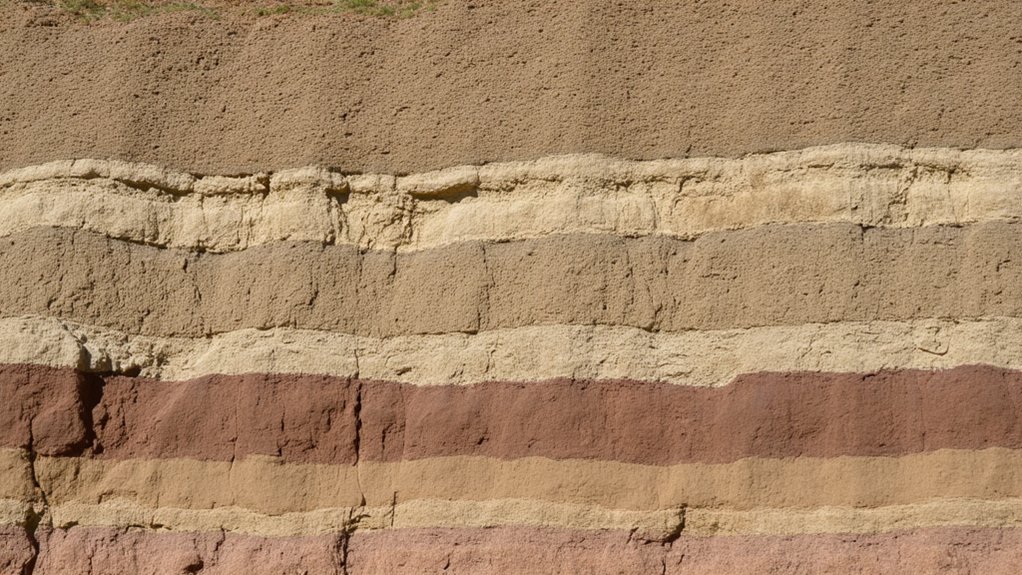
When sediments settle in water over thousands of years, they naturally form flat, parallel layers called horizontal bedding through a process known as stratification. You’ll find that these sedimentary processes involve the continuous deposition of materials like sand, silt, and clay particles.
During layer deposition, you can expect heavier particles to sink first, creating distinct bands of material. As geologist Dr. Sarah Chen explains, “Each layer represents a specific time period, with newer sediments stacking on top of older ones.” You’ll notice that the layers remain horizontal unless they’re disturbed by tectonic activity.
The process continues as long as there’s a steady supply of sediments and calm water conditions. This repetitive layering eventually creates the characteristic “cake-like” appearance you’ll see in cliff faces and quarry walls.
Key Characteristics and Visual Features
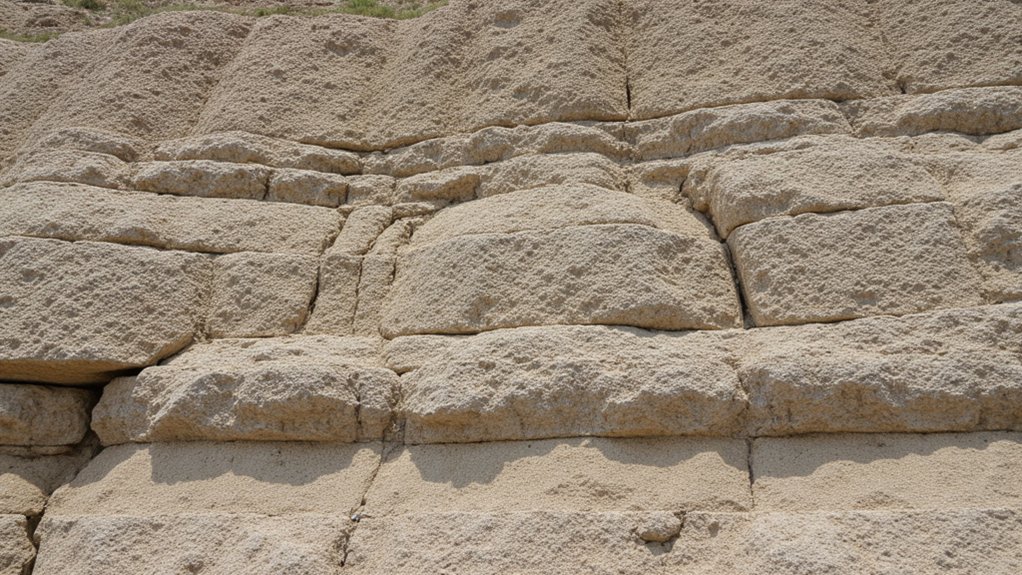
The distinctive layers of horizontal bedding display several telltale visual markers that you’ll easily recognize in the field. You’ll notice parallel bands of sediment stacked one upon another, often stretching across entire rock faces or cliff sides.
When examining these formations, you’ll spot clear texture patterns where different sediment types meet. These boundaries typically show sharp contrasts in grain size, color, and composition. The layering techniques of natural deposition create distinct bands that can range from millimeters to several meters in thickness.
Look for these key identifiers:
- Even, parallel lines extending horizontally
- Consistent thickness within individual layers
- Clear color variations between strata
- Grain size changes at layer boundaries
- Minimal distortion or tilting of beds
Types of Sedimentary Layers
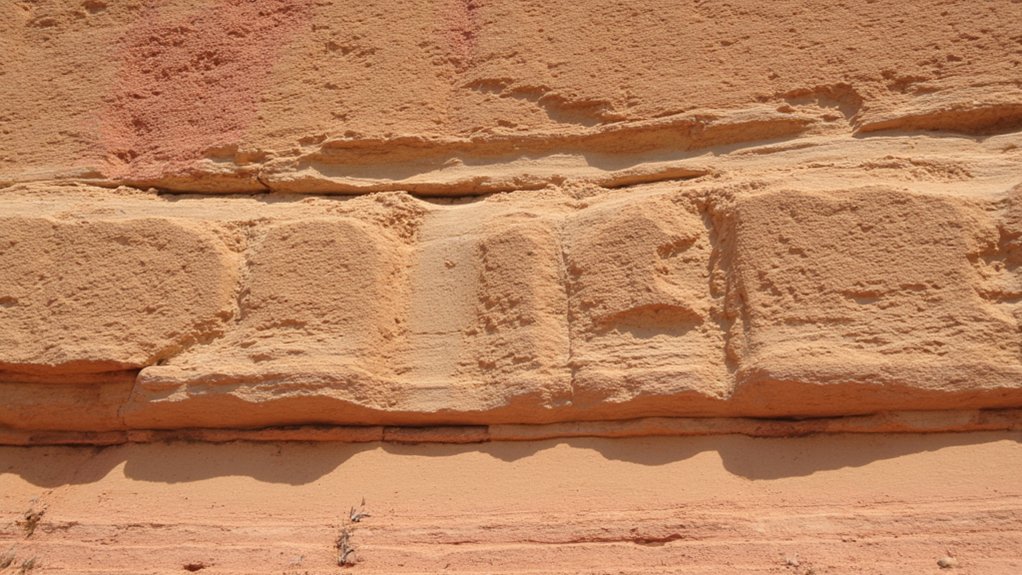
Horizontal bedding features several distinct types of sedimentary layers, each formed through specific depositional processes and environmental conditions.
You’ll find these common types in sedimentary rocks:
- Graded beds: Layers that show particle size changes from bottom to top
- Cross-bedded layers: Angular deposits formed by wind or water currents
- Laminated beds: Very thin, parallel layers of alternating composition
- Massive beds: Thick, uniform layers without internal structures
The layer composition varies considerably based on the source material:
- Sandstone layers: Made of compressed sand particles
- Limestone beds: Formed from marine organisms and minerals
- Shale deposits: Created from compressed mud and clay
- Mixed layers: Containing multiple sediment types within single beds
Dr. Sarah Chen, geologist, notes: “Each layer tells us specific information about past depositional environments and climate conditions.”
Geological Significance and Dating
Because horizontal bedding preserves distinct layers of sediment over time, you’ll find it incredibly valuable for determining geological ages and understanding Earth’s history.
Through stratigraphic correlation, you can match rock layers across different locations to piece together regional geological events. When you combine this with radiometric dating of minerals within the layers, you’re able to establish precise timelines spanning millions of years.
You’ll notice that undisturbed horizontal beds follow a simple rule: older layers sit below newer ones. Dr. Sarah Chen, geologist at Stanford University, explains: “Each layer acts like a page in Earth’s history book, revealing information about ancient environments, climate changes, and extinct life forms.” This makes horizontal bedding an essential tool for reconstructing past geological conditions.
Where to Find Horizontal Bedding Structures
When exploring sedimentary landscapes, you’ll discover horizontal bedding structures throughout many of Earth’s most dramatic geological features. You’ll find these distinctive layers in places like the Grand Canyon, where you can observe nearly two billion years of rock layers stacked like pages in a book.
Some notable horizontal bedding locations include:
- The Colorado Plateau’s sedimentary rock formations
- Zion National Park’s sandstone cliffs
- The Painted Desert in Arizona
- Australia’s Pilbara region
You can spot horizontal bedding in coastal cliffs, quarries, and road cuts where erosion has exposed the layers. Dr. Sarah Chen, geologist at UC Berkeley, notes that “the most accessible horizontal bedding structures are often found in desert environments where vegetation doesn’t obscure the rock layers.”
Environmental Indicators and Ancient History
These ancient rock layers tell fascinating stories about Earth’s past environments and the creatures that once lived here. When you examine horizontal bedding closely, you’ll find fossil evidence that reveals how environments changed over millions of years. The layers can indicate whether an area was once an ocean floor, desert, or lush forest.
Frequently Asked Questions
Can Horizontal Bedding Patterns Be Found on Other Planets Besides Earth?
You’ll find horizontal bedding on Mars, where NASA’s rovers have photographed extraterrestrial sedimentary structures. Similar layering patterns exist on other planets where sediments have accumulated over time.
How Long Does It Typically Take for Horizontal Bedding to Form?
You’ll find that bedding formation can take anywhere from days to millions of years, depending on sediment deposition rates, environmental conditions, and the amount of material being layered.
Do Earthquakes Affect the Stability of Horizontal Bedding Structures?
You’ll notice earthquake impacts can considerably disrupt horizontal layers’ structural integrity, causing fractures, faults, and deformation that may destabilize previously stable sedimentary formations in affected areas.
Can Horizontal Bedding Layers Contain Valuable Minerals or Precious Metals?
You’ll find rich mineral deposits and precious metals between horizontal layers, where ancient waters once flowed, deposited valuable materials, and created natural storage spaces over millions of years.
What Tools Do Geologists Use to Study Horizontal Bedding in the Field?
You’ll need compass tools, measuring tapes, and GPS devices for field mapping, plus sample collection kits and microscopes for sediment analysis to study layered structures effectively.
