

Your bedroom style reflects your taste, defines your space, and sets the tone for relaxation. When selecting a bed skirt, you’ll need to decide whether to match it with your comforter or sheets—a choice that impacts your room’s overall aesthetic. Interior designer Sarah Thompson suggests, “The bed skirt serves as a foundational element that can either unify your bedding or create intentional contrast.” Let’s explore the design principles that’ll help you make the right choice for your space.
Traditional Design Rules for Bed Skirt Coordination

Three fundamental rules guide traditional bed skirt coordination: matching your bed skirt to the window treatments, selecting complementary colors to your bedding, and maintaining consistent fabric types.
When choosing bed skirt fabrics, you’ll want to follow basic color theory principles. If your comforter features a bold pattern, opt for a solid-colored bed skirt that pulls from one of the design’s secondary colors. “Neutral bed skirts in cream, white, or gray serve as versatile foundations for any bedding ensemble,” notes interior designer Sarah Mitchell.
For mixed patterns, make sure your bed skirt’s scale differs from your comforter – if one has large prints, the other should display smaller designs. You’ll also want to match fabric weights: pair cotton bed skirts with cotton bedding, and silks with similar luxurious materials.
Matching Bed Skirts With Comforters: Pros and Cons
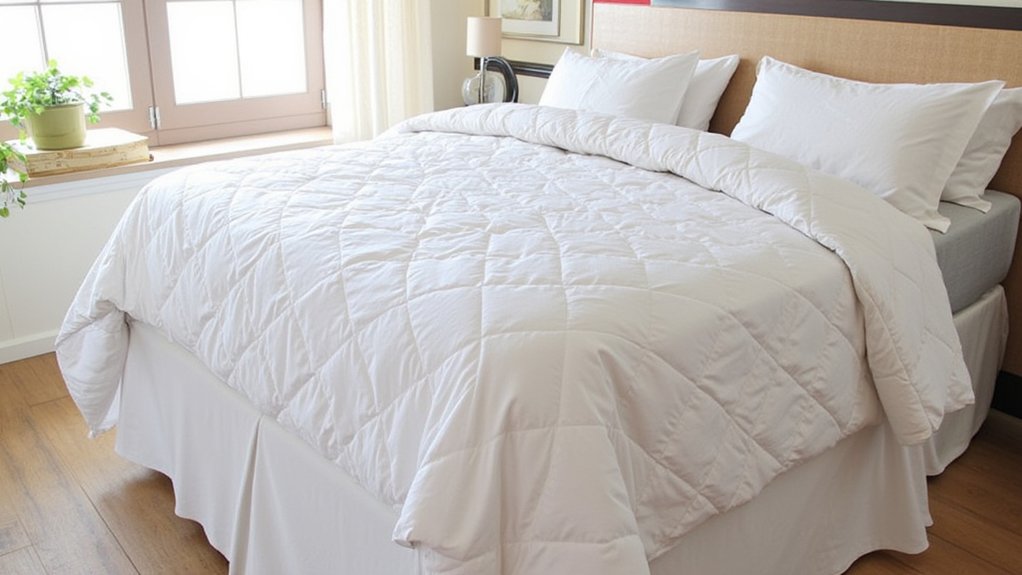
While coordinating fabrics requires careful thought, the decision to match your bed skirt exactly to your comforter presents distinct advantages and drawbacks. “Many homeowners automatically assume matching is best, but it’s not always the ideal choice,” explains interior decorator James Chen.
Pros of Matching:
- Creates visual cohesion
- Makes the room appear larger
- Simplifies your decorating decisions
Cons of Matching:
- Can look overly uniform
- Limits creative expression
- May make the bed appear flat
Color psychology suggests that varying bed skirt fabrics can add depth to your bedroom’s aesthetic. You’ll want to reflect on whether the matching approach aligns with your room’s overall design goals. “If you’re working with solid colors, matching can work beautifully. For patterns, contrasting bed skirts often create more visual interest,” advises Chen.
Coordinating Bed Skirts With Sheets: Style Tips
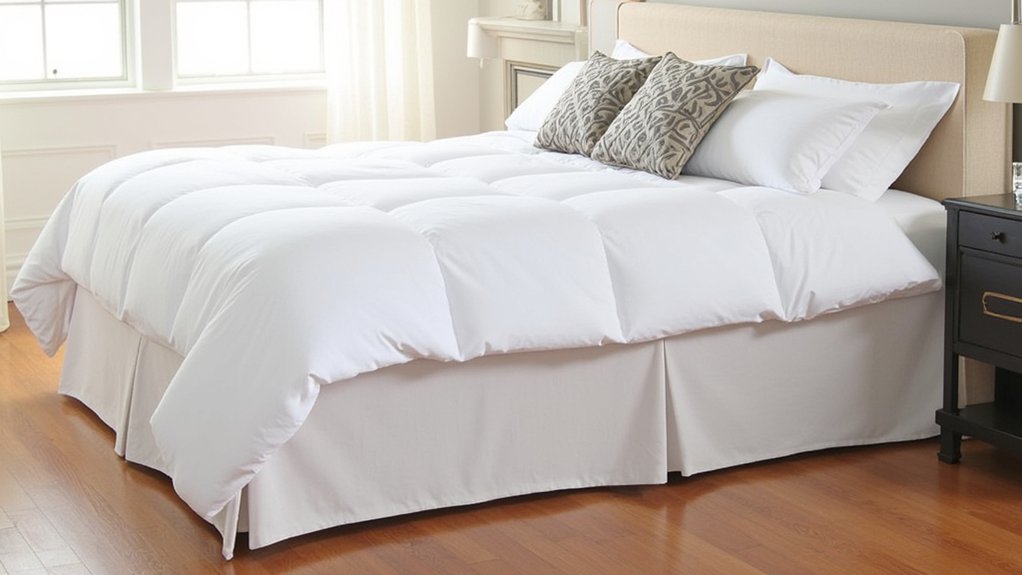
When selecting sheets to coordinate with your bed skirt, you’ll want to contemplate both color harmony and fabric textures. “The key is finding complementary materials that work together without competing for attention,” notes textile designer Sarah Martinez.
Consider these proven combinations:
- Choose solid sheets in a lighter shade of your bed skirt’s primary color
- Match crisp cotton sheets with cotton or linen bed skirt fabrics
- Pair sateen sheets with silk or polyester bed skirts for a cohesive sheen
Color psychology suggests using:
- Cool blues and greens for a calming effect
- Warm earth tones for a cozy atmosphere
- Neutral grays or taupes for versatility
For patterns, stick to this rule: If your bed skirt has a design, opt for solid sheets. If using patterned sheets, choose a solid bed skirt.
Creating Contrast: When to Break Matching Rules
Breaking traditional matching rules can breathe fresh life into your bedroom design. When you’re ready to create intentional contrast, consider these proven approaches:
- Choose a bed skirt in a complementary color from the color wheel opposite your comforter
- Mix patterns of different scales (like small dots with large florals)
- Layer solid-colored bed skirts with patterned bedding
“Color theory tells us that controlled contrast creates visual interest,” says interior designer Sarah Mitchell. “Don’t be afraid to pair a striped bed skirt with floral sheets.”
For successful pattern mixing:
- Keep patterns in the same color family
- Vary pattern sizes by at least 50%
- Limit yourself to 2-3 different patterns
- Use neutral bed skirts with bold bedding
- Consider textural contrast with different fabrics
Expert Recommendations for Different Bedroom Styles
How can you choose the perfect bed skirt for your specific bedroom style?
For Contemporary & Modern:
- Select crisp white or neutral bed skirts that enhance minimalist aesthetics
- Match your bed skirt to wall colors for a seamless look
- Interior designer Sarah Chen recommends “keeping lines clean with a 14-inch drop”
For Traditional:
- Choose bed skirts with subtle patterns that complement your comforter
- Maintain color harmony by selecting coordinating, not matching, fabrics
- Use tailored pleats for formal spaces
For Rustic & Farmhouse:
– Opt for natural fabrics like cotton or linen in earth tones
- Keep ruffles relaxed and informal
- “Layer textures rather than patterns for authentic charm,” suggests designer Mark Reynolds
- Select light, breezy fabrics in ocean-inspired hues
- Use simple, straight drops without embellishments
For Coastal:
Frequently Asked Questions
How Often Should I Wash My Bed Skirt?
While 80% of dust mites live in your bedding, you’ll want to wash your bed skirt every 3-6 months for proper maintenance. If you’ve got allergies, increase your washing frequency to monthly.
Can I Use a Bed Skirt on an Adjustable Bed Frame?
You can use a bed skirt with an adjustable bed, but you’ll need a split-corner design or elastic version. Regular bed skirts may bunch up when you adjust the frame’s position.
What Material Bed Skirt Is Best for Preventing Dust Accumulation?
Perfectly practical polyester bed skirts are your best bet. You’ll find that dust-resistant fabrics like microfiber and hypoallergenic options work wonders at repelling dust while keeping your bedroom fresh.
Are There Alternatives to Traditional Bed Skirts for Platform Beds?
You’ll find great bed skirt alternatives for your platform bed, including fitted bed wraps, box-spring covers, upholstered platform frames, or bed base panels that clip on without traditional draping.
How Do I Keep My Bed Skirt From Shifting and Sliding Around?
While bed skirt styles vary, you’ll keep yours perfectly in place using bed skirt clips, mattress pins, or non-slip grips under the mattress. Velcro strips also work wonderfully.
