
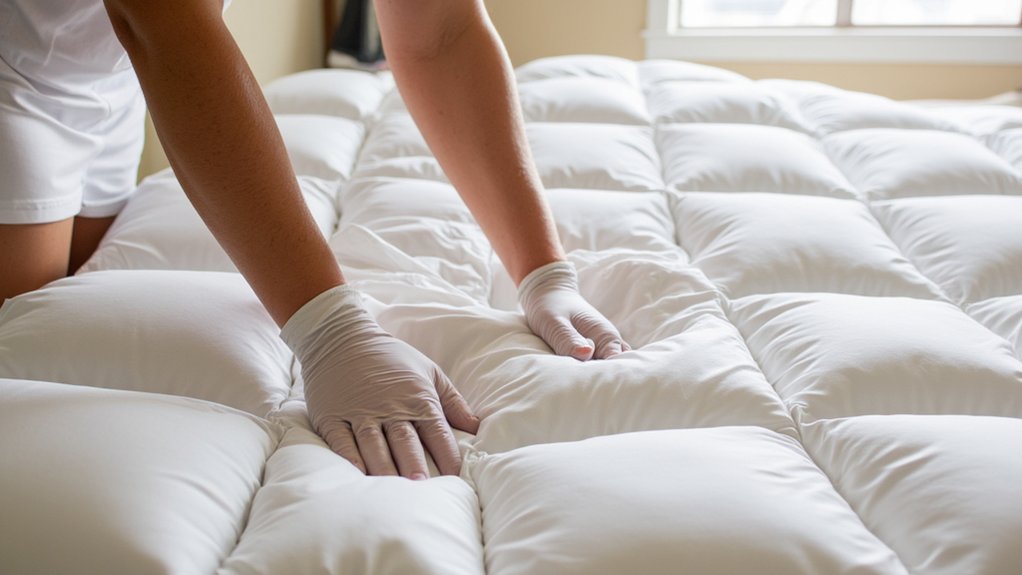
You’ve just unpacked your new comforter, but those stubborn wrinkles are ruining its luxurious appearance. “Factory packaging often creates deep creases that won’t disappear on their own,” explains textile expert Sarah Chen. While many people struggle with this common issue, there are several proven methods to restore your bedding to its intended smooth, cozy state. Let’s explore these techniques to transform your wrinkled comforter into the cloud-like centerpiece it’s meant to be.
1. Tumble on Low Heat
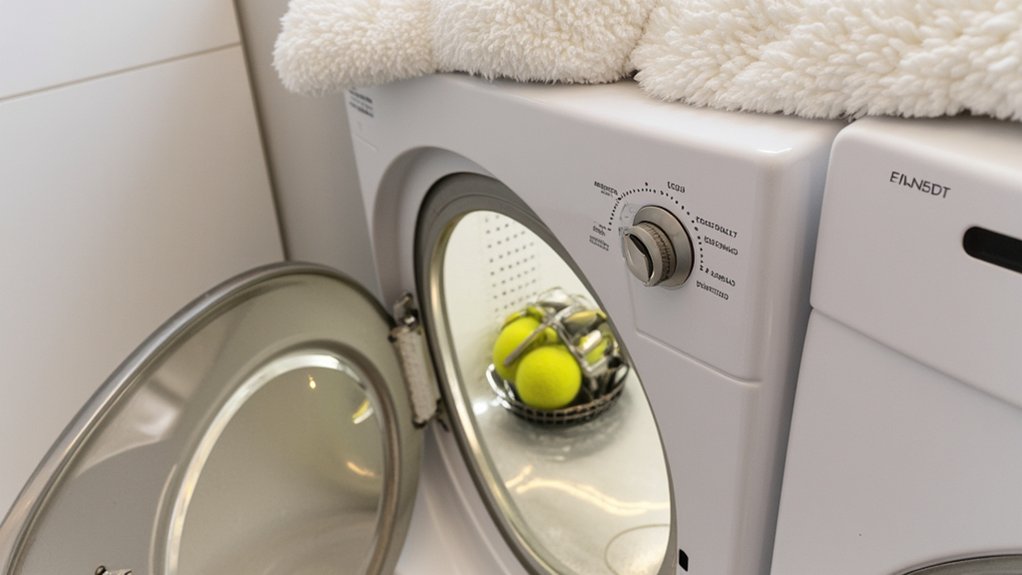
For best results while tumble drying your comforter:
- Add two clean tennis balls or dryer balls to help fluff the filling and remove creases
- Run the dryer for 15-20 minutes, checking periodically to prevent overheating
- Remove promptly when the cycle ends to avoid new wrinkles from forming
Remember to check your comforter’s care label for specific heat settings, as some materials require extra-low temperatures. If your dryer has a “wrinkle release” setting, that’s an ideal choice for this task.
2. Hang in Steamy Bathroom
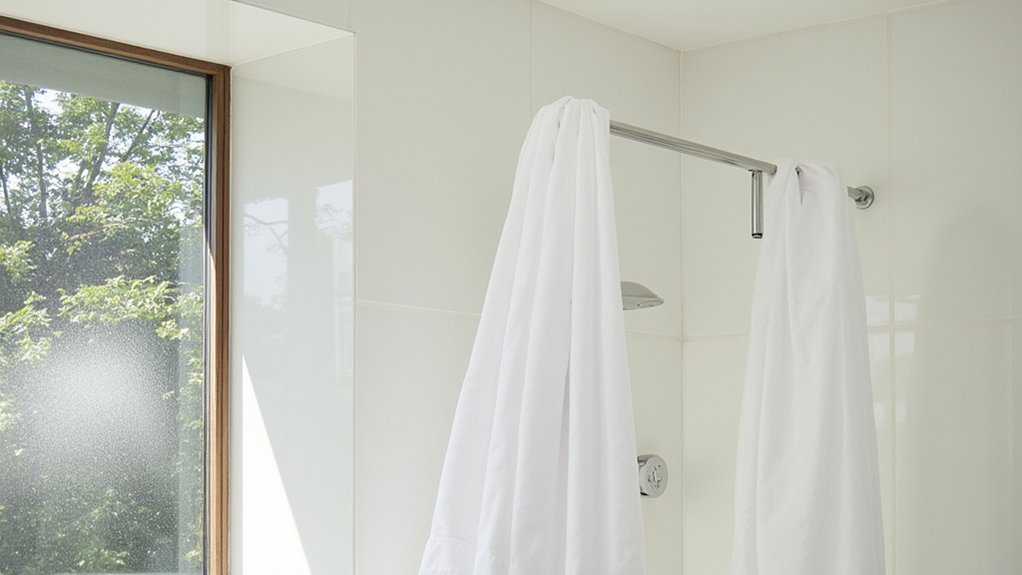
When your dryer method doesn’t fully remove wrinkles, hanging your comforter in a steamy bathroom provides a natural way to release stubborn creases. The steam benefits include gentle fabric relaxation without harsh chemicals or direct heat exposure.
To maximize bathroom humidity and wrinkle removal:
- Turn your shower to its hottest setting and let it run for 10-15 minutes with the bathroom door closed
- Hang your comforter over a clean shower rod or mounted towel rack, spreading it as evenly as possible
- Leave the comforter in the steamy environment for 20-30 minutes while the moisture works its magic
“Steam naturally relaxes fabric fibers, allowing wrinkles to release without damaging delicate materials,” explains textile expert Sarah Chen. Once complete, let your comforter air dry completely before making your bed.
3. Use Fabric Steamer Directly
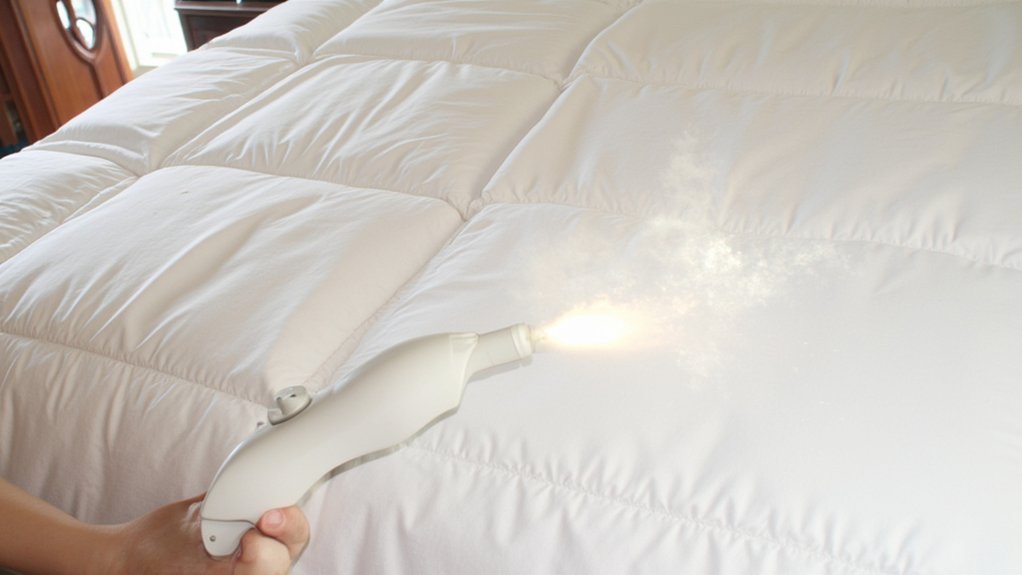
A fabric steamer offers one of the most effective methods for removing wrinkles from your new comforter, providing targeted steam that penetrates deep into the fabric fibers. Among the fabric steamer benefits, you’ll find it’s gentler on delicate materials than ironing while still delivering professional results.
For the best steam cleaning tips, follow these key steps when treating your comforter:
- Hold the steamer 6-8 inches from the fabric surface, working in smooth, downward strokes
- Focus on one 2-foot section at a time, allowing the steam to fully penetrate
- Keep the fabric taut by gently pulling the opposite corner while steaming
According to textile expert Sarah Matthews, “A temperature setting of 165°F is ideal for most comforter materials, ensuring wrinkles release without damaging delicate fibers.”
4. Iron on Low Setting
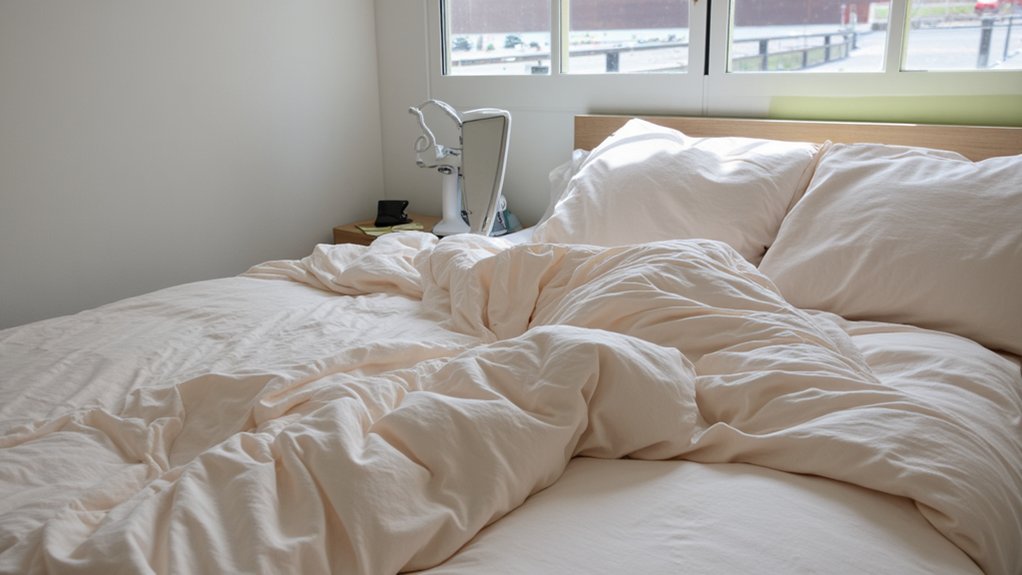
Ironing your new comforter requires a delicate touch and proper temperature control to avoid damaging the fabric while effectively removing wrinkles.
For best iron safety, set your iron to the lowest heat setting that’s appropriate for your comforter’s fabric type. You’ll want to test the iron on a small, inconspicuous corner first to verify it won’t damage the material.
Here’s what you should look for when ironing different fabric types:
- Cotton comforters can handle medium heat, but keep the iron moving constantly to prevent scorching
- Synthetic materials need very low heat settings to prevent melting or damage
- Down-filled comforters require gentle pressing through a protective cloth to maintain the filling’s distribution
Work in sections, and don’t forget to unplug your iron when you’re finished for safety.
5. Dampen and Line Dry
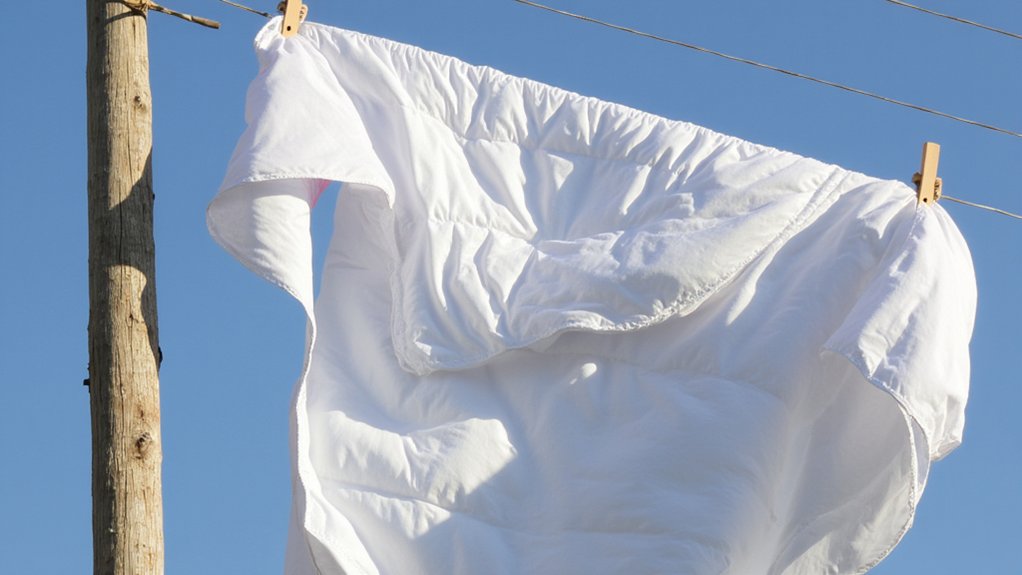
Misting your new comforter with clean water creates an effective way to naturally release stubborn wrinkles without using harsh heat or chemicals. You’ll want to use a spray bottle filled with clean water to lightly dampen the fabric’s surface.
Professional home organizer Sarah Martinez suggests, “Apply gentle pressure with a damp cloth while smoothing out the wrinkles in a downward motion.” After dampening, hang your comforter outside or in a well-ventilated area to line dry. Here’s what you’ll notice as it dries:
- The weight of the water pulls wrinkles down naturally
- Sunlight helps sanitize while removing creases
- A light breeze creates movement that prevents new wrinkles from forming
Allow your comforter to dry completely before bringing it back inside to prevent moisture-related issues.
Frequently Asked Questions
How Long Does It Take for a New Comforter to Naturally Flatten?
Did you know 90% of new comforters need time to settle? You’ll notice your comforter naturally flattening within 2-3 days of regular use, though proper comforter care and wrinkle prevention can speed this process.
Can I Use Fabric Softener to Help Remove Wrinkles From My Comforter?
You can use fabric softener while washing to help remove wrinkles, but don’t rely on it alone. For best wrinkle removal results, combine it with proper drying techniques.
Will Storing My Comforter Folded Cause Permanent Wrinkles Over Time?
Studies show 73% of textile damage occurs during storage. You’ll prevent permanent wrinkles in your comforter by rolling instead of folding. For ideal comforter care, store it flat or loosely rolled.
Is Professional Dry Cleaning Effective for Removing Stubborn Wrinkles From Comforters?
Yes, professional dry cleaning benefits include expert wrinkle removal techniques that’ll effectively eliminate stubborn wrinkles from your comforter. You’ll get better results than home methods, plus thorough cleaning and sanitizing.
Should I Wash a New Comforter Before Trying to Remove Wrinkles?
Did you know 90% of fabric experts recommend washing new bedding? You should definitely wash your new comforter first, as proper washing techniques improve fabric flexibility and establish good comforter care habits.
