
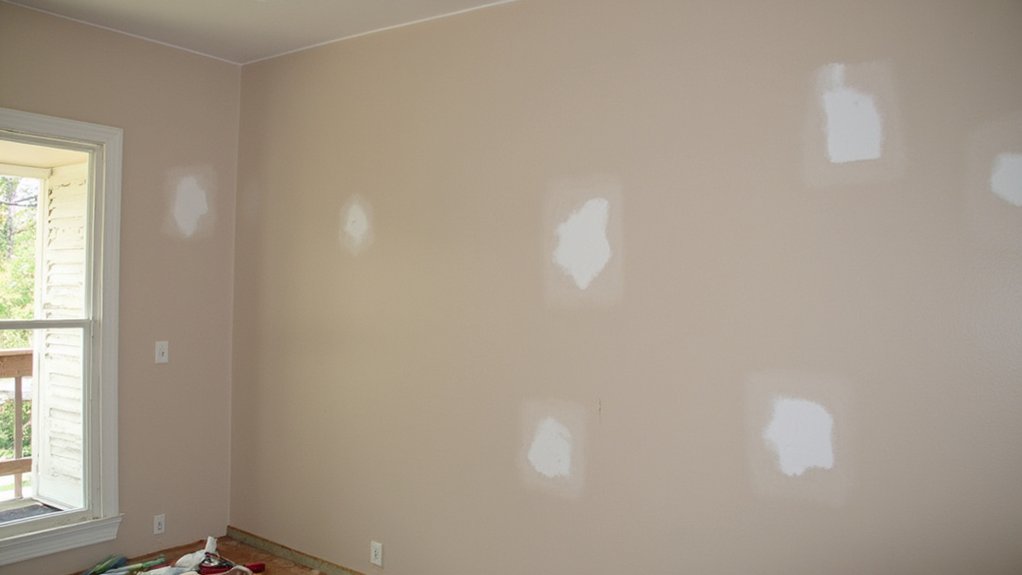
You’ve just finished painting your wall, but something doesn’t look quite right – those patchy spots are impossible to ignore. Whether you’re dealing with uneven sheen, visible roller marks, or areas that seem darker than others, several factors could be causing these frustrating imperfections. According to professional painter Mark Stevens, “90% of paint problems stem from improper prep work or application technique.” Let’s examine why your walls aren’t delivering that smooth, uniform finish you expected.
Common Causes of Patchy Wall Paint
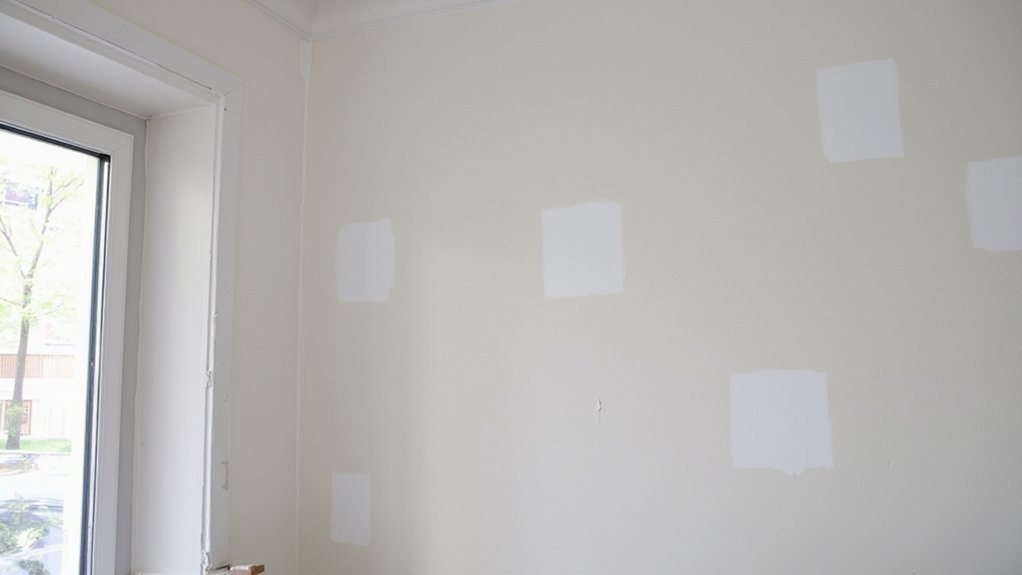
When your freshly painted walls look patchy, several common issues are likely to blame for the uneven appearance.
Common causes include:
- Improper mixing of paint (needs 2-3 minutes of thorough stirring)
- Inconsistent paint application thickness (maintain 4-6 inch roller strokes)
- Using low-quality paint or wrong paint type
- Painting over dirty or unprepared surfaces
- Skipping primer on porous surfaces
“The most frequent culprit is rushed application without maintaining a wet edge,” says Tom Carter, professional painter of 20 years. You’ll also notice patchiness if you’re painting over repairs or different surface textures. Environmental factors play a role too – painting in direct sunlight or with poor ventilation can cause paint to dry unevenly. Temperature variations between 60-80°F and humidity levels above 50% can affect paint’s drying time.
Essential Surface Preparation Steps
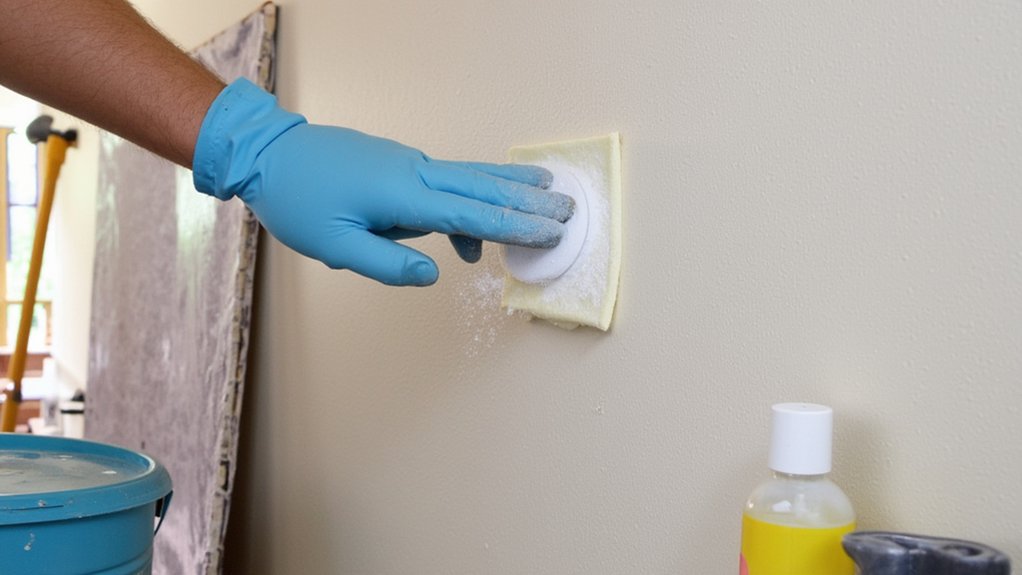
Essential Preparation Steps:
- Clean walls thoroughly with TSP solution
- Sand rough spots with 120-grit sandpaper
- Fill holes with spackling compound
- Let compound dry for 24 hours
- Sand patched areas smooth
- Wipe down with tack cloth
- Apply primer (especially on raw drywall)
“Don’t rush the prep work,” warns contractor Sarah Mills. “Each step creates the foundation for your paint’s adhesion and appearance.” You’ll need to allocate at least 2-3 days for proper preparation, depending on your wall’s condition.
Proper Paint Application Techniques
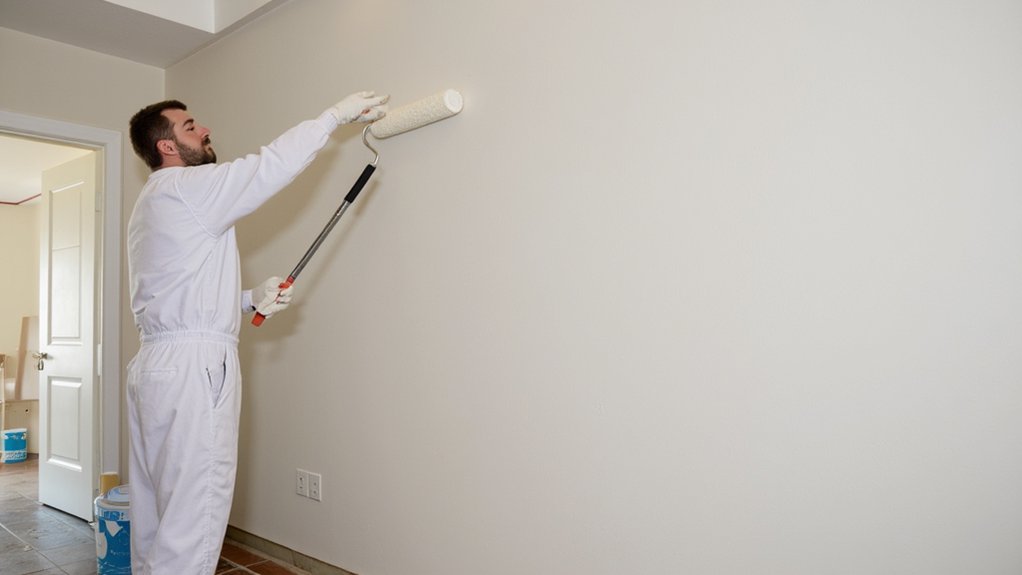
Even with meticulous preparation, your paint job’s success hinges on proper application techniques. “The key is maintaining consistent pressure and motion while painting,” explains professional painter Mike Rodriguez.
Follow these essential steps for even coverage:
- Load your roller with paint until it’s fully saturated but not dripping
- Start 6 inches from the corner, rolling in a W or M pattern
- Apply steady pressure as you move the roller at a moderate pace
- Overlap each stroke by 3-4 inches to blend edges
- Complete full wall sections in one go without stopping
“Don’t let the paint dry between sections,” Rodriguez advises. “Keep a wet edge by working systematically from top to bottom and side to side.” Maintain this rhythm throughout your painting session for professional-looking results.
Tools and Materials That Impact Paint Coverage
The right tools and materials can make or break your paint coverage quality. “Using professional-grade equipment isn’t just about making the job easier – it directly affects your final results,” says Benjamin Chen, master painter with 20 years’ experience.
Key tools that impact coverage:
- Premium rollers (3/8″ to 1/2″ nap for smooth walls)
- High-quality synthetic brushes (2.5″ to 4″ width)
- Clean roller trays with even ridges
- Paint strainers to remove debris
Material factors affecting coverage:
- Paint quality (select premium grades)
- Proper paint-to-primer ratio
- Consistent paint viscosity
- Fresh paint (under 1 year old)
“You’ll notice immediately how better tools distribute paint more evenly,” Chen explains. “Cheap rollers can leave lint and create uneven texture, while quality ones guarantee smooth application.”
Professional Tips for a Flawless Finish
Professional painters achieve flawless results by following specific techniques that you can easily master at home. “Most patchy walls come from rushing the process and skipping essential steps,” explains veteran painter Maria Rodriguez, who recommends maintaining consistent pressure and following a methodical W-pattern when rolling.
Here’s what you’ll need to do:
- Wait 4-6 hours between coats
- Roll from ceiling to floor in overlapping sections
- Keep a wet edge by working in 4×4 foot areas
- Load your roller consistently with paint every 3-4 rolls
“The key is patience,” says Rodriguez. “Apply thin, even coats rather than one thick layer.” Before applying your second coat, verify the first is completely dry and lightly sand any visible imperfections with 220-grit sandpaper. Maintain room temperature between 65-75°F for peak drying.
