
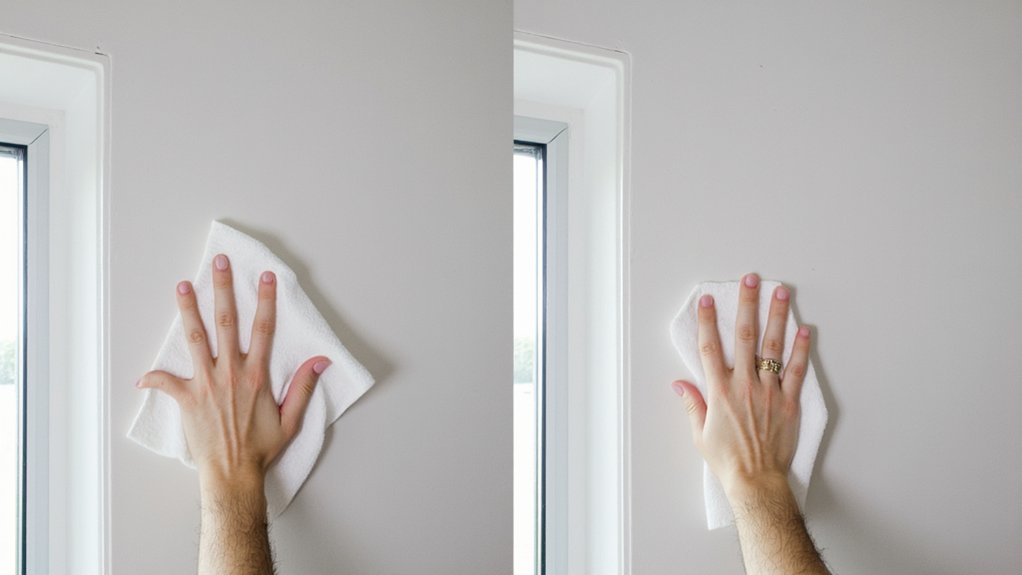
Like a fresh canvas awaiting an artist’s touch, your walls deserve the perfect paint finish to bring your vision to life. You’ll face a vital decision between flat and semi-gloss paint, each offering distinct advantages for different spaces in your home. Understanding how these finishes perform under various conditions, from hiding wall imperfections to resisting moisture and wear, will determine which option best suits your needs and lifestyle. Let’s explore the key factors that’ll shape your choice.
Understanding Flat Paint: Properties and Characteristics
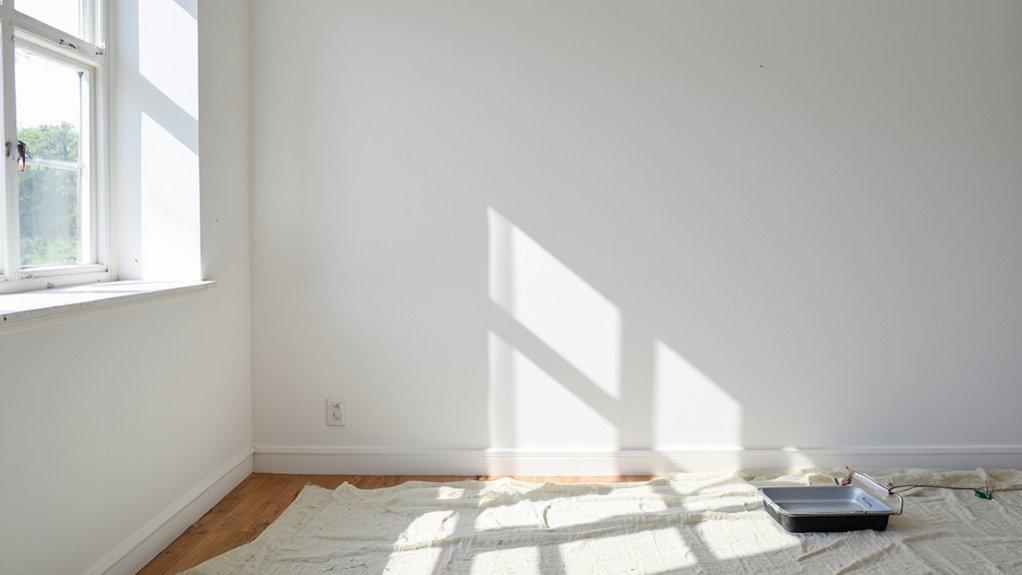
Flat paint creates a smooth, non-reflective finish that’s become increasingly popular for modern interior walls and ceilings. You’ll notice it has a matte appearance that helps hide surface imperfections and doesn’t create glare under bright lighting.
Key Properties of Flat Paint:
- Coverage: Typically requires 2 coats for best results
- Dry time: 1-2 hours between coats
- Durability: Less washable than glossier finishes
- Touch-ups: Blends seamlessly with existing paint
“Flat paint is ideal for low-traffic areas and spaces where you want to minimize visual distractions,” explains Sarah Chen, interior design specialist. You’ll find it works best in:
- Living rooms
- Bedrooms
- Dining rooms
- Home offices
- Ceilings throughout the house
Remember that flat paint isn’t recommended for bathrooms or kitchens due to its lower moisture resistance.
Semi-Gloss Paint: Key Features and Benefits
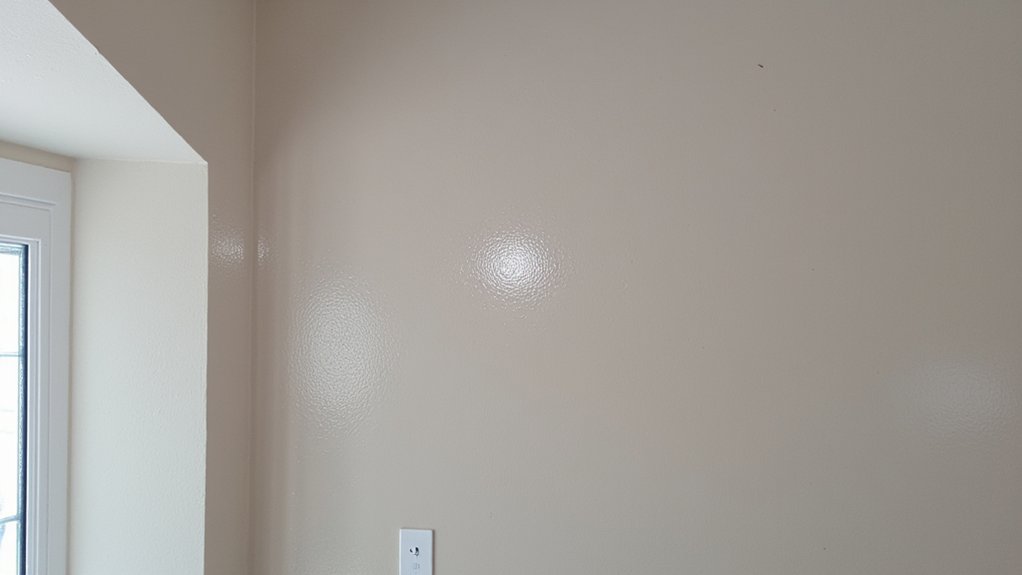
Semi-gloss paint delivers a subtle sheen that reflects roughly 40-50% of light, making it an excellent choice for high-traffic and moisture-prone areas. You’ll find it’s particularly durable and easy to clean, with a smooth finish that resists stains and mildew.
Key benefits of semi-gloss paint include:
- Superior moisture resistance
- Enhanced durability against scratches and scuffs
- Easy maintenance with simple soap and water
- Ideal for trim, doors, and cabinets
“Semi-gloss paint creates a protective barrier that’s perfect for bathrooms, kitchens, and children’s rooms,” notes interior designer Sarah Mitchell. You’ll need to prepare surfaces carefully, as this finish can highlight imperfections. For best results, apply two coats with a high-quality synthetic brush or foam roller, allowing 4-6 hours between coats.
Room-by-Room Paint Finish Guide
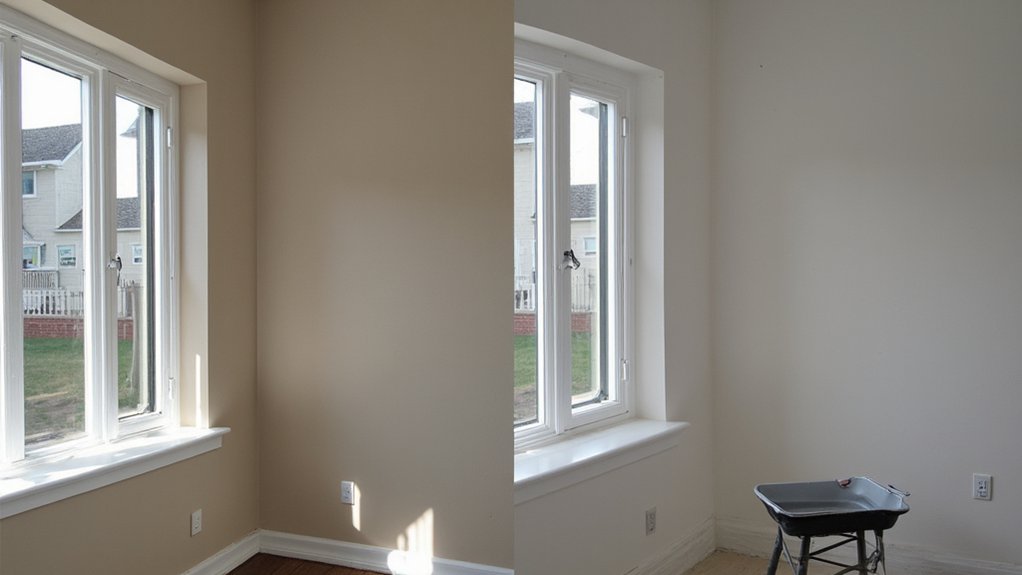
When selecting paint finishes for your home, understanding which sheen works best in each space will help you create lasting, functional results.
Here’s your room-by-room guide:
Kitchen & Bathrooms:
- Semi-gloss for walls (resists moisture and stains)
- High-gloss for trim and cabinets
Living Areas & Bedrooms:
- Eggshell or flat for walls (hides imperfections)
- Satin for high-traffic zones
- Semi-gloss for baseboards
Children’s Rooms:
- Satin for walls (easy cleaning)
- Semi-gloss for windowsills
Ceilings:
– Flat finish throughout (minimizes light reflection)
“The key is matching durability needs with aesthetic goals,” says interior designer Sarah Chen. “Higher-traffic areas need tougher finishes, while formal spaces can utilize more subtle sheens.”
Durability and Maintenance Comparison
Understanding the maintenance demands of different paint finishes will help you make an informed choice between flat and semi-gloss options for your surfaces.
Durability Comparison:
- Semi-gloss withstands up to 200 scrubs before showing wear
- Flat paint typically shows wear after 50-75 scrubs
- Semi-gloss resists moisture damage for 5-7 years
- Flat finish may need touch-ups every 2-3 years
Maintenance Requirements:
- Semi-gloss surfaces:
- Clean with mild soap and water monthly
- Wipe with damp cloth to remove fingerprints
- Scrub gently to remove stubborn stains
- Flat surfaces:
- Dust with soft cloth only
- Avoid wet cleaning methods
- Touch up marks rather than scrubbing
“Semi-gloss offers 4x more durability against cleaning than flat finishes,” notes paint specialist Sarah Chen, “making it ideal for high-traffic areas.”
Light Reflection and Visual Impact
Beyond their cleaning needs, paint finishes create dramatically different effects through their interaction with light.
When you’re choosing between flat and semi-gloss, consider how each finish will impact your room’s appearance:
Flat Paint:
- Absorbs 95-99% of light that hits the surface
- Creates a soft, muted appearance
- Helps hide wall imperfections
- Works well in low-traffic spaces like bedrooms
Semi-Gloss Paint:
- Reflects 55-60% of light back into the room
- Adds dimension and visual interest
- Makes rooms appear slightly larger
- “Semi-gloss finishes can brighten dark spaces by maximizing available light,” notes interior designer Sarah Chen
- Flat paint: $25-35 per gallon
- Semi-gloss: $30-45 per gallon
- Labor costs remain similar for both
- Sand surfaces more thoroughly
- Apply primer more meticulously
- Use finer brushes for smooth application
For best results, you’ll want to match the finish’s reflective properties to your room’s lighting conditions and intended atmosphere. Dark rooms often benefit from semi-gloss’s reflective qualities, while bright spaces may look better with flat’s light-absorbing properties.
Cost and Application Considerations
The financial differences between flat and semi-gloss paints can impact your project’s bottom line considerably. You’ll typically pay $5-10 more per gallon for semi-gloss compared to flat paint.
Application Costs:
“Semi-gloss requires more careful application technique and surface preparation,” notes Benjamin Moore specialist Sarah Chen. You’ll need to:
Coverage differences also affect your budget. Flat paint usually covers 350-400 square feet per gallon, while semi-gloss covers 300-350 square feet. You’ll likely need an extra gallon of semi-gloss for every 1,000 square feet of wall space.
