
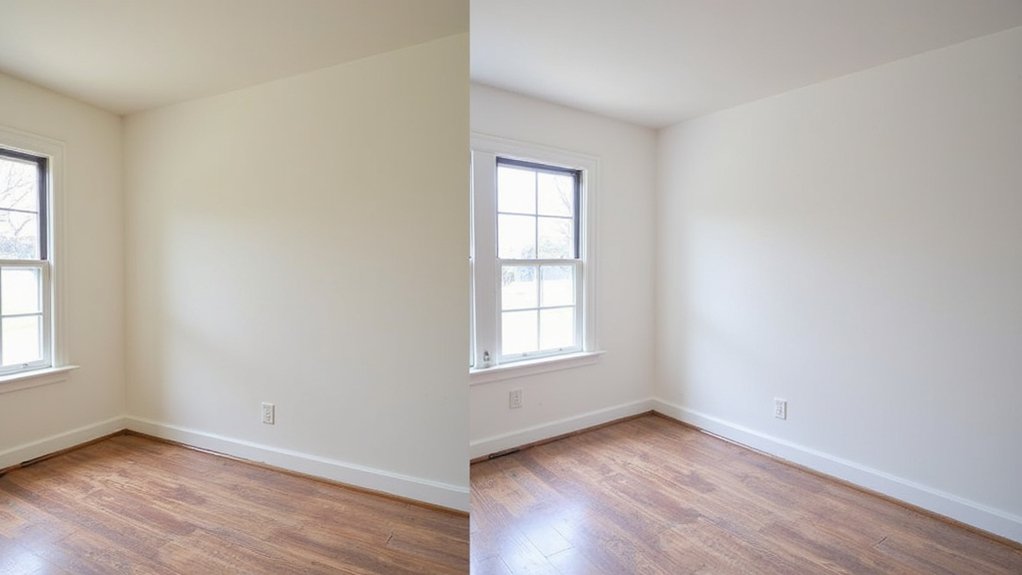
When you’re selecting paint for your interior walls, the choice between flat and satin finish impacts both aesthetics and functionality. Professional painter John Martinez explains, “Flat offers a classic, sophisticated look while hiding imperfections, but satin’s subtle sheen provides better durability.” You’ll need to weigh factors like room traffic, natural lighting, and maintenance preferences before making your decision. The right finish can transform your space – but which one suits your specific needs?
Understanding Flat and Satin Paint Finishes
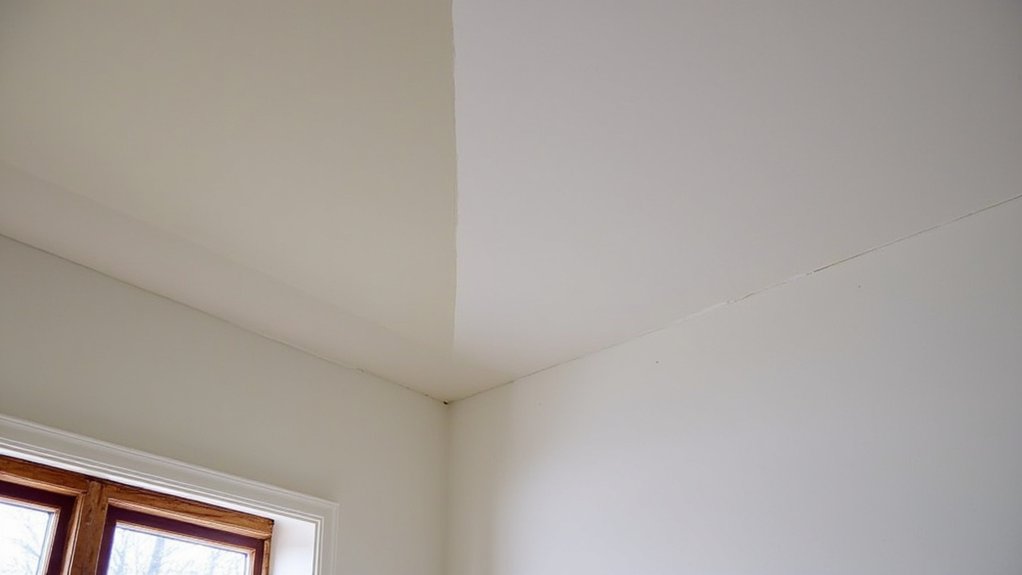
Two main paint finishes dominate interior walls: flat and satin, each offering distinct advantages for different rooms in your home. You’ll want to understand how these finishes perform in various conditions before making your choice.
Flat Paint Characteristics:
- Non-reflective, matte appearance
- Hides surface imperfections
- Less durable than satin
- Difficult to clean without damaging
Satin Paint Characteristics:
- Pearl-like sheen (25-35% gloss)
- Reflects moderate light
- Easier to clean with soap and water
- Shows surface flaws more readily
“Flat paint’s porous surface makes it ideal for low-traffic areas like bedrooms and dining rooms,” explains Mark Thompson, master painter with 20 years’ experience. “Meanwhile, satin’s durability works best in high-traffic spaces such as hallways and children’s rooms where you’ll need frequent cleaning.”
Light Reflection and Room Appearance
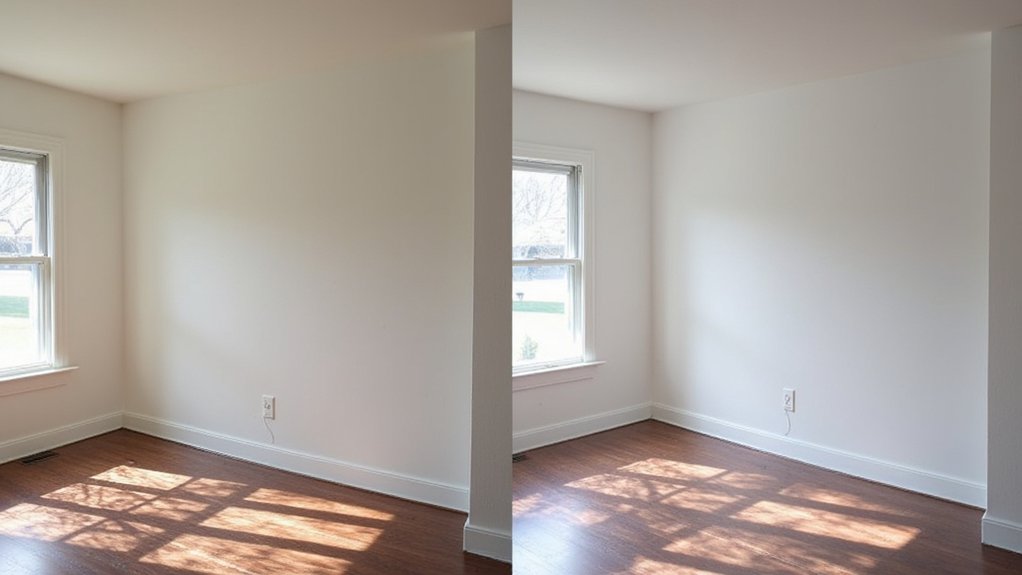
When you’re selecting a paint finish for your walls, understanding how light interacts with different sheens can dramatically impact your room’s overall appearance. Flat finishes absorb more light, reducing glare by up to 95% compared to glossier options.
Light Interaction by Finish:
- Flat: Absorbs light, hides imperfections
- Satin: Reflects 35-45% of light, creates subtle glow
“The amount of natural light in your room should guide your finish choice,” says interior designer Sarah Chen. “North-facing rooms benefit from satin’s reflective properties, while sunny spaces often look better with flat paint.”
Room Size Effects:
- Satin finishes can make small rooms appear larger
- Flat finishes create depth in spacious areas
- Darker colors show sheen variations more prominently
Durability and Maintenance Requirements
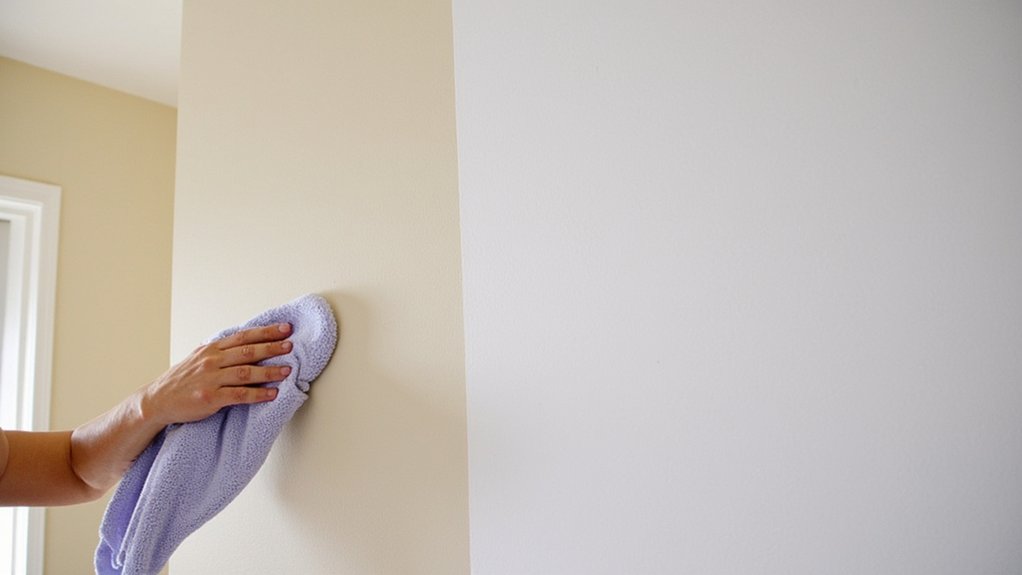
Although different paint finishes create distinct visual effects, their durability and maintenance needs should be your primary consideration for long-term satisfaction.
Durability:
- Flat finish: Shows wear quickly, scuffs easily
- Satin finish: Up to 5x more durable against daily wear
Maintenance Requirements:
- Flat Finish
- Difficult to clean without damaging surface
- Requires complete repainting every 2-3 years
- Touch-ups blend seamlessly
- Satin Finish
- Wipes clean with damp cloth
- Maintains appearance for 4-5 years
- Touch-ups may show slight variations
“Satin finishes are ideal for high-traffic areas like hallways and children’s rooms,” says interior designer Sarah Matthews. “While flat paint works best in low-traffic spaces where you won’t need frequent cleaning, such as formal dining rooms or ceilings.”
Cost and Coverage Comparisons
Beyond durability factors, your budget and room size will shape which wall finish makes the most sense for your project. When comparing costs, you’ll find flat paint averages $15-25 per gallon, while satin runs $20-35 per gallon.
Coverage comparison:
- Flat paint: 350-400 square feet per gallon
- Satin finish: 300-350 square feet per gallon
“Satin finishes typically require more coats for even coverage, increasing your overall material costs by 15-20%,” notes Michael Chen, professional painter with 20 years’ experience.
Cost-saving tip: Calculate your total square footage and add 10% for touch-ups:
- Measure wall height × width
- Subtract windows and doors
- Divide total by coverage per gallon
- Round up to nearest gallon
Best Rooms for Each Paint Finish
Since each paint finish offers distinct advantages, matching them to the right rooms will maximize their unique properties and minimize maintenance headaches.
Best Rooms for Flat Finish:
- Formal living rooms and dining rooms
- Low-traffic bedrooms
- Ceilings throughout the house
Best Rooms for Satin Finish:
- Family rooms and hallways
- Children’s bedrooms
- Home offices
Best Rooms for Semi-gloss:
- Kitchens and bathrooms
- Trim and doors
- Laundry rooms
“You’ll want to use flat paint in areas with minimalContact and cleaning needs,” says interior designer Mark Reynolds. “Save your washable satin finishes for spaces where you’ll need to wipe walls frequently, and reserve semi-gloss for high-moisture areas that require regular scrubbing.”
Tips for Application and Selection
After choosing the right finish for each room, you’ll need reliable tips to guarantee proper paint application and selection.
Key Selection Tips:
- Test paint samples on 2×2 ft wall sections
- View colors in both natural and artificial lighting
- Consider your room’s exposure (north-facing rooms need warmer tones)
Application Guidelines:
- Clean walls thoroughly and repair imperfections
- Apply primer if changing colors dramatically
- Paint in manageable 4×4 ft sections
- Use W-pattern strokes for even coverage
“The right tools make all the difference,” says professional painter Mike Stevens. “Invest in quality brushes and 3/8-inch nap rollers for smooth finishes.” Don’t forget to maintain proper ventilation and let each coat dry completely (typically 2-4 hours) before applying the next one.
