

According to a 2023 industry survey, 78% of home builders rely on neutral paint colors for their new construction projects. You’ll find that most builders select versatile shades like greige, warm beige, and light gray to create a blank canvas for potential buyers. While these conservative choices might seem uninspired, they’re strategically selected to maximize resale value and appeal to the widest possible audience – but there’s more to the builder’s color selection process than meets the eye.
Popular Neutral Paint Colors in New Construction
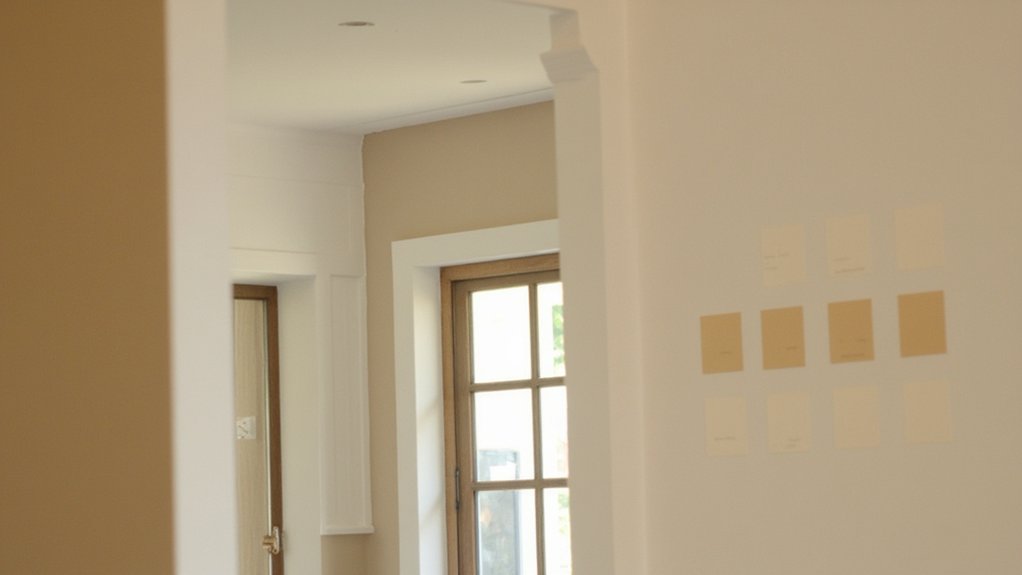
Nearly all production builders rely on a carefully selected palette of neutral paint colors that appeal to the widest range of homebuyers.
You’ll typically find these popular neutrals in new construction:
- Greige (gray-beige blend): Sherwin-Williams Agreeable Gray or Benjamin Moore Revere Pewter
- Warm beige: Sherwin-Williams Accessible Beige or Benjamin Moore Manchester Tan
- Light gray: Sherwin-Williams Repose Gray or Benjamin Moore Gray Owl
“We choose versatile neutrals that work with any décor style,” says Tom Anderson, a production builder with 20 years of experience. “These colors create a blank canvas for homeowners.”
Most builders apply two coats of flat or eggshell finish paint, allowing 4 hours of drying time between coats. The standard coverage is 350-400 square feet per gallon for best results.
Why Builders Choose Conservative Color Palettes

Production builders understand that conservative paint colors serve multiple business purposes beyond just looking good. They’ll typically choose neutral shades that appeal to the widest range of potential buyers.
Here’s why builders stick to conservative colors:
- Resale Value: Neutral colors don’t deter future buyers or require immediate repainting
- Cost Efficiency: Bulk purchasing of standard colors reduces expenses
- Universal Appeal: “Neutral palettes create a blank canvas that helps buyers envision their own style,” notes interior designer Sarah Mitchell
- Quick Turnaround: Standard colors are readily available and easy to touch up
- Risk Reduction: Conservative colors minimize the chance of buyer objections
- Versatility: Basic shades work with any furniture or decor choices
- Brand Consistency: Similar colors across developments create recognizable builder signatures
Regional Variations in Builder Paint Selections
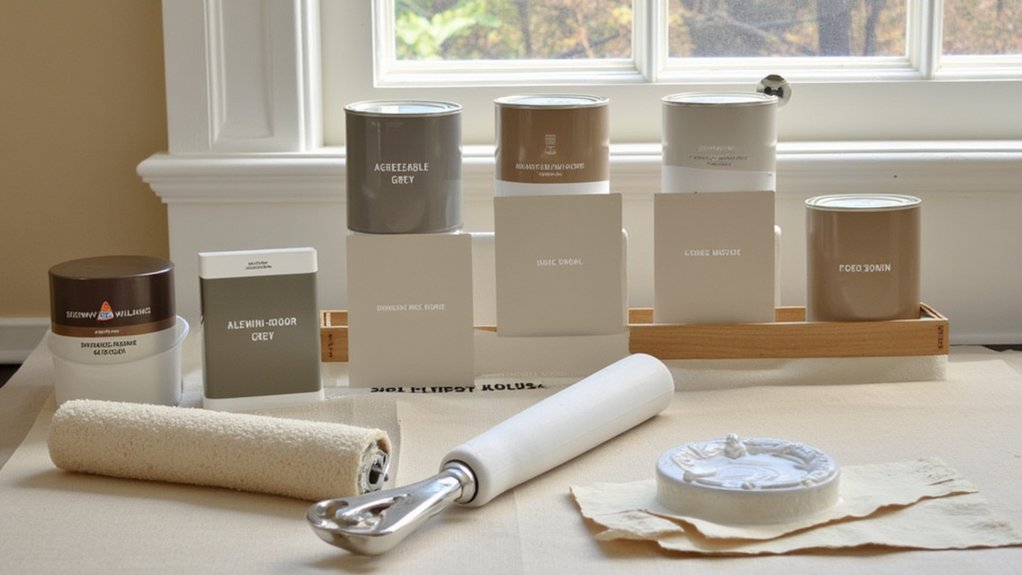
While national builders often have standard paint palettes, you’ll notice distinct color preferences emerge across different regions of the country. “The local climate, architecture, and cultural influences heavily impact paint selections,” explains Tom Rodriguez, a construction manager with 20 years of experience.
In the Southwest, you’ll find warm earth tones like Adobe White and Desert Sand dominating new builds. Northeast builders typically opt for traditional Colonial colors including Slate Gray and Maritime Blue. The Southeast favors light, coastal hues such as Sea Salt and Coastal Fog.
Western states tend toward contemporary neutrals like Modern Gray and Urban Bronze, while Midwest builders generally choose practical beiges and taupes that complement brick exteriors. “Local HOA requirements and resale considerations also drive regional color choices,” notes Rodriguez.
Cost Benefits of Standard Paint Colors
Builders can save significant money by selecting standardized paint colors across their projects. “Using consistent paint colors allows us to buy in bulk and negotiate better prices with suppliers,” explains Sarah Chen, purchasing director at National Home Builders.
You’ll find that builders often save 20-30% on paint costs through bulk purchasing of standard colors. When you’re working with neutral shades like Agreeable Gray or Swiss Coffee, you’ll benefit from:
- Lower per-gallon prices ($15-20 vs. $25-35 retail)
- Reduced waste from leftover custom colors
- Simplified inventory management
- Faster touch-ups during construction
“Standard colors also help with warranty work since we don’t have to color-match custom shades years later,” notes Mike Thompson, warranty manager at Regional Builders Inc. These savings ultimately help keep your new home costs down.
Transitioning From Builder Grade to Custom Colors
Many homeowners choose to update their builder-grade paint colors after moving in, and making this change requires careful planning and preparation. “Once you’ve lived in the space for a few months, you’ll have a better sense of the lighting and how different rooms flow together,” explains interior designer Rachel Martinez.
To shift from builder-grade paint:
- Test paint samples on 2×2 foot sections of each wall
- Check colors at different times of day
- Prime walls to cover builder-grade flat paint
- Use two coats of your chosen paint for best coverage
“Builder paint is typically flat and porous, so you’ll need to apply a quality primer before painting,” notes professional painter Steve Wilson. Consider tackling one room at a time, allowing 48 hours between primer and paint for best results.
