
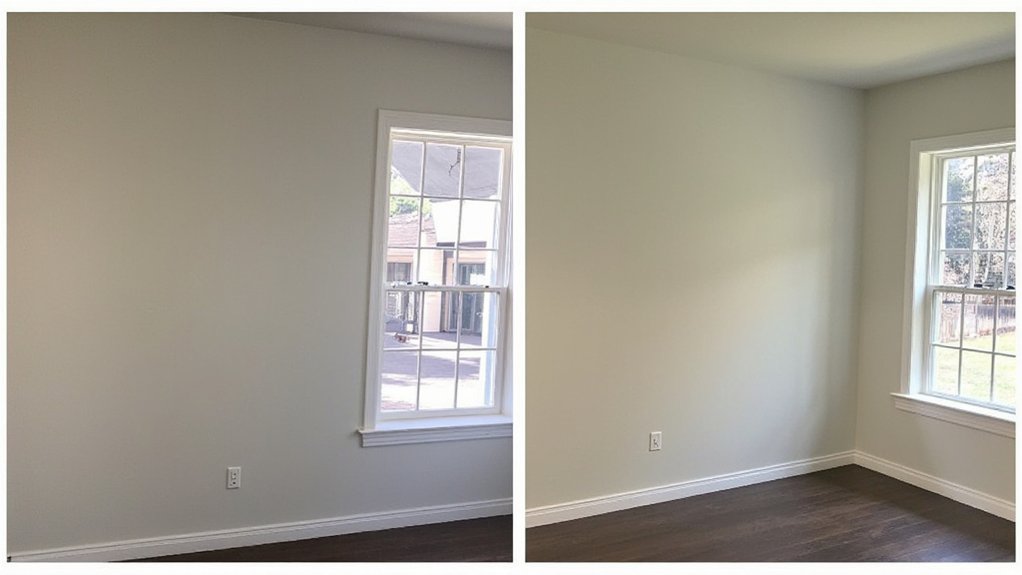
You’re faced with an important decision that’ll impact both the look and longevity of your walls. Satin and flat paints each serve distinct purposes in home design, with professional painters often recommending satin for its durability and flat for its forgiving nature. “The finish you choose can make or break a room’s functionality,” notes interior designer Sarah Chen. By understanding the key differences between these finishes, you’ll be equipped to make the best choice for each space in your home.
Understanding Satin vs. Flat Paint Characteristics
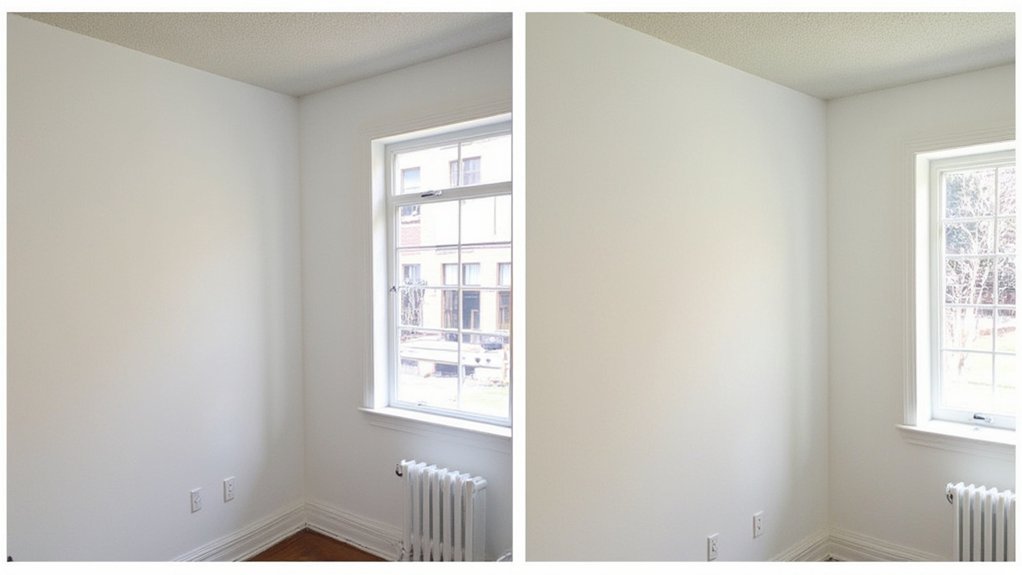
Two main paint finishes you’ll encounter when choosing wall paint are satin and flat, each with distinct characteristics that affect their appearance and performance.
Satin Finish:
- Creates a pearl-like, subtle sheen (25-35% gloss)
- Reflects moderate light, making rooms appear brighter
- Highly durable and washable
- Shows wall imperfections more than flat paint
- Ideal for high-traffic areas and moisture-prone rooms
Flat Finish:
- Provides zero to minimal sheen (0-5% gloss)
- Absorbs light rather than reflecting it
- Hides wall imperfections effectively
- Less durable and harder to clean
- Perfect for low-traffic areas and ceilings
“Flat paint offers superior coverage and masking of surface flaws, while satin provides better longevity and cleanability,” explains Tom Patterson, Master Painter with 20 years’ experience.
Best Rooms for Each Paint Finish
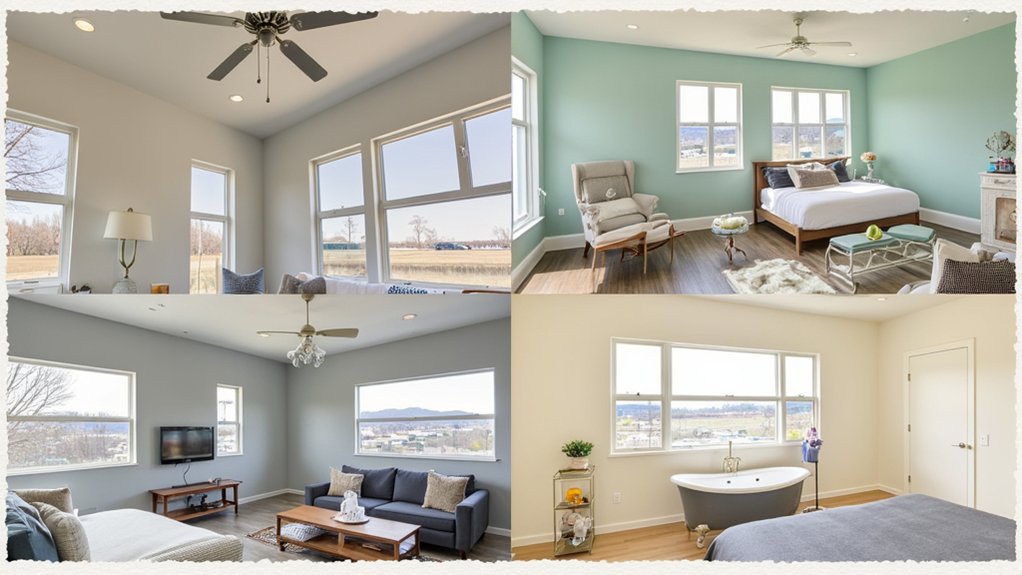
When choosing paint finishes for different rooms in your home, you’ll want to match each finish’s properties with the room’s specific needs and traffic patterns. “The key is understanding how each space will be used and what kind of wear it’ll face,” says interior designer Sarah Martinez.
Best Rooms for Flat Paint:
- Formal living rooms
- Adult bedrooms
- Home offices
- Dining rooms with minimal traffic
Best Rooms for Satin Paint:
- Children’s bedrooms
- Kitchens
- Bathrooms
- High-traffic hallways
- Family rooms
- Laundry areas
“You’ll get the best results using flat paint in low-traffic areas where you want to hide minor wall imperfections,” explains Martinez. “Save satin finishes for spaces that need frequent cleaning or face moisture exposure.”
Durability and Maintenance Differences
Different paint finishes require varying levels of maintenance to keep your walls looking fresh and clean over time. “The more sheen a paint has, the more durable and washable it becomes,” notes paint specialist Tom Wilson.
Durability Rankings (Most to Least):
- High-gloss: Withstands 100+ cleanings
- Semi-gloss: Handles weekly scrubbing
- Satin: Tolerates monthly cleaning
- Eggshell: Accepts gentle wiping
- Flat/Matte: Limited washing ability
Maintenance Requirements:
- High-gloss/Semi-gloss: Clean with mild soap; rinse thoroughly
- Satin: Wipe with damp cloth every 4-6 weeks
- Eggshell: Dust regularly; spot-clean when needed
- Flat: Use soft brush for dust; avoid scrubbing
“For high-traffic areas, choose satin or glossier finishes to guarantee your walls stay pristine with regular cleaning,” advises Wilson.
Cost Comparison and Value Analysis
Understanding paint finish costs plays an essential role in your project budget, since prices can vary by up to 50% between finishes. “Most homeowners don’t realize that flat paint averages $15-25 per gallon while high-gloss typically runs $25-40 for the same brand,” explains home improvement expert Sarah Chen.
When you’re calculating long-term value, consider these cost factors:
- Flat finishes require more frequent repainting (every 3-4 years)
- Satin finishes last 5-7 years before needing touch-ups
- Higher-end finishes need fewer coats for coverage
- Labor costs increase with glossier finishes due to careful application
“While you’ll spend more upfront for satin, its durability often makes it more cost-effective over time,” notes contractor Mike Rivera. “You’ll save about $200 per room in repainting costs over 10 years.”
Application Tips and Techniques for Both Finishes
Since proper application determines your paint finish’s final look and longevity, you’ll need to follow specific techniques for each sheen level. “The key to a professional result lies in matching your tools and methods to the finish you’ve chosen,” explains professional painter David Walsh.
For flat paint:
- Use a 3/8-inch nap roller for smooth walls
- Apply in W-shaped patterns with moderate pressure
- Allow 2-3 hours between coats
For satin finish:
- Choose a 1/4-inch microfiber roller
- Roll in straight, overlapping lines
- Maintain a wet edge while working
- Back-roll immediately to eliminate lap marks
“With satin finishes, you’ll want to complete entire wall sections in one session,” notes Walsh. “This prevents visible seams and guarantees even sheen distribution across the surface.”
