
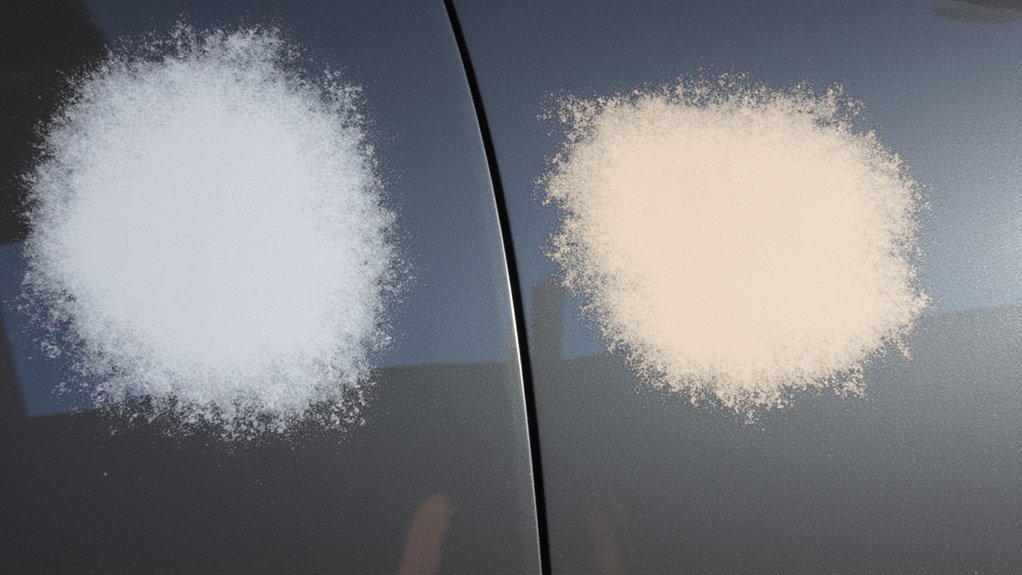
Most touch-up paint appears lighter because fresh paint reflects up to 30% more light than aged surfaces due to its smoother texture and lack of microscopic grooves. You’ve probably noticed this frustrating effect when trying to fix a scratch or chip on your car or wall. While the paint color might match perfectly in the can, several key factors determine how the final result will look against the original surface – and understanding these elements will help you achieve a more seamless repair.
Understanding Paint Composition and Pigments
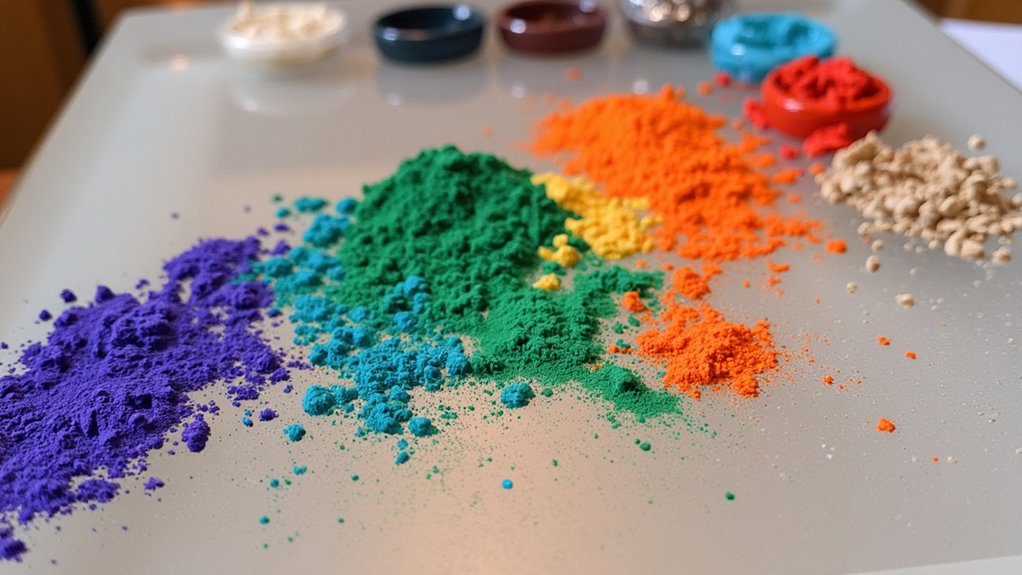
When you’re dealing with touch-up paint, understanding its basic composition helps explain why it often appears lighter than the original surface. Paint consists of four main components:
- Pigments – tiny solid particles that give paint its color
- Binders – resins that hold pigments together
- Solvents – liquids that keep paint fluid
- Additives – chemicals that enhance performance
The pigments in your touch-up paint might match perfectly in the can, but they’ll scatter light differently on a small area. “Paint particles need adequate space to align and create an even reflection pattern,” explains coating specialist Dr. James Chen. Fresh paint also contains more solvents that haven’t evaporated yet, making it appear lighter until it fully cures. The original paint has likely aged and collected microscopic surface texture, affecting how it reflects light.
The Role of Paint Application Methods
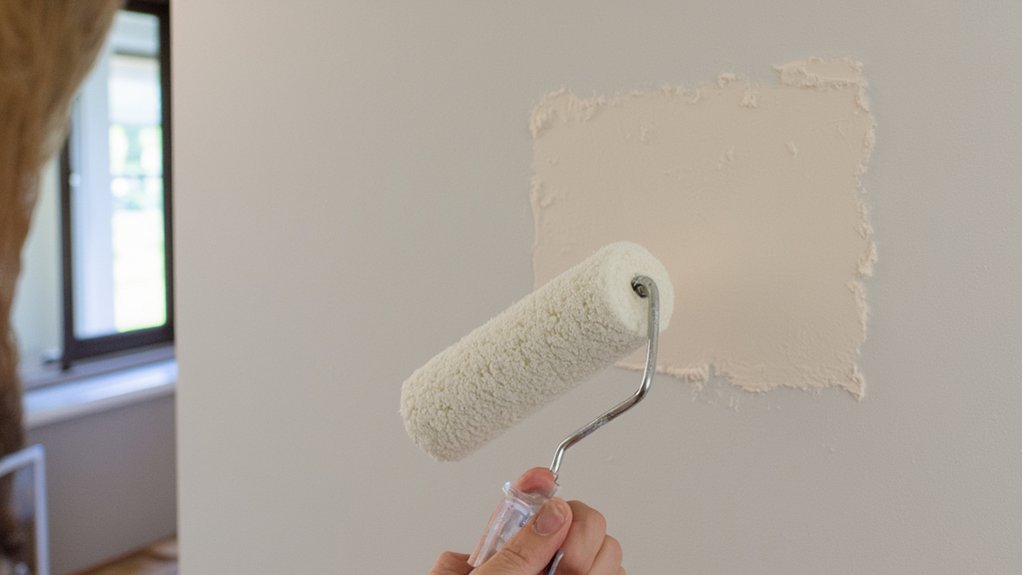
While your painting technique greatly impacts color matching, professional application methods make all the difference in achieving seamless touch-ups. “The key is to replicate the original paint’s application thickness and texture,” says auto body expert Mark Stevens.
Application methods that affect color appearance include:
- Spraying vs. brushing (sprayed paint appears more even)
- Number of coats applied (2-3 thin coats match better than 1 thick coat)
- Distance from surface while spraying (8-10 inches is ideal)
- Pressure used when brushing (light, consistent strokes work best)
“You’ll need to match the original application tool and technique,” explains Stevens. “If the wall was rolled, don’t brush the touch-up. If the trim was sprayed, avoid using a foam brush.” Following the same application method helps guarantee your touch-up paint blends seamlessly.
Effects of Surface Texture and Reflection
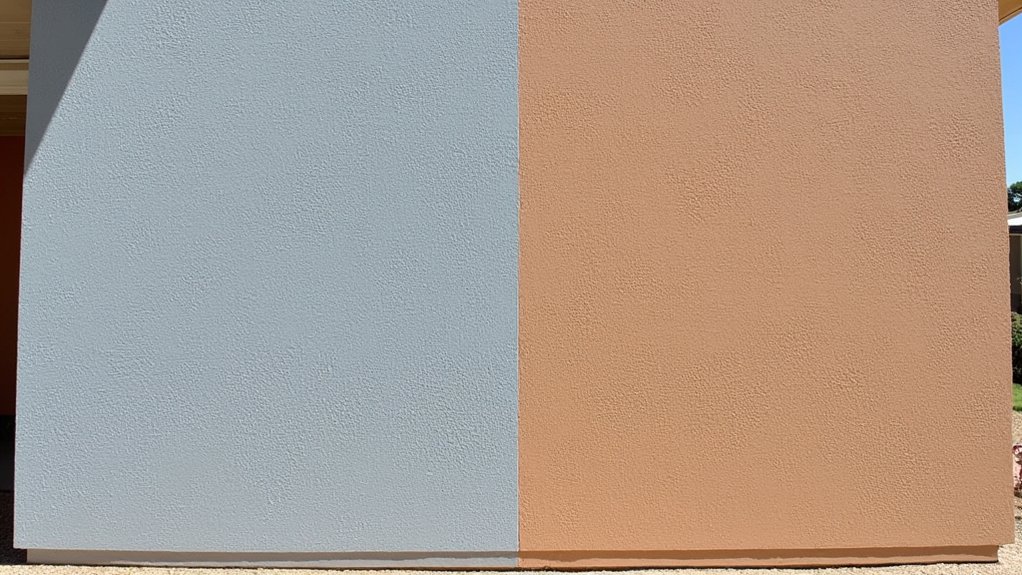
Because surface texture dramatically affects how light bounces off paint, you’ll notice that touch-ups often appear lighter or darker than the surrounding area. “The way light interacts with different surface textures can create optical illusions that make matching colors challenging,” explains paint specialist Sarah Chen.
When you apply touch-up paint, it creates a slightly raised surface that reflects light differently than the original flat paint layer. The surrounding paint has likely developed microscopic grooves and texture from cleaning and wear over time. Your fresh paint application sits smoother and higher, catching more direct light.
You’ll also find that the angle you’re viewing from matters – touch-ups might look perfect straight-on but appear lighter when viewed from the side due to these texture differences.
Environmental Factors and Paint Aging
Over time, even the highest quality paint will undergo subtle changes from exposure to sunlight, temperature fluctuations, and humidity. You’ll notice these environmental factors affect your original paint differently than touch-up areas:
- UV exposure can fade or yellow paint at varying rates
- Temperature changes cause microscopic expansion and contraction
- Moisture levels impact how paint cures and ages
“Paint oxidation occurs gradually, typically showing noticeable changes within 3-5 years of exposure,” explains automotive paint specialist Janet Chen. When you apply touch-up paint, it hasn’t experienced the same weathering as the surrounding surface. That’s why it often appears lighter or slightly different in color, even if you’ve perfectly matched the paint code. To minimize these differences, consider:
- Using UV-resistant clear coat
- Storing touch-up paint in climate-controlled conditions
- Applying paint during moderate temperatures (65-75°F)
Common Mistakes in Touch-Up Techniques
Many DIY painters make predictable mistakes when attempting touch-up work, leading to noticeable differences beyond normal environmental aging. “The most common error I see is rushing the prep work and application technique,” says automotive refinishing expert Mark Torres.
Common Touch-Up Mistakes:
- Skipping proper surface cleaning and sanding
- Applying paint too thick in a single coat
- Not matching the original paint’s application pattern
- Failing to blend edges with existing paint
- Using incorrect paint temperature (should be 70-77°F)
“You’ll need to apply 2-3 thin layers, waiting 15 minutes between coats,” Torres explains. “And don’t forget to feather the edges using a 50% overlap technique.” Remember to test your paint mixture on a hidden spot first, and always check the color match in natural daylight.
The Science of Color Perception
Although touch-up paint might look perfect in the can, our eyes perceive color differently based on various environmental factors. “Light plays an essential role in how we see paint colors,” explains Dr. Sarah Chen, color scientist at the National Institute of Standards.
Your eyes process color through specialized cells called cones, which respond to different wavelengths of light. When you’re looking at a wall, you’ll notice:
- Surface texture affects light reflection
- Adjacent colors influence perception
- Viewing angle changes color appearance
- Time of day alters how colors look
“The original paint has aged and developed a unique surface pattern that scatters light differently than fresh paint,” notes Dr. Chen. That’s why your touch-up often appears lighter – it’s reflecting light differently than the surrounding aged paint surface.
Professional Tips for Color Matching
Understanding how light affects color perception helps professional painters achieve perfect matches when doing touch-ups. “The key is to replicate both the paint color and application technique,” says Tom Rodriguez, master painter with 25 years of experience.
Key Steps for Professional Color Matching:
- Test paint samples on a hidden wall section
- Match during daylight hours (10am-2pm ideal)
- Use the same nap roller or brush type as original
- Apply paint at identical thickness (4-6 mil wet)
- Allow full cure time (24-48 hours) before evaluation
“Don’t rush the matching process,” advises Rodriguez. “Mix small batches at a time, testing each until you achieve an exact match. Keep detailed records of your formula, including brand, sheen, and mixing ratios for future reference.”
Tools and Equipment Impact on Paint Appearance
When selecting paint application tools, each type of roller, brush, and sprayer will affect your final color appearance differently. “The texture created by your tools becomes part of the wall’s visual profile,” explains Sarah Chen, architectural coating specialist at Premier Paint Systems.
Your choice of equipment impacts light reflection:
- Rollers with 3/8-inch nap create subtle texture
- Premium brushes leave fewer stroke marks
- HVLP sprayers provide the smoothest finish
“Using the same application method for touch-ups that you used for the original paint job is essential,” notes Chen. If you initially rolled the wall, don’t use a brush for touch-ups. Match both your tools and technique precisely—even minor variations in application pressure can alter how light bounces off the surface, making touch-ups appear lighter.
Layering Techniques for Better Results
Since proper layering makes a dramatic difference in touch-up results, you’ll need to apply paint in thin, even coats. Follow these essential steps:
- Start with a primer layer (1-2 mils thick)
- Allow 30 minutes drying time
- Apply first color coat using light, steady strokes
- Wait 45-60 minutes between coats
“Multiple thin layers will always look better than one thick coat,” explains auto paint specialist Mike Turner. You’ll want to build up 3-4 light coats total, keeping each layer consistent in thickness. Some tips for success:
- Use cross-hatch patterns between layers
- Keep your spray distance at 6-8 inches
- Apply clear coat last for gloss matching
- Sand lightly (2000-grit) between coats if needed
Preventive Measures and Maintenance
To maintain your touch-up paint job’s quality over time, you’ll need to follow proper care routines from day one.
Daily Care:
- Avoid washing your car for at least 7 days after touch-up work
- Keep the repaired area away from direct sunlight during curing
- Don’t apply wax or polish for 30 days
Regular Maintenance:
- Inspect touch-up areas monthly for signs of peeling
- Clean spots gently with pH-neutral car soap
- Apply paint sealant every 6 months
“Prevention is essential for long-term results,” says auto paint specialist Mike Turner. “Keep your car garaged when possible, and address any new chips within 48 hours to prevent rust formation.”
Additional Protection:
- Use a car cover when parking outdoors
- Maintain 3 feet distance from other vehicles
- Avoid automatic car washes for 60 days
