
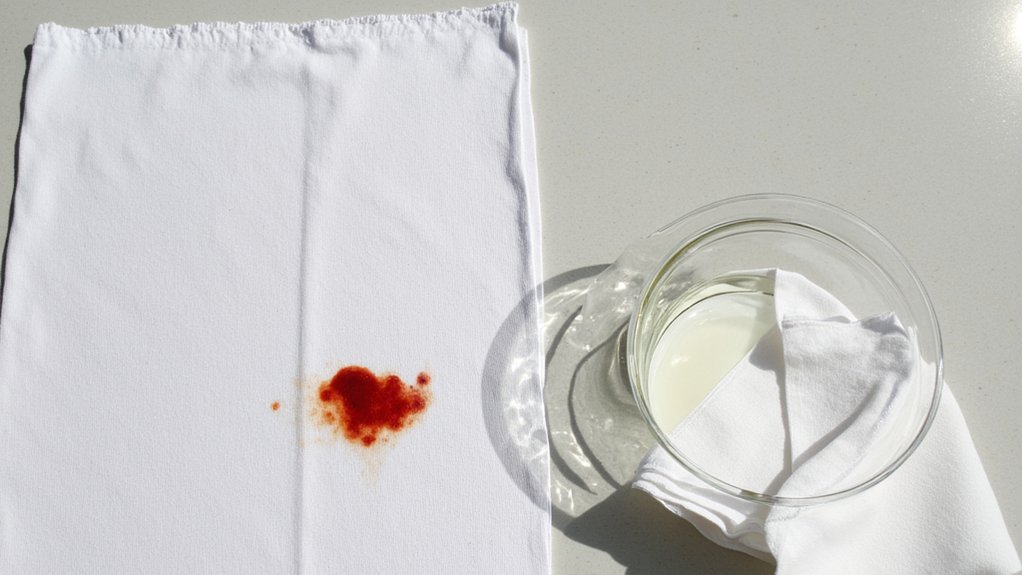
Like a persistent detective unraveling a mystery, vinegar’s power to remove blood stains lies in its scientific properties. You’ll find this common household item can effectively tackle those stubborn red marks through its acetic acid content, which breaks down blood proteins at a molecular level. Before you reach for expensive cleaning products, consider that the solution to your stain problems might be sitting right in your pantry – but there’s more to the technique than simply pouring vinegar on the spot.
The Science Behind Vinegar’s Stain-Fighting Power
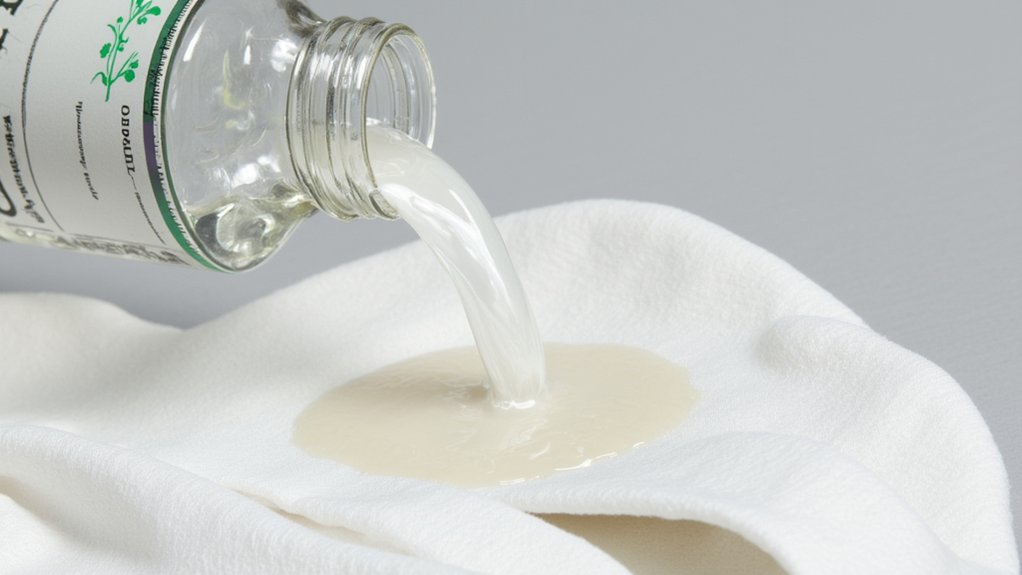
When vinegar comes into contact with blood stains, its acetic acid content breaks down the proteins that make blood stick to fabric. The acetic acid, which makes up about 5-8% of white vinegar, works by dissolving the chemical bonds that hold blood proteins together.
Here’s how the chemistry works:
- Vinegar’s acidic pH (2.4-3.4) denatures the protein structures in blood
- The acid breaks hemoglobin molecules into smaller, water-soluble components
- These broken-down particles can then be washed away more easily
“Vinegar’s effectiveness comes from its ability to destabilize protein structures without damaging most fabric types,” explains textile scientist Dr. Sarah Chen. You’ll find this particularly useful with cotton and synthetic materials, though you should always test on a hidden area first.
Types of Vinegar for Blood Stain Removal
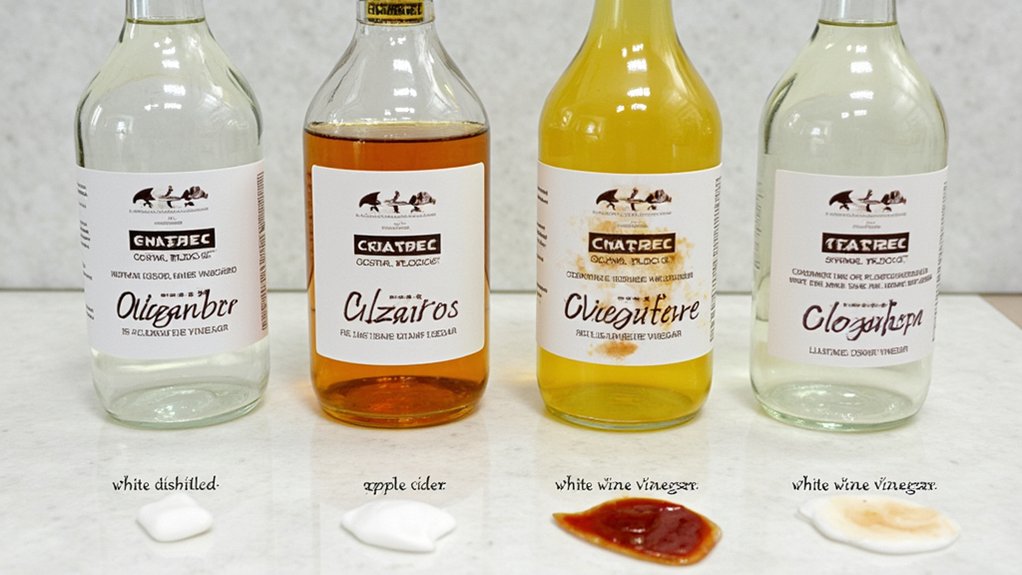
Three main types of vinegar work effectively for blood stain removal, with white distilled vinegar being your best overall choice.
Best Options for Blood Stains:
- White Distilled Vinegar (5% acidity)
- Most effective and affordable
- Won’t leave additional stains
- Use full-strength for fresh stains
- Apple Cider Vinegar (5-6% acidity)
- Works well on dried blood
- May leave slight coloring on light fabrics
- Dilute with equal parts water
- White Wine Vinegar (6-7% acidity)
- Gentler on delicate fabrics
- Higher price point
- Mix 2/3 vinegar with 1/3 water
“White distilled vinegar’s clear composition makes it ideal for blood stain treatment without risking additional discoloration,” notes textile expert Dr. Sarah Chen, recommending you test any vinegar solution on an inconspicuous area first.
Step-by-Step Guide to Using Vinegar on Blood Stains
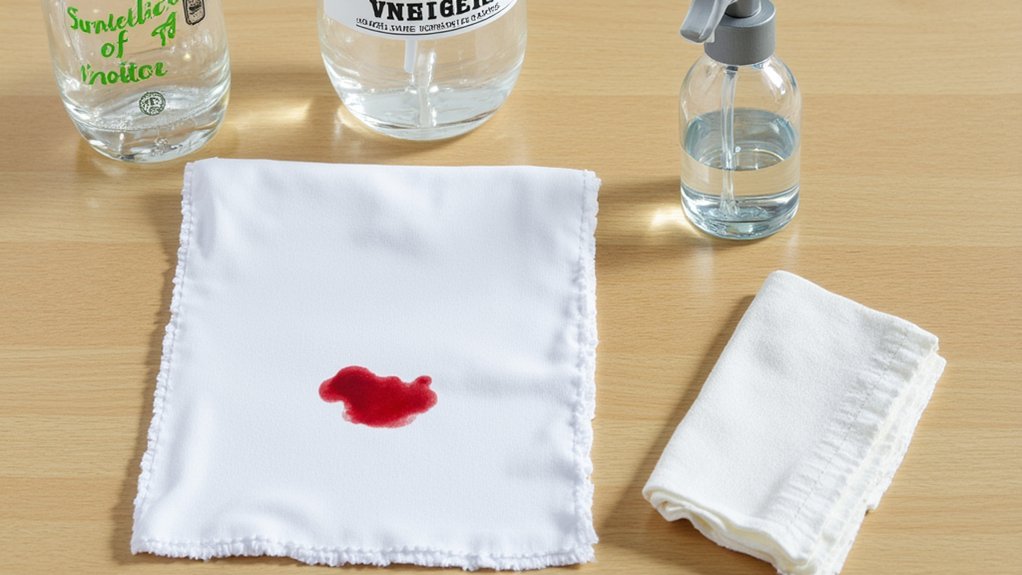
Following five simple steps with vinegar can effectively remove blood stains from most fabrics and surfaces.
Here’s what you’ll need to do:
- Blot the stain with cold water to remove excess blood
- Mix equal parts white vinegar and water in a spray bottle
- Spray the solution directly onto the blood stain
- Let it sit for 5-10 minutes (longer for older stains)
- Gently scrub with a soft brush or cloth
“The acetic acid in vinegar breaks down protein bonds in blood, making it easier to lift from fabric fibers,” explains textile specialist Dr. Sarah Chen. Don’t forget to test the solution on a hidden area first to verify it won’t damage your fabric. For stubborn stains, you may need to repeat the process 2-3 times, always rinsing with cold water between applications.
Best Practices and Safety Precautions
Safe handling and proper technique make a significant difference when using vinegar for blood stain removal.
Safety First:
- Always wear protective gloves to avoid skin irritation
- Work in a well-ventilated area
- Keep vinegar away from eyes and mouth
- Store vinegar out of children’s reach
Best Practices:
- Test fabric colorfastness in an inconspicuous area first
- Don’t mix vinegar with bleach or ammonia-based cleaners
- Use white vinegar only – avoid colored varieties
- Don’t apply heat until stain is completely gone
“Proper ventilation is essential when working with vinegar, as its fumes can cause respiratory irritation in enclosed spaces,” says cleaning expert Sarah Thompson. Remember to rinse treated areas thoroughly with cold water and never use hot water, which can set the stain permanently.
Alternative Methods to Combine With Vinegar
While vinegar works effectively on its own, combining it with other common household items can boost its stain-fighting power considerably. Here are proven combinations you can try:
- Mix equal parts white vinegar and hydrogen peroxide, applying them separately to avoid neutralization
- Combine 1/2 cup vinegar with 2 tablespoons of salt to create a gentle scrubbing paste
- Add 1 tablespoon of baking soda to 1/4 cup vinegar for extra cleaning power
“The key is to use these combinations strategically,” says laundry expert Sarah Chen. “Start with vinegar alone on delicate fabrics, then progress to these enhanced solutions for stubborn stains.”
For best results:
- Test combinations on a hidden area first
- Apply solutions directly to the stain
- Let sit for 5-10 minutes before washing
Common Mistakes to Avoid When Using Vinegar
Here are key mistakes you’ll want to avoid:
- Using undiluted vinegar directly on delicate fabrics
- Letting the vinegar solution sit for more than 5 minutes
- Scrubbing the stain aggressively instead of blotting
- Mixing vinegar with bleach or hydrogen peroxide
- Not testing the solution on a hidden area first
- Drying the garment before the stain is completely gone
- Using dark or apple cider vinegar instead of white vinegar
Remember to always work from the stain’s outer edges inward to prevent spreading.
