
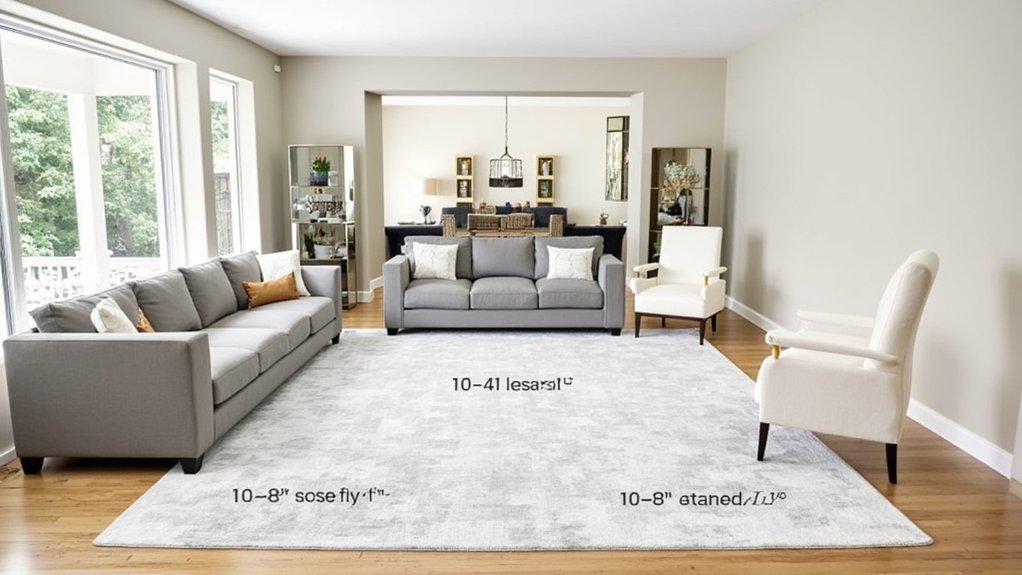
Like a frame that perfectly complements a masterpiece, your living room rug needs to be sized just right to enhance your space. You’ll want to take into account both your room’s dimensions and your furniture arrangement when selecting the ideal rug size. Interior designer Sarah Mitchell notes, “The right-sized rug creates visual harmony and defines conversation areas.” Before you start shopping, you’ll need to understand the key measurements that make the difference between a cohesive layout and a disjointed space.
Standard Living Room Rug Dimensions
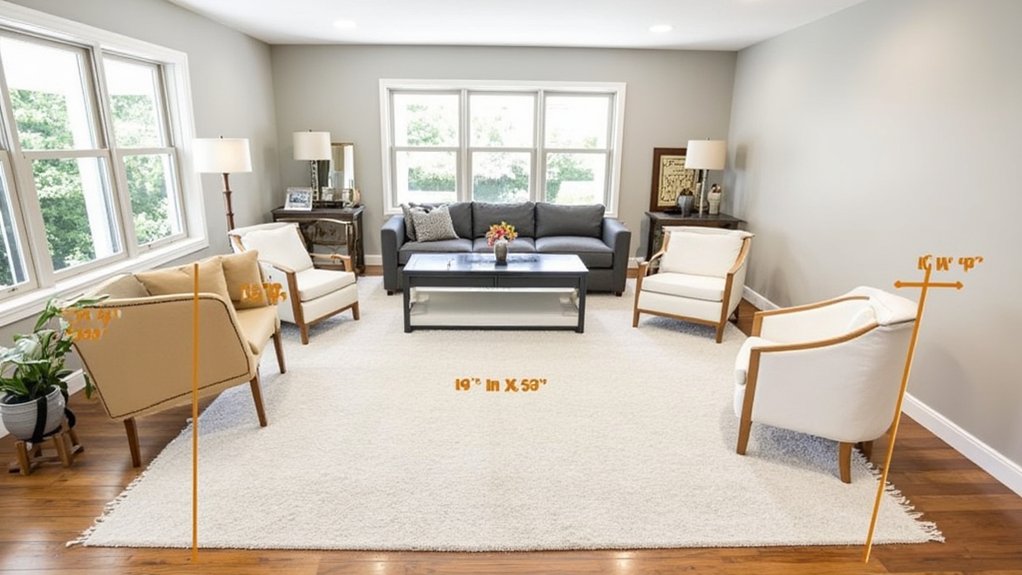
Three standard rug sizes dominate the living room market: 5′ x 8′, 8′ x 10′, and 9′ x 12′. You’ll want to choose the size that best fits your room’s dimensions and furniture layout.
For small living rooms under 200 square feet, a 5′ x 8′ rug works well, especially when you’re placing just a coffee table and sofa on it. Interior designer Sarah Mitchell notes, “An 8′ x 10′ rug is ideal for medium-sized rooms between 200-300 square feet, allowing all your furniture’s front legs to rest on it.”
The 9′ x 12′ size suits larger living spaces over 300 square feet. “You’ll need this larger size when you’re working with sectionals or multiple seating arrangements,” explains James Cooper, certified room planner.
Measuring Your Space Correctly
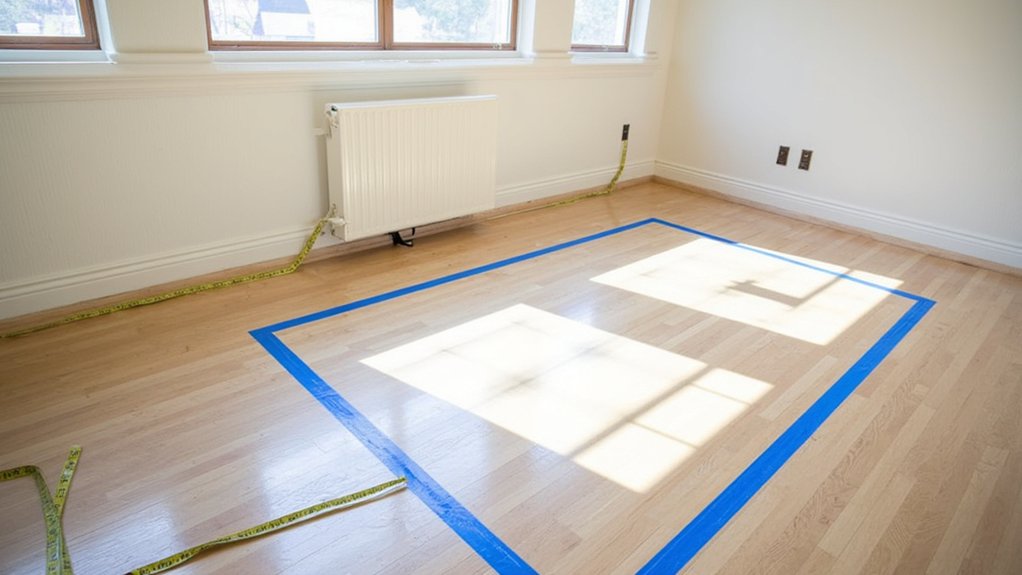
Before selecting your perfect rug size, you’ll need to measure your living room’s dimensions and create a furniture layout plan. Here’s how to measure correctly:
- Start with the room’s length and width using a measuring tape
- Measure your furniture placement area
- Account for walking paths (minimum 18-24 inches)
“Always measure twice to guarantee accuracy,” advises interior designer Sarah Mitchell. “Don’t forget to take into account doorways and changes between rooms.”
Important measurements to note:
- Distance between major furniture pieces
- Space from walls to furniture
- Traffic flow areas
- Room focal points (fireplace, TV area)
Pro tip: Use painter’s tape to mark your intended rug placement on the floor. This helps you visualize the space and adjust measurements before making your purchase.
Furniture Layout Considerations
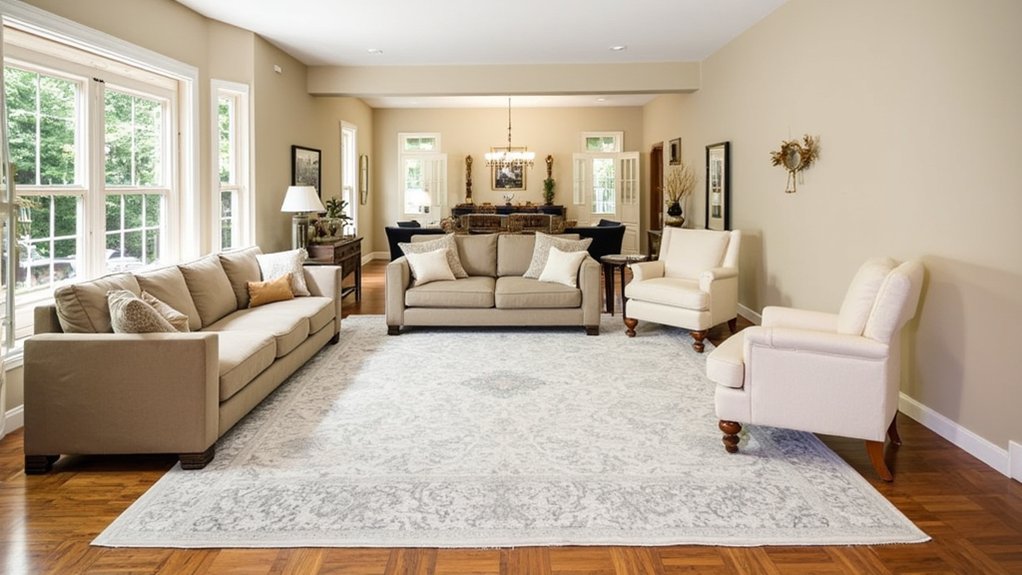
Your furniture arrangement directly impacts the ideal rug size for your living room space. “The way you position your seating creates distinct zones that your rug needs to unite,” explains interior designer Michael Chen.
Consider these key layout factors:
- All front legs of sofas and chairs should rest on the rug
- Leave 18-24 inches of rug visible beyond furniture edges
- Center your rug under the main seating area
- Maintain at least 8-12 inches between the rug and walls
For open floor plans, you’ll want to define conversation areas with your rug placement. “Think of your rug as an anchor that holds the furniture grouping together,” notes Chen. If you’re using a coffee table, make sure it sits completely on the rug with at least 18 inches of space around all sides.
Common Rug Sizing Mistakes to Avoid
Many homeowners make critical sizing mistakes when selecting living room rugs, leading to awkward proportions and visual imbalance. “The biggest error I see is choosing rugs that are too small for the space,” says interior designer Sarah Martinez.
Common mistakes to avoid:
- Selecting a rug that only fits under the coffee table
- Leaving more than 24 inches of floor space between the rug and walls
- Using a rug that’s too small to anchor furniture pieces
- Positioning only the front legs of sofas on the rug
- Choosing irregular sizes for symmetrical room layouts
“Your rug should extend at least 6-8 inches beyond your seating arrangement,” explains Martinez. “For an average 12×15 living room, you’ll want a minimum 8×10 rug, though 9×12 is often better for proper furniture placement and visual flow.”
Different Room Shapes and Rug Placement
Room shape directly impacts ideal rug placement and sizing decisions for your living space. Here’s how to approach different layouts:
Square Rooms:
- Center a square rug with equal distances from walls
- Leave 18-24 inches of flooring exposed on all sides
- Consider an 8′ x 8′ or 10′ x 10′ rug for standard rooms
Rectangular Rooms:
- Place the rug parallel to the longest walls
- Verify front furniture legs rest on the rug
- Use 9′ x 12′ for larger spaces, 8′ x 10′ for medium rooms
L-Shaped Rooms:
- Define separate seating areas with two coordinating rugs
- Keep 2-3 feet between rugs
- Select sizes proportional to each zone
“The rug should anchor your furniture arrangement while maintaining proper scale with the room’s dimensions,” says interior designer Sarah Matthews.
Creating Zones With Multiple Rugs
When creating distinct functional areas in an open floor plan, strategically placing multiple rugs helps define separate zones while maintaining visual flow. You’ll want to select complementary rugs that share at least one color or pattern element to guarantee cohesion.
For a conversation area, use a rug that extends 12-18 inches beyond your seating arrangement. If you’re creating a dining zone, choose a rug that’s 24-30 inches wider than your table on all sides. For a media area, assure your rug reaches 6-8 inches past the TV stand.
“When using multiple rugs, maintain at least 18 inches of space between them,” advises interior designer Sarah Chen. “This creates clear boundaries while preserving natural walkways throughout your living space.”
Rug Size Based on Traffic Flow
Understanding traffic patterns plays an essential role in selecting the right rug size for your living space. You’ll want to guarantee your rug accommodates natural walking paths without creating obstacles.
For high-traffic areas, follow these guidelines:
- Leave 18-24 inches of bare floor between the rug’s edge and walls
- Position the rug so furniture legs either sit completely on or off it
- Create clear pathways that are at least 30 inches wide
“The rug should guide movement through the room, not force people to walk awkwardly around it,” says interior designer Sarah Chen. Map out your traffic flow by observing how people naturally move through your space. Consider doorways, television viewing angles, and conversation areas when determining where to place your rug’s edges.
Choose a size that lets you maintain these pathways without compromising your furniture arrangement.
Seasonal Adjustments and Flexibility
Since your living space can feel dramatically different as seasons change, you’ll want to contemplate adjustable rug options throughout the year.
Consider these seasonal adjustments:
- Switch to lightweight cotton rugs in summer for a cooler feel
- Layer thicker wool rugs in winter for added warmth
- Use 5×8 rugs in summer to create more exposed floor space
- Opt for 8×10 or larger during winter months for maximum coziness
“Rotating your rug size seasonally helps maintain proper air circulation while adapting to changing household needs,” says interior designer Sarah Martinez. You can store off-season rugs rolled in breathable canvas bags under beds or in climate-controlled spaces. For maximum flexibility, invest in two different-sized rugs that coordinate with your decor, allowing you to adjust your living room’s atmosphere as temperatures shift.
Budget-Friendly Size Solutions
Anyone can create an appropriately-sized living room rug setup without breaking the bank. Consider these cost-effective solutions:
Layer Multiple Rugs
- Use a larger, affordable sisal or jute rug as your base (8×10′)
- Add smaller decorative rugs on top for style and savings
Smart Shopping Strategies
- Shop end-of-season sales (save 40-60%)
- Check outlet stores and online marketplaces
- Compare prices across different retailers
“Combining two medium-sized rugs often costs less than one large premium rug,” says interior designer Sarah Chen.
Size-Saving Tips
- Choose a slightly smaller size and position furniture strategically
- Use rug pads to extend the life of budget-friendly options
- Consider indoor/outdoor rugs, which typically cost 30% less than indoor-only versions
