
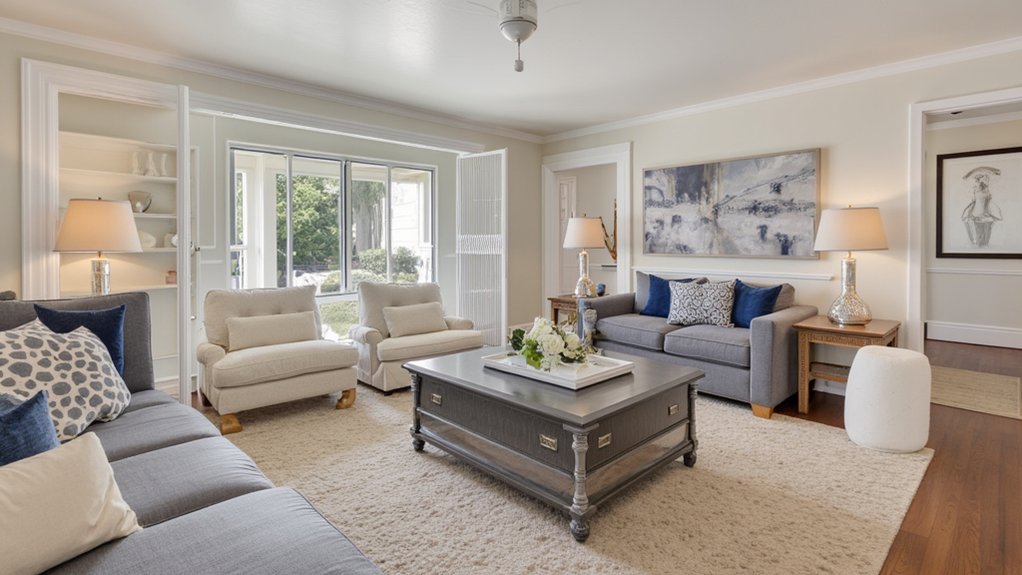
Just as a symphony conductor arranges musicians to create harmony, you’ll need to orchestrate your furniture placement for maximum functionality in a large living room. Interior design expert Sarah Mitchell notes that “the key is creating distinct zones while maintaining flow.” By starting with a clear plan for your space’s layout, including precise measurements and purposeful groupings, you can transform an overwhelming room into an organized haven that serves multiple functions seamlessly.
1. Create Central Conversation Area
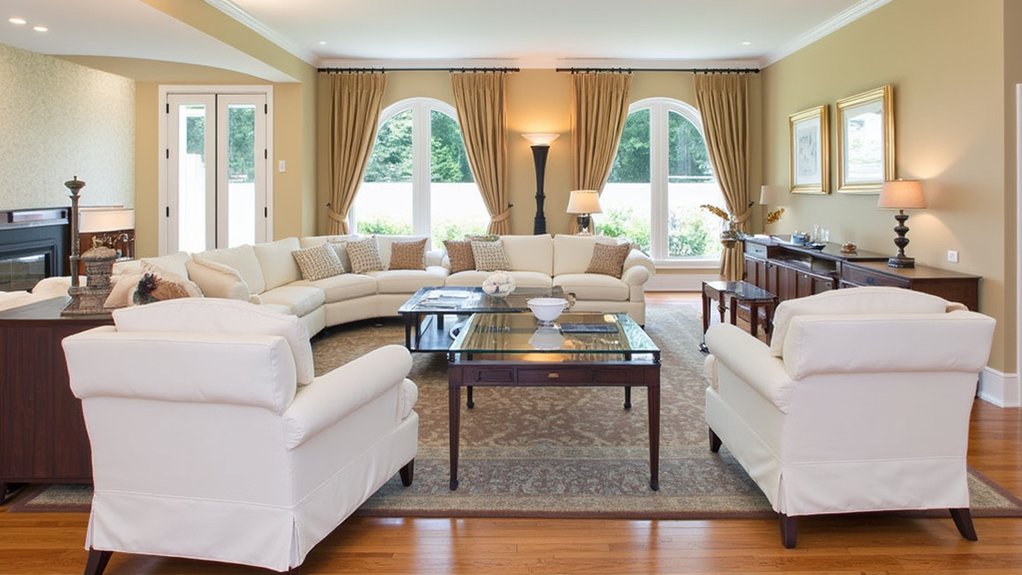
Here are three key elements for your conversation area:
- Place chairs at 90-degree angles to your sofa, keeping them within 8 feet of each other to maintain easy conversation flow
- Center a substantial coffee table (36-48 inches wide) in the middle of your seating arrangement
- Add side tables within arm’s reach of each seat, ideally 18-24 inches from the furniture’s edge
Remember to maintain clear pathways of at least 30 inches between furniture pieces for easy navigation.
2. Define Distinct Activity Zones
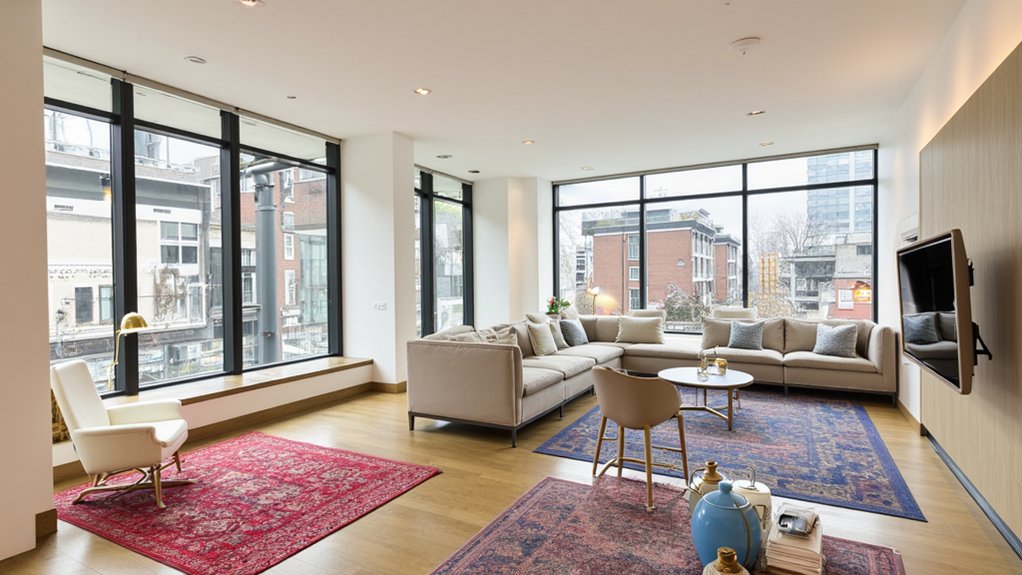
Large living rooms offer the perfect opportunity to create multiple functional areas that serve different purposes throughout your day. You’ll want to establish clear boundaries between zones while maintaining a cohesive flow throughout the space.
- Create a reading nook by positioning a comfortable armchair, floor lamp, and small side table near a window, keeping at least 24 inches of clearance around the furniture
- Set up a workspace along a wall with a slim desk, task lighting, and storage solutions, allowing 36 inches of walkway space
- Design an entertainment zone with media cabinet, TV mounting at 42 inches height, and secondary seating 8-10 feet from the screen
Interior designer Sarah Mitchell notes, “Use area rugs and strategic lighting to visually separate zones while keeping the overall room connected.”
3. Position Lighting Strategically
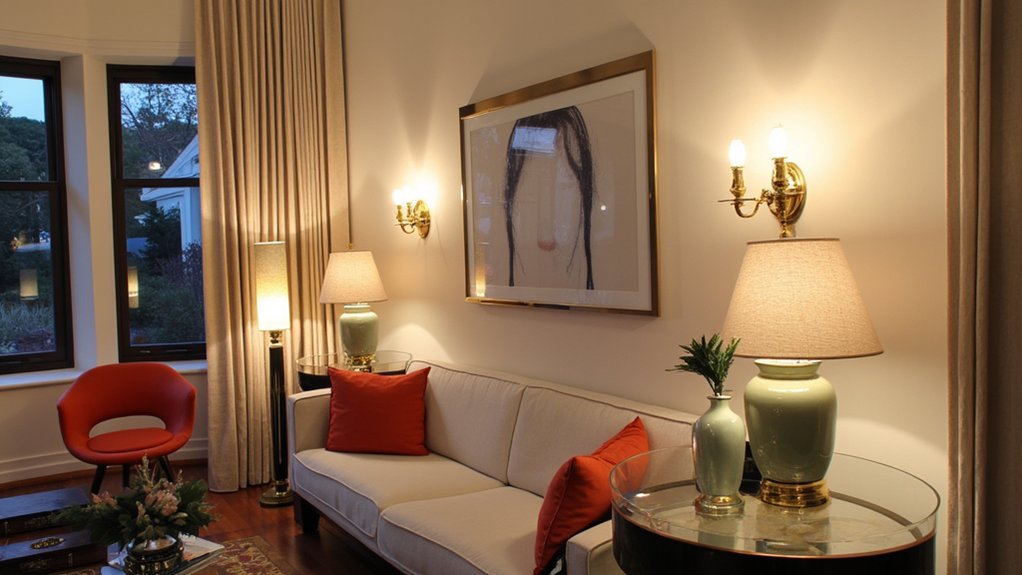
Here’s how to position your lighting effectively:
- Place floor lamps (at least 60 inches tall) behind seating areas where overhead lighting doesn’t reach, ensuring they’re within 12 inches of chairs or sofas
- Install wall sconces at eye level (typically 60-72 inches from the floor) to illuminate artwork and create ambient lighting around the room’s perimeter
- Add table lamps (18-24 inches tall) on end tables or console surfaces, spacing them approximately 6 feet apart to maintain consistent illumination throughout conversation areas
Remember to use LED bulbs between 2700-3000K for a warm, welcoming glow that complements your furniture arrangement.
4. Establish Clear Traffic Paths
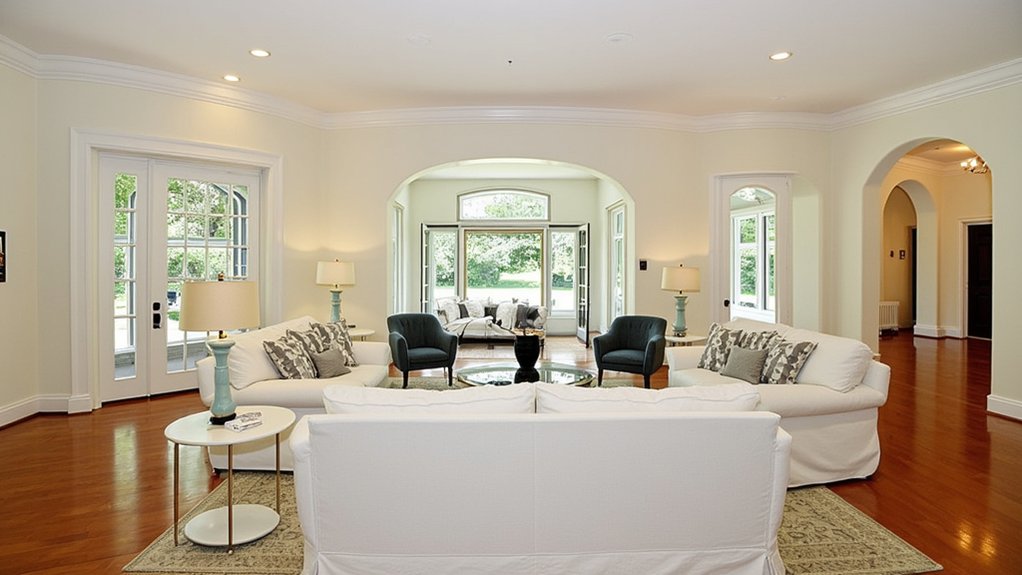
When establishing clear paths in your large living room, consider these essential guidelines:
- Create a direct route from the main entrance to the most frequently used seating areas, keeping this path completely free of obstacles
- Allow 18-24 inches between the coffee table and sofa for easy movement while maintaining accessibility
- Position larger furniture pieces against walls, leaving the center space open for natural movement patterns through the room
Remember to test your traffic flow by walking through each pathway several times to guarantee smooth navigation throughout your space.
5. Add Artwork Above Seating
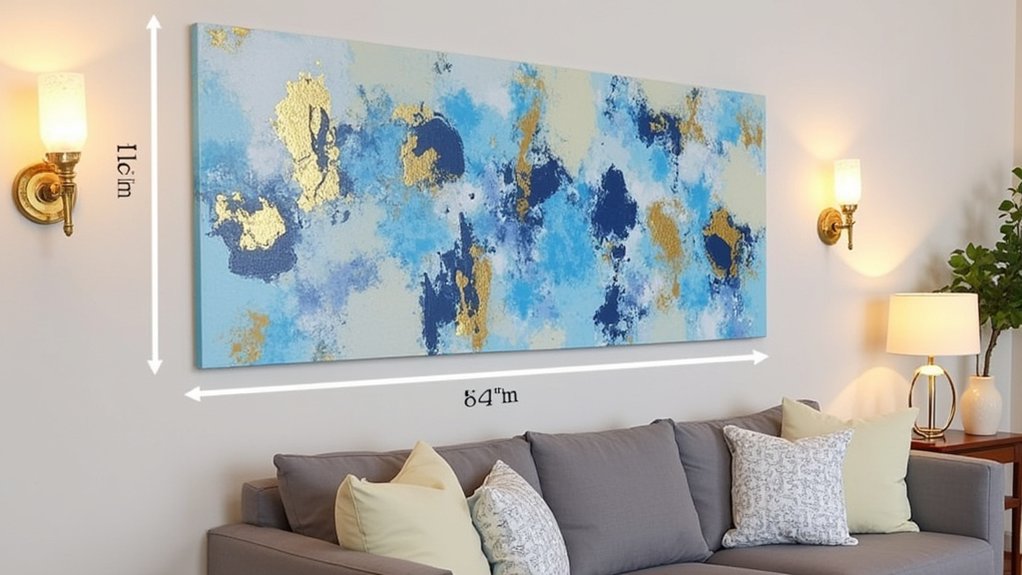
Selecting the right artwork above your seating creates a powerful focal point and ties your living room’s design elements together. Interior designer Sarah Chen recommends hanging artwork at eye level, typically 57-60 inches from the floor to the center of the piece.
When choosing and positioning artwork above your seating, follow these key guidelines:
- Select pieces that are approximately 2/3 the width of your sofa or seating arrangement – for an 84-inch sofa, aim for artwork that’s 56 inches wide
- Maintain 6-8 inches of space between the bottom of your artwork and the top of your furniture to create visual breathing room
- Layer your lighting by installing picture lights or sconces 12-15 inches above the artwork to enhance its presence, especially during evening hours
6. Layer Area Rugs Strategically
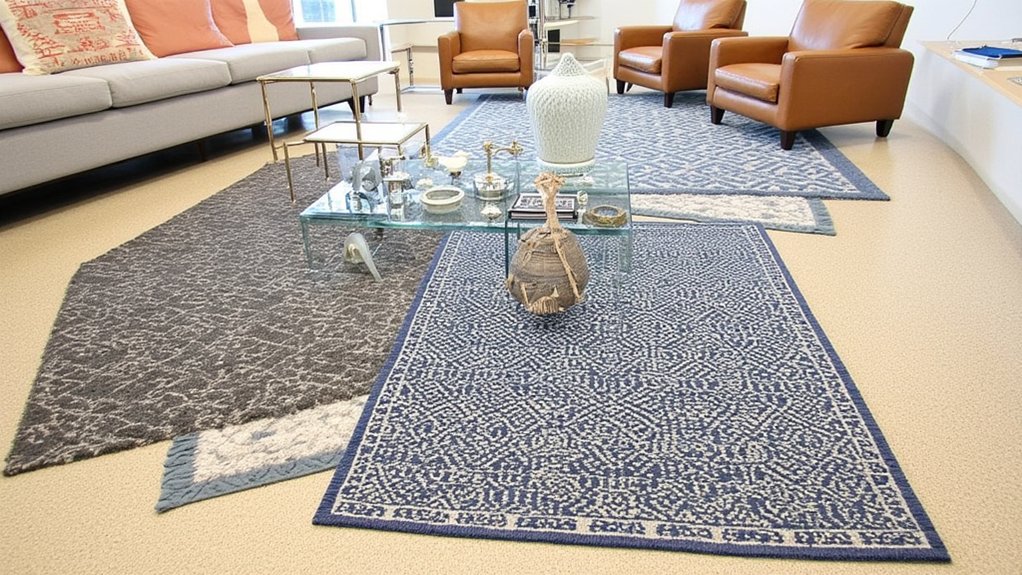
Layering area rugs strategically helps define distinct zones within your large living room while adding depth and visual interest. Interior designer Sarah Thompson suggests placing a large neutral base rug (at least 8×10 feet) underneath your primary seating arrangement. You’ll want to layer smaller, more decorative rugs on top to create cozy conversation areas.
- Position your base rug so it extends 18-24 inches beyond your sofa on all sides
- Add a 5×7 accent rug at a 45-degree angle under your coffee table
- Place a 4×6 rug beneath auxiliary seating groups to establish secondary zones
Remember to maintain at least 2 feet of overlap between layered rugs to create cohesion. Choose complementary patterns and textures, keeping the larger rug neutral and the smaller ones more detailed.
7. Install Window Seat Nooks
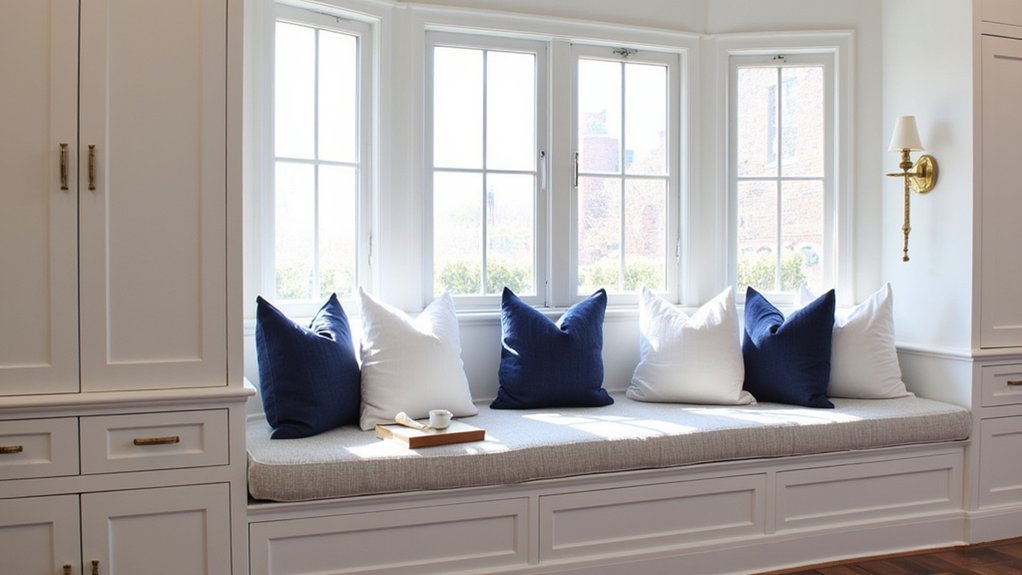
To create an inviting window seat area:
- Position comfortable cushions and pillows at a 90-degree angle, ensuring proper back support while maintaining clear sightlines to the outside view
- Install built-in storage drawers beneath the seat to maximize space efficiency – standard height should be 16-18 inches from floor to seat top
- Add sconce lighting 60 inches from the floor and incorporate USB charging ports for a functional reading and relaxation zone
Consider matching your window seat’s upholstery to existing room accents for a cohesive look.
