
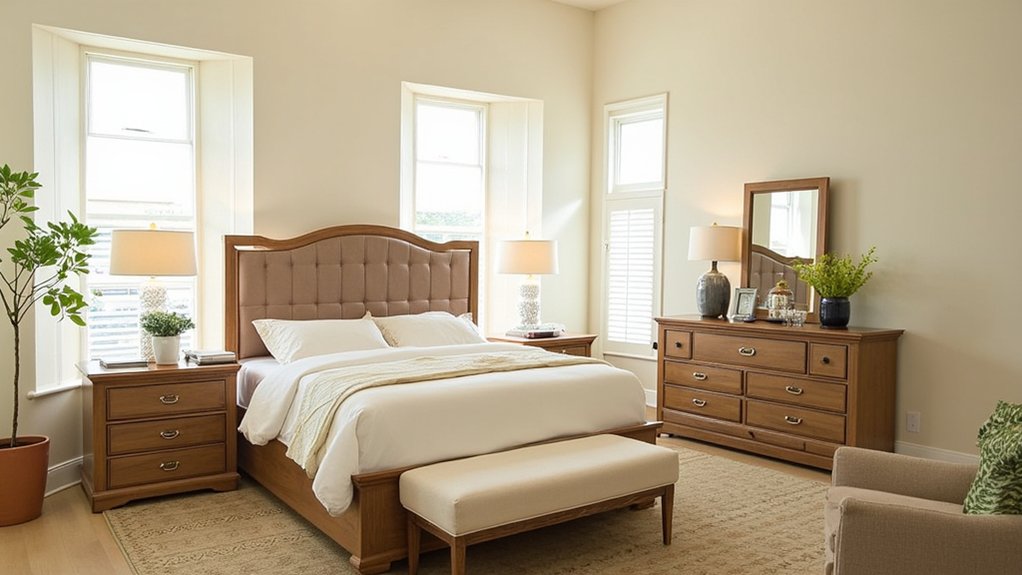
Getting Started with Bedroom Furniture Choices****
Hey, let’s figure out how to pick the right bedroom furniture for your space. Start by grabbing a tape measure to check your room’s dimensions—length, width, and height in feet. “Accurate measurements, ideally within 6 inches, prevent costly mistakes,” says interior designer Jane Smith. Focus on your needs for the next 5-10 years. Curious about the next step? There’s more to explore!
Assess Your Space and Needs

Before you plunge into picking out bedroom furniture, take a moment to assess your space and needs carefully. Start by measuring your room—grab a tape measure and note the length, width, and height. Make certain you’ve got exact numbers, like 12 feet by 10 feet, to avoid surprises later.
Key Steps to Follow:
- Map the Layout: Sketch your room on paper, marking windows, doors, and outlets. Leave at least 2 feet around the bed for easy movement.
- List Your Needs: Do you need a king-size bed or just a twin? As expert designer Jane Smith says, “Prioritize essential pieces first to maximize functionality.”
- Check Timing: Spend about 1-2 hours on this step to guarantee accuracy.
Set a Realistic Budget

Three essential steps can guide you in setting a realistic budget for your bedroom furniture. Let’s break it down so you can spend wisely.
Step 1: Assess Your Total Funds****
Start by checking your savings and monthly income. Decide how much you can allocate—say, $800—within the next 3 months for furniture.
Step 2: Prioritize Key Pieces****
Focus on essentials like a bed frame and mattress first. Allocate about 60% of your budget, around $480, for these core items. “Quality matters for sleep health,” says furniture expert Jane Carter.
Step 3: Plan for Additional Costs****
Don’t forget delivery fees or assembly, often $50-$100. Set aside 10-15% of your budget for these extras to avoid surprises later.
Determine Your Style Preferences
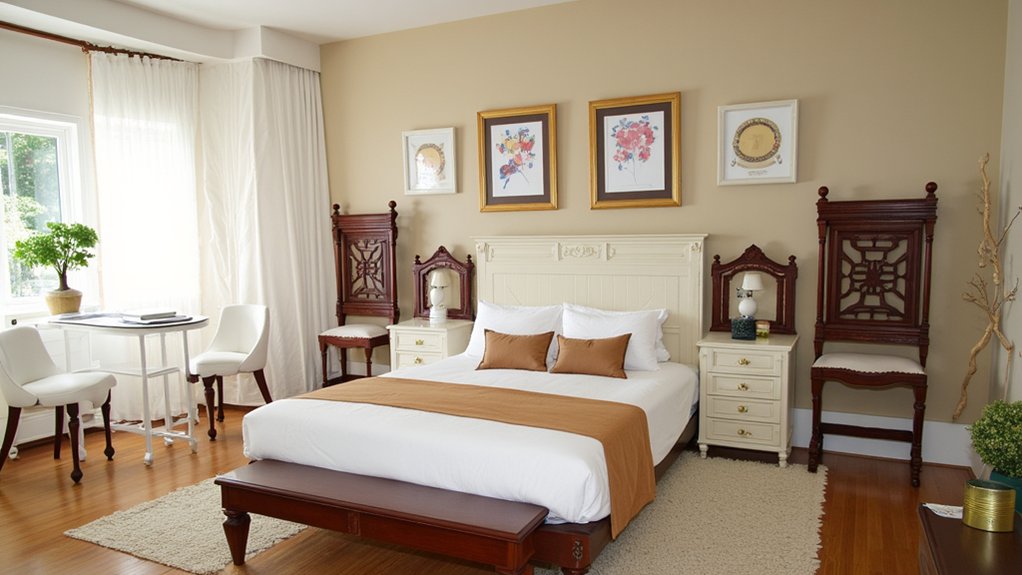
Now that you’ve got a budget in place, let’s move on to figuring out your style preferences for bedroom furniture. Your bedroom should reflect who you are, so take some time to pinpoint what you love.
Steps to Identify Your Style:
- Browse Inspiration: Spend 1-2 hours flipping through magazines or scrolling on Pinterest for bedroom ideas. Look for colors or themes you’re drawn to.
- Note Key Elements: Write down specific vibes, like modern with clean lines or rustic with warm wood tones.
- Consider Space: Measure your room—standard bedroom sizes are 10×12 feet—and pick styles that fit.
Interior designer Jane Smith advises, “Stick to a cohesive palette; it ties everything together effortlessly.” Start exploring today!
Prioritize Essential Pieces
After pinning down your style, it’s time to focus on the must-have furniture for your bedroom. Start with the essentials to create a functional space. You’ll need key pieces that meet your daily needs and fit your room’s layout.
Top Priorities for Your Bedroom
- Bed Frame or Base: Make certain it’s sturdy, ideally 80 inches long for adults, to support restful sleep.
- Nightstands: Pick two, about 24-28 inches high, for easy access to lamps or books within 2-3 days of setup.
- Storage Solutions: Choose a dresser, roughly 36-48 inches wide, for clothes storage, as expert designer Jane Smith advises, “Prioritize multi-use furniture to maximize space.”
Stick to these basics first before adding extras. Plan your purchases within a week to stay organized.
Consider Bed Size and Type
While you’re planning your bedroom layout, deciding on the right bed size and type is an essential step. Your bed’s the centerpiece, so let’s get it right with some clear choices.
Picking the Perfect Size
- Measure your room first; a queen bed (60”x80”) fits most spaces if you’ve got at least 10’x10’.
- For solo sleepers, a twin (38”x75”) works if space is tight—ideal for kids or guests.
- Couples might want a king (76”x80”), but confirm you’ve got 12’x12’ for comfort.
Choosing the Bed Type
- Platform beds: Sleek, no box spring needed, great for modern looks.
- Canopy beds: Add drama, but check ceiling height—needs 8’ clearance.
As expert Jane Doe says, “Match bed style to room dimensions for balance.” Make this decision early, within a week of planning.
Evaluate Storage Solutions
Think about your bedroom’s setup beyond just the bed, and start focusing on how you’ll keep things organized. Storage solutions can transform clutter into calm, so let’s break it down with clear steps.
Assess Your Needs First
- Identify what you’re storing: clothes, books, or extra bedding.
- Measure your space; guarantee at least 24 inches of clearance around storage units for easy access.
Choose Smart Options
- Opt for a dresser with 4-6 drawers, ideally 36 inches wide, for folded items.
- Consider under-bed storage bins, about 6-8 inches high, for seasonal stuff.
- Add a nightstand with a drawer, roughly 20 inches wide, for quick-access items.
As expert Jane Doe says, “Prioritize multifunctional pieces to maximize small spaces within days of planning.”
Choose Durable Materials
Key Materials to Contemplate:
- Hardwood: Look for beds with frames over 48 inches wide for stability.
- Metal: Choose steel bases with coatings to resist rust over time.
- Upholstery: Pick durable fabrics like microfiber for headboards, lasting 5-7 years.
Check for tight joints and smooth finishes. Investing in quality now saves you replacements later.
Focus on Comfort and Ergonomics
As you pick out bedroom furniture, remember that comfort and ergonomics shape your daily rest and health. Your bed, chair, or desk must support your body right. Let’s plunge into key tips to guarantee you’re comfy.
Prioritize Mattress Support****
- Test mattresses in-store for at least 10 minutes to feel back support.
- Look for medium-firm options; they often suit most spines, per Dr. Jane Smith, a sleep expert.
Adjust Furniture Heights
- Choose bed frames 20-25 inches off the floor for easy getting in and out.
- Make sure desks are 28-30 inches high to keep elbows at 90 degrees while typing.
“Ergonomic design prevents strain over years,” notes Dr. Smith. Focus on these specs, and you’ll wake up feeling rested every day.
Match Colors and Finishes
While comfort sets the foundation for your bedroom, coordinating colors and finishes brings the space to life. You’ve gotta think about how furniture pieces work together visually to create a cohesive look.
Steps to Match Colors and Finishes
Follow these tips to get it right:
- Pick a base color—like a soft gray or warm beige—for larger pieces like your bed frame.
- Match wood finishes; if your dresser’s a dark walnut, choose nightstands in a similar tone.
- Add accent colors with smaller items, keeping contrast under 30% of the room’s palette.
As designer Jane Smith advises, “Stick to a 60-30-10 color rule for balance.” Take about a week to test swatches under your room’s lighting before finalizing choices.
Measure for Proper Fit
Let’s shift focus from colors to making certain your furniture fits perfectly in your bedroom space. Before buying anything, grab a tape measure and get precise dimensions of your room. You don’t want a bed or dresser that’s too big!
Steps to Measure Accurately
- Measure Room Dimensions: Check the length and width of your space, noting down numbers like 10 feet by 12 feet.
- Account for Doors and Windows: Leave at least 2-3 feet clearance around openings for easy access.
- Check Height: Make sure tall furniture, like a 6-foot wardrobe, fits under your ceiling height.
As expert designer Jane Smith advises, “Always measure twice before purchasing; it saves time and avoids costly returns.” Take 10-15 minutes to do this right!
Think About Room Layout
Before you pick out that perfect bed or nightstand, take a moment to plan your bedroom’s layout with purpose. A well-thought-out space boosts comfort and flow, so let’s get started with actionable steps.
Key Steps to Layout Success
- Visualize Traffic Flow: Make sure you’ve got at least 24 inches of walking space around your bed. Don’t block doorways or windows.
- Position the Bed First: Place your bed against a focal wall, ideally 3-5 feet from the entrance for easy access.
- Plan Storage Spots: Leave 18-24 inches near dressers for drawer pull-outs.
Interior designer Jane Smith advises, “Sketch your room on paper within 10 minutes to spot layout issues before buying.” Start planning now for a functional bedroom!
Explore Multi-Functional Options
Now that you’ve mapped out your bedroom layout, turn your attention to furniture that serves more than one purpose. Multi-functional pieces save space and add value to your room. Think about your needs—do you need storage or a workspace?
Why Choose Multi-Functional?
- Space Efficiency: A bed with built-in drawers (around 12-18 inches deep) stores clothes or bedding.
- Versatility: Look for ottomans (about 16×16 inches) that double as seating and storage.
Steps to Select:
- Measure your space—ensure items fit within a 2-foot clearance.
- Prioritize needs—opt for a desk (30×60 inches) that doubles as a vanity.
- Check durability—solid wood lasts 10+ years, says furniture expert Jane Carter.
Start exploring these options within a week to finalize your setup!
Research Brands and Reviews
How do you find bedroom furniture that’s worth your money and fits your style? Start by researching brands and reviews to guarantee quality. You don’t want a bed frame that creaks after a month!
Steps to Research Effectively
- Check Online Reviews: Spend about 30 minutes browsing sites like Amazon or Wayfair for user feedback on specific items, like a 60-inch-wide dresser.
- Compare Brands: Look at popular names like IKEA or Ashley Furniture. Note their warranty, often 1-5 years, for reliability.
- Seek Expert Opinions: As furniture analyst Jane Smith says, “Always verify material durability—solid wood outlasts particle board by years.”
- Visit Forums: Join discussions on Reddit for honest user experiences. Take a week to gather info before deciding.
Plan for Future Updates
Planning ahead for bedroom furniture updates saves you stress and money down the road. When picking pieces now, think about how your needs might change in 5-10 years. Will you need more storage or a bigger bed frame?
Steps to Plan Smartly
- Assess Space: Measure your room (e.g., 12×14 feet) to guarantee future pieces fit without crowding.
- Choose Modular Designs: Opt for furniture like expandable dressers or bed frames that adjust from queen (60×80 inches) to king (76×80 inches).
- Budget for Updates: Save $50 monthly for replacements, as expert Jane Smith, interior designer, advises, “Planning small investments now prevents costly overhauls later.”
